


As an Amazon Associate, We earn from qualifying purchases.
Changing a light bulb is a fundamental household task that anyone can master with the right knowledge and precautions. This comprehensive guide walks you through essential safety steps, how to identify the correct replacement bulb, and a detailed, step-by-step process for various fixtures. Empower yourself to confidently change light bulbs and illuminate your space safely and efficiently.
Welcome, friend! Ever found yourself standing in a dimly lit room, staring at a dead light bulb, wondering if you need a professional electrician just to get some light back? You’re not alone! Changing a light bulb might seem like a simple task, but doing it correctly and safely involves a few key steps that often get overlooked. Whether you’re dealing with a standard lamp, a tricky recessed light, or even an outdoor fixture, this guide is here to light your way through the process.
This isn’t just about unscrewing one bulb and screwing in another; it’s about understanding the nuances that ensure safety, prolong the life of your fixtures, and get you the right kind of light for your space. We’ll break down everything from turning off the power to choosing the perfect replacement bulb, and even tackling those stubborn or broken ones. So, roll up your sleeves – metaphorically speaking, unless you actually prefer to change light bulbs in short sleeves – and let’s get started on brightening up your home!
By the end of this article, you’ll be able to change a light bulb with confidence, no matter the situation. We’ll cover all the practical tips, common pitfalls, and clever tricks that will turn you into a light bulb changing pro. Get ready to banish the darkness and make your home shine again!
Key Takeaways
- Safety First: Always turn off the power at the switch and breaker, and allow the bulb to cool completely before attempting to remove it.
- Identify Your Bulb: Before buying a new bulb, check the old one for its type (incandescent, CFL, LED), base style (screw-in, pin-type), wattage, and lumens to ensure compatibility.
- Gentle Removal: When unscrewing an old bulb, turn counter-clockwise slowly and apply steady, gentle pressure to avoid breakage or stripping the socket.
- Proper Installation: Screw new bulbs in clockwise until snug, but avoid overtightening, which can damage the bulb or socket.
- Fixture-Specific Care: Different fixtures like recessed lights, chandeliers, or enclosed outdoor units may require unique steps for cover removal or handling.
- Troubleshooting Tips: If a new bulb doesn’t work, check the power, ensure it’s fully screwed in, and inspect the socket for damage before assuming the bulb is faulty.
Quick Answers to Common Questions
How long should I wait for a light bulb to cool down?
You should wait at least 5-10 minutes for a light bulb to cool down after turning off the power. If it’s a traditional incandescent bulb or has been on for a long time, give it even longer to ensure it’s safe to touch without burning yourself.
What does “E26” or “E12” mean on a light bulb?
“E” refers to an Edison screw base (the most common screw-in type), and the number (e.g., 26 or 12) indicates the diameter of the base in millimeters. E26 is the standard medium screw base in North America, while E12 is a smaller candelabra base.
Can I put a higher wattage bulb in my fixture?
No, you should never exceed the maximum wattage limit specified on your light fixture. This limit is crucial for safety to prevent overheating, which can cause damage to the fixture, wiring, or even lead to a fire. If you want more light, choose an LED bulb with higher lumens but lower wattage.
What if my new light bulb doesn’t work after I install it?
First, double-check that the power is on at both the wall switch and the circuit breaker. Then, ensure the bulb is screwed in snugly but not overtightened. If it still doesn’t work, try a different, known-good bulb to rule out a faulty new bulb. You can also inspect the socket for a flattened contact tab.
Is it okay to throw CFL bulbs in the regular trash?
No, CFL (Compact Fluorescent Lamp) bulbs contain a small amount of mercury and should not be thrown in regular household trash. Many municipalities and retailers offer special recycling programs for CFLs. Check with your local waste management services for proper disposal instructions in your area.
📑 Table of Contents
Safety First! The Golden Rule of Light Bulb Changing
Before you even think about touching that old, dead bulb, remember this: safety is paramount. Electricity and glass can be a dangerous combination if not handled properly. Taking a few moments to ensure your safety can prevent shocks, cuts, and other unpleasant surprises. This is the most crucial step when you change light bulb.
Turn Off the Power at the Source
This is non-negotiable. Flipping the wall switch off is a good start, but it’s not always enough, especially for more complex fixtures or if someone else might accidentally flip the switch back on.
- The Wall Switch: Always start by turning off the light switch that controls the fixture.
- The Circuit Breaker: For maximum safety, especially if you’re working on an overhead fixture, recessed light, or an outdoor light, locate your home’s electrical panel and flip the circuit breaker corresponding to that room or fixture. If you’re unsure which breaker it is, it’s safer to just turn off the main breaker for the entire house temporarily. Tell everyone in the house what you’re doing so they don’t get surprised by a temporary power outage.
- Unplug Lamps: For floor or table lamps, simply unplugging them from the wall socket is the easiest and safest way to cut power.
Once the power is off, you’re one step closer to safely changing a light bulb.
Let it Cool Down
Light bulbs, especially traditional incandescent ones and even some CFLs, can get incredibly hot during operation. Touching a hot bulb can lead to severe burns.
- Wait for it: Give the bulb at least 5-10 minutes to cool down after turning off the power. If it has been on for a long time, give it even longer. You can often feel the residual heat radiating from the bulb or fixture.
- The Touch Test: Gently place the back of your hand near the bulb (don’t touch it directly yet) to gauge its temperature. If it still feels warm, wait a bit longer.
Gather Your Tools and Gear
Having the right equipment on hand makes the job easier and safer.
- Ladder or Step Stool: If the fixture is out of reach, use a sturdy ladder or step stool. Avoid standing on chairs or unstable objects. Make sure someone can spot you if you’re on a tall ladder.
- Gloves: Wear work gloves (cotton or leather) to protect your hands from potential cuts from broken glass or residue, and to get a better grip on a slippery bulb. They also keep fingerprints off new bulbs.
- Eye Protection: Safety glasses are a good idea, especially when working overhead, to protect your eyes from dust, debris, or glass shards if a bulb breaks.
- New Bulb: Of course, have your replacement bulb ready! We’ll talk more about how to choose the right one in the next section.
- Screwdriver (Optional): Some fixtures have screws to remove covers or cages. Have a basic set handy.
- Trash Can/Bag: For safely disposing of the old bulb, especially if it’s a CFL (which contains mercury and requires special disposal in some areas).
Identifying Your Bulb’s Type and Base
You can’t change a light bulb without knowing what kind of bulb you need! This is where many people get stuck. There’s a vast world of light bulbs out there, and choosing the right one is crucial for proper function and aesthetics.
Common Bulb Types: Incandescent, CFL, LED
Each type has its own characteristics:
- Incandescent: These are the traditional bulbs, known for their warm glow. They consume a lot of energy and have a short lifespan. Many are being phased out. If you have an incandescent, you’ll likely want to upgrade.
- CFL (Compact Fluorescent Lamp): These are energy-efficient alternatives to incandescents, often recognized by their coiled or spiral shape. They last longer but contain mercury, requiring careful disposal. They also take a moment to warm up to full brightness.
- LED (Light Emitting Diode): The most energy-efficient and longest-lasting option. LEDs come in a vast array of shapes, sizes, and color temperatures (from warm white to cool daylight). They turn on instantly and don’t contain mercury. This is generally the best choice when you change light bulb today.
Check the old bulb itself for markings – often printed on the base or glass – indicating its type.
Understanding Bulb Bases: Screw-in, Pin-type, Bi-pin
The base is how the bulb connects to the fixture. This is arguably the most critical compatibility factor.
- Screw-in (Edison Screw): The most common type. Sizes are denoted by “E” followed by a number indicating the diameter in millimeters.
- E26/E27: Standard medium screw base, common in North America (E26) and Europe (E27).
- E12: Candelabra base, smaller, often found in chandeliers and nightlights.
- E17: Intermediate base, less common but found in some appliances.
- Pin-type (Bi-pin, G-type): These bulbs have two or more pins that plug into the socket. Common for spotlights, track lighting, and some fluorescent tubes. Examples include GU10 (twist-and-lock) and G9.
Look at the base of your old bulb. Is it threaded? Does it have pins? Measure the diameter or count the pins if unsure, but usually, visual inspection is enough.
Wattage and Lumens: Getting the Right Brightness
Don’t just look at wattage anymore, especially if you’re upgrading from incandescent to LED or CFL.
- Wattage (W): This measures energy consumption. While important for fixture limits (e.g., “Max 60W”), it no longer directly correlates to brightness for modern bulbs.
- Lumens (lm): This is the true measure of a bulb’s brightness. A 60W incandescent bulb produces about 800 lumens. When buying an LED, look for the lumen rating to match the brightness you desire.
- For reference:
- 40W incandescent = ~450 lumens
- 60W incandescent = ~800 lumens
- 75W incandescent = ~1100 lumens
- 100W incandescent = ~1600 lumens
- For reference:
- Color Temperature (Kelvin – K): This describes the “warmth” or “coolness” of the light.
- Warm White (2700K-3000K): Soft, yellowish light, similar to traditional incandescents, good for living rooms and bedrooms.
- Cool White (3500K-4100K): More neutral, whiter light, good for kitchens, bathrooms, and task lighting.
- Daylight (5000K-6500K): Very bright, bluish-white light, good for workshops, reading, and areas where natural daylight is desired.
- Position Yourself: Stand on your sturdy ladder or stool directly beneath the bulb. Ensure you have a good grip and balance.
- Remove Any Covers (If Applicable): Many fixtures have globes, shades, or cages. These usually unscrew counter-clockwise, have clips, or decorative nuts that need loosening. Set them aside carefully where they won’t break.
- Grip the Bulb: With your gloved hand, firmly but gently grasp the bulb. For screw-in bulbs, hold the glass part (not just the base) if possible. For pin-type bulbs, you might need to gently pull and then twist, or simply twist, depending on the base.
- Turn Counter-Clockwise: Slowly rotate the bulb counter-clockwise. It should loosen fairly easily. If it’s stuck, apply steady, gentle pressure. Avoid excessive force, as this can cause the bulb to break in your hand or strip the socket.
- Support a Heavy Bulb: If it’s a large or heavy bulb (like some floodlights), support its weight with your free hand as you unscrew it to prevent it from dropping.
- Dispose of the Old Bulb: Carefully place the old bulb in your trash receptacle. If it’s a CFL, handle it with extra care and check local regulations for proper disposal due to mercury content.
- Check for Debris: Dust, insects, or even pieces of a previous broken bulb can be in the socket. If you see any, gently wipe them away with a dry cloth (ensure power is still off!).
- Look for Damage: Inspect the metal tab at the bottom of a screw-in socket. If it’s flattened, you can *gently* pry it up slightly with a wooden or plastic stick (NEVER metal!) to ensure better contact with the new bulb. Also, check for any corrosion or discoloration, which could indicate a wiring issue (in which case, call an electrician).
- Handle with Care: Hold the new bulb by its base, or with a clean cloth/gloves, especially for halogen or some LED bulbs, to avoid getting oils from your skin on the glass, which can reduce their lifespan.
- Align and Screw In (Clockwise): For screw-in bulbs, align the base with the socket and gently turn clockwise. It should thread smoothly. Turn until it’s snug, but do not overtighten. Overtightening can damage the socket or the bulb itself, making it harder to remove next time. For pin-type bulbs, align the pins and push or twist them into place until they feel secure.
- Reinstall Covers: If you removed any globes, shades, or cages, carefully reattach them. Make sure they are secure but not overtightened.
- Restore Power: Go back to your circuit breaker or plug in your lamp.
- Flip the Switch: Turn on the light switch.
- Enjoy! If all went well, your new bulb should illuminate instantly.
- Trim and Housing: Many recessed lights have a trim ring that either twists off, is held by springs, or has clips. You might need to gently pull down the entire trim assembly to access the bulb.
- Bulb Types: Common bulbs for recessed fixtures include PAR, BR, or GU10 bases. Pay close attention to the base type and shape when replacing.
- Springs: Be mindful of springs that hold the trim in place; they can snap back.
- Screw-on Globes: Many simply unscrew counter-clockwise.
- Clips or Latches: Some are held by small metal clips or latches that need to be unfastened.
- Decorative Nuts: Other covers might have decorative nuts at the bottom or sides that need to be unscrewed.
- Gaskets: Outdoor or damp-rated fixtures often have a rubber gasket to prevent moisture ingress. Ensure this gasket is properly seated when you reinstall the cover to maintain its weatherproofing.
- Height: Always use a very stable ladder and consider having someone spot you.
- Fragility: Many chandelier bulbs are small candelabra (E12) bases. Handle delicate glass or crystal components with extreme care.
- Multiple Bulbs: If changing multiple bulbs, consider changing them all at once to ensure uniform light output and to avoid going up and down the ladder multiple times.
- Weather-Resistant Bulbs: Some outdoor fixtures require specific types of bulbs (e.g., “enclosed fixture rated” LEDs) that can withstand heat buildup in sealed environments.
- Gaskets and Seals: Always ensure all gaskets and seals are clean and properly seated when reassembling the fixture cover to prevent water from entering and damaging the wiring or new bulb.
- Corrosion: Outdoor sockets can corrode. If you see significant corrosion, it might be time to replace the fixture or have an electrician inspect it.
- Is the Power On? Double-check the wall switch and the circuit breaker. It sounds obvious, but it’s easy to forget!
- Is the Bulb Screwed In All the Way? Gently tighten the bulb a little more (clockwise). Sometimes it just needs a better connection.
- Is the Bulb Faulty? Even new bulbs can sometimes be duds. If you have another bulb of the same type, try swapping it in to test.
- Check the Socket Tab: As mentioned before, for screw-in sockets, the small metal tab at the bottom might be flattened. With the power off, *gently* pry it up slightly with a wooden or plastic stick to improve contact.
- Is the Fixture Faulty? If other bulbs in the same fixture work, but this one doesn’t (and you’ve tried a known good bulb), the socket itself might be damaged. This usually requires professional repair.
- Stuck Bulb: If a bulb is stuck and won’t turn, try gripping it with a rubber jar opener or a thick rubber glove for extra traction. Sometimes a little penetrating oil (like WD-40, sparingly applied around the base and *only when power is off and fixture is cool*) can help, but ensure it doesn’t get into the electrical contacts.
- Broken Bulb (Glass Intact, Base Stuck): This is the most common tricky situation.
- Ensure Power is OFF: This is critical.
- Safety Gear: Wear thick work gloves and safety glasses.
- The Potato/Apple Trick: Cut a raw potato or apple in half. Press the cut side firmly into the broken bulb’s base in the socket. Twist counter-clockwise. The potato/apple acts as a grip.
- Needle-Nose Pliers: If the potato trick doesn’t work, carefully use needle-nose pliers to grasp the edges of the metal base and twist it out. Be extremely cautious not to touch the metal tab at the bottom of the socket or damage the socket threads.
- Broken Bulb (Shattered Glass): If the bulb shatters completely while still in the socket, use the needle-nose pliers to extract any remaining glass shards and the metal base. Vacuum up any small glass pieces immediately.
- Repeated Blown Fuses/Tripped Breakers: If your circuit breaker keeps tripping after changing a bulb, there’s likely a deeper electrical issue.
- Buzzing or Flickering (After New Bulb): If the new bulb buzzes, flickers, or smells burnt, immediately turn off the power and call an electrician.
- Damaged Sockets or Wiring: If you notice cracked sockets, frayed wires, or scorch marks inside the fixture, do not attempt to fix it yourself.
- Unreachable or Complex Fixtures: If you can’t safely reach the fixture, or it’s a very old, delicate, or intricate antique fixture that you’re unsure how to handle, a professional can assist.
Once you have all this information from your old bulb, you’re ready to purchase the perfect replacement.
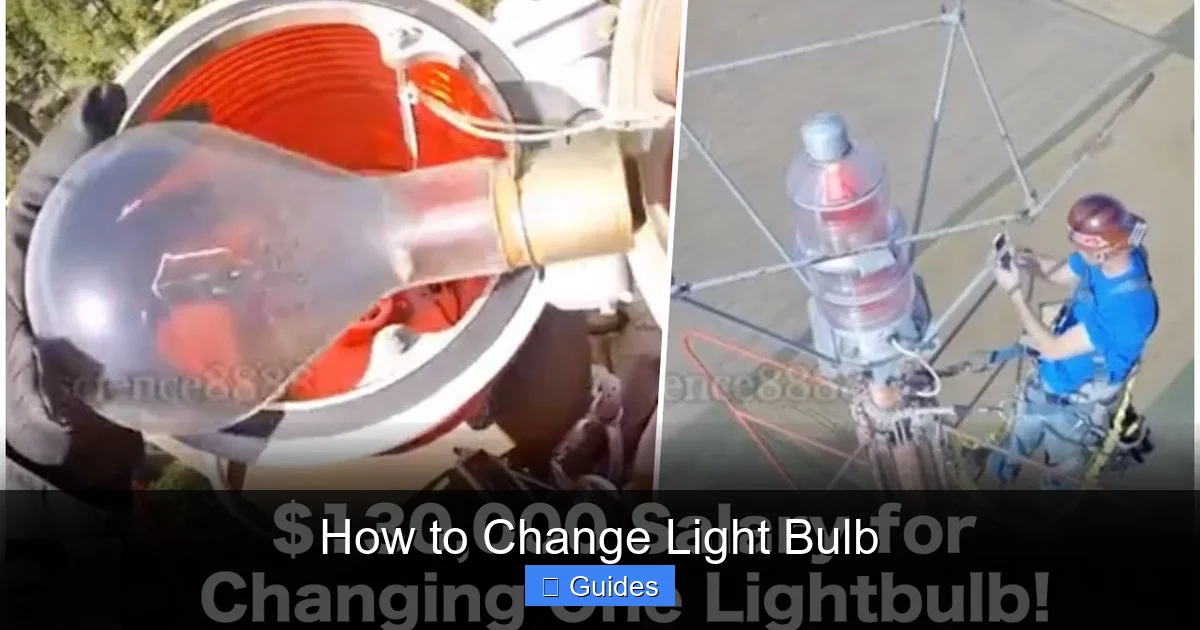
Visual guide about How to Change Light Bulb
Image source: i.ytimg.com
The Step-by-Step Process to Change a Light Bulb
With safety precautions in place and the right new bulb in hand, you’re ready for the main event: actually changing that light bulb!
Removing the Old Bulb Safely
This is often where accidents happen if not done carefully.
Inspecting the Socket
Before you install the new bulb, take a quick look at the socket.
Installing the New Bulb Correctly
Now for the exciting part – bringing light back!
Testing Your Work
The moment of truth!
Special Considerations for Different Fixtures
While the core principles remain the same, different types of fixtures might require a slightly different approach when you change light bulb.
Recessed Lighting: More Than Just a Bulb
Recessed lights (the ones flush with the ceiling) often have specific bulb types and retention mechanisms.
Enclosed Fixtures: Dealing with Covers and Gaskets
Bathroom vanity lights, ceiling lights with frosted globes, or outdoor fixtures often have sealed or enclosed covers.
Chandeliers and Delicate Fixtures
These can be intimidating due to their height and fragile nature.
Outdoor Lighting: Weatherproofing Matters
Outdoor lights are exposed to the elements, so proper sealing is vital.
Troubleshooting Common Issues & Advanced Tips
Sometimes, changing a light bulb isn’t quite as straightforward as it seems. Here’s how to handle a few common snags.
Bulb Not Lighting Up After Replacement
Don’t panic! It’s usually a simple fix.
Dealing with a Stuck or Broken Bulb
This is where safety precautions truly shine.
When to Call a Professional
While changing a light bulb is generally a DIY task, there are times when it’s best to call a licensed electrician:
Conclusion
And there you have it! Changing a light bulb, while seemingly mundane, is a skill that empowers you to keep your home bright, functional, and safe. By following these steps – especially prioritizing safety, correctly identifying your bulb, and handling each step with care – you’ll find that this once daunting task becomes second nature.
Remember, every time you successfully change a light bulb, you’re not just restoring light; you’re also taking a small but significant step in maintaining your home and gaining confidence in your DIY abilities. So go forth, embrace the light, and never let a burnt-out bulb dim your spirits again! With this comprehensive guide, you’re now equipped to tackle virtually any light bulb challenge that comes your way. Shine on!
🎥 Related Video: How to Change a Lightbulb
📺 Small & Simple Stuff
Frequently Asked Questions
How do I know what kind of replacement bulb to buy?
To choose the right replacement, first identify the old bulb’s type (incandescent, CFL, LED), its base (e.g., screw-in E26, pin-type GU10), and its desired brightness, which is measured in lumens. The old bulb often has this information printed on its base or glass.
Should I wear gloves when changing a light bulb?
Yes, wearing gloves is highly recommended. They protect your hands from potential cuts if a bulb breaks, provide a better grip, and prevent oils from your skin from transferring to new halogen or some LED bulbs, which can reduce their lifespan.
What’s the difference between wattage and lumens?
Wattage (W) measures the amount of energy a bulb consumes, while lumens (lm) measure its actual brightness. For modern, energy-efficient bulbs like LEDs, focusing on lumens will tell you how bright the bulb is, rather than wattage, which mainly indicates energy usage.
Can I change a light bulb without turning off the power?
While you might get away with it for a lamp that’s unplugged, it’s extremely dangerous to change any light bulb without first turning off the power at the wall switch and, ideally, the circuit breaker. This prevents electrical shock, which can be severe or even fatal.
How do I remove a broken bulb with the base stuck in the socket?
First and foremost, ensure the power is OFF at the circuit breaker. Wear thick gloves and safety glasses. You can try pressing half a raw potato or apple firmly into the broken base and twisting counter-clockwise. If that doesn’t work, carefully use needle-nose pliers to grip the metal edge of the base and twist it out.
What are the benefits of switching to LED bulbs?
LED bulbs offer numerous benefits: they are significantly more energy-efficient, lasting much longer than incandescent or CFL bulbs (often tens of thousands of hours). They also provide instant full brightness, come in a wide range of color temperatures, and do not contain mercury, making them a more environmentally friendly choice.
