


As an Amazon Associate, We earn from qualifying purchases.
Choosing the right light bulb isn’t about wattage anymore; it’s primarily about finding the ideal lumens for brightness and ensuring the correct base and shape for physical fit. Always prioritize lumens to achieve your desired illumination level, as watts only indicate energy consumption. Finally, check the bulb’s base type and dimensions to guarantee seamless compatibility with your fixture.
This is a comprehensive guide about what size light bulb do i need.
Key Takeaways
- Prioritize Lumens: Lumens indicate brightness, not wattage.
- Match the Base: Ensure the bulb base fits your fixture.
- Respect Wattage Limits: Never exceed the fixture’s maximum wattage rating.
- Select Bulb Shape: Choose shapes like A19 or BR30 for proper fit.
- Consider Color Temperature: Select Kelvin (K) for desired warmth or coolness.
- Check Dimmer Compatibility: Use only dimmable bulbs with dimmer switches.
Quick Answers to Common Questions
When I ask “what size light bulb do I need,” am I talking about physical fit or brightness?
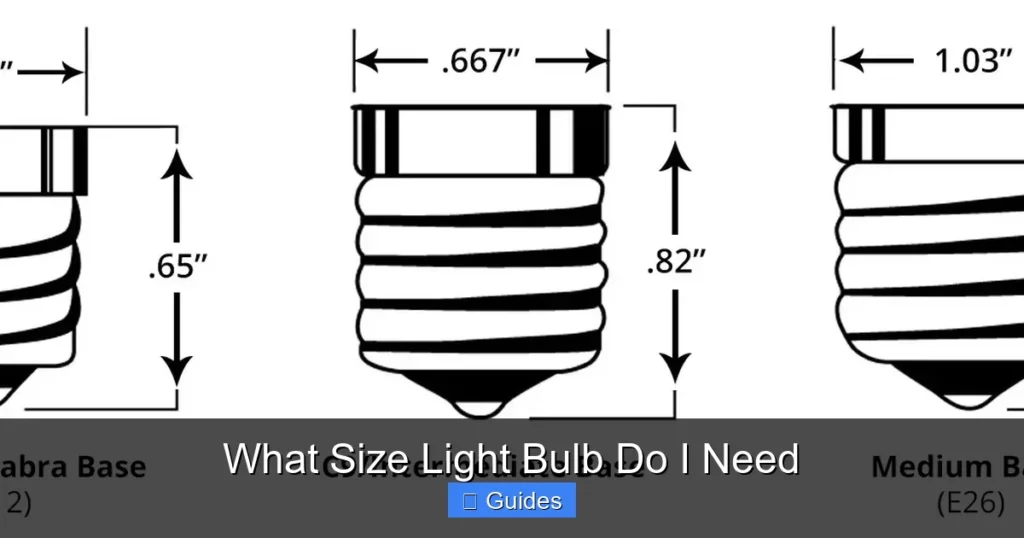
Great question! Most often, when people say “what size light bulb do I need,” they’re thinking about both the physical base size (like E26, E12) to fit the socket and the brightness level (lumens) they desire.
My new bulb doesn’t fit the lamp socket – what did I do wrong?
You likely picked the wrong base size! Sockets have specific connector types (standard E26, candelabra E12, or GU10), so always check your fixture or old bulb for the correct base when asking “what size light bulb do I need.”
How do I figure out how bright my bulb should be?
Forget watts for brightness; now we look at lumens! The higher the lumen number, the brighter the bulb, so decide “what size light bulb do I need” by matching the lumens to the desired light output for your space.
Can I put a higher wattage bulb in my lamp if it screws in?
No, never exceed the fixture’s maximum wattage rating, even if the bulb fits! Using a bulb with too high a wattage can overheat the fixture and create a fire hazard, so always check the sticker when considering “what size light bulb do I need.”
Beyond regular bulbs, are there other “sizes” or types to consider?
Absolutely! Beyond standard A-shape bulbs, you might need floodlights (PAR, BR), candelabra bulbs (B, C, F), or decorative globe bulbs (G), so remember to think about the bulb’s shape and purpose when deciding “what size light bulb do I need.”
🎥 Related Video: Standard Light Bulb – Size & Codes | Spec. Sense
📺 AMRE Supply
What does the A19 code describe? What is an E26 base? In this episode of Spec. Sense, Vance shows how to measure and how …
Frequently Asked Questions
What does “light bulb size” actually refer to?
“Light bulb size” can refer to several things: the physical dimensions (length and width), the shape (e.g., A19, BR30), and the type of base that screws or plugs into the fixture. It’s crucial to consider all these aspects to ensure compatibility and proper fit for your light bulb.
How do I determine the correct base size for my light bulb?
The base size refers to the part of the light bulb that connects to the fixture. For screw-in bulbs, the most common sizes are E26 (standard medium base) and E12 (candelabra base), and you can often find this indicated on the old bulb or the fixture itself. If you don’t have the old light bulb, you might need to measure the socket or consult the fixture’s specifications.
Are there different physical shapes and sizes of light bulbs, even if they have the same base?
Yes, absolutely. Many different light bulb shapes, like the classic “A-type” (A19) or floodlight shapes (BR30, PAR38), all come with the same E26 screw base. The specific shape and physical dimensions of a light bulb are important to ensure it fits inside shades, enclosures, or recessed cans without obstruction.
My fixture says “Max 60W.” Can I use a brighter LED light bulb?
Yes, you almost certainly can. The “Max 60W” warning refers to the heat generated by traditional incandescent bulbs, preventing overheating of the fixture. LED light bulbs consume significantly less wattage (e.g., a 10W LED can be as bright as a 60W incandescent) and produce much less heat, so a 10W LED providing 800 lumens (60W equivalent) is perfectly safe and brighter.
What do terms like A19, BR30, or MR16 mean when choosing a light bulb?
These are common industry codes that describe the physical shape and approximate diameter of the light bulb. A19 is the classic pear-shaped bulb, while BR30 and PAR38 are types of reflector or floodlight bulbs, often used in recessed lighting. MR16s are small, multi-faceted reflector bulbs common in track lighting or landscape applications.
How do I know if a new light bulb will physically fit into my fixture?
The best way to check for physical fit is to measure the height and width of your existing light bulb or the available space within your fixture or shade. Then, compare these measurements to the dimensions provided on the packaging or product specifications of the new light bulb you intend to purchase.
