


As an Amazon Associate, We earn from qualifying purchases.
Picking the right light bulb can feel overwhelming with all the options, but it doesn’t have to be! To figure out how do I know what light bulb I need, you should first check your fixture’s socket type and maximum wattage. Then, consider the desired brightness (lumens), the light’s color (Kelvin), and whether you want energy-efficient LEDs or smart features. This guide will walk you through each step, making your next bulb purchase simple and stress-free.
How Do I Know What Light Bulb I Need
Have you ever stood in the lighting aisle, staring at a dizzying array of light bulbs, feeling completely lost? You’re not alone. What used to be a simple choice between a 60-watt or 100-watt bulb has evolved into a complex decision involving lumens, Kelvin, base types, smart features, and various technologies. It can feel like you need a degree in lighting engineering just to replace a burnt-out bulb!
The good news is, understanding how do I know what light bulb I need doesn’t have to be complicated. This comprehensive guide is designed to cut through the jargon, providing you with practical, easy-to-understand information. We’ll break down all the essential factors, from the physical fit of the bulb to its light output and color, empowering you to confidently choose the perfect illumination for every corner of your home. Say goodbye to guesswork and hello to perfectly lit spaces!
So, let’s demystify the world of light bulbs together. By the end of this article, you’ll be able to answer the question, “how do I know what light bulb I need?” with absolute confidence, ensuring your home is always bathed in the ideal light for every occasion.
Key Takeaways
- Socket Type is Key: Always check your light fixture’s base type (e.g., E26, E12, GU10) and the bulb’s shape (A-type, MR, PAR) to ensure physical compatibility before anything else.
- Think Lumens, Not Watts: Brightness is measured in lumens. Forget comparing watts directly, as modern LEDs use far less wattage for the same or greater light output. Aim for appropriate lumens for the room’s function.
- Color Temperature Matters: Light color, measured in Kelvin (K), significantly impacts a room’s mood. Choose warm white (2700K-3000K) for cozy areas, cool white (3500K-4100K) for task lighting, and daylight (5000K-6500K) for vibrant, energizing spaces.
- LEDs are the Standard: Opt for LED bulbs for superior energy efficiency, longer lifespan, and often better dimming capabilities and smart features compared to older technologies like incandescent or CFLs.
- Check for Dimmability: If your fixture is on a dimmer switch, make sure the bulb you choose is explicitly labeled as “dimmable” to avoid flickering or damage.
- Match to Your Fixture’s Max Wattage: While lumens are for brightness, never exceed the maximum wattage listed on your light fixture, even with energy-efficient LEDs (though they rarely come close to incandescent limits).
- Consider Room Purpose & Aesthetics: The best bulb for you depends on what you’re doing in the room and how you want it to look and feel. Tailor your choices accordingly.
Quick Answers to Common Questions
What’s the most important thing to check when buying a light bulb?
The absolute most important thing is the socket type (e.g., E26, E12, GU10) to ensure the bulb physically fits your fixture. After that, check the maximum wattage allowed by the fixture.
What are lumens and why are they important?
Lumens measure a light bulb’s actual brightness, or how much visible light it produces. They are important because they tell you how bright a bulb will be, regardless of its energy consumption (watts).
What does “color temperature” mean for light bulbs?
Color temperature, measured in Kelvin (K), describes the hue of the light. Lower Kelvin numbers (2700K-3000K) produce warm, yellowish light, while higher numbers (5000K-6500K) produce cool, bluish-white “daylight” light.
Can I use any LED bulb in a dimmer switch?
No, not all LED bulbs are dimmable. You must specifically look for “dimmable” on the bulb’s packaging. Using a non-dimmable LED on a dimmer can cause flickering, buzzing, or prevent proper dimming.
Why are LEDs better than old incandescent bulbs?
LEDs are superior because they are far more energy-efficient, use significantly less power for the same brightness, last much longer (thousands of hours vs. hundreds), and produce less heat.
📑 Table of Contents
- 1. The Foundation: Understanding Socket Type and Bulb Shape
- 2. Brightness: Decoding Lumens, Not Watts
- 3. Light Color: Setting the Mood with Color Temperature
- 4. Energy Efficiency and Technology: The Modern Standard
- 5. Special Features and Applications: Going Beyond the Basics
- 6. Putting It All Together: Your Light Bulb Checklist
- Conclusion
1. The Foundation: Understanding Socket Type and Bulb Shape
Before you even think about brightness or color, the absolute first step in figuring out how do I know what light bulb I need is ensuring it physically fits into your fixture. This means checking the bulb’s base type (the part that screws or plugs in) and its overall shape.
Common Base Types: The Connection Point
The base of a light bulb is its electrical connector. There are many different types, but a few are incredibly common in homes:
- Edison Screw Bases (E-Type): These are the most prevalent. The “E” stands for Edison, and the number refers to the diameter of the base in millimeters.
- E26 (Medium/Standard): This is the classic screw-in base you find in most lamps, ceiling fixtures, and recessed lights in North America. When you think “regular light bulb,” this is usually it.
- E12 (Candelabra): Smaller than E26, these are common in chandeliers, decorative fixtures, nightlights, and some smaller accent lamps.
- E17 (Intermediate): Less common than E26 or E12, but occasionally found in some appliance bulbs (like microwaves) or older fixtures.
- Bayonet Bases (B-Type): Instead of screwing in, these bulbs have pins that push into a socket and then twist to lock. More common in Europe and some specialized applications in North America.
- Bi-Pin Bases (GU-Type): These have two pins that push into the socket and often twist or lock.
- GU10: Recognizable by its two stubby pins with flattened ends. Frequently used for track lighting and some recessed lighting, especially for spotlights.
- GU24: A “twist and lock” bi-pin base designed to prevent the use of traditional screw-in incandescent bulbs, often found in energy-efficient fixtures.
Pro Tip: The easiest way to know what base type you need is to look at the old bulb. If you don’t have it, look for markings on the fixture itself, usually near the socket.
Bulb Shapes: Form Follows Function
Beyond the base, the bulb’s overall shape also matters for aesthetics and fit within a fixture.
- A-Type (A19, A21): The classic “A” (Arbitrary) shape, resembling an upside-down pear. A19 is the most common size, A21 is slightly larger. These fit most standard fixtures.
- B/C-Type (B10, C7): Also known as “candle” or “flame tip” bulbs. They have a slender, often pointed shape, ideal for chandeliers and decorative wall sconces.
- MR (Multifaceted Reflector) – MR16: Small, directional bulbs, often with a flat face and short pins (like GU10). Used in track lighting, recessed lighting, and landscape lighting where focused light is needed.
- PAR (Parabolic Aluminized Reflector) – PAR20, PAR30, PAR38: Larger, more powerful directional bulbs. They come in different sizes, with PAR38 being common for outdoor floodlights or indoor recessed lights requiring a strong beam.
- BR (Bulged Reflector) – BR30, BR40: Similar to PAR bulbs but with a wider, softer light distribution. Ideal for recessed lighting in rooms where you want general, diffused light rather than a spotlight.
- G-Type (G25, G30): Globe-shaped bulbs, often used in vanity lights, decorative fixtures, or pendant lights where the bulb itself is visible. The number indicates the diameter in eighths of an inch.
Once you’ve determined the correct base and shape, you’re halfway to understanding how do I know what light bulb I need!
2. Brightness: Decoding Lumens, Not Watts
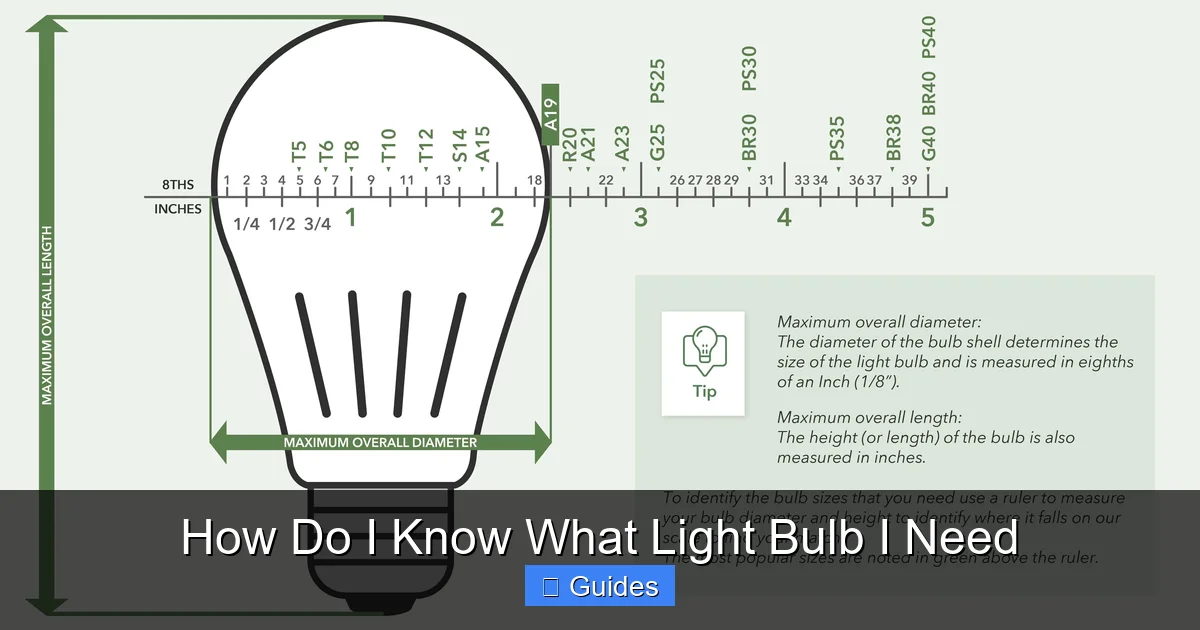
Visual guide about How Do I Know What Light Bulb I Need
Image source: i1.wp.com
This is where many people get confused, still clinging to the old “60-watt bulb” mentality. Modern lighting has shifted from measuring power consumed (watts) to measuring actual light output (lumens).
Deciphering Lumens: The True Measure of Brightness
A lumen is the unit of luminous flux, which basically means it’s how much visible light a bulb produces. The higher the lumen number, the brighter the bulb. This is crucial because different bulb technologies (incandescent, CFL, LED) achieve the same brightness with vastly different wattages.
Wattage Equivalence: Bridging the Old and New
To help consumers transition, manufacturers often provide “wattage equivalence” on LED packaging. This tells you what old incandescent bulb brightness the LED compares to.
- 40-watt incandescent equivalent: ~450 lumens
- 60-watt incandescent equivalent: ~800 lumens
- 75-watt incandescent equivalent: ~1100 lumens
- 100-watt incandescent equivalent: ~1600 lumens
When you ask yourself, “how do I know what light bulb I need for brightness?” always look at the lumens first.
How Many Lumens Do You Need? Room-Specific Examples
The ideal lumen output depends heavily on the room’s function and size.
- Bedrooms: 800-2,000 lumens (total, across multiple fixtures) for general ambient light, with brighter task lighting as needed.
- Living Rooms: 1,500-4,000 lumens (total) for a mix of ambient and accent lighting.
- Kitchens: 3,000-6,000 lumens (total) for bright, functional task lighting.
- Bathrooms: 2,000-4,000 lumens (total), ensuring good light around the vanity mirror.
- Dining Rooms: 1,000-2,500 lumens (total) for atmospheric lighting, often dimmable.
Consider Layers of Light: Most rooms benefit from a combination of general (ambient), task, and accent lighting. Don’t rely on just one overhead fixture!
3. Light Color: Setting the Mood with Color Temperature
Beyond how bright a bulb is, its color or “warmth” plays a huge role in the ambiance of a room. This is measured on the Kelvin (K) scale.
The Kelvin Scale Explained
The Kelvin scale describes the color appearance of light, from very warm (reddish-orange) to very cool (bluish-white).
- Lower Kelvin numbers (2000K-3000K): Produce “warm” light, similar to candlelight or traditional incandescents.
- Mid-range Kelvin numbers (3500K-4100K): Are more neutral, often called “cool white” or “neutral white.”
- Higher Kelvin numbers (5000K-6500K): Emit “cool” or “daylight” light, resembling natural midday sunlight.
Common Color Temperatures: Finding Your Vibe
When thinking about how do I know what light bulb I need for color, here’s a quick guide:
- Warm White (2700K-3000K):
- Feeling: Cozy, inviting, relaxed, traditional.
- Best for: Bedrooms, living rooms, dining rooms, family rooms, anywhere you want a comfortable, intimate atmosphere. Mimics the glow of old incandescent bulbs.
- Cool White / Neutral White (3500K-4100K):
- Feeling: Clean, crisp, alert, modern.
- Best for: Kitchens, bathrooms, home offices, workshops, utility rooms. Good for task lighting without being overly stark.
- Daylight (5000K-6500K):
- Feeling: Energizing, vibrant, bright, stimulating.
- Best for: Garages, workshops, laundry rooms, basements, display areas, or anywhere you need maximum visibility and true color rendition. Can feel harsh in living spaces for some.
Personal Preference: While there are general recommendations, color temperature is highly subjective. What feels “just right” for one person might be too warm or too cool for another. Experiment a little!
4. Energy Efficiency and Technology: The Modern Standard
The technology inside your bulb impacts its energy consumption, lifespan, and even special features. To understand how do I know what light bulb I need for long-term value, consider its technology.
LED: The Modern Standard
LED (Light Emitting Diode) bulbs are, without a doubt, the dominant technology today, and for good reason:
- Energy Efficiency: They use significantly less electricity than incandescent or even CFL bulbs for the same light output, leading to substantial energy savings on your utility bill.
- Long Lifespan: LEDs can last 15,000 to 50,000 hours or more, meaning you won’t be changing bulbs nearly as often.
- Durability: Being solid-state lighting, they are more resistant to breakage from drops or vibrations compared to glass filament bulbs.
- Instant On: Unlike some CFLs, LEDs provide instant full brightness without a warm-up period.
- Versatility: Available in a vast array of shapes, sizes, color temperatures, and often include dimmable or smart features.
Other Technologies (Briefly):
While still available, incandescent and CFL bulbs are less common now.
- Incandescent: The traditional bulb. Inexpensive to buy, but very inefficient and short-lived. Phasing out in many regions.
- CFL (Compact Fluorescent Lamp): More efficient than incandescent but less so than LED. Often contain mercury and have a warm-up period.
- Halogen: A type of incandescent bulb that offers slightly better efficiency and a whiter light than traditional incandescents, but still runs very hot and has a shorter lifespan than LEDs.
For most home applications, the answer to how do I know what light bulb I need today is almost always an LED.
Smart Bulbs and Dimmable Features
Modern LEDs also bring exciting features:
- Dimmability: If your fixture is on a dimmer switch, always ensure the bulb packaging explicitly states “dimmable.” Not all LEDs are dimmable, and using a non-dimmable bulb on a dimmer can cause flickering, buzzing, or damage.
- Smart Bulbs: These connect to your home Wi-Fi or a hub, allowing you to control them via an app, voice assistant (like Alexa or Google Assistant), or even automate schedules. Many offer tunable white light (changing color temperature) or full RGB color options.
5. Special Features and Applications: Going Beyond the Basics
Sometimes, you need a bulb that does more than just shine a basic light. When thinking about how do I know what light bulb I need, consider these specialized needs.
Dimmability: Smooth Transitions
As mentioned, if you have a dimmer switch, a dimmable bulb is a must. But it’s not just about avoiding flicker; good dimmable LEDs offer smooth transitions from bright to dim, often “dimming to warm” (where the color temperature gets warmer as the light dims, mimicking traditional incandescents). Check for compatibility with your specific dimmer switch if you encounter issues.
Smart Home Integration: The Connected Experience
Smart bulbs offer unparalleled flexibility. You can:
- Change brightness and color temperature remotely.
- Set schedules for lights to turn on/off.
- Integrate with security systems or motion sensors.
- Create different “scenes” for various activities (e.g., “movie night,” “reading”).
When considering a smart bulb, think about your existing smart home ecosystem (e.g., Philips Hue, Lutron Caséta, Google Home, Apple HomeKit) to ensure compatibility.
Specialty Bulbs for Specific Needs
- 3-Way Bulbs: These bulbs (typically LED equivalents now) offer three levels of brightness (e.g., 50/100/150 watts equivalent) when used in a compatible 3-way lamp socket. Look for specific lumen ratings like “500/1000/1500 lumens.”
- Outdoor/Wet-Rated Bulbs: For outdoor fixtures, make sure the bulb is rated for outdoor or wet conditions, especially if exposed to rain or dampness. These are often PAR-type bulbs.
- Appliance Bulbs: Smaller, sometimes more durable bulbs designed for specific uses like refrigerators, ovens, or microwaves. Check the exact base and temperature rating.
- Germicidal/UV Bulbs: Used for sterilization, these produce UV-C light and are not for general illumination or direct exposure.
- Plant Grow Lights: Provide specific spectrums of light optimized for plant growth, often with a purple or pinkish hue.
6. Putting It All Together: Your Light Bulb Checklist
To consolidate everything and confidently answer how do I know what light bulb I need, here’s a simple checklist to follow:
1. Read the Fixture’s Requirements:
- Socket Type: E26, E12, GU10, etc. (Check the old bulb or the fixture itself).
- Maximum Wattage: Never exceed this. Even with LEDs that draw much less power, it’s a safety precaution for the fixture’s wiring.
- Enclosed Fixture Rating: If the bulb will be in a fully enclosed fixture, some LEDs require an “enclosed fixture rated” label to prevent overheating and premature failure.
2. Consider the Room’s Purpose and Existing Lighting:
- Function: What activities happen here? Task lighting (kitchens, offices), ambient lighting (living rooms, bedrooms), or accent lighting (displaying artwork)?
- Desired Brightness (Lumens): How much light do you really need? Refer to the lumen guidelines.
- Desired Color Temperature (Kelvin): What mood are you trying to create? Warm, neutral, or cool?
- Dimmability: Do you need to adjust the brightness? Is your fixture on a dimmer?
3. Don’t Forget the Aesthetics and Special Features:
- Bulb Shape: Does it fit well and look good in the fixture? (A-type, Globe, Candelabra, etc.).
- Finish: Clear, frosted, or decorative filament (Edison style)?
- Smart Features: Do you want app control, voice control, or color-changing capabilities?
- Energy Efficiency: Opt for LEDs for long-term savings and environmental benefits.
By systematically going through these points, you’ll be well-equipped to select the perfect light bulb for any application.
Conclusion
Gone are the days when buying a light bulb was a no-brainer. But as you’ve seen, with a little knowledge, figuring out how do I know what light bulb I need is completely manageable. By focusing on four key aspects—socket type/shape, lumens for brightness, Kelvin for color, and LED technology for efficiency—you can confidently navigate the lighting aisle.
Remember to always start with the physical fit and maximum wattage of your fixture, then tailor your choices to the specific needs and desired ambiance of each room. Embrace the versatility and energy savings of modern LED bulbs, and don’t be afraid to experiment with different color temperatures to find what truly feels right for your home. You’re now a light bulb expert – go illuminate your world!
Frequently Asked Questions
How do I know what light bulb I need if I don’t have the old bulb or fixture info?
If you don’t have the old bulb, carefully inspect the light fixture itself for any labels or stamps near the socket. These often list the required base type (e.g., E26) and maximum wattage. If no info is available, consider taking a photo of the socket or fixture to a hardware store for advice.
What’s the difference between a PAR bulb and a BR bulb?
Both PAR (Parabolic Aluminized Reflector) and BR (Bulged Reflector) bulbs are types of reflector bulbs often used in recessed lighting. PAR bulbs typically provide a more focused, intense beam of light, ideal for spotlights, while BR bulbs offer a wider, softer light distribution for more general illumination.
Is it okay to put a higher wattage LED bulb into a fixture rated for a lower incandescent wattage?
Yes, as long as you respect the *actual* wattage drawn by the LED, not its “incandescent equivalent.” For example, an 8W LED (equivalent to 60W incandescent) is perfectly safe in a fixture rated for “Max 60W Incandescent” because the LED only draws 8 watts, well below the limit.
Why do some LED bulbs flicker or hum with my dimmer switch?
Flickering or humming usually occurs because the LED bulb is not compatible with your dimmer switch. Many older dimmer switches were designed for the higher load of incandescent bulbs. You may need to replace your dimmer with an LED-compatible dimmer switch, or try a different brand of dimmable LED bulb.
Can I mix different color temperature bulbs in the same room?
While generally not recommended for primary light sources in the same fixture, you can strategically mix color temperatures in a room using different light sources. For example, warm white ambient lighting from a lamp combined with a slightly cooler white for a specific task light can work well and add depth to a room’s lighting design.
Are smart bulbs worth the extra cost?
Smart bulbs offer significant convenience and flexibility, allowing you to control lighting remotely, change colors and brightness, set schedules, and integrate with smart home systems. If you value these features and enjoy customizing your home’s ambiance, the added cost can be well worth it for the enhanced control and energy management they provide.
