


As an Amazon Associate, We earn from qualifying purchases.
A Type B light bulb is distinctively shaped like a blunt-tipped candle flame, offering a decorative and elegant aesthetic. These bulbs are commonly used in chandeliers, sconces, and other ornamental fixtures where their unique form enhances the overall design. Understanding what is a Type B light bulb helps you select the perfect lighting to elevate your home’s ambiance with both style and efficiency.
Have you ever found yourself staring at a dazzling chandelier or an elegant wall sconce, admiring its glow, and then wondered about the specific light bulbs that bring it to life? It’s easy to get lost in the sea of shapes, sizes, and technical jargon when it comes to lighting. But fear not, because today we’re shining a spotlight on a particularly charming and often misunderstood member of the bulb family: the Type B light bulb.
These aren’t your average, everyday bulbs. A Type B light bulb possesses a unique elegance that sets it apart. It’s designed not just to illuminate but also to contribute significantly to the aesthetic of your lighting fixtures. If you’ve ever wanted to truly understand what makes your decorative lighting pop, learning about the Type B light bulb is your first step. We’ll cover everything from its distinctive appearance to its modern iterations and how to choose the perfect one for your home.
So, let’s embark on this illuminating journey together. By the end of this guide, you’ll be an expert on the Type B light bulb, confident in selecting the right one to enhance the beauty and functionality of your cherished light fixtures. Get ready to add a touch of sophistication and clarity to your lighting choices!
Key Takeaways
- Distinctive Shape: A Type B light bulb is characterized by its blunt-tipped, flame-like or torpedo shape, making it highly decorative.
- Common Applications: These bulbs are primarily used in decorative lighting fixtures such as chandeliers, sconces, wall lights, and enclosed lamps where their elegant form is visible.
- Base Compatibility: While often associated with candelabra (E12) bases, Type B light bulbs can also come with medium (E26) bases, so checking your fixture’s requirements is crucial.
- Ambiance Enhancer: The graceful design of a Type B light bulb contributes significantly to the aesthetic appeal and overall ambiance of a room, often used for accent or mood lighting.
- Modern Evolution: Originally incandescent, Type B bulbs are now widely available as energy-efficient LEDs, offering the same beautiful shape with significantly lower energy consumption and longer lifespan.
- Choosing the Right One: When selecting a Type B light bulb, consider its base type, wattage/lumens, color temperature, and dimmability to match your fixture and desired lighting effect.
Quick Answers to Common Questions
What is the main characteristic of a Type B light bulb?
The main characteristic of a Type B light bulb is its distinctive blunt-tipped, torpedo, or candle flame shape, which makes it ideal for decorative lighting fixtures.
Are Type B and C bulbs the same?
While very similar and often used interchangeably, Type B bulbs typically have a blunt or rounded tip, whereas Type C (candle) bulbs usually have a sharper, more defined point, more closely mimicking a burning candle.
What type of base does a Type B light bulb commonly use?
A Type B light bulb most commonly uses an E12 candelabra base, which is smaller than a standard household base, but E26 (medium) base options also exist.
Can I use an LED Type B light bulb in an old chandelier?
Yes, you can almost always replace old incandescent Type B bulbs with LED Type B light bulbs in an old chandelier, provided you match the base type (e.g., E12) and consider if a dimmer upgrade is needed for optimal dimmable LED performance.
What is the best color temperature for a Type B light bulb in a living room?
For a living room, a warm white color temperature (2700K-3000K) is generally best for a Type B light bulb, as it creates a cozy, inviting, and traditional ambiance.
📑 Table of Contents
Decoding Light Bulb Shapes: What Exactly is a Type B Light Bulb?
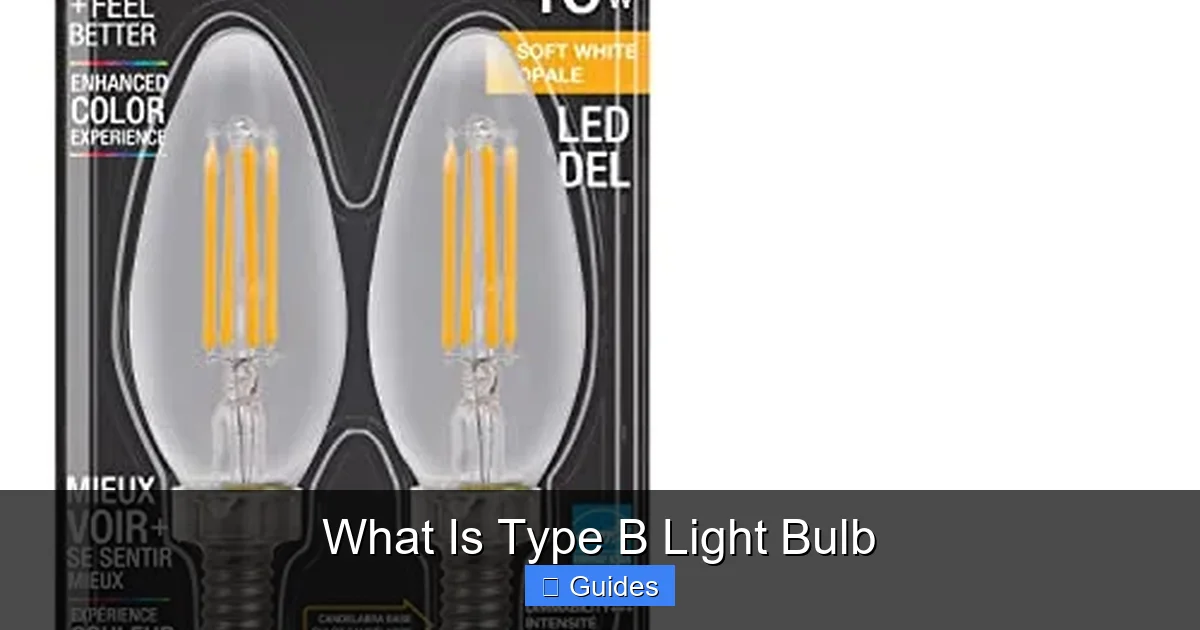
When we talk about what is a Type B light bulb, we’re primarily referring to its distinctive physical shape. Unlike the common pear-shaped A-type bulb or the round globe bulb, the Type B light bulb has a slender, elegant form that tapers to a blunt, rounded tip. Think of a small, decorative candle flame, but one that is more torpedo-like or conical rather than sharply pointed.
The Candlestick Connection
Historically, many light bulbs were designed to mimic the look of traditional flame sources, such as candles. The Type B light bulb is a perfect example of this design philosophy. Its shape is specifically crafted to evoke the graceful appearance of a candle, making it a natural fit for fixtures that traditionally held candles, like chandeliers and candelabras. This heritage is part of its charm and why it remains a popular choice for decorative lighting.
Key Characteristics of Type B Bulbs
The most defining characteristic of a Type B light bulb is, without a doubt, its shape. It typically has a narrow base that gradually widens before tapering off to a blunt, rounded or slightly pointed tip. This isn’t just for looks; its slender profile allows it to fit into more compact or ornate fixtures where larger, rounder bulbs simply wouldn’t work. While often associated with smaller candelabra bases (E12), a Type B light bulb can also be found with a standard medium base (E26) for certain applications. The key takeaway here is the specific form factor.
Differentiating B from C (Candle) and F (Flame Tip)
It’s easy to get confused with similar-looking bulbs, as many decorative bulbs share slender profiles. Let’s clarify:
- Type B Light Bulb: As we’ve discussed, this has a blunt or slightly rounded tip, like a torpedo or a small cone.
- Type C (Candle) Bulb: This is very similar to a Type B but tends to be slightly more slender and often has a sharper, more defined point, truly mimicking a burning candle. Sometimes, Type B and Type C are used interchangeably in casual conversation because their applications overlap significantly, but technically, the tip distinguishes them.
- Type F (Flame Tip) Bulb: This bulb takes the candle resemblance a step further. It has a distinctly twisted or bent tip, designed to look even more like a dancing flame. This adds an extra layer of visual interest to highly decorative fixtures.
While the differences can be subtle, understanding what is a Type B light bulb specifically means recognizing its elegant, blunt-tipped form.
Where Type B Bulbs Shine Brightest: Ideal Applications
Visual guide about What Is Type B Light Bulb
Image source: m.media-amazon.com
The beauty of a Type B light bulb isn’t just in its shape; it’s how that shape integrates with and enhances specific lighting fixtures. Because of their slender and elegant design, Type B bulbs are predominantly chosen for decorative purposes where the bulb itself is often visible.
Chandeliers and Decorative Fixtures
This is arguably the most common and iconic home for a Type B light bulb. Imagine a grand chandelier; its arms extend gracefully, often holding multiple smaller sockets. A Type B light bulb fits perfectly into these designs, providing light while also contributing to the fixture’s overall aesthetic appeal. Their slender profile prevents them from looking bulky or out of place, maintaining the delicate balance of the chandelier’s design. They create that classic, sparkling effect that chandeliers are known for.
Sconces and Wall Lighting
Wall sconces, especially those designed with a more traditional or ornamental flair, are another prime location for Type B light bulbs. Whether flanking a fireplace, illuminating a hallway, or adding accent lighting in a living room, a Type B light bulb in a sconce can provide a soft, inviting glow while looking perfectly at home within the fixture. Their compact size allows them to be used in more enclosed or vertically oriented fixtures without protruding awkwardly.
Enclosed Fixtures and Smaller Lamps
Sometimes, you have a smaller lamp or an enclosed fixture, such as certain types of enclosed porch lights or decorative table lamps, where a standard A-type bulb would simply be too large. The narrower profile of a Type B light bulb makes it an excellent solution for these spaces. It can provide adequate illumination without pushing against the shade or housing, ensuring proper fit and often better heat dissipation in confined spaces.
Enhancing Ambiance in Any Room
Beyond specific fixture types, a Type B light bulb is fundamentally an ambiance enhancer. Because of its decorative nature, it’s often used where the light quality and the visual appeal of the bulb itself are important. Think about creating a cozy dining room atmosphere, a welcoming entryway, or a sophisticated bedroom. The elegant glow and refined shape of a Type B light bulb contribute significantly to setting the desired mood and feel of a space. It’s less about bright, functional task lighting and more about creating an inviting and visually pleasing environment.
Beyond the Shape: Understanding Type B Bulb Specifications
Knowing what is a Type B light bulb by its shape is a great start, but there’s more to consider when choosing the right one. Like all light bulbs, Type B bulbs come with various specifications that impact their performance and suitability for different uses.
Base Types: E12 (Candelabra) vs. E26 (Standard)
The base of the bulb is crucial for compatibility with your fixture.
- E12 (Candelabra Base): This is by far the most common base for a Type B light bulb. The “E” stands for Edison screw, and “12” indicates the diameter of the base in millimeters. E12 bases are smaller and are typically found in chandeliers, sconces, and smaller decorative lamps.
- E26 (Medium or Standard Base): While less common for the classic Type B shape, you can find Type B light bulbs with an E26 base. The E26 is the standard screw-in base for most everyday light bulbs in North America (26mm diameter). If your fixture has a standard base but you want the elegant look of a Type B, these options exist.
Always check the existing bulb or your fixture’s specifications to ensure you purchase a Type B light bulb with the correct base.
Wattage and Lumens: Brightness Explained
- Wattage (W): Traditionally, wattage indicated how much energy an incandescent bulb consumed and, by extension, its brightness. For modern LED bulbs, wattage still indicates energy consumption, but it’s no longer a direct measure of brightness. An LED Type B light bulb will use significantly fewer watts than an incandescent one for the same light output.
- Lumens (lm): This is the true measure of a light bulb’s brightness. When choosing a Type B light bulb, look at the lumen output to determine how bright it will be. For chandeliers and decorative fixtures, you might want a lower lumen count per bulb (e.g., 200-400 lumens) spread across multiple bulbs to create a softer, diffused glow, rather than one intensely bright source.
Color Temperature: Setting the Mood
Color temperature, measured in Kelvins (K), describes the perceived warmth or coolness of the light emitted.
- Warm White (2700K-3000K): This emits a yellowish-white light, similar to traditional incandescent bulbs. It’s excellent for creating a cozy, inviting, and traditional atmosphere, perfect for dining rooms, bedrooms, and living areas where Type B light bulbs are often found.
- Cool White (3500K-4100K): This light has a more neutral, whiter appearance. It can be good for kitchens or bathrooms, but less common for decorative Type B applications, as it can feel less intimate.
- Daylight (5000K-6500K): This mimics natural daylight, appearing very bright and blue-white. It’s rarely used for decorative Type B light bulb applications, as it tends to be too stark for ambiance.
For most Type B light bulb applications, especially in home decorative settings, a warm white color temperature is highly recommended to enhance the elegant aesthetic.
Dimmability: Control Your Lighting
Many decorative fixtures benefit greatly from dimmable light bulbs, allowing you to adjust the brightness to suit different moods or occasions. If your fixture is on a dimmer switch, make sure to purchase a Type B light bulb that is explicitly labeled as “dimmable.” Using non-dimmable bulbs on a dimmer switch can lead to flickering, buzzing, or premature bulb failure. Investing in dimmable LED Type B light bulbs provides the ultimate flexibility for ambiance control.
The Evolution of Type B: From Incandescent to LED
The journey of the Type B light bulb reflects the broader evolution of lighting technology. What started as a simple, glowing filament has transformed into highly efficient, long-lasting illumination.
Incandescent Type B: The Traditional Glow
For decades, the incandescent Type B light bulb was the standard. It produced light by heating a filament until it glowed, offering that familiar warm, yellowish light. These bulbs were beautiful and perfectly matched the traditional aesthetic of the fixtures they powered. However, they were energy-inefficient, converting most of their energy into heat rather than light, and had a relatively short lifespan. Despite their charm, their environmental and cost impact led to their gradual phase-out.
CFL Type B: Energy-Saving (But Less Common)
Compact Fluorescent Lamps (CFLs) emerged as an energy-efficient alternative to incandescents. While CFLs came in various shapes, the Type B light bulb form factor was less common and often less aesthetically pleasing. CFLs require a brief warm-up period to reach full brightness, and their light quality, particularly in early models, wasn’t always as desirable as incandescent or LED. Plus, the spiraled glass inside wasn’t as elegant as the smooth shape of traditional Type B bulbs. For these reasons, CFL Type B bulbs never gained widespread popularity in decorative fixtures.
LED Type B: The Modern Champion
Today, the LED (Light Emitting Diode) Type B light bulb is the undisputed king. LED technology has revolutionized lighting, offering incredible energy efficiency, exceptionally long lifespans, and excellent light quality. Modern LED Type B light bulbs are designed to perfectly replicate the classic blunt-tipped candle flame shape, often with filaments that mimic the look of traditional incandescents for a “vintage” feel.
Why LED Type B is the Smart Choice Today
Choosing an LED Type B light bulb offers numerous advantages:
- Energy Efficiency: They use up to 90% less energy than incandescent bulbs for the same brightness, leading to significant savings on your electricity bill.
- Long Lifespan: LED Type B light bulbs can last for 15,000 to 50,000 hours or more, meaning you won’t be changing bulbs in your chandelier nearly as often. This is a huge convenience, especially for hard-to-reach fixtures.
- Durability: LEDs are solid-state devices and are much more robust than delicate incandescent filaments or glass CFL tubes.
- Instant On: Unlike some CFLs, LED Type B light bulbs provide full brightness instantly.
- Cool Operation: They produce very little heat, which is safer and helps keep your rooms cooler.
- Versatility: Available in a wide range of color temperatures and dimmable options, allowing for precise control over your lighting ambiance.
Upgrading your decorative fixtures with LED Type B light bulbs is a smart move that combines classic aesthetics with modern performance.
Choosing the Right Type B Bulb: A Practical Guide
Now that you’re well-versed in what is a Type B light bulb and its characteristics, let’s walk through the practical steps to choose the perfect one for your home. Making the right choice ensures both beauty and functionality.
Check Your Fixture’s Requirements
This is the most critical first step. Before you even think about buying, look at your existing bulbs or the fixture itself.
- Base Type: Is it an E12 candelabra base or an E26 standard base? This is non-negotiable for compatibility.
- Maximum Wattage: Your fixture will have a sticker indicating the maximum wattage it can safely handle. While LED Type B light bulbs use very little wattage, it’s still good practice to be aware of this limit, especially if you’re replacing older incandescents.
- Physical Size: Measure the space inside the fixture or shade. While Type B bulbs are slender, some fixtures are very tight. Ensure the bulb’s length and diameter will fit without touching the sides or protruding too much.
Consider the Desired Ambiance
What kind of mood are you trying to create?
- Brightness (Lumens): For a chandelier with multiple sockets, you might choose lower lumen bulbs (e.g., 200-300 lumens per bulb) to create a gentle sparkle. For a single sconce meant to provide more general illumination, you might go slightly higher (e.g., 400-500 lumens). Remember, you can use several lower lumen bulbs to achieve a lovely, diffused light without harshness.
- Color Temperature (Kelvin): As discussed, warm white (2700K-3000K) is almost always the best choice for Type B light bulb applications in decorative fixtures, as it enhances warmth and coziness.
Prioritize Energy Efficiency
Unless you have a very specific reason not to, always opt for LED Type B light bulbs. The long-term savings on energy bills and the convenience of not having to replace them often far outweigh any initial price difference. Plus, you’re making an environmentally friendly choice.
Don’t Forget Dimmer Compatibility
If your fixture is controlled by a dimmer switch, make absolutely certain that the Type B light bulb you choose is marked as “dimmable.” Modern LED dimmers are also often required for optimal performance with LED bulbs, as older incandescent dimmers might not be fully compatible.
A Quick Checklist for Your Next Purchase
- Shape: Blunt-tipped candle/torpedo (Type B).
- Base: E12 (candelabra) or E26 (medium) – match your fixture.
- Brightness: Lumens appropriate for desired effect.
- Color Temperature: Warm white (2700K-3000K) for ambiance.
- Technology: LED for efficiency and longevity.
- Dimmable: Yes, if your fixture uses a dimmer switch.
By following these simple steps, you’ll confidently select the perfect Type B light bulb to bring beauty and light to your home.
Conclusion
The Type B light bulb, with its elegant, blunt-tipped candle flame shape, is more than just a source of light; it’s a design element in its own right. From gracing the arms of majestic chandeliers to providing a gentle glow in wall sconces, its unique form perfectly complements decorative fixtures, enhancing the overall aesthetic and ambiance of any room.
We’ve explored what makes a Type B light bulb distinctive, its ideal applications, and the essential specifications you need to consider – from base types and brightness to color temperature and dimmability. We also journeyed through its evolution, highlighting why modern LED Type B light bulbs are the superior choice for energy efficiency, longevity, and consistent performance.
So, the next time you look at a beautiful light fixture, you’ll not only appreciate its design but also understand the specific role of the graceful Type B light bulb within it. Empowered with this knowledge, you can confidently choose the perfect Type B bulbs to illuminate your space with style, efficiency, and a touch of timeless elegance. Happy lighting!
Frequently Asked Questions
What does “Type B” mean for a light bulb?
In lighting, “Type B” refers to the specific physical shape of a light bulb. It describes a bulb that has a slender, tapered body with a blunt or rounded tip, often resembling a small, elegant candle flame or a torpedo shape.
Where are Type B light bulbs most commonly used?
Type B light bulbs are most commonly found in decorative lighting fixtures where the bulb itself is visible and contributes to the aesthetic. This includes chandeliers, wall sconces, candelabras, and certain ornamental enclosed lamps.
Are Type B light bulbs energy efficient?
Modern LED Type B light bulbs are highly energy efficient, using significantly less electricity than traditional incandescent versions while providing the same or better light output. If you’re using incandescent Type B bulbs, they are not energy efficient.
Can I dim a Type B LED light bulb?
Yes, many LED Type B light bulbs are designed to be dimmable. However, it is crucial to check the product packaging for “dimmable” compatibility and ensure you have a compatible dimmer switch designed for LED bulbs.
What’s the difference between lumens and wattage for Type B bulbs?
Wattage measures the amount of energy a Type B bulb consumes, while lumens measure its actual brightness. For modern LED Type B bulbs, always look at lumens to gauge brightness, as their wattage is very low compared to incandescent bulbs for the same light output.
How long do LED Type B light bulbs last?
LED Type B light bulbs are known for their exceptional longevity. They typically last anywhere from 15,000 to 50,000 hours or more, which is many times longer than traditional incandescent bulbs, meaning fewer replacements and less maintenance.
