


As an Amazon Associate, We earn from qualifying purchases.
Have you ever stopped to consider how do you make a light bulb? The journey from raw materials to a glowing lamp is a marvel of engineering. It involves carefully drawing a hair-thin tungsten filament, enclosing it in a precisely shaped glass bulb with an inert gas or vacuum, and attaching it to a base that connects to electricity. This intricate process combines historical ingenuity with modern manufacturing precision, bringing light to our world.
Have you ever looked at a simple light bulb and truly wondered about the magic inside? That warm, inviting glow, so ubiquitous in our daily lives, often feels like a given. But the journey from a collection of raw materials to that brilliant illumination is nothing short of fascinating, a testament to human ingenuity and persistent experimentation. It’s a process that marries delicate materials with precise engineering, all to harness the fundamental principle of creating light from electricity.
For many, the name Thomas Edison immediately springs to mind when thinking about the light bulb. While he certainly played a monumental role in perfecting a commercially viable and long-lasting incandescent bulb, the story of how do you make a light bulb actually stretches back much further, involving numerous brilliant minds contributing to its evolution. But what exactly goes into crafting this everyday marvel? What are the individual components, and how do they come together to produce light safely and efficiently? Let’s peel back the layers and uncover the intricate steps involved in making a light bulb.
This article will guide you through the captivating world of light bulb manufacturing, focusing primarily on the traditional incandescent bulb, which laid the foundation for all modern lighting. We’ll explore the essential components, delve into the step-by-step assembly process, and even touch upon the scientific principles that make it all work. So, get ready to shed some light on the question: how do you make a light bulb?
Key Takeaways
- The Filament is Key: The heart of a traditional light bulb is a thin tungsten filament, chosen for its high melting point and resistance, which glows incandescently when heated by an electric current.
- Vacuum or Inert Gas Protection: To prevent the filament from burning out quickly (oxidizing), the glass bulb is either evacuated to a vacuum or filled with inert gases like argon or nitrogen.
- Historical Innovation: The development of the practical incandescent light bulb, notably by Edison, was a result of countless experiments with filament materials, vacuum technology, and sealing techniques.
- Precision Manufacturing: Making a light bulb is an intricate process involving precise steps like drawing tungsten wire, blowing and sealing glass, evacuating and gas-filling the bulb, and securely attaching the base.
- Basic Components: Every traditional light bulb consists of a filament, a glass envelope, lead-in wires, a support wire, a glass mount, and a base with electrical contacts.
- Beyond Incandescent: While this guide focuses on traditional bulbs, the principles of controlling light through electricity have evolved into modern solutions like halogen, fluorescent, and LED technologies.
Quick Answers to Common Questions
What is the most important component of an incandescent light bulb?
The most important component is the filament, typically made of tungsten. This is the part that heats up and glows, producing the light.
Why is there a vacuum or inert gas inside a light bulb?
A vacuum or inert gas (like argon or nitrogen) is used to prevent the hot tungsten filament from quickly oxidizing and burning out when exposed to oxygen in the air. It significantly extends the bulb’s lifespan.
What material is commonly used for the filament and why?
Tungsten is commonly used for the filament because it has an extremely high melting point, allowing it to get intensely hot and glow brightly without melting, and it’s strong enough to be drawn into a very fine wire.
How does the light bulb connect to electricity?
The light bulb connects to electricity via its metal screw-in base (or bayonet base). Lead-in wires inside the bulb connect the filament to the base’s tip contact and threaded shell, completing the electrical circuit when screwed into a socket.
Do modern LED bulbs have filaments?
No, modern LED bulbs do not have filaments. They produce light through a completely different process called electroluminescence, where an electric current passes through a semiconductor material (a diode) to emit light.
📑 Table of Contents
The Core Idea: Light Through Resistance
At its heart, the incandescent light bulb operates on a wonderfully simple scientific principle: incandescence. This fancy word simply means light produced by heat. Think about a campfire or a blacksmith’s forge; as things get hotter, they start to glow. A light bulb takes this natural phenomenon and controls it to produce a steady, usable light.
Early Discoveries and Filaments
Long before Edison, scientists like Humphry Davy in the early 1800s demonstrated the first electric arc lamp, creating light by passing a current between two charcoal rods. While impressive, it wasn’t practical for household use. Many inventors followed, experimenting with various materials for the “filament” – the part that gets hot and glows. Carbon rods, platinum wires, and even bamboo fibers were tried. Each had its limitations: some burned out too quickly, others were too expensive, and many simply didn’t produce enough light. The challenge wasn’t just *how to make* a light bulb glow, but how to make it glow *reliably and affordably*.
The Incandescent Principle Explained
When electricity flows through a material that offers resistance, it generates heat. This is the same principle that makes your toaster or electric stove work. In a light bulb, the filament is specifically designed to have high electrical resistance. As electrons push through this resistance, they collide with atoms in the filament, causing those atoms to vibrate intensely and heat up. If the filament gets hot enough – usually thousands of degrees Celsius – it emits photons, which is the light we see. The goal is to get the filament extremely hot without melting it or causing it to burn up. This is a critical factor in understanding how do you make a light bulb that lasts.
Essential Components of a Light Bulb
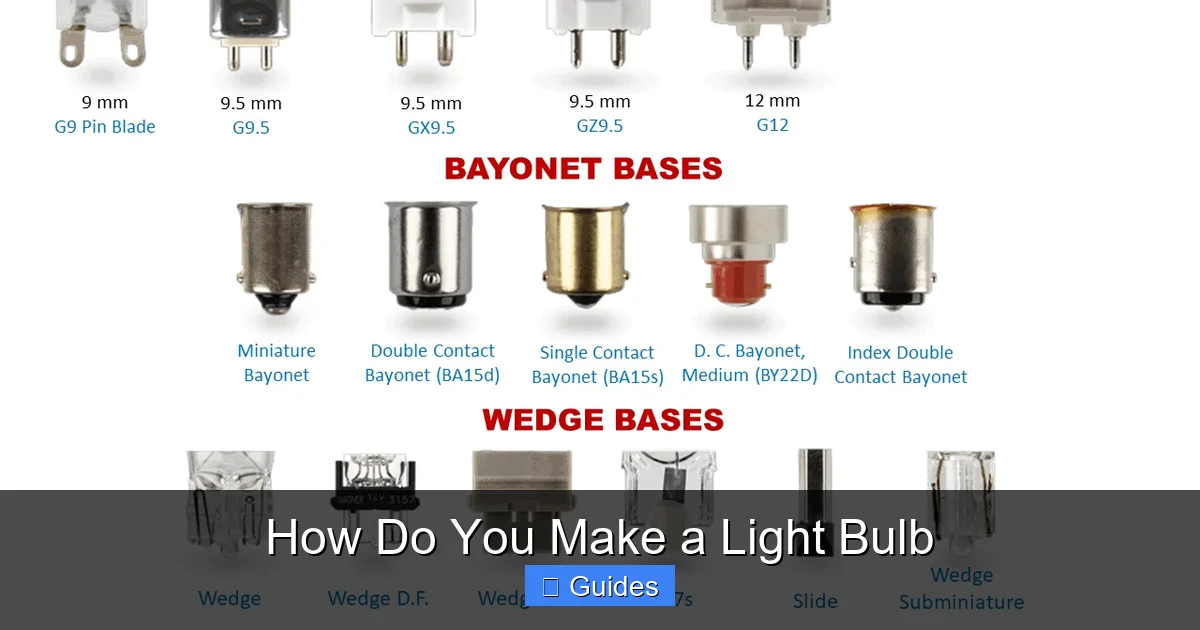
Visual guide about How Do You Make a Light Bulb
Image source: lightadviser.com
Before we dive into the assembly line, let’s break down the key players that make up a traditional incandescent light bulb. Each component has a vital role in the bulb’s function and longevity.
The Filament: The Heart of the Light
The filament is arguably the most crucial part. For modern incandescent bulbs, this is almost always made from tungsten. Why tungsten? Because it has an incredibly high melting point (around 3,422 °C or 6,192 °F), allowing it to get intensely hot and glow brightly without melting. It’s also strong and can be drawn into an incredibly fine wire, often coiled multiple times to increase its length and therefore its resistance within a small space. This tiny wire, often thinner than a human hair, is what truly answers the question of how do you make a light bulb produce light.
The Glass Bulb (Envelope): Protecting the Filament
The delicate filament needs protection from the outside world, primarily oxygen. The glass bulb, also known as the envelope, serves this purpose. Without it, the hot tungsten filament would rapidly oxidize and burn out in a puff of smoke, much like a sparkler. The glass is carefully shaped and usually frosted or coated internally to diffuse the light, making it less harsh and more pleasant.
The Inert Gas or Vacuum: Why it Matters
Inside that glass bulb, there isn’t just regular air. Early light bulbs used a vacuum to remove oxygen, preventing oxidation. However, at extremely high temperatures, tungsten atoms can evaporate from the filament, depositing on the inside of the glass and darkening the bulb over time. To combat this and extend bulb life, modern incandescent bulbs are often filled with an inert gas, such as argon, nitrogen, or a mixture of both. These gases don’t react with the hot tungsten but help slow down the evaporation of tungsten atoms, allowing the filament to run at higher temperatures for longer, increasing both light output and bulb life. This step is a sophisticated part of how do you make a light bulb efficient and durable.
The Base and Electrical Contacts: Powering the Bulb
At the bottom of the bulb is the metal screw-in base (often called an Edison screw base) or a bayonet fitting. This base serves two main purposes: to securely hold the bulb in a socket and to provide the electrical connection. Inside the base, there are usually two lead-in wires – one connected to the tip contact at the very bottom and the other connected to the threaded shell. These wires pass through the glass mount (often called the stem or arbor) inside the bulb and connect directly to the filament, completing the electrical circuit. A small blob of solder typically secures the tip contact and one of the lead-in wires.
The Manufacturing Process: Step-by-Step
Understanding how do you make a light bulb involves appreciating the precision and automation that goes into each stage. Modern light bulb factories are highly automated, producing millions of bulbs with remarkable consistency.
Filament Production: Drawing the Wire
The journey begins with tungsten. Pure tungsten is initially a brittle material, but through a process of heating, hammering, and drawing through progressively smaller dies, it’s transformed into an incredibly fine, flexible wire. This wire is then coiled into a very tight spiral, sometimes even a coiled coil (a coil of coils!), to maximize the length of the filament within a compact space. This maximizes resistance and therefore light output. Precision is key here; even a slight variation in wire thickness or coiling can affect the bulb’s performance and lifespan.
Glass Blowing and Sealing: Creating the Envelope
Meanwhile, the glass bulbs are formed. Molten glass is fed into molds and then blown to create the characteristic bulb shape. Once shaped, the glass bulb is joined with the “stem” or “mount” assembly. This assembly already contains the lead-in wires and the support wires for the filament. The joining process involves heating the glass parts until they soften and fuse together, creating an airtight seal. This seal is absolutely critical, as it maintains the vacuum or inert gas environment essential for the filament’s survival. This stage is where the outer protective layer takes shape, a crucial step in how do you make a light bulb durable.
Evacuation and Gas Filling: Preparing the Interior
After the stem is sealed to the bulb, the next crucial step is to prepare the internal atmosphere. The bulb is attached to a vacuum pump system through a small exhaust tube (or “pumping stem”) on the base. All air, especially oxygen, is meticulously removed to create a near-perfect vacuum. For gas-filled bulbs, once the vacuum is achieved, the inert gas (argon, nitrogen, or a mix) is then carefully introduced into the bulb through the same exhaust tube. Once the desired pressure is reached, the exhaust tube is sealed off, typically by heating and pinching the glass, creating a permanent, sealed environment for the filament. This step is a marvel of industrial chemistry and engineering.
Base Attachment and Soldering: Making it Functional
With the filament safely enclosed, the final major step is attaching the metal base. The lead-in wires that extend from the glass mount are connected to the electrical contacts on the base. One wire is typically soldered to the central tip contact, and the other to the threaded shell of the base. Cement is then used to securely bind the glass envelope to the metal base, ensuring a strong and stable connection. This is the practical answer to how do you make a light bulb connect to power.
Quality Control and Testing: Ensuring Reliability
Throughout the manufacturing process, and especially at the end, rigorous quality control checks are performed. Bulbs are visually inspected for defects in the glass, filament, and base. They undergo electrical tests to ensure proper resistance and continuity. Some bulbs are subjected to life testing, where they are run for extended periods to estimate their lifespan and identify any potential design or manufacturing flaws. This ensures that only high-quality, reliable bulbs make it to consumers.
Beyond Incandescent: A Brief Look at Other Technologies
While our focus has been on answering “how do you make a light bulb” in its traditional incandescent form, it’s worth noting that lighting technology has evolved significantly. Each new technology addresses some of the limitations of its predecessors, particularly energy efficiency and lifespan.
Halogen Bulbs: Incandescent, but Better
Halogen bulbs are essentially an improved version of the incandescent. They still use a tungsten filament but are encased in a smaller quartz envelope and filled with a halogen gas (like iodine or bromine). The halogen gas creates a regenerative cycle that redeposits evaporated tungsten back onto the filament, extending its life and allowing it to operate at higher temperatures for a brighter, whiter light.
Fluorescent Lamps: Gas Discharge Technology
Fluorescent lamps operate on a completely different principle. They don’t rely on a glowing filament. Instead, electricity excites mercury vapor inside a glass tube, which emits ultraviolet (UV) light. This UV light then strikes a phosphor coating on the inside of the tube, causing it to fluoresce and produce visible light. These are significantly more energy-efficient than incandescents.
LED Bulbs: The Solid-State Revolution
Light Emitting Diodes (LEDs) represent the pinnacle of modern lighting efficiency. They are solid-state devices that produce light when an electric current passes through a semiconductor material. They don’t have filaments, don’t rely on gases, and don’t produce much heat in the process of generating light. This makes them incredibly durable, long-lasting, and energy-efficient, fundamentally changing the landscape of how we think about light sources.
The Human Ingenuity Behind the Glow
The story of how do you make a light bulb is not just about manufacturing processes; it’s deeply intertwined with human ingenuity, scientific discovery, and relentless perseverance.
The Iterative Process of Invention
Think of Edison’s famous quote: “I have not failed. I’ve just found 10,000 ways that won’t work.” His quest for a practical incandescent bulb involved testing thousands of different filament materials, from platinum to carbonized cotton threads and bamboo fibers. Each experiment, each “failure,” brought him closer to understanding the optimal conditions and materials needed. It wasn’t just about making *a* light bulb, but making *the* light bulb – one that was durable, efficient enough, and commercially viable for widespread adoption. This iterative, trial-and-error approach is a cornerstone of invention.
Modern Manufacturing Precision
Today, the manufacture of light bulbs is a highly automated and precise operation. Robotics and sophisticated machinery handle the delicate assembly steps, ensuring consistency and minimizing human error. From the micro-precision coiling of tungsten filaments to the airtight sealing of glass envelopes and the exact measurement of inert gas, every step is optimized for efficiency and quality. This blend of historical scientific principles with modern industrial capabilities is what allows us to enjoy reliable, affordable light in every corner of the globe. The answer to how do you make a light bulb today often involves sophisticated robotics.
Conclusion
The journey of how do you make a light bulb is a captivating narrative of scientific discovery, engineering precision, and enduring human innovation. From the basic principle of incandescence to the intricate assembly of its many components, each step is vital in creating that familiar glow. What started as an experimental curiosity has evolved into a mass-produced essential, lighting our homes, streets, and workplaces with remarkable reliability.
While newer, more efficient technologies like LEDs are increasingly taking center stage, the traditional incandescent bulb remains a powerful symbol of progress and a testament to the ingenious minds who worked tirelessly to bring light to the world. So, the next time you flick a switch and a room is bathed in light, take a moment to appreciate the complex yet elegant process behind that simple, everyday marvel. It’s a reminder that even the most common objects often hide a rich history and a fascinating story of creation.
🎥 Related Video: How to make bulb #Diy
📺 AB Electric
short #diy_project #electricalhacks.
Frequently Asked Questions
What was the biggest challenge in developing the first practical light bulb?
The biggest challenge was finding a filament material that could glow brightly for a long time without burning out quickly, along with creating a strong enough vacuum inside the bulb to protect that filament. Thomas Edison’s breakthrough involved a high-resistance carbonized bamboo filament and an improved vacuum pump.
Why do older incandescent bulbs often get very hot?
Older incandescent bulbs get very hot because they are inefficient at converting electrical energy into visible light. A significant portion (often over 90%) of the energy consumed is released as heat rather than light, which is a byproduct of the incandescence principle.
What is the purpose of the small glass support wires inside the bulb?
The small glass support wires, sometimes called “lead-in wires” or “support wires,” physically hold the delicate tungsten filament in place. They prevent the filament from sagging or breaking due to gravity or vibrations when it gets extremely hot and becomes slightly softer.
Can you make a light bulb at home?
While you can experiment with creating a very basic, short-lived incandescent light source at home using a battery and a thin wire, creating a functional, safe, and long-lasting light bulb like those manufactured industrially is extremely difficult. It requires specialized equipment for high vacuum, precise glass sealing, and filament drawing.
Why do light bulbs sometimes “pop” when they burn out?
A light bulb “pops” when it burns out because the filament, usually at its weakest point, finally breaks. When the circuit is interrupted, there’s often a small electrical arc that can cause a sudden, small surge of energy and a flash, resulting in the audible pop and sometimes a darkening or frosting inside the bulb.
Are all light bulbs filled with the same type of gas?
No, not all light bulbs are filled with the same type of gas. Traditional incandescent bulbs often use a mixture of argon and nitrogen, while halogen bulbs use specific halogen gases like iodine or bromine. Fluorescent lamps, on the other hand, contain mercury vapor and an inert gas like argon to initiate the discharge.
