


As an Amazon Associate, We earn from qualifying purchases.
Choosing the right wattage light bulb for your bedroom is crucial for comfort and functionality. Forget traditional watts; focus on lumens for brightness, aiming for 800-1200 lumens for ambient light and more for specific tasks. Consider factors like room size, wall color, and bulb type (LEDs are highly recommended for efficiency and versatility) to create your perfect sleeping sanctuary.
What Wattage Light Bulb for Bedroom?
Ever walked into your bedroom, flipped the switch, and felt like something was just… off? Maybe it was too bright, too dim, or just had a sterile, unwelcoming glow. We’ve all been there! Your bedroom is more than just a place to sleep; it’s your sanctuary, a space for relaxation, unwinding, reading, and sometimes even getting ready for the day. The lighting in this crucial room plays a massive role in setting the mood, enhancing comfort, and supporting various activities.
Choosing the right light bulb can feel a bit like a mystery, especially with all the options on the market today. Gone are the days when “what wattage light bulb for bedroom” simply meant picking a 60-watt or 100-watt incandescent. With modern LED technology, the game has changed entirely. Now, we’re talking about lumens, color temperature, and smart features. Don’t worry, though; this guide is here to demystify the process and help you create the perfectly lit bedroom you’ve always dreamed of.
Understanding the Shift: Lumens, Not Just Watts
For decades, we’ve been conditioned to think about “what wattage light bulb for bedroom” in terms of how bright it would be. A 60-watt bulb was standard, and a 100-watt bulb was bright. This made sense when incandescent bulbs were the only option, as their wattage (energy consumption) directly correlated with their light output. However, with the advent of more energy-efficient technologies like CFLs and especially LEDs, wattage no longer tells the full story of brightness.
* Watts: This measures how much energy a light bulb consumes. Lower wattage means less energy used, which is good for your electricity bill and the environment.
* Lumens: This is the true measure of a light bulb’s brightness. The higher the lumen count, the brighter the light.
When asking yourself “what wattage light bulb for bedroom,” you’re actually asking “how many lumens do I need for my bedroom?” A modern LED bulb might produce the same brightness (lumens) as an old 60-watt incandescent bulb while only consuming 8-10 watts of power. So, the first step in choosing the right light bulb is to shift your focus from watts to lumens.
Key Takeaways
- Focus on Lumens, Not Watts: When choosing a light bulb for your bedroom, prioritize lumens (brightness) over watts (energy consumption). A good range for ambient bedroom lighting is typically 800-1200 lumens.
- LEDs are Your Best Bet: Light Emitting Diodes (LEDs) are the most energy-efficient, long-lasting, and versatile bulbs available, offering a wide range of brightness and color temperatures with low wattage.
- Consider Room Size and Color: Larger rooms and those with darker walls or furniture will require higher lumen output to achieve adequate brightness compared to smaller rooms with lighter decor.
- Layer Your Lighting: For optimal bedroom functionality and mood, combine ambient (general), task (reading, dressing), and accent (mood setting) lighting. This allows for flexibility in brightness and focus.
- Adjust for Activities: The ideal brightness varies significantly based on activity. You’ll want brighter task lighting (e.g., 800-1000 lumens for a bedside lamp) for reading and softer ambient lighting for relaxation.
- Embrace Dimmers and Smart Bulbs: Dimmers offer incredible flexibility, allowing you to adjust light intensity for various moods and tasks. Smart bulbs provide even more control, including color temperature changes and scheduling.
- Color Temperature Matters: Warm white (2700K-3000K) is generally preferred for bedrooms as it promotes relaxation and a cozy atmosphere, mimicking natural sunset light. Avoid harsh cool white light before bedtime.
Quick Answers to Common Questions
What is the most important factor when choosing a bedroom light bulb?
The most important factor is lumens, which measures the brightness of the bulb. Forget wattage for brightness; focus on lumens to achieve your desired light level.
Are 100-watt equivalent LED bulbs too bright for a bedroom?
A 100-watt equivalent LED typically produces around 1500-1600 lumens. While this might be too bright for a single central fixture in a small bedroom, it can be ideal for larger rooms, or if paired with a dimmer switch for adjustable brightness.
Should all lights in my bedroom be the same color temperature?
It’s generally recommended that your primary ambient lights and reading lights are within a similar warm white color temperature (2700K-3000K) for consistency and comfort. However, accent lights can sometimes vary slightly for visual interest, or a specific task light could be slightly cooler if needed for precision tasks.
Can I mix different types of light bulbs in one bedroom?
Yes, you can mix different types of bulbs, but it’s best to stick to LEDs for efficiency and consistency in light quality. More importantly, focus on mixing different *types* of lighting (ambient, task, accent) rather than different bulb technologies (incandescent, LED) to achieve layered illumination.
Is it okay to use smart bulbs for all my bedroom lighting?
Absolutely! Smart bulbs are an excellent choice for bedroom lighting. They offer unmatched flexibility, allowing you to control brightness, color temperature, and even color with an app or voice commands, creating personalized scenes for any activity or mood.
📑 Table of Contents
- The Ideal Lumens for a Bedroom: Finding Your Brightness Sweet Spot
- Types of Light Bulbs: Efficiency and Performance
- Factors Influencing Your Bedroom Lighting Needs
- Layering Light in the Bedroom: A Comprehensive Approach
- Practical Tips for Choosing and Installing Your Bedroom Light Bulbs
- Conclusion: Your Bedroom, Your Light
The Ideal Lumens for a Bedroom: Finding Your Brightness Sweet Spot
So, if we’re focusing on lumens, what’s a good starting point for your bedroom? There isn’t a single magic number, as the ideal brightness depends heavily on your specific needs, the size of your room, and the activities you perform there. However, we can provide some excellent guidelines for what wattage light bulb for bedroom lighting is appropriate in terms of lumen output.
General Ambient Lighting
For general, overarching brightness in your bedroom, you want enough light to comfortably move around, see clearly, and feel at ease without it being overly harsh or dim. Most experts suggest the following lumen ranges for ambient bedroom lighting:
- Small Bedrooms (up to 100 sq ft): 800-1000 lumens (equivalent to one 60-75W incandescent bulb).
- Medium Bedrooms (100-250 sq ft): 1000-1500 lumens (equivalent to one 75-100W incandescent bulb or two 60W equivalent bulbs).
- Large Bedrooms (over 250 sq ft): 1500-3000+ lumens, often achieved through multiple light sources, not just one central fixture.
Remember, these are starting points. It’s often better to aim slightly higher if you have a dimmer switch, as you can always reduce the brightness, but you can’t make a dim bulb brighter.
Task Lighting for Specific Activities
Beyond general ambient light, your bedroom likely needs task lighting for activities like reading, dressing, or working. When considering what wattage light bulb for bedroom task lighting, think about focused brightness.
- Bedside Reading Lamps: For a dedicated reading lamp, look for bulbs producing 400-800 lumens. If you read a lot, closer to 800 lumens is better, especially for older eyes. This ensures you have enough light directly on your book or device without disturbing a partner. A typical 40W equivalent LED bulb is often perfect here.
- Dressing Area/Vanity Lights: For applying makeup or choosing outfits, good, even lighting is essential to avoid shadows. Aim for 800-1000 lumens per fixture, often distributed around a mirror. Color rendering index (CRI) is also important here (look for CRI 90+ for accurate color perception).
- Desk Lamps: If you have a desk in your bedroom, a task lamp with 400-800 lumens is ideal, depending on the intensity of your work.
Accent Lighting for Mood
Accent lighting is less about brightness and more about creating atmosphere and highlighting features. This might include small spotlights on artwork, uplights in corners, or decorative string lights. For these, lumens can be quite low, often in the 50-200 lumen range, as their purpose is visual interest rather than illumination.
Types of Light Bulbs: Efficiency and Performance
Understanding the different types of light bulbs available is crucial when figuring out what wattage light bulb for bedroom use is best, especially for balancing brightness with energy efficiency.
Incandescent Bulbs
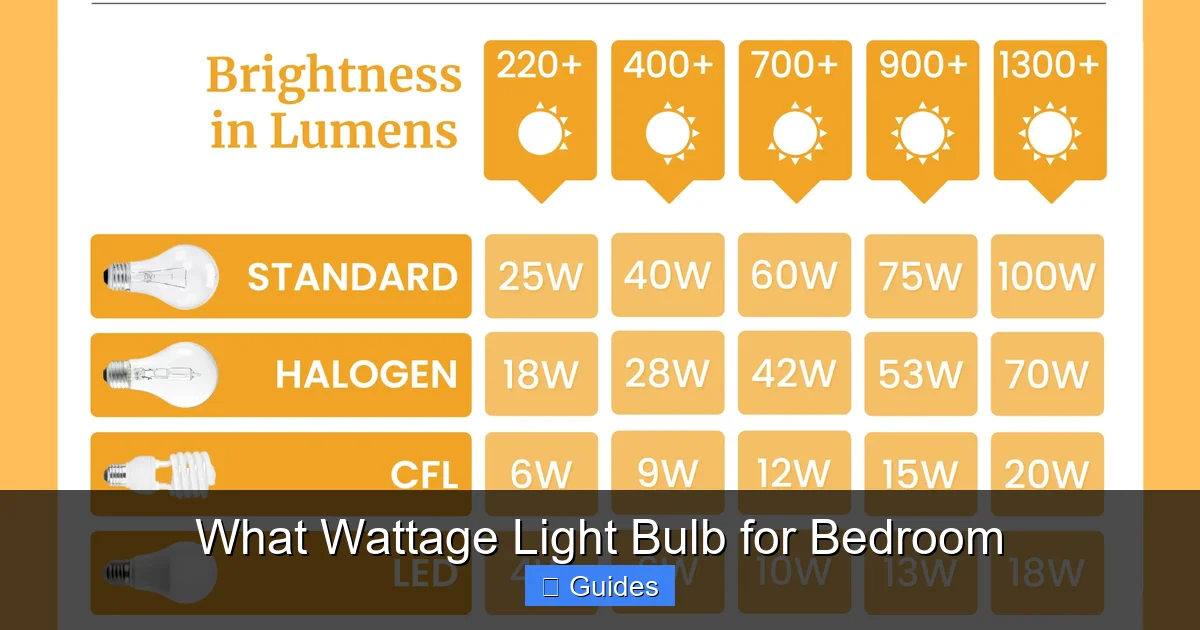
These are the traditional bulbs with a filament that glows when heated. While they produce a warm, comforting light, they are incredibly inefficient, converting only about 10% of their energy into light and the rest into heat. Most countries have phased them out due to energy regulations. If you still use them, a typical 60W bulb produces about 800 lumens, while a 100W bulb produces around 1600 lumens. However, they are generally not recommended for new installations due to their inefficiency and short lifespan.
Visual guide about What Wattage Light Bulb for Bedroom
Image source: thecanconverter.com
Halogen Bulbs
Halogens are a type of incandescent bulb that uses halogen gas to improve efficiency and lifespan slightly. They produce a brighter, whiter light than standard incandescents. They are still relatively inefficient compared to LEDs, consuming more wattage to produce fewer lumens. A 43-watt halogen bulb might produce 650 lumens, while a 72-watt bulb yields 1490 lumens. They also get very hot, which can be a safety concern in some fixtures.
Compact Fluorescent Lamps (CFLs)
CFLs were once considered the energy-efficient alternative to incandescents. They use less energy and last longer. However, they contain mercury (requiring special disposal) and often take time to reach full brightness. They also don’t dim very well and can produce a less desirable light quality. A 13-watt CFL can produce around 800 lumens, replacing a 60W incandescent. While more efficient than incandescents, they’ve largely been superseded by LEDs.
LED (Light Emitting Diode) Bulbs: The Modern Solution
LEDs are the undisputed champions of modern lighting, especially when considering what wattage light bulb for bedroom is most effective. They are incredibly energy-efficient, long-lasting, and offer a wide range of features. An 8-10 watt LED bulb can easily produce 800 lumens, making it equivalent to a 60-watt incandescent. This means significant energy savings over their lifespan (often 15-25 years).
- Energy Efficiency: Consume a fraction of the power of older bulbs.
- Longevity: Last significantly longer, reducing the hassle of frequent bulb changes.
- Cool Operation: Generate very little heat, making them safer and reducing cooling costs.
- Instant On: Reach full brightness immediately.
- Dimmable Options: Many LEDs are dimmable (ensure the bulb explicitly states it’s dimmable and you have a compatible dimmer switch).
- Color Temperature: Available in a vast range of color temperatures, from warm white to cool daylight.
- Smart Features: Smart LEDs can be controlled via apps, voice commands, and integrated into smart home systems, often offering color-changing capabilities.
Given their overwhelming advantages, LEDs are almost always the best choice when deciding what wattage light bulb for bedroom use.
Factors Influencing Your Bedroom Lighting Needs
Beyond just lumens, several other elements play a crucial role in how bright your bedroom feels and what wattage light bulb for bedroom will be most effective for your space.
Room Size and Ceiling Height
A larger room will naturally require more lumens to feel adequately lit than a smaller room. Similarly, rooms with high ceilings will need more powerful bulbs to send light down to living areas. As a rough guide, multiply your room’s square footage by 15 to 20 for ambient lumens. For example, a 12×15 ft (180 sq ft) bedroom might need 2700-3600 total ambient lumens, distributed across multiple fixtures.
Wall and Furniture Colors
Darker walls, carpets, and furniture absorb more light, making a room feel dimmer. If your bedroom is decorated with deep hues, you’ll need higher lumen output from your bulbs to compensate. Conversely, light-colored walls and decor reflect light, making a room feel brighter and allowing you to use slightly lower lumen bulbs. This is a key consideration when deciding what wattage light bulb for bedroom use is right.
Amount of Natural Light
Bedrooms with large windows and abundant natural light during the day might need less artificial lighting overall. However, you’ll still need adequate artificial light for evenings, cloudy days, or early mornings. Consider how much natural light your room gets when planning your artificial lighting strategy.
Personal Preference and Activities
This is perhaps the most important factor. Are you someone who prefers a cozy, cave-like atmosphere, or do you like a brighter, more invigorating space? Do you read in bed, do yoga, or watch TV? Your daily routines heavily influence the best wattage light bulb for bedroom applications. If you enjoy reading, task lighting by the bed is non-negotiable. If you need a gentle wake-up, smart bulbs with sunrise simulation might be perfect.
Color Temperature (Kelvin)
While not directly related to wattage or lumens, color temperature significantly impacts the feel of your bedroom. Measured in Kelvins (K):
- Warm White (2700K-3000K): This soft, yellowish light is ideal for bedrooms. It promotes relaxation, mimics traditional incandescent bulbs, and creates a cozy, inviting atmosphere. It’s often recommended for evening use as it’s less disruptive to sleep patterns.
- Neutral White (3500K-4000K): Brighter and less yellow, this is suitable for tasks but can feel a bit too cool for a relaxing bedroom environment.
- Cool White/Daylight (5000K-6500K): Mimics bright natural daylight. While energizing, it’s generally too harsh for a bedroom, especially in the evenings, as it can suppress melatonin production. Best avoided for primary bedroom lighting unless for specific task areas where alertness is key.
When selecting what wattage light bulb for bedroom, pay close attention to the Kelvin rating printed on the packaging.
Layering Light in the Bedroom: A Comprehensive Approach
The secret to truly great bedroom lighting isn’t just picking one perfect bulb; it’s about layering different types of light to achieve versatility and comfort. This allows you to adjust the lighting for various moods and activities, answering the “what wattage light bulb for bedroom” question for each specific need.
Ambient Lighting (General Illumination)
This is your primary light source, providing overall illumination for the room. It could come from a ceiling fixture (flush mount, semi-flush mount, or chandelier) or a floor lamp. The goal is even, comfortable brightness that allows you to navigate the room safely. As discussed, aim for 800-1500 lumens for most bedrooms, depending on size and decor. Consider a dimmable fixture here to adjust the intensity. This is where your main consideration for what wattage light bulb for bedroom (in terms of ambient lumens) will go.
Task Lighting (Functional Brightness)
Task lighting is focused light for specific activities. In a bedroom, this most commonly includes bedside lamps for reading, vanity lights for grooming, or a desk lamp for work. These lights should be brighter and more directional than ambient light. A bedside lamp might have a 400-800 lumen bulb, while a vanity light could use multiple bulbs totaling 800-1000 lumens. The key is to position them correctly to minimize shadows and glare. When thinking about what wattage light bulb for bedroom reading, an LED equivalent to a 60-watt incandescent is often ideal.
Accent Lighting (Creating Mood and Focus)
Accent lighting adds visual interest and defines the mood. It can highlight artwork, architectural features, or simply create a soft, inviting glow. Examples include wall sconces, picture lights, recessed spotlights aimed at a specific area, or even string lights. These typically use lower lumen bulbs (50-200 lumens) and are often on separate switches from ambient light. They are fantastic for adding warmth and depth to your bedroom without overwhelming it with brightness.
Practical Tips for Choosing and Installing Your Bedroom Light Bulbs
Now that you understand the concepts, let’s look at some practical tips for selecting the best wattage light bulb for bedroom and implementing your lighting plan.
- Start with Dimmers: If you don’t have them, install dimmer switches for your ambient and task lighting. They offer unparalleled flexibility, allowing you to fine-tune the brightness for any mood or activity. Make sure your chosen LED bulbs are “dimmable.” This is the easiest way to make sure whatever wattage light bulb for bedroom you choose is always just right.
- Match the Base: Always check the bulb’s base type (e.g., E26 for standard screw-in, GU10 for spotlights, E12 for candelabra) to ensure it fits your fixture.
- Read the Label: Modern bulb packaging clearly lists lumens, wattage, estimated annual energy cost, color temperature (K), and estimated lifespan.
- Test It Out: If possible, buy one bulb and test it in your fixture at different times of day before committing to buying several. Light looks different in various environments.
- Consider Smart Bulbs: For ultimate control, smart LED bulbs (like Philips Hue, Sengled, Govee) allow you to change brightness, color temperature, and even color directly from your phone or voice assistant. This eliminates much of the guesswork about what wattage light bulb for bedroom and what color temperature to buy, as you can adjust it on the fly.
- Check Fixture Max Wattage: Always ensure your chosen bulb’s actual wattage (not lumen equivalent) does not exceed the maximum wattage rating of your light fixture. While LEDs consume very little power, it’s a good safety habit.
- Balance Warmth and Function: While warm white (2700K-3000K) is generally recommended for bedrooms, you might consider a slightly brighter, neutral white (3500K) for a specific task light if you need more focused visual clarity for activities like intricate crafting.
Conclusion: Your Bedroom, Your Light
Choosing what wattage light bulb for bedroom use is no longer about a simple wattage number. It’s about understanding lumens, considering bulb types (LEDs are king!), and thinking about how you use your space. By focusing on lumens for brightness, selecting the right color temperature for mood, and layering your lighting with ambient, task, and accent fixtures, you can transform your bedroom into a comfortable, functional, and aesthetically pleasing haven.
Remember, the best light bulb for your bedroom is ultimately the one that makes you feel most comfortable and supports your daily activities. Don’t be afraid to experiment, use dimmers, and embrace the versatility of modern LED lighting. With these insights, you’re well-equipped to make informed choices and illuminate your personal sanctuary perfectly. Enjoy your beautifully lit bedroom!
🎥 Related Video: How to Choose the Right Color Temperature Lights for Your Home | IDS
📺 Design Duo by IDS
Lighting can make or break a room! ✨ In this hilarious guide, we explore how to choose the right color temperature lights for …
Frequently Asked Questions
What is the recommended lumen range for a master bedroom?
For ambient lighting in a master bedroom, a good starting point is typically between 1500-3000 lumens, often achieved through multiple fixtures or a powerful central light. This range allows for sufficient general brightness, especially if the room is large or has darker decor.
Why are my LED bulbs flickering on a dimmer switch in the bedroom?
LED flickering on a dimmer usually indicates an incompatibility between the LED bulb and the dimmer switch. Traditional dimmers are designed for incandescent bulbs, while LEDs require specific “LED compatible” or “phase-cut” dimmers. Ensure both your bulbs and dimmer switch are rated for LED use.
What color temperature is best for promoting sleep in the bedroom?
Warm white light, specifically in the 2700K to 3000K range, is best for promoting relaxation and sleep in the bedroom. This mimics the warm glow of natural sunset light and avoids the blue light spectrum that can disrupt melatonin production, which is crucial for sleep.
Can I use a grow light in my bedroom for plants?
While you can, it’s generally not recommended for your primary bedroom lighting. Grow lights emit a specific spectrum optimized for plant growth, which can appear quite harsh or purple to human eyes and may not be conducive to a relaxing environment. Consider placing plants closer to natural light sources or using a small, dedicated grow light in an unobtrusive spot.
How do I choose the right bedside lamp bulb for reading?
For a bedside lamp for reading, look for an LED bulb that produces around 400-800 lumens, equivalent to a 40-60W incandescent. Ensure it has a warm white color temperature (2700K-3000K) and is dimmable so you can adjust the brightness to your comfort level.
Is a single ceiling light enough for a bedroom?
For most bedrooms, a single ceiling light, even a bright one, is often not enough to provide balanced and versatile lighting. It typically creates shadows and doesn’t offer adequate task or accent lighting. Layering with bedside lamps, floor lamps, and other fixtures provides much better functionality and ambiance.
