


As an Amazon Associate, We earn from qualifying purchases.
Decoding light bulb sizes is simpler than it seems! To correctly identify what size light bulb you need, first check the old bulb and your fixture for shape, diameter (often in 1/8ths of an inch), and base type codes like E26 or GU10. Don’t forget to consider lumens for brightness and Kelvin for color temperature to ensure the perfect fit and ambiance in any room. Understanding these key markers will empower you to choose the right bulb every time.
Ever stood in the lighting aisle, completely overwhelmed by the sheer number of light bulb options? You’re not alone! With dozens of shapes, sizes, bases, and technical specs, figuring out how to tell what size light bulb you need can feel like learning a secret code. It’s enough to make anyone just grab whatever looks “about right” and hope for the best.
But getting the right light bulb isn’t just about making sure it screws in. The wrong size or type can impact your room’s aesthetics, your energy bill, and even the safety of your fixture. From a tiny nightlight bulb to a powerful floodlight, each bulb has a specific purpose and fit. This comprehensive guide is here to demystify the process, turning you into a light bulb sizing expert so you can confidently choose the perfect bulb every single time.
We’ll walk you through the essential components of a light bulb, from its physical shape and size to its base and even its brightness and color. By the end, you’ll understand what all those letters and numbers mean, making it incredibly easy to tell what size light bulb you need for any fixture in your home. Let’s shed some light on this common household dilemma!
Key Takeaways
- Bulb Shape and Diameter are Key: The letter (e.g., A, G, PAR) denotes shape, and the number following indicates diameter in eighths of an inch (e.g., A19 is A-shape, 19/8ths inch diameter).
- Base Type is Crucial for Fit: The base type (e.g., E26 for standard screw-in, E12 for candelabra, GU10 for bi-pin) must match your fixture’s socket.
- Lumens Measure Brightness: Forget watts for brightness. Lumens tell you how bright a bulb really is, so match lumens to your old incandescent bulb’s output.
- Watts Indicate Energy Use and Fixture Limits: While less about brightness for LEDs, wattage still tells you energy consumption and, critically, the maximum safe wattage your fixture can handle.
- Color Temperature Sets the Mood: Measured in Kelvin (K), color temperature dictates if your light is warm and cozy (2700K-3000K) or cool and energizing (4000K-5000K+).
- Always Check the Old Bulb and Fixture: The easiest way to determine what size light bulb you need is to look for printed codes on the old bulb or inside the fixture itself.
- Measure if Necessary: If codes are missing, measure the diameter of the bulb or base to help identify the correct replacement.
Quick Answers to Common Questions
What do the numbers on a light bulb (like A19 or PAR38) mean?
The number typically indicates the bulb’s diameter in eighths of an inch. So, an A19 bulb is 19/8 inches (or 2.375 inches) in diameter at its widest point, and a PAR38 is 38/8 inches (or 4.75 inches).
How do I know what base type my light bulb needs?
Look for a code printed on the metal or plastic base of the old bulb (e.g., E26, E12, GU10). If unavailable, examine the socket of your fixture. Screw-in bases often correspond to “E” codes, while push-and-twist bases are typically “G” codes.
Should I match watts or lumens when buying an LED replacement?
You should primarily match lumens (lm) for brightness. An 800-lumen LED bulb provides similar brightness to a 60-watt incandescent, even though it consumes far fewer watts. The wattage of the LED indicates its energy consumption.
What does “color temperature” mean for a light bulb?
Color temperature, measured in Kelvin (K), describes the perceived warmth or coolness of the light. Lower Kelvin numbers (e.g., 2700K) produce a warm, yellowish light, while higher numbers (e.g., 5000K) produce a cool, bluish-white light similar to daylight.
Can I put any LED bulb into any fixture?
No, you must ensure the LED bulb’s base type matches the fixture’s socket and that the bulb’s physical dimensions fit within the fixture. Also, always check the fixture’s maximum wattage rating; while LEDs consume less, it’s still a safety precaution, and if the fixture is enclosed, ensure the LED is rated for enclosed fixtures.
📑 Table of Contents
- Understanding the Basics: Decoding Light Bulb Labels
- The Alphabet Soup of Bulb Shapes (and Their Numbers)
- Navigating Bulb Bases: The Crucial Connection
- Beyond Shape and Base: Lumens, Watts, and Color Temperature
- Practical Tips for Choosing the Right Bulb
- Conclusion: Light Up Your Life with Confidence
Understanding the Basics: Decoding Light Bulb Labels
Before we dive into the specifics of shapes and bases, let’s talk about where to find the crucial information you need. Most of the time, the best place to start when trying to figure out what size light bulb you need is by looking at the old bulb itself or the packaging of a new one. Modern light bulb packaging, and often the bulb itself, is packed with information.
What to Look For on the Bulb or Packaging
When you pick up a light bulb, or look at its box, you’ll typically see several key pieces of information. These are your clues to solving the “what size light bulb do I need?” puzzle:
- Shape/Size Code: This is usually a letter followed by a number, like A19, PAR38, or G25. This tells you the bulb’s overall shape and its diameter.
- Base Type: This indicates the type of connector that screws or pushes into your fixture. Common examples include E26, E12, GU10, or G9.
- Lumens (lm): This is the most important measure of brightness. The higher the lumen number, the brighter the light.
- Watts (W): This tells you how much energy the bulb consumes. For incandescent bulbs, it also roughly indicated brightness. For LEDs, it’s primarily an energy consumption metric.
- Color Temperature (K): Measured in Kelvin, this describes the warmth or coolness of the light (e.g., 2700K for warm white, 5000K for daylight).
- Dimmable: Indicates whether the bulb can be used with a dimmer switch.
While lumens, watts, and color temperature are vital for the light quality, the shape/size code and base type are absolutely essential for ensuring the bulb physically fits your fixture. So, when trying to understand what size light bulb you need, these two pieces of information are your primary focus.
The Alphabet Soup of Bulb Shapes (and Their Numbers)
The first step in figuring out how to tell what size light bulb you need is understanding its shape and overall dimensions. Light bulb shapes are designated by a letter, and their size (diameter) by a number. This number isn’t in inches; it represents the diameter in eighths of an inch. Confusing, right? Let’s break down the most common types.
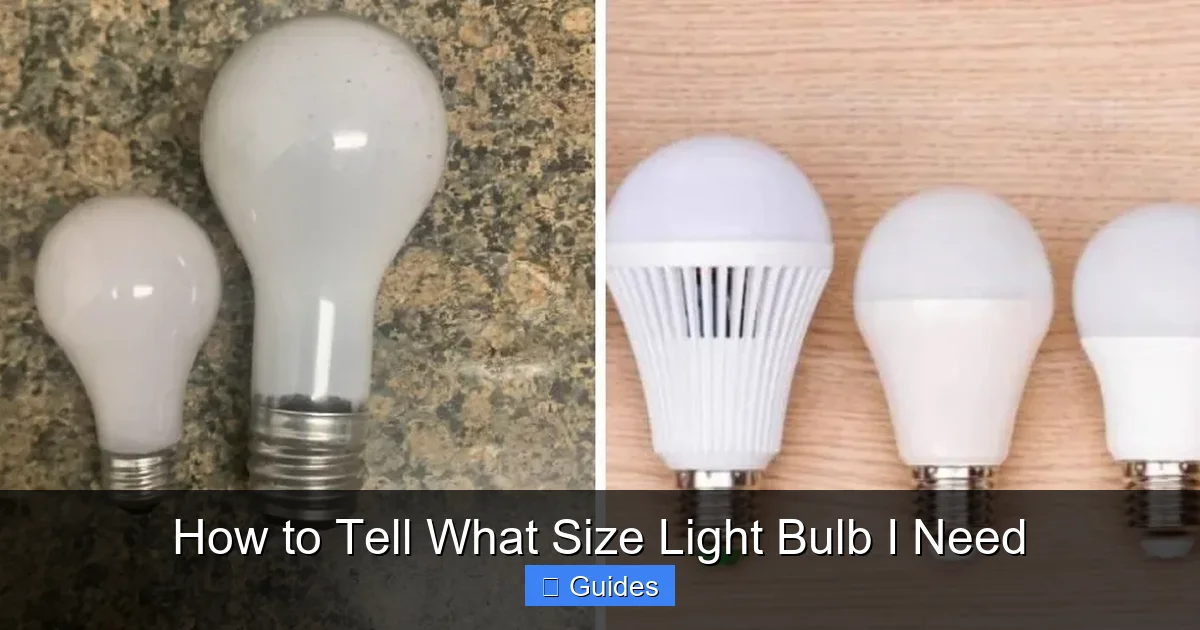
Visual guide about How to Tell What Size Light Bulb I Need
Image source: lightenify.com
Common Bulb Shapes and Their Meanings
- A-Shape (Standard Household Bulb):
- A: Stands for “Arbitrary” or “All-purpose.” This is the classic pear-shaped bulb we all recognize.
- A19: The most common household bulb. The “19” means it’s 19 eighths of an inch in diameter (19/8″ = 2.375 inches or about 2 3/8 inches).
- A21: Slightly larger than A19, often used for higher wattage or lumen output.
- Where you’ll find them: Lamps, ceiling fixtures, general lighting everywhere. If you’re trying to figure out what size light bulb you need for a regular lamp, it’s probably an A19.
- B, C, F-Shapes (Decorative/Candelabra):
- B: “Blunt Tip” candle shape.
- C: “Conical” or “Candle” shape, often with a pointed tip.
- F: “Flame Tip,” resembling a flickering flame.
- These often come in smaller diameters like C7 or B10. The numbers again refer to the diameter in eighths of an inch.
- Where you’ll find them: Chandeliers, wall sconces, decorative fixtures, nightlights.
- G-Shape (Globe):
- G: Stands for “Globe.” These bulbs are round or spherical.
- G16, G25, G30, G40: The numbers indicate the diameter in eighths of an inch. For instance, a G25 is 25/8 inches or 3.125 inches in diameter.
- Where you’ll find them: Vanity lights (especially G25), pendant lights, exposed bulb fixtures where the bulb itself is part of the design. When trying to determine what size light bulb you need for an exposed fixture, a globe shape is often preferred for its aesthetic.
- MR-Shape (Multifaceted Reflector):
- MR: “Multifaceted Reflector.” These bulbs have a distinct faceted reflector inside.
- MR16: A very common low-voltage (usually 12V) spotlight bulb. “16” means 16/8 inches or 2 inches in diameter.
- Where you’ll find them: Track lighting, recessed lighting, accent lighting, landscape lighting. These require specific transformers.
- PAR-Shape (Parabolic Aluminized Reflector):
- PAR: “Parabolic Aluminized Reflector.” These are floodlight or spotlight bulbs with a very precise beam. They are often used outdoors or in recessed fixtures.
- PAR20, PAR30, PAR38: Common sizes. A PAR38, for example, is 38/8 inches or 4.75 inches in diameter.
- Where you’ll find them: Recessed cans, outdoor security lights, track lighting, retail displays. When you need a focused beam and are asking yourself what size light bulb I need for outdoor use, PAR often comes to mind.
- BR-Shape (Bulged Reflector):
- BR: “Bulged Reflector.” Similar to PAR, but with a softer, wider beam spread due to its bulged shape. They are designed to fit flush in recessed can fixtures.
- BR30, BR40: Common sizes, often used in 5-inch or 6-inch recessed cans respectively.
- Where you’ll find them: Indoor recessed lighting (the go-to for most residential recessed cans).
- T-Shape (Tubular):
- T: “Tubular.” These are long, narrow bulbs.
- T3, T4, T8, T10, T12: The numbers represent diameter in eighths of an inch (for smaller ones) or simply actual inches (for fluorescent tubes like T8 = 1 inch diameter).
- Where you’ll find them: Appliances (refrigerators, ovens), decorative bare-bulb fixtures, old fluorescent shop lights.
To summarize, when you see a code like “A19,” “PAR30,” or “G25,” the letter tells you the basic form, and the number tells you its diameter. This is a critical piece of information for how to tell what size light bulb you need.
Navigating Bulb Bases: The Crucial Connection
Once you’ve got the shape and diameter down, the next absolutely vital piece of information for knowing what size light bulb you need is the base type. The base is the part of the bulb that connects to your fixture’s socket. If the base doesn’t match, the bulb won’t work, no matter how perfect the shape or brightness.
The Main Types of Light Bulb Bases
- Edison Screw Bases (E-Type):
- Named after Thomas Edison, these are the most common screw-in bases. The “E” stands for Edison, and the number refers to the diameter of the screw base in millimeters.
- E26: This is the “standard” screw-in base in North America. Sometimes called “medium” or “standard Edison.” If you’re wondering what size light bulb I need for most lamps, it’s likely E26.
- E12: The “candelabra” base. Much smaller than E26, commonly found on decorative bulbs (B, C, F, G shapes) for chandeliers and sconces.
- E17: The “intermediate” base. Less common than E26 or E12, but found in some appliance bulbs or specialty lamps.
- E39/E40: The “mogul” base. Much larger, typically used for industrial or high-wattage applications like streetlights or very large floodlights. E39 is North American, E40 is European/Rest of World.
- Bi-Pin Bases (G-Type):
- These bases have two pins that push into the socket. The “G” stands for “Glass,” referring to the original material. The number typically refers to the distance between the centers of the two pins in millimeters.
- GU10: A common twist-and-lock bi-pin base for directional spotlights. It has two stout pins with flattened ends.
- GU24: A twist-and-lock two-pin base that is designed to prevent the use of traditional Edison screw bulbs in fixtures. It’s an energy-efficient standard.
- G4, G6.35, G9: Smaller bi-pin bases, often found in puck lights, under-cabinet lighting, or decorative fixtures. G9 bases have loop-shaped pins.
- GX23/GX24: Square, four-pin bases common on compact fluorescent lamps (CFLs).
- Bayonet Bases (B-Type):
- Instead of screwing in, these bulbs push in and twist to lock with two pins on the side of the base.
- BA15d, BA9s: Less common in modern North American homes but still found in some specialty applications, marine lighting, or older fixtures. The “s” and “d” denote single or double contact.
- Wedge Bases (W-Type):
- These bulbs have a glass base that simply wedges into a slot. Often found in automotive applications, but also in some puck lights or indicator lights.
To determine what size light bulb you need in terms of its base, look carefully at the old bulb’s metal or plastic base for a printed code. If there’s no code, examine the socket in your fixture. Is it a screw-in? How wide is it? Does it have two pins, and if so, how far apart are they? Measuring the diameter of a screw base (in millimeters) or the distance between pins (in millimeters) can quickly help you identify the correct type.
Beyond Shape and Base: Lumens, Watts, and Color Temperature
Now that you know how to tell what size light bulb you need in terms of its physical fit, let’s talk about the kind of light it produces. These factors are crucial for achieving the desired brightness and ambiance in your space.
Lumens: The True Measure of Brightness
For decades, we relied on wattage to tell us how bright a light bulb was. A 60-watt bulb was brighter than a 40-watt bulb, simple! However, with the advent of energy-efficient LEDs, wattage no longer equals brightness. An LED bulb that uses only 9 watts can be just as bright as an old 60-watt incandescent bulb.
- How to use Lumens: Always look for the lumen (lm) rating when choosing a new bulb. If you’re replacing an old incandescent, use this guide:
- 40W Incandescent ≈ 450 Lumens
- 60W Incandescent ≈ 800 Lumens (the most common replacement target)
- 75W Incandescent ≈ 1100 Lumens
- 100W Incandescent ≈ 1600 Lumens
- Tip: To figure out what size light bulb I need for brightness, decide how much light you want in the room, then choose an LED with a matching lumen output.
Watts: Energy Consumption and Fixture Limits
While lumens tell you brightness, watts still matter. The wattage rating on an LED bulb tells you how much electricity it consumes. Lower watts mean lower energy bills.
- Fixture Wattage Limits: More importantly, always check your fixture for a maximum wattage rating. It’s usually a sticker inside the socket or on the fixture itself. For example, a fixture might say “MAX 60W.” This means you should not put a bulb that *consumes* more than 60 watts into that fixture, regardless of its type. While most LEDs consume far less than their incandescent equivalents (e.g., a 9W LED replacing a 60W incandescent), it’s a critical safety measure to be aware of. Overloading a fixture can lead to overheating and fire hazards.
Color Temperature: Setting the Mood with Kelvin (K)
Color temperature dictates the perceived “warmth” or “coolness” of the light. It’s measured in Kelvin (K).
- Warm White (2700K – 3000K): Mimics the cozy, slightly yellowish glow of traditional incandescent bulbs. Ideal for living rooms, bedrooms, and dining areas where relaxation is key.
- Cool White / Neutral White (3500K – 4100K): A more balanced, crisp white light. Good for kitchens, bathrooms, offices, or workshops where you need better visibility and focus.
- Daylight (5000K – 6500K): A very bright, bluish-white light that closely resembles natural daylight. Excellent for task lighting, garages, utility rooms, or spaces where accuracy and alertness are paramount.
- Tip: When you’re trying to figure out what size light bulb I need, don’t forget to consider the ambiance! The right color temperature can transform a room.
Dimmability: A Key Feature for Flexibility
If you plan to use a dimmer switch, you absolutely must purchase a bulb explicitly labeled “dimmable.” Not all LED or CFL bulbs are dimmable, and using a non-dimmable bulb with a dimmer can lead to flickering, buzzing, or premature bulb failure.
Practical Tips for Choosing the Right Bulb
Armed with all this knowledge, let’s put it into practice. Here’s a step-by-step approach to confidently select the right light bulb every time you go shopping.
1. Check the Old Bulb First
This is by far the easiest and most reliable method for how to tell what size light bulb you need. Take the old bulb out and look for printed information on its base or glass. You’re looking for:
- Shape and Size Code: (e.g., A19, PAR30, G25).
- Base Type: (e.g., E26, E12, GU10).
- Lumens: (e.g., 800lm).
- Color Temperature: (e.g., 2700K).
- Wattage: (e.g., 9W LED, or 60W for an old incandescent).
If the markings are faded or the bulb is broken, don’t worry, move on to the next tip.
2. Consult the Fixture
If the old bulb is unreadable or missing, your next best bet is to examine the light fixture itself. Many fixtures have labels or stickers inside the socket or somewhere discreetly visible.
- Maximum Wattage: Look for “MAX W” or “Max Wattage” to ensure you don’t exceed the fixture’s limit.
- Base Type: Sometimes the fixture will indicate the required base type (e.g., “Use only E26 bulbs”).
- Bulb Shape Guidelines: Occasionally, a fixture designed for a specific bulb shape (like a recessed can) might have a diagram or text indicating the recommended bulb type (e.g., “BR30 recommended”).
3. Measure if Necessary
If you have no identifying marks on the bulb or fixture, a measuring tape can be your best friend to determine what size light bulb you need.
- Bulb Diameter: Measure the widest point of the bulb itself in inches. Then, multiply that number by 8 to get the approximate number for the bulb’s size code (e.g., 2.375 inches * 8 = 19, so A19).
- Base Diameter: For screw-in bases, measure the diameter of the screw base in millimeters to match it to E26 (26mm), E12 (12mm), etc.
- Pin Spacing: For bi-pin bases, measure the distance between the center of the two pins in millimeters to identify types like GU10 or G9.
- Fixture Opening: For recessed lights, measure the diameter of the opening to ensure the replacement bulb (like a BR or PAR) fits snugly without sticking out too much or getting lost inside.
4. Consider the Application and Aesthetic
Beyond fit, think about how and where the light will be used. This will help you decide on lumens, color temperature, and even the bulb’s aesthetic shape.
- Task Lighting: Brighter lumens (e.g., 1100lm+), cooler color temperatures (4000K-5000K) for kitchens, home offices, or workshops.
- Ambient Lighting: Moderate lumens (e.g., 450-800lm), warmer color temperatures (2700K-3000K) for living rooms, bedrooms.
- Decorative Fixtures: If the bulb is exposed (like in a clear pendant or vanity fixture), the bulb’s shape (G-shape, F-shape, or even an “Edison-style” filament bulb) becomes part of the room’s decor.
5. When in Doubt, Take a Photo or Bring the Old Bulb
If you’re still unsure after all these steps, don’t hesitate! Take the old bulb with you to the store, or snap a few clear photos of the bulb and the fixture’s socket. Any knowledgeable sales associate can quickly help you figure out what size light bulb you need with this visual aid.
Conclusion: Light Up Your Life with Confidence
Navigating the world of light bulbs doesn’t have to be a dark and confusing experience. By understanding the simple codes for shape, size, and base type, along with appreciating the importance of lumens and color temperature, you’re now equipped to confidently tell what size light bulb you need for any situation.
Remember, it all starts with looking at the old bulb or the fixture itself. Take a moment to read those labels, measure if necessary, and consider the purpose of the light. With these practical tips and a little bit of knowledge, you’ll not only ensure a perfect physical fit but also achieve the ideal brightness and ambiance for every corner of your home. Say goodbye to guesswork and hello to perfectly lit spaces!
Frequently Asked Questions
What is the most common light bulb size for household lamps?
The most common light bulb size for household lamps in North America is the A19 shape with an E26 (medium or standard Edison) screw base. This combination fits the vast majority of table lamps, floor lamps, and many ceiling fixtures. When you need to tell what size light bulb to get for general use, start by looking for this type.
How do I measure a light bulb’s diameter if there’s no label?
If there’s no label to tell what size light bulb you need, you can measure its widest point using a ruler or tape measure in inches. Then, multiply that measurement by 8. For example, if the bulb is 2.5 inches wide, 2.5 x 8 = 20, so you’d look for an A20 (or similar shape like A19/A21 which are common near that size).
Can I use a higher wattage LED bulb than my fixture specifies if it uses fewer actual watts?
Yes, usually. If your fixture says “MAX 60W” and you’re using an LED bulb that *consumes* only 9 watts but provides the brightness of a 60W incandescent, that’s perfectly safe. The “MAX W” refers to the maximum *power consumption* the fixture can safely handle, and since LEDs are so efficient, their actual watt consumption is much lower.
What’s the difference between a PAR and a BR light bulb?
Both PAR (Parabolic Aluminized Reflector) and BR (Bulged Reflector) bulbs are designed for directional lighting, often in recessed fixtures. PAR bulbs offer a more focused, intense beam, making them suitable for spotlights. BR bulbs have a wider, softer beam spread, making them better for general floodlighting in residential recessed cans, where a diffused light is often preferred.
Why is my new LED bulb flickering with my old dimmer switch?
Your new LED bulb is likely flickering because it’s either not designed to be dimmable, or it’s not compatible with your older dimmer switch. Many traditional dimmer switches were designed for incandescent bulbs, which operate differently than LEDs. To fix this, ensure your LED bulb is specifically labeled “dimmable” and consider upgrading your dimmer switch to one designed for LED compatibility.
What does “Edison screw” mean when referring to a light bulb base?
“Edison screw” refers to the common screw-in type of light bulb base, named after Thomas Edison who invented it. These bases are designated by the letter “E” followed by a number, which indicates the diameter of the screw base in millimeters. For example, E26 is the standard medium screw base in North America (26mm diameter), and E12 is the smaller candelabra base (12mm diameter).
