


As an Amazon Associate, We earn from qualifying purchases.
Replacing a tail light bulb is a common maintenance task, and its cost can vary significantly. A single tail light bulb typically ranges from $4 to $30 for the bulb itself, depending on its type (incandescent, LED) and quality. If professional installation is needed, labor costs can add another $20 to $100, bringing the total expense to anywhere from $24 to $130 or more.
How Much Is a Tail Light Bulb?
It’s a scenario many drivers have faced: you’re driving along, minding your own business, and suddenly a friendly passerby or a police officer alerts you to a burnt-out tail light. Or maybe you noticed it yourself when backing up at night. A non-functioning tail light bulb isn’t just an annoyance; it’s a safety hazard and an illegal offense that can lead to a ticket. But before you panic, take a deep breath. Replacing a tail light bulb is one of the more straightforward car maintenance tasks, and thankfully, it’s usually quite affordable.
So, how much is a tail light bulb, really? The answer, like with many car parts, isn’t a single number. It depends on several factors, including the type of bulb your car uses, where you buy it, and whether you decide to tackle the replacement yourself or pay a professional to do it. Don’t worry, we’re going to break down all the costs involved, from the bulb itself to potential labor fees, and give you all the information you need to make an informed decision. Let’s shed some light on this common automotive issue!
Understanding Tail Light Bulbs: Types and Functions
Before we dive into pricing, it helps to understand what a tail light bulb is and the different kinds available. Your car’s tail lights are located at the rear of your vehicle and serve a crucial safety purpose: making your car visible to other drivers, especially in low light conditions or at night. They also often house your brake lights (which get brighter when you press the pedal) and sometimes your turn signals and reverse lights, all within the same housing unit, though sometimes using different bulbs or bulb filaments.
Incandescent Tail Light Bulbs
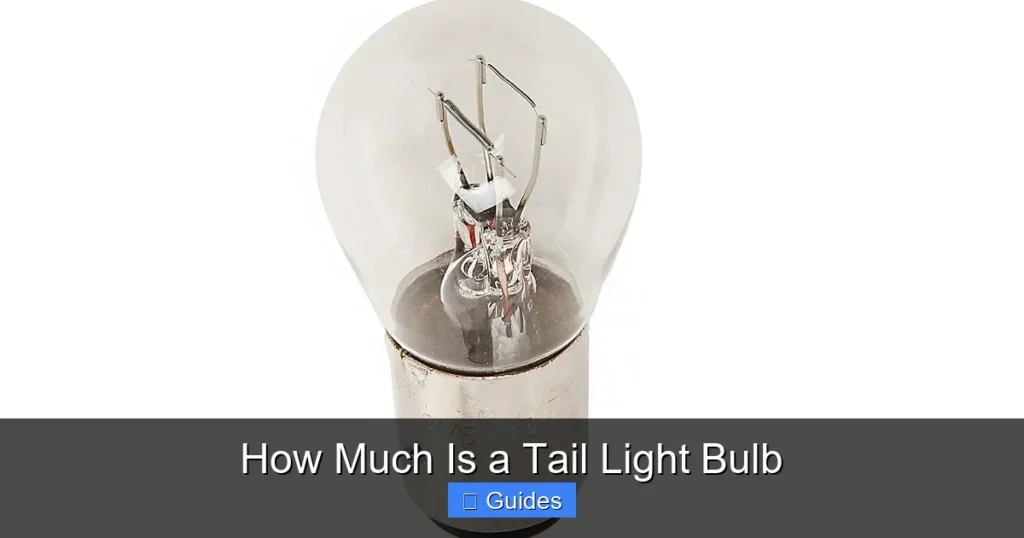
For decades, incandescent bulbs have been the standard. These are your traditional bulbs, much like the ones in your home, with a filament that heats up and glows when electricity passes through it.
- Pros: They are widely available, inexpensive, and easy to replace.
- Cons: They have a shorter lifespan compared to LEDs, consume more power, and can burn out more frequently.
Often, a single incandescent bulb will have two filaments – one for the dim tail light and a brighter one for the brake light. These are known as dual-filament bulbs (e.g., 1157, 3157, 7443).
LED Tail Light Bulbs
Light Emitting Diodes (LEDs) are the newer technology, becoming increasingly common in modern vehicles.
- Pros: They last significantly longer (often the lifetime of the vehicle), are much brighter, consume less power, and illuminate instantly.
- Cons: The initial cost of an LED tail light bulb is higher than an incandescent one. Some older vehicles might require a “load resistor” to prevent hyper-flashing if converting from incandescent to LED turn signals, but this isn’t usually an issue for just tail lights.
Many newer cars come equipped with integrated LED tail light units, where the bulbs aren’t designed to be individually replaced. If an LED unit fails in such a car, you might need to replace the entire tail light assembly, which can be significantly more expensive. However, many aftermarket LED replacement bulbs are available for vehicles originally fitted with incandescents.
The Cost of a Tail Light Bulb: Breaking Down the Price Tag
Let’s get to the brass tacks: how much money are we actually talking about for a tail light bulb? The cost can vary quite a bit, but generally, it’s not a bank-breaker.
Cost of the Bulb Itself
The price of the tail light bulb itself is usually the smallest part of the total expense, especially if you’re comfortable doing the replacement yourself.
- Standard Incandescent Bulb: You can typically expect to pay anywhere from $4 to $15 per bulb. Common incandescent bulbs like the 1157 or 3157 often fall into this range. Prices can vary slightly between brands (e.g., Sylvania, GE, Philips) and retailers.
- LED Replacement Bulb: If you’re upgrading from incandescent to LED or your car originally came with replaceable LED bulbs, the price point goes up. A single LED tail light bulb can cost anywhere from $15 to $30 or more. Some specialized, high-performance LED bulbs can even reach $50 or $60, but these are less common for basic tail light functions.
- Specialty or OEM Bulbs: For certain luxury vehicles or less common models, an original equipment manufacturer (OEM) bulb purchased from a dealership might be a bit pricier, potentially $20-$40, even for an incandescent. Aftermarket options are almost always cheaper.
It’s worth noting that some retailers sell bulbs in packs of two, which can sometimes offer a slight discount per bulb. Since it’s often recommended to replace both tail light bulbs at the same time for consistent brightness and to avoid another burnout soon, buying a pair can be a smart move.
Cost of Professional Installation (Labor)
If you’re not comfortable replacing the tail light bulb yourself, or if your car’s design makes it particularly difficult, you’ll need to factor in labor costs.
- Independent Mechanic: Most independent shops will charge between $20 and $50 for labor to replace a single tail light bulb. The price can depend on how accessible the bulb is. Some vehicles require removing parts of the trunk lining or even the entire tail light assembly, which takes more time.
- Dealership Service Center: Dealerships typically have higher labor rates. Expect to pay anywhere from $40 to $100 or more for them to replace a tail light bulb. Sometimes, they might try to include it as part of a larger diagnostic fee if you bring the car in for multiple issues.
- Auto Parts Stores: Many major auto parts retailers (like AutoZone, Advance Auto Parts, O’Reilly Auto Parts) offer free installation of tail light bulbs if you purchase the bulb from them. This is a fantastic option if you’re looking to save money and the replacement isn’t overly complicated. It’s always worth asking if they offer this service when you buy the bulb.
So, when combining the cost of the bulb and potential labor, the total expense for a tail light bulb replacement can range from as little as $4 (if you DIY with an incandescent) to upwards of $130 (for a specialty LED bulb installed at a dealership in a difficult-to-access location).
DIY vs. Professional Installation: What’s the Real Difference?
The choice between doing it yourself and getting professional help is a big factor in the overall cost. Let’s explore why.
The DIY Approach
Replacing a tail light bulb is often one of the easiest car repairs you can do.
- How it’s done: In many cars, you can access the tail light bulbs from inside the trunk. You might need to remove a small access panel, unscrew a few fasteners, or twist out the bulb housing. Some vehicles require the removal of the entire tail light assembly, which usually involves a few screws and clips on the exterior.
- Tools Needed: Often just a screwdriver (Phillips or flathead) or a small wrench. Sometimes, no tools are needed at all!
- Time Commitment: Usually 5-15 minutes, depending on your car’s design and your comfort level.
- Cost Savings: Significant! You avoid all labor charges, paying only for the tail light bulb itself.
If you’re unsure, a quick search on YouTube for “[Your Car Make Model Year] tail light bulb replacement” will often yield helpful step-by-step videos. It’s a great way to save money and gain a little automotive confidence.
Going Pro
There are valid reasons to opt for professional installation.
- Complexity: Some cars, particularly newer models with intricate designs or luxury vehicles, can make tail light bulb replacement surprisingly complex. If it involves removing multiple panels or special tools, a pro might be worth it.
- Lack of Tools or Time: If you don’t have the basic tools, aren’t comfortable working on your car, or simply don’t have the time, a mechanic is a convenient option.
- Integrated LED Units: As mentioned, if your car has an integrated LED tail light assembly where individual bulbs aren’t replaceable, a professional will be needed to replace the entire unit. This is a much larger job, and the cost will be significantly higher than just a bulb replacement.
Remember the auto parts stores offering free installation – this is often the best “pro” option for simple bulb replacements, combining convenience with cost savings.
Factors Influencing the Total Cost
Beyond just the bulb type and installation method, several other elements can sway the final price of replacing a tail light bulb.
Vehicle Make and Model
A basic Honda Civic tail light bulb will likely be cheaper and easier to replace than one on a Mercedes-Benz S-Class or a specialized heavy-duty truck. Luxury and import cars often use more expensive bulbs and can have more complex designs that drive up labor costs.
Bulb Accessibility
This is a major factor in labor costs. If the bulb is easily accessible from the trunk with a simple twist, labor will be minimal. If the mechanic has to remove bumper fascia, inner fender liners, or full tail light assemblies, the time and cost will increase.
Location and Type of Shop
As discussed, dealerships typically charge more than independent mechanics, and auto parts stores might offer free installation. Prices can also vary geographically; shops in major metropolitan areas often have higher labor rates than those in rural towns.
Brand and Quality of Bulb
While a generic “no-name” incandescent bulb might cost $4, a recognized brand like Sylvania, Philips, or GE might be $8-$15. For LED replacement bulbs, the price differences between budget brands and established names can be even more pronounced, reflecting differences in brightness, lifespan, and warranty. Choosing a reputable brand usually means better reliability.
Where to Buy Tail Light Bulbs: Best Options
Knowing where to purchase your tail light bulb can impact both convenience and price.
Auto Parts Stores
- Examples: AutoZone, Advance Auto Parts, O’Reilly Auto Parts, Pep Boys.
- Pros: Wide selection of incandescent and LED bulbs, knowledgeable staff who can help you find the correct bulb for your specific car, often offer free bulb testing and free installation services with purchase. They usually have a range of brands and price points.
- Cons: Prices might be slightly higher than online retailers for the exact same bulb.
This is often the most recommended option for ease, immediate availability, and potential free installation.
Online Retailers
- Examples: Amazon, RockAuto, eBay, PartsGeek.
- Pros: Typically offer the lowest prices, massive selection of brands and types, convenient delivery to your door. Great for planning ahead.
- Cons: You need to know exactly which bulb you need (use your car’s owner’s manual or a cross-reference guide). No immediate gratification or personal assistance. Shipping costs might negate some savings for a single, inexpensive bulb.
Online is excellent if you’re comfortable with DIY and want the best price, but make sure to double-check compatibility.
Dealership Parts Department
- Pros: Guaranteed to get the exact OEM (Original Equipment Manufacturer) bulb designed for your specific vehicle.
- Cons: Often the most expensive option. Limited selection of aftermarket brands.
Generally, only recommended if your car requires a highly specialized bulb that’s difficult to find elsewhere, or if you prefer strictly OEM parts.
Mass Retailers / Superstores
- Examples: Walmart, Target (sometimes in automotive sections).
- Pros: Convenient if you’re already shopping there. Some basic, common incandescent bulbs might be available.
- Cons: Very limited selection, staff usually not knowledgeable about specific vehicle needs. Unlikely to find specialty or LED bulbs.
A last resort for basic bulbs if other options aren’t available.
Tips for Saving Money and Extending Bulb Life
Replacing a tail light bulb doesn’t have to be a recurring nightmare or an expensive ordeal. Here are some smart tips:
Do It Yourself (DIY)
As emphasized, this is the biggest money-saver. Most tail light bulb replacements are beginner-friendly. Consult your car’s owner’s manual or YouTube for instructions specific to your vehicle.
Know Your Bulb Type
Before you even head to the store, check your owner’s manual or look up online resources for your car’s exact make, model, and year. You’ll need the bulb number (e.g., 1157, 3157, 7443) to ensure you buy the correct replacement.
Consider Replacing Both Bulbs
If one tail light bulb has gone out, its twin on the other side is often nearing the end of its life too. Replacing both at the same time ensures consistent brightness and saves you the hassle of another replacement in the near future. This is especially true for incandescent bulbs.
Upgrade to LED
While the initial cost of an LED tail light bulb is higher, they last much longer (tens of thousands of hours vs. a few thousand for incandescent), are brighter, and consume less power. This can save you money on replacements and potentially improve safety over the long run. Just ensure they are “CANbus error-free” if your car’s computer system is sensitive to bulb changes (though less common for tail lights than headlights or turn signals).
Use Reputable Brands
While it’s tempting to go for the cheapest option, a quality tail light bulb from a reputable brand will generally last longer and perform better than a no-name alternative. The few extra dollars are often worth it.
Keep Spare Bulbs
If you have an older car or frequently find yourself with burnt-out bulbs, consider keeping a spare tail light bulb in your glove compartment or trunk. This way, you can replace it immediately if one fails, avoiding a potential ticket or an unsafe driving situation.
Conclusion
A burnt-out tail light bulb is more than just an inconvenience; it’s a safety concern and a legal issue. Thankfully, the cost to replace a tail light bulb is typically very reasonable. For the bulb itself, you’re usually looking at $4 to $30, with professional installation adding another $20 to $100. By understanding the types of bulbs, your car’s specific needs, and the options for purchase and installation, you can keep your vehicle safe and compliant without breaking the bank. So, don’t delay – get that tail light fixed, and enjoy peace of mind on the road!
Key Takeaways
- Bulb Cost Variation: A single incandescent tail light bulb usually costs $4-$15, while an LED bulb can range from $15-$30+. Premium or specialty bulbs may be even more.
- DIY vs. Professional Installation: Replacing a tail light bulb is often a simple DIY task, saving you $20-$100 in labor fees. Many auto parts stores offer free installation with a bulb purchase.
- Factors Affecting Total Cost: The type of bulb (incandescent vs. LED), vehicle make and model, bulb accessibility, and whether you DIY or hire a mechanic all influence the final price.
- Importance of Functioning Tail Lights: A burnt-out tail light is illegal and dangerous, potentially leading to fines and increased accident risk. It’s crucial to replace it promptly.
- Where to Buy: Auto parts stores (AutoZone, Advance Auto Parts, O’Reilly), online retailers (Amazon, RockAuto), and dealership parts departments are common sources. Auto parts stores often provide helpful staff and free testing.
- Consider LED Upgrades: While more expensive upfront, LED tail light bulbs last significantly longer, consume less power, and offer brighter illumination, potentially saving money and hassle in the long run.
- Check Both Sides: When one tail light bulb goes out, the other is often not far behind. Consider replacing both simultaneously for consistent brightness and to avoid another visit soon.
Quick Answers to Common Questions
How long does a tail light bulb typically last?
An incandescent tail light bulb usually lasts between 1,000 and 5,000 hours of operation. LED tail light bulbs, however, can last significantly longer, often 25,000 to 50,000 hours or even the lifetime of the vehicle.
Can I drive with a burnt-out tail light bulb?
No, it is illegal and unsafe to drive with a burnt-out tail light bulb. You can receive a traffic ticket, and more importantly, it reduces your visibility to other drivers, significantly increasing the risk of a rear-end collision.
Do I need any special tools to replace a tail light bulb?
For many vehicles, replacing a tail light bulb only requires basic tools like a Phillips or flathead screwdriver, or sometimes no tools at all. However, some car designs might necessitate specific wrenches or removal tools, though this is less common for basic bulb replacements.
Is it worth upgrading to an LED tail light bulb?
Yes, upgrading to an LED tail light bulb is often worth it for its extended lifespan, brighter illumination, and lower power consumption. While the initial cost is higher, LEDs can save you money and hassle over time due to less frequent replacements.
What happens if I put the wrong tail light bulb in my car?
Using the wrong tail light bulb can lead to several problems: it might not fit correctly in the socket, fail to illuminate, cause electrical issues, or even damage the vehicle’s wiring or fuse box. Always use the specific bulb type and number recommended for your car.
Frequently Asked Questions
How do I know what type of tail light bulb my car needs?
The easiest way to determine the correct tail light bulb for your car is to consult your vehicle’s owner’s manual. It will list the specific bulb number (e.g., 1157, 3157, 7443) for each light function. You can also use online parts finders on auto parts store websites by entering your car’s make, model, and year.
Why did my tail light bulb burn out so quickly?
Several factors can cause a tail light bulb to burn out quickly. These include vibrations from rough roads, minor electrical issues like voltage spikes, corrosion in the bulb socket, or simply purchasing a low-quality or defective bulb. Sometimes, it’s just bad luck with a short-lived bulb.
Can an auto parts store really install my tail light bulb for free?
Yes, many major auto parts chains like AutoZone, Advance Auto Parts, and O’Reilly Auto Parts offer free installation services for tail light bulbs purchased at their store. This service is usually for basic bulb replacements that don’t require extensive disassembly of vehicle parts. It’s always a good idea to call ahead and confirm.
Are brake light bulbs and tail light bulbs the same?
Often, brake light bulbs and tail light bulbs are housed within the same physical bulb, especially for incandescent types. These are dual-filament bulbs (e.g., 1157, 3157) where one filament handles the dimmer tail light function, and the other brighter filament activates for the brake light. However, some vehicles may use separate bulbs for these functions, or have dedicated LED arrays.
What’s the average lifespan of an LED tail light bulb compared to incandescent?
The average lifespan of an LED tail light bulb is significantly longer than an incandescent one. Incandescent bulbs typically last 1,000-5,000 hours, while quality LED bulbs can last 25,000-50,000 hours or more. This means an LED could potentially last for the entire life of your car.
Should I replace both tail light bulbs at the same time?
It’s generally a good practice to replace both tail light bulbs at the same time, especially if they are incandescent and were installed around the same time. This ensures consistent brightness on both sides and prevents you from having to replace the other bulb shortly after the first, saving you another trip or labor charge.
