


As an Amazon Associate, We earn from qualifying purchases.
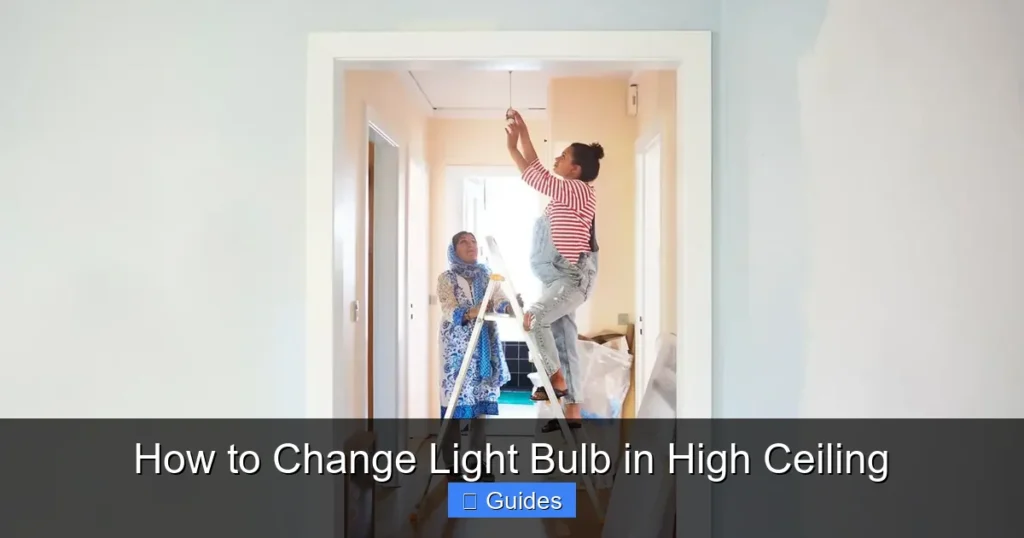
Changing a light bulb in a high ceiling can seem daunting, but with the right tools and safety precautions, it’s a manageable task. This guide covers everything from choosing the correct ladder or pole system to specific techniques for various bulb types, ensuring you can safely and efficiently brighten up your tall spaces. Prioritize safety by clearing your workspace and using proper equipment to avoid accidents.
There’s a certain elegance to high ceilings – they create an expansive, airy feel, adding grandeur and openness to any room. But that beauty comes with a practical challenge: when a light bulb inevitably burns out, changing it isn’t as simple as grabbing a step stool. The task of how to change light bulb in high ceiling can quickly turn from a minor inconvenience into a daunting, even dangerous, endeavor if you’re not properly prepared.
Fear not, homeowner! You don’t necessarily need to call an electrician every time a high-up bulb flickers out. With the right knowledge, equipment, and a healthy dose of caution, you can tackle this task yourself, saving time and money. This comprehensive guide will walk you through every step, from selecting the safest tools to mastering the techniques needed to safely change light bulb in high ceiling, transforming a potentially stressful chore into a manageable one.
Key Takeaways
- Safety First: Always prioritize safety by clearing the area, having a spotter, and assessing the stability of your ladder or tools before attempting to change a light bulb in a high ceiling.
- Right Tools for the Job: Invest in a sturdy extension ladder, an articulated ladder, or a high-quality light bulb changer pole system with various head attachments to safely reach high ceilings.
- Ladder Safety Protocol: When using a ladder, ensure it’s on a stable, level surface, extended correctly, and maintain three points of contact while ascending or descending. Avoid overreaching.
- Pole Changer Mastery: Light bulb changer poles are ideal for very high or hard-to-reach bulbs. Learn to attach the correct head, extend the pole, and apply gentle, steady pressure for removal and installation.
- Consider Bulb Type: Different bulb types (incandescent, LED, CFL) might require different handling or specific changer heads. Always ensure the new bulb matches the fixture’s requirements.
- When to Call a Pro: If the ceiling is excessively high (over 20 feet), the fixture is delicate or complex, or you feel unsafe, don’t hesitate to hire a professional electrician or handyman.
Quick Answers to Common Questions
What is the safest way to change a light bulb in a very high ceiling?
The safest way is to use a light bulb changer pole system from the ground. For higher ceilings that require ladder access, ensure you use a properly rated ladder, have a spotter, and follow all ladder safety guidelines, never overreaching.
Can I use a regular step ladder for high ceilings?
No, usually a regular step ladder is not tall enough for high ceilings and attempting to stand on the very top rung or overreach is extremely dangerous. You need an extension ladder, articulated ladder, or a pole system.
What if my light bulb is stuck in the socket?
First, turn off the power at the circuit breaker. If the bulb won’t unscrew, try spraying a small amount of penetrating oil around the base, avoiding electrical contacts, and let it sit before gently trying again with gloves.
What kind of light bulb changer head do I need for recessed lights?
For smooth-faced recessed lights (like floodlights or PAR/BR bulbs), a suction cup changer head is usually the most effective choice. Ensure it’s clean and forms a good seal.
When should I call a professional to change a high ceiling light bulb?
You should call a professional if your ceiling is excessively high (e.g., over 20 feet), the fixture is heavy, complex (like a delicate chandelier), or if you simply don’t feel safe or comfortable performing the task yourself.
📑 Table of Contents
Safety First: The Golden Rule for High Ceilings
Before you even think about grabbing a ladder or a light bulb changer pole, your absolute top priority must be safety. Working at height carries inherent risks, and a momentary lapse in judgment or an unstable setup can lead to serious injury. Always remember, a new light bulb isn’t worth a trip to the emergency room.
Assess the Situation and Your Equipment
Take a good look at the light fixture. Is it a simple recessed can light, a chandelier, or a track light? The type of fixture will dictate the tools you need. Next, consider the height. Is it 12 feet, 15 feet, or even higher? Your chosen method to change light bulb in high ceiling must be appropriate for that specific height. Inspect any ladders or tools you plan to use for damage, loose parts, or signs of wear. A wobbly ladder or a cracked pole extender is an accident waiting to happen.
Clear the Area
Before you begin, make sure the floor directly beneath and around your work area is completely clear. Move furniture, rugs, toys, and anything else that could obstruct your movement or cause you to trip. You want a clear, level, and unobstructed path for your ladder or for maneuvering your pole. This also provides a clear landing space should anything (or anyone!) accidentally fall.
Get a Spotter
If you’re using a ladder, especially an extension ladder, having a spotter is non-negotiable. A spotter can stabilize the base of the ladder, hand you tools or bulbs, and alert you to any hazards you might not see. Their presence significantly reduces the risk of the ladder slipping or toppling. Even when using a pole system, a spotter can offer an extra pair of eyes and hands, especially if you’re working with a very long or heavy pole.
Choose the Right Ladder or Tool
This is critical. Never try to stretch or overreach from an inadequate ladder. If your ladder doesn’t allow you to comfortably reach the fixture, it’s the wrong ladder. Consider an extension ladder, an articulated ladder (multi-position), or a specialized light bulb changer pole. We’ll delve into these tools in more detail, but remember: the right tool ensures you can reach the bulb without feeling precarious or off-balance. When you change light bulb in high ceiling, stability is key.
Essential Tools for the Job
Having the right arsenal of tools makes all the difference when you’re looking to change light bulb in high ceiling. Don’t skimp on quality, especially when it comes to safety equipment. Here’s what you’ll likely need:
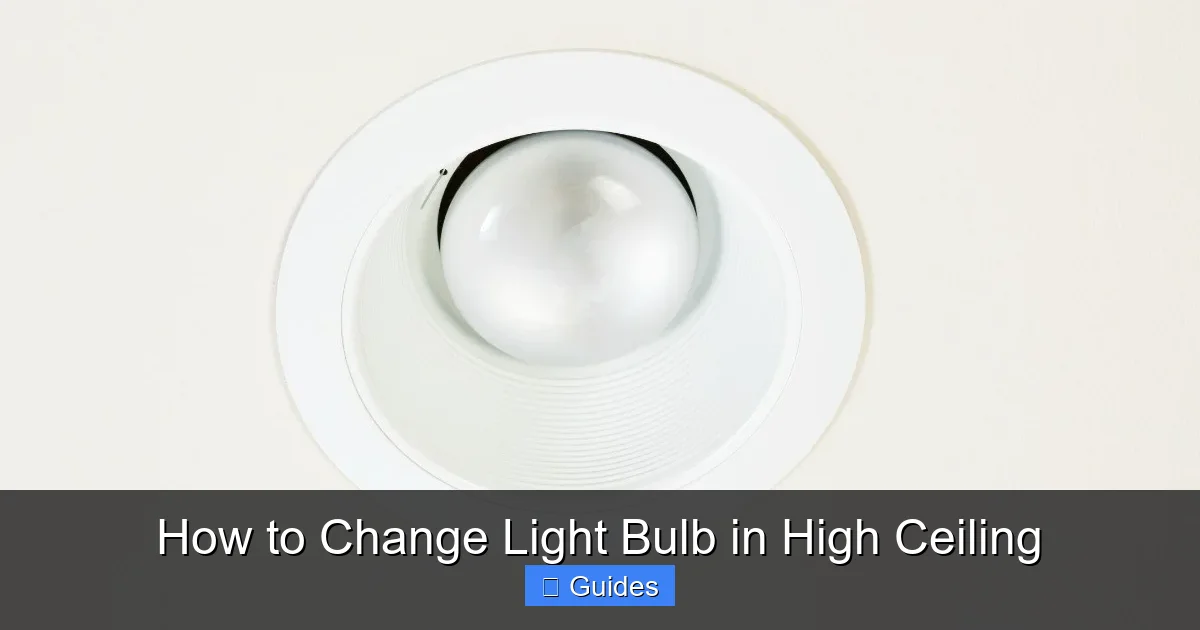
Visual guide about How to Change Light Bulb in High Ceiling
Image source: img.thrfun.com
The Right Ladder for the Job
- Extension Ladders: For very high ceilings (often 12 feet or more), an extension ladder might be necessary. Ensure it’s rated for the height you need and has non-slip feet. Always use it at the correct angle (a 1:4 ratio – for every 4 feet of height, the base should be 1 foot away from the wall).
- Articulated (Multi-Position) Ladders: These versatile ladders can be configured into A-frames, extensions, or even scaffolding. They offer great stability and flexibility for various ceiling heights and angles. Make sure it’s fully locked in position before climbing.
- Platform Ladders: While not for extreme heights, a sturdy platform ladder can be excellent for slightly higher ceilings where a regular step stool isn’t quite enough. The platform provides a more stable standing surface than rungs.
Tip: Never use a regular stepladder if you have to stand on the very top rung or the platform designed for tools. Your belt buckle should not be higher than the top of the ladder.
Light Bulb Changers (Pole Systems)
For ceilings that are incredibly high, or fixtures that are difficult to access with a ladder (like those over stairwells), a light bulb changer pole system is a godsend. These systems consist of:
- Extendable Pole: Often made of fiberglass or aluminum, these poles can extend several feet, sometimes up to 20 feet or more.
- Various Changer Heads: These are specialized attachments that screw onto the end of the pole. Common types include:
- Suction Cup Grippers: Best for smooth, flat-faced bulbs (like floodlights or recessed bulbs).
- Cage Grippers/Fingers: Designed for standard incandescent, CFL, or LED bulbs, these heads typically have spring-loaded fingers that gently grip the bulb.
- Rubber Cup Grippers: Offer a softer grip for more delicate bulbs.
- Broken Bulb Remover: A specialized tool for extracting bulbs that have broken off at the base.
Make sure to get a set that includes heads compatible with the types of bulbs in your high ceiling fixtures.
Protective Gear
- Work Gloves: Protect your hands from glass shards (if a bulb breaks) and provide a better grip, especially when handling a long pole.
- Safety Glasses: Essential to protect your eyes from dust, debris, or shattered glass.
- Closed-Toe Shoes with Good Grip: Crucial for stability on ladders. Avoid sandals or open-toed shoes.
New Bulbs and Cleaning Supplies
- The Right Replacement Bulbs: Ensure you have the correct wattage, base type (e.g., E26, GU10), color temperature, and beam angle for your fixture. Consider upgrading to long-lasting LEDs to reduce how often you need to change light bulb in high ceiling.
- Cleaning Cloths/Wipes: While you’re up there, it’s a perfect opportunity to wipe down dusty fixtures.
- Small Bucket or Bag: To safely collect the old bulb and any debris.
Mastering the Ladder Technique
If your ceiling height allows for safe ladder use, this is often the most direct method to change light bulb in high ceiling. However, proper ladder technique is paramount for safety.
Setting Up Your Ladder Safely
- Level and Stable Surface: Always place your ladder on a firm, level, non-slip surface. If the floor is uneven, use ladder levelers to stabilize the base. Never place a ladder on a rug or loose mat without ensuring it won’t slide.
- Proper Angle: For extension ladders, the 4-to-1 rule is key: for every four feet of height the ladder reaches, the base should be one foot away from the wall. This creates a stable angle.
- Locking Mechanisms: Ensure all locking mechanisms (on extension ladders or articulated ladders) are fully engaged and secure before you even think about climbing.
- Extension Beyond the Work Area: For extension ladders, the ladder should extend at least three feet above the point of support (the ceiling edge or wall top) you are climbing to.
Climbing and Working on the Ladder
- Three Points of Contact: When climbing or descending, always maintain three points of contact with the ladder (two hands and one foot, or two feet and one hand).
- Face the Ladder: Always face the ladder when ascending or descending.
- Keep Your Belt Buckle Between the Rails: This ensures your center of gravity remains within the ladder’s footprint. Never overreach or lean too far to one side. If you can’t reach, descend, reposition the ladder, and re-ascend.
- Secure Your Tools: Carry tools in a tool belt or have your spotter hand them to you. Never climb with tools in your hands, as this compromises your grip and balance.
- Removing the Old Bulb: Once safely positioned, turn the bulb counter-clockwise to loosen it. If it’s hot, wait for it to cool or use gloves. Be gentle, especially if the bulb feels stuck.
- Installing the New Bulb: Carefully screw the new bulb in clockwise until it’s snug, but don’t overtighten it. Overtightening can crack the bulb or strip the fixture.
When a Ladder Isn’t Enough: Scaffolding or Professional Help
For extremely high ceilings (often 20 feet or more), vaulted ceilings, or when dealing with heavy or complex fixtures like large chandeliers, a standard ladder might not be safe or sufficient. In these cases, consider renting scaffolding for a more stable work platform. Alternatively, and often the safest bet, is to hire a professional electrician or a handyman service specializing in high-ceiling work. They have the specialized equipment and expertise to safely change light bulb in high ceiling without risking injury or damage to your home.
The Magic of Light Bulb Changer Poles
For many homeowners, especially those with cathedral ceilings or stairwells, the light bulb changer pole is the go-to solution for how to change light bulb in high ceiling. It allows you to replace bulbs from the safety of the ground.
Understanding Different Changer Heads
As mentioned, various heads exist. Identify your bulb type:
- Recessed Can Lights (e.g., PAR, BR, R bulbs): Often smooth and round, best handled by a suction cup changer head. Ensure the rubber is clean and pliable for a good seal.
- Standard (A-shape) or CFL/LED Bulbs: These often have a more traditional shape and can be gripped by spring-loaded “finger” changers or rubber cup changers.
- Track Lighting Bulbs (e.g., GU10, MR16): Some specific small suction cup or cage changers are designed for these smaller, often twist-and-lock bulbs.
Match the head to your bulb for the best grip and to avoid breakage.
Attaching and Extending the Pole
- Secure the Head: Screw the appropriate changer head firmly onto the end of your extendable pole.
- Extend with Caution: Extend the pole gradually, locking each section as you go, until it’s just long enough to comfortably reach the bulb. Avoid over-extending, as this can make the pole wobbly and harder to control.
Removing the Old Bulb
- Positioning: Carefully guide the changer head over the old bulb. If using a suction cup, center it perfectly. If using a cage/finger gripper, ensure the fingers surround the bulb securely.
- Apply Gentle Pressure (Suction Cup): For suction cups, push the pole gently upwards to create a seal. Then, twist the pole counter-clockwise to unscrew the bulb. Maintain steady upward pressure to keep the suction.
- Grip and Twist (Cage/Fingers): For cage grippers, gently push the head onto the bulb until the fingers grip firmly. Twist counter-clockwise to unscrew.
- Lowering the Bulb: Once unscrewed, slowly and carefully lower the pole, keeping the bulb secure in the changer head, until you can safely detach it.
Installing the New Bulb
- Attach the New Bulb: Secure the new bulb into the changer head. For suction cups, press it firmly to create a seal. For cage grippers, carefully seat the bulb within the fingers.
- Guide Upwards: Slowly raise the pole, guiding the new bulb into the socket.
- Screw In: Gently turn the pole clockwise to screw the bulb into the socket. You’ll feel it catch. Continue turning until it’s snug but not overtightened.
- Release: For suction cups, a slight side-to-side wiggle or gentle twist will often break the seal. For cage grippers, pull straight down gently to release the bulb. Ensure the bulb is fully seated and not just resting in the socket before detaching the changer.
Tips for Recessed Lighting and Track Lighting
Recessed lights often require a suction cup due to their smooth surface. For track lighting, ensure you know if the bulb twists into place (like GU10s) or simply pushes in (like some MR16s). Some track light fixtures have clips that need to be released before the bulb can be removed, which can be tricky with a pole. Always read the fixture’s instructions if available.
Special Considerations and Advanced Tips
Changing light bulb in high ceiling isn’t always straightforward. Here are some extra tips for trickier situations.
Dealing with Different Bulb Types (CFLs, LEDs, Halogen)
- CFLs (Compact Fluorescent Lamps): Handle these carefully as they contain a small amount of mercury. If a CFL breaks, open windows, leave the room for 15 minutes, and then clean up thoroughly using disposable gloves and a damp paper towel, never a vacuum cleaner.
- LEDs (Light Emitting Diodes): LEDs are more durable and don’t get as hot as traditional incandescent bulbs. They’re also mercury-free, making cleanup easier if one breaks. Their long lifespan means you won’t need to change light bulb in high ceiling as often.
- Halogen Bulbs: These get extremely hot. Always let them cool completely before attempting removal. Avoid touching new halogen bulbs directly with bare hands; the oils from your skin can create hot spots and shorten their lifespan. Use gloves or a clean cloth to handle them.
When Bulbs are Stuck or Broken
- Stuck Bulbs: Over time, heat can cause bulbs to seize in their sockets. If a bulb won’t turn, try spraying a small amount of penetrating oil (like WD-40) around the base of the socket, being careful not to get it on the electrical contacts. Let it sit for a few minutes before trying again.
- Broken Bulbs: If the glass bulb breaks, leaving the base still screwed into the socket, *DO NOT TOUCH IT WITH YOUR BARE HANDS*. First, ensure the power to the fixture is absolutely off at the circuit breaker. Use a specialized broken bulb remover tool (often a tapered, rubber-coated tool that you push into the broken base and twist) or needle-nose pliers with insulated handles to carefully twist out the base.
Cleaning Fixtures While You’re Up There
Since you’ve gone to the effort to safely reach your high ceiling fixture, take a moment to clean it! Dust and cobwebs can accumulate, reducing light output and potentially posing a fire hazard. Use a dry or slightly damp cloth to wipe down glass globes, shades, and the fixture itself. If cleaning a chandelier, be extra gentle with delicate parts.
Proactive Lighting Maintenance
To reduce the frequency of having to change light bulb in high ceiling, consider these proactive steps:
- Long-Life Bulbs: Invest in high-quality LED bulbs with extended lifespans (e.g., 25,000-50,000 hours). While more expensive initially, they save you the hassle and cost of frequent replacements.
- Consistent Replacements: If multiple bulbs in a fixture are of the same age, consider replacing them all at once. This prevents you from having to repeat the process every few weeks.
- Dimmer Switches: Using dimmer switches can extend the life of incandescent and halogen bulbs (though check compatibility for LEDs).
Conclusion
Changing a light bulb in a high ceiling doesn’t have to be a dreaded chore. By prioritizing safety, investing in the right tools, and understanding proper techniques, you can confidently tackle this task yourself. Whether you opt for the sturdy reliability of a well-positioned ladder or the ingenious reach of a light bulb changer pole, always remember that preparation and caution are your best friends.
Remember to assess the situation, clear your workspace, and never compromise on safety. With these guidelines, you’re now equipped to illuminate every corner of your beautiful high-ceilinged rooms, ensuring your home remains bright and inviting. And if at any point the task feels too challenging or unsafe, there’s no shame in calling a professional – your well-being is always the most important consideration.
🎥 Related Video: Changing the burned bulb had never been so easy before
📺 A1 Home
Changing the burned bulb had never been so easy before.
Frequently Asked Questions
How do I know what size ladder I need for my high ceiling?
To determine the ladder size, measure the height to the light fixture. For an extension ladder, you’ll need one that can extend at least 3 feet beyond the point of support, allowing you to comfortably reach the fixture without standing on the very top rungs. A spotter can also help assess the reach.
Are light bulb changer poles universal for all bulb types?
No, light bulb changer poles come with various interchangeable heads designed for different bulb types, such as suction cups for smooth recessed bulbs, cage grippers for standard bulbs, and specialized heads for broken bulbs. Ensure you have the correct head for your specific bulb.
What should I do if a CFL bulb breaks while I’m changing it?
If a CFL bulb breaks, immediately turn off the HVAC system, open windows, and leave the room for 15 minutes. When you return, wear gloves, carefully scoop up all fragments with stiff paper or cardboard, use sticky tape for small pieces, and wipe the area with a damp paper towel. Place all materials in a sealed plastic bag for disposal according to local hazardous waste guidelines.
Can I clean the light fixture while changing the bulb in a high ceiling?
Yes, absolutely! It’s an excellent opportunity to clean the fixture. Make sure the power is off, and gently wipe down globes, shades, or the fixture itself with a dry or slightly damp cloth to remove dust and cobwebs before installing the new bulb.
Is it worth replacing high ceiling incandescent bulbs with LEDs?
Definitely! Upgrading to LED bulbs is highly recommended for high ceilings. LEDs have a significantly longer lifespan (meaning fewer trips up the ladder), consume less energy, and produce less heat, making them a more efficient and safer choice in the long run.
How can I prevent light bulbs from getting stuck in high ceiling fixtures?
To prevent bulbs from getting stuck, avoid overtightening them during installation. You can also apply a small amount of dielectric grease (specifically designed for electrical connections) to the threads of the bulb’s base before screwing it in. This can help prevent corrosion and seizing over time.
