


As an Amazon Associate, We earn from qualifying purchases.
Navigating the world of light bulb sizes can seem confusing, but the “standard light bulb” for most homes in North America is typically the A19 shape with an E26 base. This means it has a classic “A” shape, measures 19 eighths of an inch in diameter, and screws into a common 26mm Edison socket. Understanding bulb codes like A19, G25, or PAR38, and base types like E26, E12, or GU10, is key to ensuring compatibility and achieving the right lighting effect for any fixture in your home.
What Size Is a Standard Light Bulb? Demystifying Your Home Lighting Choices
Ever stood in the light bulb aisle, staring at a dizzying array of numbers and letters, wondering what on earth “A19 E26” or “G25 E12” actually means? You’re not alone! It’s a common dilemma. We all just want to find “the standard light bulb” that fits our lamp, but the reality is a little more nuanced than a single universal size. While there is indeed a dominant player in the world of residential lighting, understanding what makes it “standard” and how to identify other types is key to a perfectly lit home.
This guide is here to cut through the confusion like a beam of light through a dark room. We’re going to break down the mysterious codes, explain what each part means, and empower you to confidently choose the right bulb for any fixture in your home. Forget the guesswork and the frustration of buying the wrong size; by the end of this, you’ll be a light bulb sizing pro!
Key Takeaways
- The “Standard” Bulb: In North America, the most common “standard light bulb” is the A19 shape with an E26 medium screw base. It’s often found in general purpose fixtures.
- Decoding Bulb Sizes: Light bulb sizes are typically identified by a letter (representing shape) followed by a number (representing diameter). For example, “A” is the classic pear shape, and “19” indicates 19 eighths of an inch in diameter.
- Understanding Base Types: The base code (e.g., E26, E12, GU10) tells you how the bulb connects to the fixture. “E” stands for Edison screw, and the number is its diameter in millimeters.
- Beyond A19: Many other common shapes exist, such as Globe (G series for vanity lights), Reflector (R or PAR series for recessed lighting), Candle (B or C series for decorative fixtures), and Tubular (T series).
- Why Size Matters: Using the correct bulb size ensures physical fit, electrical compatibility, safe operation (preventing overheating in enclosed fixtures), and proper aesthetic appeal.
- How to Choose: Always check the existing bulb’s markings, measure the fixture’s space, and read the fixture’s maximum wattage and bulb type recommendations. When in doubt, take the old bulb to the store.
Quick Answers to Common Questions
What is the most common standard light bulb size in North America?
The most common standard light bulb size in North America is the A19 shape with an E26 medium screw base.
What does “A19” mean on a light bulb?
“A” refers to the classic pear-like shape of the bulb, and “19” indicates its widest diameter is 19 eighths of an inch (or 2.375 inches).
What does “E26” mean for a light bulb base?
“E” stands for Edison screw base, and “26” indicates that the diameter of the screw base is 26 millimeters.
Can I use an E27 bulb in an E26 socket?
While E26 and E27 bases are very similar in size and often physically interchangeable, there can be slight differences in voltage ratings and safety standards. It’s generally recommended to use the bulb specified for your region (E26 in North America) for optimal safety and performance.
Why is it important to use the correct light bulb size?
Using the correct light bulb size ensures physical fit within the fixture, proper electrical connection, prevents overheating (especially in enclosed fixtures), and maintains the intended aesthetic and light distribution.
📑 Table of Contents
- Unpacking the “Standard”: What Do Bulb Codes Mean?
- The A19/E26: The Most Common “Standard Light Bulb”
- Beyond A19: Exploring Other Popular Bulb Shapes and Sizes
- Understanding Light Bulb Bases: More Than Just “E”
- Why Light Bulb Size and Base Compatibility Are Crucial
- Tips for Choosing the Right Light Bulb Size Every Time
- Conclusion
Unpacking the “Standard”: What Do Bulb Codes Mean?
When you look at a light bulb’s packaging, you’ll usually see a combination of letters and numbers, like A19 or E26. These aren’t random; they’re a concise way to describe two critical aspects of the bulb: its shape and its diameter, and its base type. Think of it like a shoe size – you need to know both the length and the width for a comfortable fit!
The first part of the code, usually a letter, tells you the bulb’s overall shape. The number that follows almost always refers to the bulb’s widest diameter, measured in eighths of an inch. Yes, it’s a bit quirky, but it’s a longstanding industry standard. The second part of the code, usually starting with “E” (for Edison), describes the type and size of the base – the part that screws into your fixture.
Decoding Bulb Shapes and Diameters
Let’s start with the shape. The letter gives you a visual clue, and the number tells you its girth.
* **A-Shape (Arbitrary or “Classic”):** This is the familiar pear-shaped bulb we often think of when we picture a light bulb.
* **B-Shape (Bullet) or C-Shape (Candle):** These are smaller, often pointed or blunt-tipped bulbs, common in chandeliers or decorative fixtures.
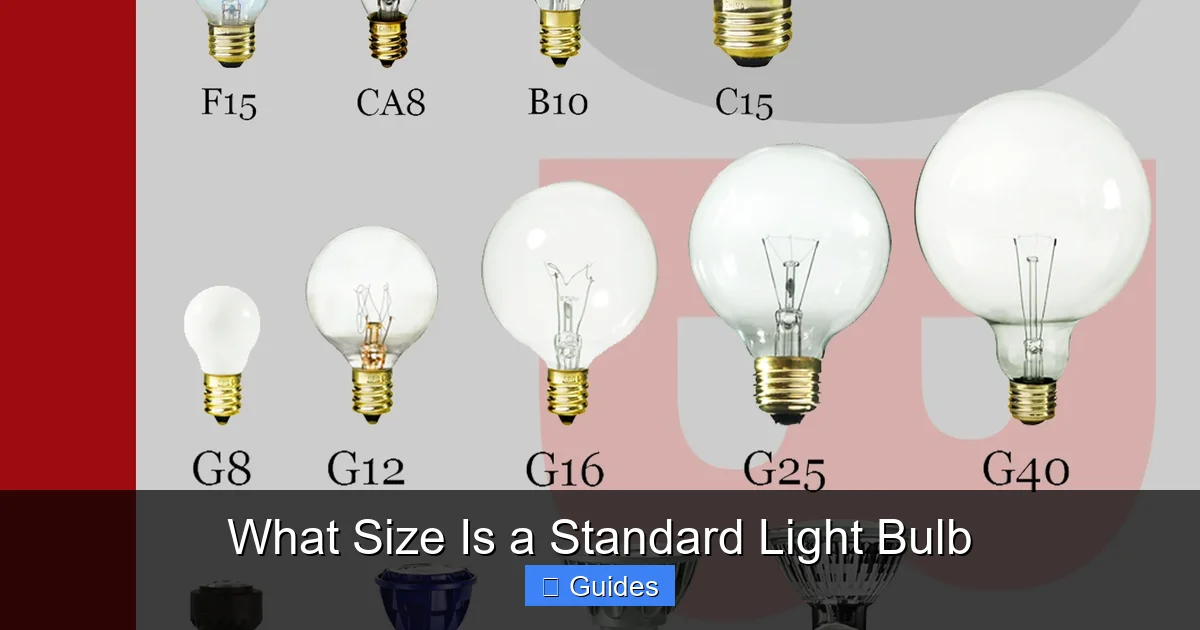
* **G-Shape (Globe):** These bulbs are perfectly round, often used in vanity lights or exposed fixtures where the bulb itself is part of the design.
* **MR-Shape (Multi-faceted Reflector):** These are smaller, often glass-covered bulbs with an internal reflector, creating a focused beam. Think track lighting.
* **PAR-Shape (Parabolic Aluminized Reflector):** These are larger, typically outdoor or recessed lighting bulbs designed for directional light. They look a bit like car headlights.
* **R-Shape (Reflector):** Similar to PAR but often less precise in their beam. Common in recessed fixtures indoors.
* **T-Shape (Tubular):** These are long, slender bulbs, ranging from small decorative tubes to large fluorescent tubes.
Remember, the number after the letter (e.g., “19” in A19) is the diameter at the bulb’s widest point, expressed in eighths of an inch. So, an A19 bulb is 19/8 inches wide, which equals 2.375 inches. A G25 bulb is 25/8 inches wide, or 3.125 inches. Simple enough, right? Once you get the hang of it, these codes start to make a lot of sense.
Understanding Base Codes: The “E” and Beyond
The base is equally important because it’s what connects the bulb to the power source. The “E” in many base codes stands for “Edison screw,” named after Thomas Edison. The number after the “E” indicates the diameter of the screw base in millimeters.
* **E26:** This is the most common screw-in base in North America. It’s a medium-sized base, 26 millimeters in diameter.
* **E12:** Known as a candelabra base, it’s smaller, 12 millimeters in diameter, often found on decorative bulbs like C7 or B10 shapes.
* **E17:** An intermediate base, 17 millimeters, less common but still around.
* **E39:** A mogul base, much larger at 39 millimeters, typically used for high-wattage industrial or street lighting.
While Edison screw bases are dominant, other types exist, like GU10 (a twist-and-lock bi-pin base for track lights) or G9 (a bi-pin capsule base for small fixtures). We’ll dive deeper into these later.
The A19/E26: The Most Common “Standard Light Bulb”
Visual guide about What Size Is a Standard Light Bulb
Image source: images.squarespace-cdn.com
When people ask, “What size is a standard light bulb?” they are almost always referring to the A19 shape with an E26 medium screw base. This is the workhorse of home lighting in the United States and Canada. Let’s break down why this specific combination holds the “standard” title.
The A19 Shape: A Timeless Classic
The “A” in A19 denotes the classic, pear-like shape that has been synonymous with light bulbs for over a century. It’s a versatile design that distributes light broadly and evenly, making it ideal for general ambient lighting in lamps, ceiling fixtures, and sconces. The “19” tells us its widest point is 19/8 inches, or 2.375 inches (about 60mm). This size is compact enough for most residential fixtures but large enough to house a powerful light source and adequate heat dissipation.
The E26 Base: America’s Go-To Screw
The E26 base is an Edison screw base with a diameter of 26 millimeters. It’s robust, easy to install (just screw it in!), and incredibly prevalent. If you have a lamp or a light fixture in your home, there’s a very high chance it uses an E26 base.
It’s important to note the geographical distinction here. While E26 is the standard in North America, much of Europe and other regions use the E27 base. Functionally, E26 and E27 bulbs are very similar in size and often interchangeable in terms of physically screwing into the socket. However, there are slight differences in voltage ratings and safety standards, so it’s always best to use the bulb specified for your region if possible. For most common home use, an A19 E26 is your go-to standard light bulb.
Beyond A19: Exploring Other Popular Bulb Shapes and Sizes
While the A19/E26 combination is the reigning standard, your home is likely filled with fixtures that require different shapes and sizes. Understanding these variations will help you light every corner effectively and stylishly.
Candle (B and C series)
These slender, often decorative bulbs are perfect for chandeliers, wall sconces, and enclosed decorative fixtures.
* **C7 or C9:** Small, often used for nightlights or holiday string lights. The “C” indicates a conical or candle flame shape, and the number is the diameter in eighths of an inch. They usually have an E12 (candelabra) base.
* **B10 or B11:** Slightly larger candle-shaped bulbs, often with a blunt tip. The “B” indicates a bullet or blunt tip candle shape. They commonly use an E12 (candelabra) base and are popular in multi-bulb decorative fixtures.
Globe (G series)
Globe bulbs are perfectly round and are designed to be seen. They’re often used in bathroom vanity strips, pendant lights, or any fixture where the bulb is exposed.
* **G16.5:** A smaller globe bulb, sometimes called a “golf ball” bulb.
* **G25:** The most common globe bulb, 25 eighths of an inch (about 3.125 inches) in diameter.
* **G30, G40:** Larger globe bulbs used for more dramatic effect or in larger fixtures.
Most globe bulbs, especially G25, use an E26 medium base, but smaller globe bulbs might use an E12 base.
Reflector (R and PAR series)
These bulbs are designed to direct light, often used in recessed lighting, track lighting, and outdoor floodlights.
* **R-Shape (Reflector):** These bulbs have an internal reflective coating to direct light forward. Common sizes include **R20** (for 4-inch recessed cans), **BR30** (Bulged Reflector, for 5-inch or 6-inch recessed cans), and **BR40** (for larger 6-inch recessed cans). They almost always have an E26 base.
* **PAR-Shape (Parabolic Aluminized Reflector):** PAR bulbs offer more precise light control and are generally more robust, making them ideal for outdoor use or commercial applications. Common sizes are **PAR20**, **PAR30**, and **PAR38**. The “38” in PAR38 means it’s 38 eighths of an inch (4.75 inches) wide, a typical size for outdoor floodlights. PAR bulbs also primarily use an E26 base.
Tubular (T series)
Tubular bulbs are long and slender. They can be very small for accent lighting or much larger for utility and commercial use.
* **T4, T5, T6, T8, T10, T12:** These numbers relate to their diameter in eighths of an inch. For example, a T8 bulb is 8 eighths of an inch (1 inch) in diameter. Smaller T-bulbs (T4, T5, T6) are often used in under-cabinet lighting or specialized fixtures. Larger ones (T8, T12) are traditional fluorescent tube sizes.
* Small T-bulbs can have an E12, E17, or E26 base, while larger ones use specialized bi-pin bases (like G13 for T8/T12).
Multi-faceted Reflector (MR series)
* **MR16:** A very common bulb type for track lighting, landscape lighting, and display cases. The “MR” indicates its multifaceted reflector, creating a focused beam. The “16” means it’s 16 eighths of an inch (2 inches) in diameter. MR16s typically use a GU5.3 bi-pin base, but some newer LED versions are available with GU10 twist-and-lock bases.
Understanding Light Bulb Bases: More Than Just “E”
The base of a light bulb is just as important as its shape and size. It’s the point of connection to your fixture and determines electrical compatibility. While E26 is the standard light bulb base for most homes, a variety of others exist.
Edison Screw Bases (E-series)
We’ve already touched on these, but let’s list the most common ones you might encounter:
* **E12 (Candelabra):** Smallest common screw base. Found on C7, C9, B10, B11 bulbs.
* **E17 (Intermediate):** A step up from candelabra. Less common but used in some specialized fixtures.
* **E26 (Medium):** The most common standard light bulb base in North America. Used on A19, G25, BR30, PAR30/38, and many other general-purpose bulbs.
* **E39 (Mogul):** A very large base for high-wattage bulbs, typically in industrial or street lighting applications. Not common in residential settings.
Bi-pin Bases (G-series)
These bases use two pins to connect to the fixture, rather than a screw mechanism.
* **GU10:** A common bi-pin base where the pins have a small square foot that twists and locks into place. Popular with some MR16 LED bulbs for track lighting.
* **GU5.3 (or GX5.3):** The standard bi-pin base for traditional MR16 halogen and many MR16 LED bulbs. The pins simply push into the socket.
* **G4, G6.35, G9:** Small capsule-style halogen or LED bulbs often used in compact fixtures, puck lights, or under-cabinet lighting. The number refers to the distance between the pin centers in millimeters.
Bayonet Bases (B-series)
Less common in North America for residential general lighting, but prevalent in some older fixtures, automotive lighting, and in other parts of the world (like the UK and Australia, where B22 is common). Instead of screwing in, you push the bulb in and twist it to lock it in place.
* **BA15d (Double Contact Bayonet):** Often used in marine or specialized applications.
* **B22d (Bayonet Cap):** The common “large bayonet” in the UK.
Why Light Bulb Size and Base Compatibility Are Crucial
Choosing the wrong light bulb size or base type isn’t just an annoyance; it can lead to functional problems, safety hazards, and aesthetic compromises. Getting it right is about more than just finding any standard light bulb.
Physical Fit and Electrical Compatibility
This is the most obvious reason. A bulb that’s too wide simply won’t fit into the shade or housing of your fixture. A bulb that’s too long might protrude unpleasantly or hit the top of an enclosed fixture. If the base doesn’t match (e.g., trying to put an E12 bulb into an E26 socket), it won’t screw in or connect electrically. Even if it seems to “fit” loosely, it can create a poor electrical connection, leading to flickering or failure.
Safety Hazards
This is where compatibility becomes critical.
* **Overheating in Enclosed Fixtures:** If you put a bulb that’s too large or too high wattage for an enclosed fixture, it can lead to excessive heat buildup. This can shorten the bulb’s lifespan, damage the fixture, or in severe cases, pose a fire risk. Always check the fixture’s maximum wattage rating and look for bulbs specifically rated for enclosed fixtures (often marked “Enclosed Fixture Rated”).
* **Electrical Mismatch:** Using a bulb with a different voltage rating than your fixture can cause immediate damage to the bulb or, potentially, the fixture. While less common in standard residential settings with E26 bulbs, it’s a concern with specialized low-voltage bulbs (like some MR16s) or when dealing with imported fixtures.
Aesthetic Impact
Beyond safety and function, the right bulb size contributes significantly to the overall look and feel of your lighting.
* **Protrusion:** A bulb that sticks out too far from a decorative fixture can look awkward and expose the bright filament/LED array, creating glare.
* **Light Spread:** Different shapes are designed for different light spreads. An R or PAR bulb is great for focused light in a recessed can, but a G25 globe bulb would look out of place and spread light poorly in the same application. A standard light bulb (A19) works well for general diffuse light.
* **Scale:** In a chandelier, small candelabra bulbs (B10/C7/C9) look elegant. A large A19 bulb would overwhelm the fixture’s delicate design.
Tips for Choosing the Right Light Bulb Size Every Time
Now that you’re armed with knowledge, let’s put it into practice. Follow these steps to confidently choose the correct standard light bulb size, or any bulb, for your needs.
Identify the Current Bulb
The easiest way to find the right replacement is to look at the old bulb.
* **Read the Markings:** Most bulbs have their shape, size, and base type printed right on the base or glass (e.g., “A19 E26”). Take a picture with your phone if you can’t remember it.
* **Take it with You:** If the markings are worn off, take the old bulb to the store. A sales associate can help you identify it, or you can compare it to new bulbs.
Measure the Fixture
Sometimes you don’t have an old bulb, or you want to try a different style.
* **Measure Diameter:** Use a ruler or tape measure to find the maximum width and length the bulb can be while still fitting inside any shade or housing.
* **Check the Socket:** Visually inspect the socket to determine if it’s a screw-in (Edison) or a push-in/twist-and-lock (bi-pin or bayonet) type. For Edison bases, you can try to estimate the diameter or compare it to known sizes (e.g., E26 is clearly larger than E12).
Consider the Application
Think about where the bulb is going and what kind of light you want.
* **General Lighting:** A standard light bulb like an A19 E26 is usually perfect.
* **Decorative/Exposed:** A G25 globe bulb or a C11 candle bulb might be better if the bulb is visible and part of the aesthetic.
* **Recessed/Directional:** R or PAR bulbs are designed for these applications.
* **Small/Enclosed Spaces:** Often require smaller bulbs (like C7) or specialized types.
Read the Fixture’s Specifications
Many light fixtures, especially recessed cans or ceiling fans, will have a label indicating the maximum wattage and sometimes even the recommended bulb shape. **Always adhere to these guidelines for safety.** If it says “Max 60W A-type bulb,” stick to that. For LED bulbs, which use much less wattage, focus on matching the shape and size.
When in Doubt, Consult an Expert
If you’re still unsure, don’t hesitate to ask for help at a hardware store or lighting specialty shop. Bring photos of your fixture and measurements, or even the old bulb itself.
By following these practical tips, you’ll not only find the right standard light bulb but also gain the confidence to select any specialized bulb your home might need, ensuring your spaces are always perfectly illuminated, safely and stylishly.
Conclusion
The question “What size is a standard light bulb?” might seem simple, but as we’ve explored, the answer is wonderfully detailed. While the A19 shape with an E26 medium screw base is the undisputed champion for general home lighting in North America, the world of light bulbs offers a rich variety of shapes, sizes, and base types to suit every need and aesthetic.
From the elegant curve of a G25 globe to the focused beam of a PAR38 floodlight, each bulb has a specific purpose and design. By understanding the simple codes – the letter for shape, the number for diameter (in eighths of an inch), and the base type (like E26 in millimeters) – you’re no longer guessing in the light bulb aisle. You’re now equipped to make informed choices that ensure safety, compatibility, and the perfect ambiance for every corner of your home. So go forth and illuminate with confidence!
🎥 Related Video: Standard Light Bulb – Size & Codes | Spec. Sense
📺 AMRE Supply
What does the A19 code describe? What is an E26 base? In this episode of Spec. Sense, Vance shows how to measure and how …
Frequently Asked Questions
What is the difference between an A19 and a G25 light bulb?
An A19 light bulb has the traditional pear shape, which is great for general, diffused lighting. A G25 light bulb is perfectly round, often called a globe bulb, and is typically used in vanity strips or exposed fixtures where the bulb’s aesthetic is part of the design.
Are all LED bulbs the same size as their incandescent counterparts?
Generally, yes. LED bulbs are designed to mimic the sizes and shapes of traditional incandescent bulbs (like A19, G25, BR30) to ensure compatibility with existing fixtures. However, because LEDs are more efficient, they sometimes come in smaller sizes for the same light output.
What do the numbers mean on PAR and R series light bulbs?
For PAR (Parabolic Aluminized Reflector) and R (Reflector) series bulbs, the number (e.g., PAR38, R20) represents the diameter of the bulb at its widest point in eighths of an inch. So, a PAR38 bulb is 38 eighths of an inch (4.75 inches) in diameter.
Can I use a larger wattage bulb if it physically fits?
No, you should always adhere to the maximum wattage rating specified on your light fixture. Even if a bulb physically fits, exceeding the recommended wattage can lead to overheating, electrical damage, or even fire hazards, especially in enclosed fixtures.
What is a candelabra base?
A candelabra base, also known as E12, is a smaller screw-in base, 12 millimeters in diameter. It is commonly found on decorative light bulbs such as candle-shaped (C-type) or bullet-shaped (B-type) bulbs used in chandeliers and sconces.
How can I tell what base my current light bulb has if the markings are gone?
If the markings are worn off, remove the bulb and carefully observe the base. If it screws in, it’s an Edison screw base (E-type); you can compare its size to known E12 (small), E17 (medium-small), or E26 (medium) examples. If it has two pins, it’s a bi-pin base (G-type), and you might need to measure the distance between the pins.
