


As an Amazon Associate, We earn from qualifying purchases.
Want to control your light’s brightness without installing a traditional dimmer switch? This guide reveals numerous practical and safe methods to dim a light bulb without a dimmer. Explore options ranging from simple physical adjustments and choosing the right bulbs to leveraging smart technology, all designed to help you create the perfect atmosphere in any room.
Have you ever found yourself wishing you could turn down the intensity of a bright light, but there’s no dimmer switch in sight? Perhaps you’ve just moved into a new place, or you have a fixture that wasn’t designed for dimming. Whatever the reason, you’re not alone! Many of us desire more control over our home’s ambiance, craving softer lighting for relaxation, reading, or simply setting a cozy mood, without the hassle or expense of installing a traditional dimmer switch.
The good news is that you absolutely can achieve a dimmer effect without a conventional wall-mounted dimmer. This guide is your go-to resource for discovering a variety of clever, safe, and effective ways to reduce light intensity. We’ll explore everything from simple physical alterations and smart bulb technology to practical placement strategies, empowering you to tailor your lighting to any occasion. Get ready to transform your living space and create the perfect atmosphere, all while learning how to dim a light bulb without a dimmer.
Key Takeaways
- Physical Diffusion is Simple: Using lampshades, fabric overlays, or light filters can effectively reduce light output without any electrical modifications.
- Bulb Choice Matters: Opting for lower wattage bulbs, choosing bulbs with specific dimming features, or investing in smart bulbs are excellent non-dimmer solutions.
- Strategic Placement Enhances Mood: Positioning lights to bounce off walls or using indirect lighting can naturally soften and dim the perceived brightness of a room.
- Plug-in Dimmers Offer Flexibility: For lamps, a plug-in dimmer provides convenient brightness control without requiring permanent installation or wiring changes.
- Smart Bulbs are a Modern Solution: Many smart bulbs offer app-controlled dimming functionality directly, often without needing a dedicated smart home hub or a wall dimmer switch.
- Safety is Paramount: Always prioritize electrical safety. Avoid unsafe DIY electrical hacks and ensure any modifications you make are non-permanent and safe for your fixtures and bulbs.
- Match Bulb Type to Method: Incandescent, LED, and CFL bulbs respond differently to various dimming techniques. LEDs and incandescents are generally more adaptable than CFLs.
Quick Answers to Common Questions
Can I dim any light bulb without a dimmer switch?
While you can use physical methods like lampshades or lower wattage bulbs with almost any light, electrical dimming methods (like plug-in dimmers or smart bulbs) usually require bulbs specifically labeled as “dimmable” for optimal performance and safety.
Are smart bulbs a good way to dim a light bulb without a dimmer?
Yes, smart bulbs are an excellent modern solution. They have built-in dimming capabilities controlled via an app or voice commands, effectively allowing you to dim them without needing a wall-mounted dimmer switch.
Is it safe to put fabric over a lampshade to dim the light?
It can be safe if done correctly. Always use non-flammable fabric, ensure it’s not directly touching the bulb, and maintain adequate airflow. This method is safer with cooler-running LED bulbs than with hot incandescent bulbs.
What’s the easiest non-electrical way to dim a very bright lamp?
The easiest non-electrical way is often to replace the existing bulb with one of a lower wattage or lower lumen output. Alternatively, a thicker or darker lampshade can also provide significant dimming.
Can I use a plug-in dimmer with any lamp?
Most plug-in dimmers work well with incandescent bulbs and many dimmable LED bulbs. However, they are typically not compatible with non-dimmable LEDs or CFLs, which can cause flickering or damage. Always check the dimmer and bulb specifications for compatibility.
📑 Table of Contents
Understanding Light and Dimming Basics
Before diving into the “how-to,” it’s helpful to understand a little about how light bulbs work and why traditional dimmers are designed the way they are. This knowledge will help you make informed decisions about the best non-dimmer solutions for your needs and ensure you prioritize safety.
How Different Bulb Types Work
- Incandescent Bulbs: These are the classic bulbs that produce light by heating a filament. They are the easiest to dim because reducing the voltage directly reduces the heat and thus the light output.
- LED Bulbs (Light Emitting Diodes): LEDs are incredibly energy-efficient and produce light differently. Standard LEDs are designed to work at a specific voltage and typically require special dimming circuitry (often built into “dimmable” LED bulbs) to reduce light output smoothly. Non-dimmable LEDs can flicker or fail prematurely if connected to a traditional dimmer.
- CFL Bulbs (Compact Fluorescent Lamps): Like LEDs, standard CFLs are generally not dimmable. They rely on gas excitation, and altering the voltage often causes flickering, buzzing, or damage unless they are specifically labeled as “dimmable CFLs.”
Why Traditional Dimmers Work (and Why They’re Sometimes Not an Option)
Traditional dimmers work by rapidly turning the power on and off many times per second (a technique called phase-cut dimming) or by reducing the overall voltage supplied to the bulb. This effectively “dims” the light. However, installing a traditional dimmer switch requires electrical work, often involves specific wiring, and is usually only compatible with certain types of dimmable bulbs and fixtures. For renters, or those simply looking for a quick fix, this isn’t always feasible or desired. This is where creative solutions for how to dim a light bulb without a dimmer come into play.
Non-Electrical Methods for Dimming
Sometimes, the simplest solutions are the most effective. These methods don’t involve any electrical modifications and are often the quickest way to achieve a dimmer effect.
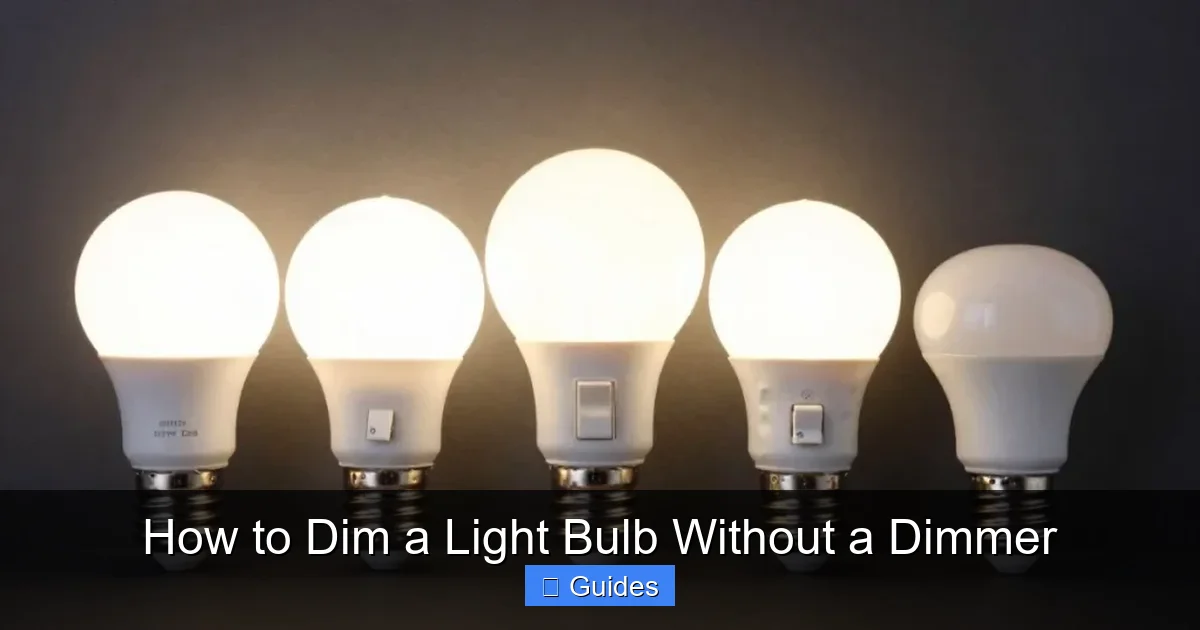
Visual guide about How to Dim a Light Bulb Without a Dimmer
Image source: mansionfreak.com
Physical Obstruction and Diffusion
One of the most straightforward ways to reduce light intensity is to physically block or diffuse some of the light. Think of it like putting on sunglasses for your light bulb!
- Lampshades and Diffusers: This is the most common and obvious method. A thicker or darker lampshade will inherently block more light. You can also experiment with different materials or layers. Some lampshades are specifically designed with inner diffusers to soften harsh light.
- Fabric Overlays: For temporary or decorative solutions, draping a light, sheer fabric (like a scarf or a piece of chiffon) over a lampshade can instantly soften the light. Always ensure the fabric is non-flammable and kept away from hot bulbs, especially incandescents. LEDs run cooler, making this a safer option for them.
- Light Filters/Gels: Professional photographers and theater designers use colored or frosted gels to manipulate light. You can buy similar transparent films designed for lighting. Attaching a neutral density (ND) filter or a frosted film to the inside of a lampshade or fixture can effectively dim the light. Ensure it’s heat-resistant and safely secured.
- DIY Solutions: Get creative with materials like parchment paper, frosted window film, or even strategically placed decorative items around the light source to block or scatter light. Again, safety is paramount; keep flammable materials away from hot bulbs.
Changing Bulb Type or Wattage
This is less about “dimming” an existing bulb and more about choosing a bulb that naturally emits less light.
- Lower Wattage Bulbs: If your fixture allows, simply replacing a 100-watt incandescent bulb with a 60-watt or 40-watt equivalent will significantly reduce the light output. For LEDs, look for lower “lumen” ratings. Lumens measure brightness, so a 450-lumen LED will be dimmer than an 800-lumen one, even if both are only 9 watts.
- Bulbs with Specific Features: Some bulbs are designed to provide a softer glow inherently. Look for “soft white,” “warm white,” or “vintage-style” LED bulbs, which often have a lower color temperature (e.g., 2700K) and can feel dimmer than brighter, cooler bulbs (e.g., 5000K).
Strategic Placement and Indirect Lighting
The way light interacts with its surroundings can dramatically change its perceived brightness.
- Bouncing Light Off Walls/Ceilings: Instead of directing light straight into the room, position floor lamps or table lamps to shine upwards, or towards a light-colored wall. The bounced light will be softer, more diffused, and inherently feel dimmer. This is an excellent way to dim a light bulb without a dimmer, especially for ambient lighting.
- Using Multiple Smaller Sources: Rather than one very bright overhead light, use several smaller, strategically placed lamps. This creates layers of light, often resulting in a softer, more inviting atmosphere than a single intense source. You control the overall brightness by turning some on and some off.
Simple Plug-in and Smart Solutions (Without Installing a Wall Dimmer)
While the goal is to dim a light bulb without a dimmer *switch*, there are portable and smart technology options that achieve the dimming effect without permanent electrical installation.
Utilizing Plug-in Dimmers (for Lamps)
This is one of the most practical solutions for lamps that plug into an outlet. A plug-in dimmer is an external device that you simply plug into the wall socket, and then plug your lamp into the dimmer. It allows you to control the brightness via a slider or dial on the unit itself.
- Compatibility: Ensure both the plug-in dimmer and your light bulb are compatible. Many plug-in dimmers are designed for incandescent and dimmable LED bulbs. Always check the product specifications.
- Ease of Use: No wiring, no installation. Just plug and play. It’s a fantastic way to dim a light bulb without a dimmer being part of your wall wiring.
- Ideal For: Table lamps, floor lamps, and any fixture with a standard two-prong or three-prong plug.
The Power of Smart Bulbs (Beyond the Hub)
Smart bulbs have revolutionized home lighting. Many offer built-in dimming capabilities that you control via a smartphone app or voice commands, even without a full smart home hub.
- App Control: Most smart bulbs (like Philips Hue, Sengled, Wyze, etc.) come with their own dedicated apps. Once you screw in the bulb and pair it with the app (usually via Bluetooth or Wi-Fi), you can adjust its brightness, color temperature, and even color directly from your phone.
- No Hub Required: Many newer smart bulbs connect directly to your home Wi-Fi or use Bluetooth, meaning you don’t need a separate smart home hub (like a Hue Bridge or SmartThings hub) to access basic features like dimming.
- Voice Control: If you have a smart speaker (Google Home, Amazon Echo), you can often link your smart bulbs and dim them with voice commands, adding another layer of convenience.
- Energy Efficiency: Smart bulbs are almost exclusively LEDs, meaning they are very energy-efficient, saving you money in the long run. This is a very elegant solution for how to dim a light bulb without a dimmer switch on the wall.
Practical Applications and Creative Solutions
Let’s look at how these methods can be applied in various scenarios around your home.
For Overhead Fixtures
Overhead lights, especially those with multiple bulbs, can often be too bright. Here’s how to dim a light bulb without a dimmer in these situations:
- Lower Wattage/Lumen Bulbs: Replace some or all of the bulbs with lower wattage equivalents or LEDs with fewer lumens. You can even mix and match – use a few brighter bulbs and a few dimmer ones.
- Frosted or Diffused Covers: If your fixture has a removable cover, consider replacing it with a frosted or opal glass one to soften the light. For open fixtures, consider bulbs with frosted finishes.
- Smart Bulb Conversion: If your overhead fixture uses standard E26 or E12 base bulbs, you can replace them with smart bulbs and dim them via an app. This is a powerful solution to dim a light bulb without a dimmer.
For Lamps (Table, Floor, Desk)
Lamps are perhaps the easiest to modify for dimming without a built-in dimmer.
- Lampshade Experimentation: Try different lampshades – darker fabrics, thicker materials, or those with opaque linings will reduce light significantly.
- Fabric Overlays: As mentioned, a sheer scarf over the lampshade (away from the bulb!) can offer a quick, temporary dimming effect.
- Plug-in Dimmers: This is the ideal solution for most lamps. They are inexpensive, easy to use, and give you precise control over brightness.
- Smart Bulbs: Replace your lamp’s bulb with a smart bulb for app-controlled dimming and even color changes.
For Outdoor Lighting
Outdoor lighting often needs to be softer for ambiance, not just security.
- Solar Lights with Dimming: Many modern solar-powered outdoor lights come with multiple brightness settings or even motion-sensing capabilities that adjust light levels.
- Fewer Lights: Simply use fewer lights, or choose fixtures that direct light downwards rather than broadcasting it widely.
- Strategic Placement: Angle floodlights towards trees or architectural features instead of directly into seating areas to create a softer, more indirect glow.
Creating Mood Lighting
Dimming isn’t just about reducing brightness; it’s about creating an atmosphere.
- Warm Color Temperatures: Bulbs with a color temperature around 2200K-2700K (warm white/soft white) inherently feel cozier and less harsh than cooler, bluer lights (4000K-5000K).
- Colored Bulbs/Smart Bulbs: Smart bulbs allow you to change colors. Warm oranges, reds, and deep purples can create a dramatically different, often dimmer, and more intimate mood than bright white light.
- Indirect Uplighting: Place small puck lights or strip lights behind furniture, under cabinets, or near plants to cast soft, indirect light, adding depth and warmth without being overtly bright.
Safety First: Important Considerations
While exploring ways to dim a light bulb without a dimmer, safety must always be your top priority. Electrical systems and heat from bulbs can pose risks if not handled correctly.
Matching Bulb Type to Fixture and Method
Always ensure the bulb you’re using is appropriate for the fixture’s wattage rating. Exceeding this can lead to overheating and fire hazards. When using physical diffusers, make absolutely sure the material is non-flammable and has adequate clearance from the bulb to prevent scorching or fire, especially with incandescent bulbs that generate a lot of heat. LEDs run much cooler, making them safer for creative diffusion methods.
Overheating Risks
Blocking ventilation around a light fixture can cause heat to build up, potentially damaging the bulb, fixture, or leading to fire. Always ensure adequate airflow, especially for enclosed fixtures or when adding physical barriers. Never completely seal a light bulb.
Electrical Safety Warnings
This guide focuses on non-electrical or plug-and-play solutions. Never attempt to modify the internal wiring of a fixture or your home’s electrical system unless you are a qualified electrician. Improper wiring can lead to electric shock, short circuits, and fire. When in doubt, consult a professional.
“Dimmable” vs. “Non-Dimmable”
It’s crucial to distinguish between bulbs labeled “dimmable” and “non-dimmable.”
- Dimmable Bulbs: These are designed to work with traditional dimmers and often with plug-in dimmers and smart home systems. They have internal circuitry that allows for smooth light output reduction.
- Non-Dimmable Bulbs: These bulbs (especially LEDs and CFLs) are meant to be either fully on or fully off. If you connect a non-dimmable LED or CFL to a traditional dimmer or even some plug-in dimmers, it can cause flickering, buzzing, reduced lifespan, or damage to the bulb and potentially the dimmer itself. While non-electrical methods (like lampshades or lower wattage) work universally, be mindful of bulb types when using any electrical dimming device.
When to Consult an Electrician
If you find that none of the non-dimmer solutions meet your needs, or if you’re considering any permanent changes to your home’s wiring, it’s always best to consult a licensed electrician. They can safely install traditional dimmers, upgrade fixtures, or provide tailored advice for your specific electrical setup.
Conclusion
Achieving the perfect lighting ambiance doesn’t always require a complicated electrical overhaul. As we’ve explored, there are numerous creative, safe, and effective ways to dim a light bulb without a dimmer switch, transforming your living space with minimal effort and expense. Whether you’re draping a sheer fabric, swapping out a high-wattage bulb for a lower-lumen LED, or embracing the convenience of smart lighting technology, the power to control your light is truly in your hands.
Remember to always prioritize safety by understanding your bulb types, respecting heat limits, and avoiding any unsafe electrical modifications. With a little ingenuity and the tips from this guide, you can effortlessly create a variety of moods and functional lighting schemes, making your home more comfortable and inviting. So go ahead, experiment, and enjoy the beautiful, subtle glow of perfectly dimmed lights!
Frequently Asked Questions
What are the safest methods to dim a light bulb without a dimmer?
The safest methods typically involve non-electrical solutions. These include using thicker lampshades, adding diffusion materials (safely away from the bulb), choosing lower wattage or lower lumen bulbs, and strategically placing lights to bounce off surfaces. These options carry minimal risk compared to electrical modifications.
Can dimming a light bulb without a dimmer save energy?
Yes, choosing a lower wattage bulb or using smart bulbs that are dimmed will consume less energy than their full brightness. However, physical diffusion methods like lampshades don’t reduce the bulb’s power consumption; they only reduce the visible light output.
Will covering a light bulb reduce its lifespan?
If covering a light bulb leads to excessive heat buildup due to blocked ventilation or direct contact with flammable materials, it can potentially shorten the bulb’s lifespan and create a fire hazard. Always ensure proper airflow and never use materials that trap heat or could ignite, especially with incandescent bulbs.
Are there any health benefits to dimming lights?
Dimming lights, particularly in the evening, can help promote better sleep by reducing exposure to bright, blue-spectrum light that can disrupt your body’s natural circadian rhythm. Softer lighting can also reduce eye strain and create a more relaxing environment, contributing to overall well-being.
Can I dim a non-dimmable LED bulb?
You cannot effectively or safely dim a non-dimmable LED bulb using traditional electrical dimmers (wall-mounted or plug-in). Doing so can cause flickering, buzzing, or damage. For non-dimmable LEDs, your best options are physical diffusion (like lampshades) or simply replacing them with lower-lumen or smart dimmable LED bulbs.
What’s the difference between “soft white” and “dimmed” light?
“Soft white” refers to the color temperature of the light (typically around 2700 Kelvin), which appears warm and yellowish, often perceived as cozier. “Dimmed” light refers to a reduction in the brightness or intensity of the light output. You can have a bright “soft white” light, or you can dim a “daylight” (cooler) bulb to be less intense.
