


As an Amazon Associate, We earn from qualifying purchases.
Learning how to remove a fluorescent light bulb safely is crucial for any homeowner. This comprehensive guide walks you through the essential safety precautions, helps you identify different bulb types, and provides clear, step-by-step instructions for removal. Always prioritize safety by powering off the fixture and wearing protective gear to prevent injury and ensure proper handling.
How to Remove a Fluorescent Light Bulb
Changing a light bulb might seem like one of those mundane household tasks you barely think about, but when it comes to fluorescent light bulbs, there’s a little more to it than just unscrewing and replacing. Whether you’re upgrading to more energy-efficient LEDs, replacing a flickering old tube, or simply performing routine maintenance, knowing how to remove a fluorescent light bulb safely and correctly is an invaluable skill. It not only protects you from potential hazards but also ensures you don’t damage the fixture or the new bulb.
Many homes and businesses still rely on fluorescent lighting for its efficiency and widespread illumination. These bulbs come in various shapes and sizes, from long linear tubes to circular and U-shaped designs, and even compact fluorescent lamps (CFLs) that screw into standard sockets. Each type requires a slightly different approach for removal, but the underlying principles of safety and care remain the same. This guide will walk you through everything you need to know, from preparation and identifying your bulb type to step-by-step removal instructions and, crucially, proper disposal.
So, let’s roll up our sleeves, gather our tools, and demystify the process of how to remove a fluorescent light bulb, ensuring your lighting upgrades or replacements go as smoothly and safely as possible. We’ll cover common scenarios, offer practical tips, and help you feel confident tackling this task around your home or office.
Key Takeaways
- Prioritize Safety: Always turn off the power at the circuit breaker before attempting to remove any fluorescent light bulb to prevent electrical shock.
- Wear Protective Gear: Use gloves and eye protection to safeguard against cuts from broken glass and mercury exposure.
- Identify Bulb Type: Different fluorescent bulbs (linear, U-bend, circular, CFL) have distinct removal methods; knowing yours is key.
- Master the Twist-and-Pull: For linear tubes, gently twist the bulb 90 degrees and then pull it straight out of the tombstone (socket).
- Handle with Care: Fluorescent bulbs contain mercury and are fragile; avoid sudden movements and always support the bulb properly.
- Dispose Responsibly: Never throw fluorescent bulbs in regular trash. Recycle them at designated facilities due to their mercury content.
Quick Answers to Common Questions
How do I know if my fluorescent bulb is a T8 or T12?
Look at the end of the bulb or its packaging. T8 bulbs are 1 inch in diameter, while T12 bulbs are 1.5 inches in diameter. The label will typically state “T8” or “T12.”
Can I remove a hot fluorescent bulb?
No, it’s best to let a fluorescent bulb cool down for a few minutes after turning off the power before handling it. While they don’t get as hot as incandescent bulbs, they can still be warm enough to cause discomfort or minor burns.
What if my fluorescent bulb breaks during removal?
If a bulb breaks, immediately ventilate the area by opening windows and doors, and leave the room for 5-10 minutes. Do not use a vacuum cleaner. Wear gloves, carefully scoop up debris with stiff paper, and use sticky tape for small fragments. Seal all materials in a plastic bag and take it to a hazardous waste facility.
Do all fluorescent bulbs contain mercury?
Yes, all fluorescent light bulbs, including linear tubes, U-bends, circular bulbs, and CFLs, contain a small amount of mercury vapor. This is why proper handling and recycling are crucial.
Can I just unscrew a linear fluorescent tube like a regular light bulb?
No, linear fluorescent tubes are not screwed in. They are held in place by pins that fit into spring-loaded sockets. You must twist them 90 degrees to disengage the pins before pulling them out.
📑 Table of Contents
Safety First! The Absolute Must-Dos Before You Begin
Before you even think about touching that old, flickering fluorescent light bulb, safety must be your number one priority. Working with electricity and fragile glass components demands caution. Skipping these vital steps can lead to electrical shock, cuts, or falls.
Always Turn Off the Power
This is non-negotiable. Do not attempt to remove a fluorescent light bulb without cutting the power to the fixture. Simply flipping the light switch off isn’t enough; someone could accidentally flip it back on. The safest method is to go to your home’s main electrical panel (breaker box) and switch off the circuit breaker that controls the light fixture. If you’re unsure which breaker it is, it’s always safer to turn off the main breaker for your entire home. A simple way to confirm the power is off is to try turning the light switch on after flipping the breaker – if the light doesn’t come on, you’re good to go.
Wear Personal Protective Equipment (PPE)
Fluorescent bulbs are made of glass and contain a small amount of mercury vapor. Breaking one can be dangerous. Protect yourself by wearing:
- Work Gloves: Sturdy gloves, preferably leather or heavy-duty fabric, will protect your hands from cuts if the bulb breaks. They also provide a better grip.
- Safety Glasses or Goggles: Eye protection is crucial. If a bulb shatters, glass shards could fly, and you don’t want them anywhere near your eyes.
Use a Stable Ladder or Step Stool
Reaching overhead fixtures requires a secure base. A wobbly chair or balancing on a bucket is an accident waiting to happen. Use a sturdy stepladder or an extension ladder that is properly set up on a flat, stable surface. Ensure the ladder’s feet are secure and that you maintain three points of contact (two hands and one foot, or two feet and one hand) when climbing or working.
Ensure Bulbs Are Cool
While fluorescent bulbs don’t get as scorching hot as traditional incandescent bulbs, they can still be warm, especially if they’ve been on for a long time. Give them a few minutes to cool down after you’ve turned off the power before you attempt to remove them. This prevents minor burns and makes the bulbs easier to handle.
Clear Your Workspace
Make sure the area around your ladder is clear of clutter, toys, furniture, or anything that could cause you to trip or lose your balance. Having a clear path to and from your work area is essential for safety.
Identifying Your Fluorescent Bulb Type for Correct Removal
Knowing the type of fluorescent bulb you’re dealing with is critical, as removal methods vary. Don’t worry, it’s usually pretty easy to tell them apart. Most fluorescent light fixtures will use one of these common types:
Linear Fluorescent Tubes (T8, T12, T5)
These are the most common type, found in garages, workshops, kitchens, and offices. They are long, straight glass tubes. The “T” stands for tubular, and the number (e.g., T8, T12, T5) indicates the bulb’s diameter in eighths of an inch. A T8 bulb is 8/8 inch (1 inch) in diameter, while a T12 is 12/8 inch (1.5 inches). T5 bulbs are thinner, at 5/8 inch. T8 and T12 bulbs typically have two pins at each end, fitting into what are called “tombstone” sockets. T5 bulbs also have two pins but are often found in newer, more compact fixtures.
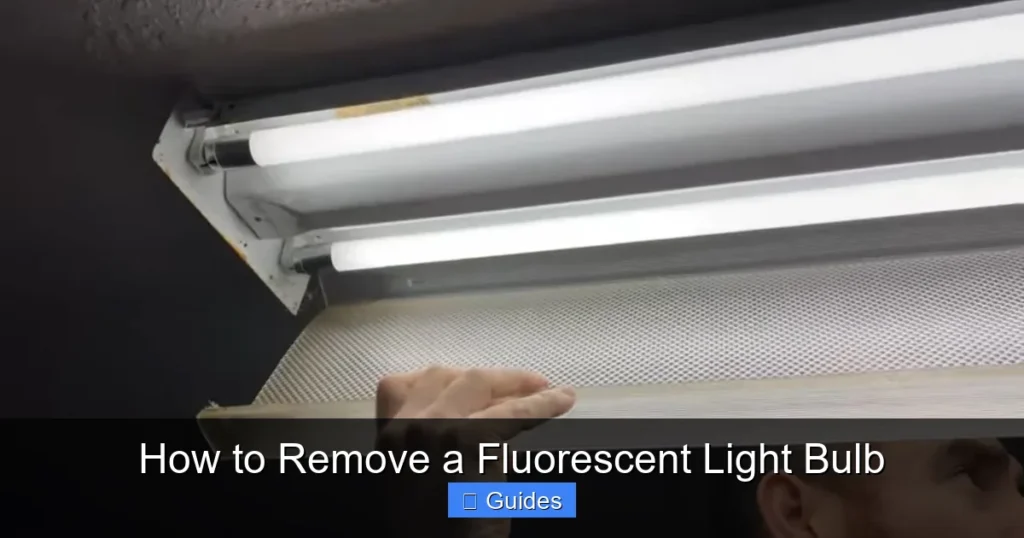
Visual guide about How to Remove a Fluorescent Light Bulb
Image source: midlandauthors.com
U-Bend Fluorescent Bulbs
As the name suggests, these are linear tubes bent into a U-shape. They often have a single base with four pins in the center or two pins at each end, similar to linear tubes, but their bent form requires slightly different handling to remove a fluorescent light bulb without breaking it.
Circular Fluorescent Bulbs (Circline)
These are ring-shaped bulbs, often found in older ceiling fixtures or specialty lighting. They typically have a single, multi-pin connector in the center or a series of clips holding them in place. The fixture will usually have a ballast in the center of the circle.
Compact Fluorescent Lamps (CFLs)
CFLs are designed to be a more energy-efficient alternative to incandescent bulbs. They come in two main forms:
- Screw-in CFLs: These have a standard Edison screw base and look somewhat like coiled or folded incandescent bulbs. You remove these just like a regular light bulb.
- Pin-Base CFLs: These have a base with two or four pins that push into a socket. They are often found in recessed lighting or enclosed fixtures.
Step-by-Step Guide to Removing Linear Fluorescent Bulbs (T8/T12)
The linear fluorescent tube is arguably the most common type you’ll encounter. Follow these steps carefully to remove a fluorescent light bulb from its fixture.
Gathering Your Tools
Before you begin, make sure you have everything ready:
- A sturdy stepladder or extension ladder.
- Work gloves.
- Safety glasses.
- A sturdy box or the original packaging for the new bulb to safely store the old one.
The Twist-and-Pull Method
This is the standard procedure for how to remove a fluorescent light bulb of the linear variety:
- Position Your Ladder: Place your ladder directly beneath one end of the fluorescent fixture. Ensure it’s stable and you can comfortably reach the bulb without overextending.
- Grip the Bulb Firmly: With gloved hands, grip the fluorescent tube firmly in the middle, or slightly off-center. Avoid gripping too close to the ends, as this can put stress on the pins.
- Rotate 90 Degrees: Gently but firmly rotate the bulb a quarter turn (90 degrees). You’ll feel it click or release from the spring-loaded pins inside the tombstone sockets at both ends. The bulb should now hang loosely.
- Pull Gently: Once the bulb is rotated, gently pull it straight down and slightly away from the tombstone socket at one end. The pins should slide out.
- Lower the Bulb: Support the bulb with both hands and carefully lower the other end from its socket. Be mindful of the length of the bulb, especially if it’s a 4-foot or 8-foot tube, as it can be awkward to handle.
- Safe Storage: Immediately place the removed bulb in its protective sleeve or a designated box for safe transport and disposal.
Tips for Stubborn Bulbs
Sometimes, fluorescent bulbs can be a bit stubborn. Here’s what to do:
- Gentle Wiggling: If the bulb doesn’t rotate easily, try a very gentle back-and-forth wiggling motion while rotating. Do not force it, as too much pressure can cause it to break.
- Two-Person Job: For very long bulbs (like 8-foot tubes), it’s often safer and easier to have two people. One person can support each end of the bulb during rotation and removal.
- Check for Obstructions: Ensure there are no clips, covers, or other parts of the fixture that might be preventing the bulb from rotating or coming free.
Removing Other Fluorescent Bulb Types
While linear tubes are common, you might encounter other types. Here’s how to remove a fluorescent light bulb that isn’t a straight tube.
U-Bend Fluorescent Bulbs
U-bend bulbs are essentially linear tubes that have been bent. The removal process is very similar:
- Locate Pins: U-bends usually have two pins at each end (four pins total, just like a linear tube) that insert into tombstone sockets.
- Grip and Rotate: Grip the curved part of the “U” gently but firmly. Rotate the entire bulb 90 degrees until the pins disengage from the sockets.
- Pull Down: Carefully pull the bulb straight down and out of the sockets. Be extra gentle with the curve to avoid putting stress on the glass.
- Support: Support the bulb with both hands as you lower it.
Circular Fluorescent Bulbs (Circline)
Circular bulbs often have a multi-pin connector in the center or are held by clips. This is how you remove a fluorescent light bulb that is circular:
- Identify Connection Type: Look at the center of the circular bulb. You’ll either see a single central base with pins or small metal clips holding the bulb to the fixture.
- For Central Pin Base: Gently push the bulb up into the fixture slightly, then twist it counter-clockwise (about a quarter turn) until the pins disengage. Then, carefully pull the bulb straight down.
- For Clip-Held Bulbs: If there are small metal clips, gently flex them away from the bulb to release it. You might need to release several clips around the circumference. Once released, carefully lower the bulb.
Pin-Base CFLs
These compact fluorescent lamps don’t screw in; they push in and lock with pins.
- Grip Base: Grasp the plastic base of the CFL, not the glass spiral or folds.
- Push Up and Twist: Gently push the bulb up into the fixture a small amount, then twist it a quarter turn (either direction, depending on the fixture). You should feel the pins release from their locking mechanism.
- Pull Down: Once released, pull the bulb straight down and out of the socket.
Screw-In CFLs
These are the easiest! They function exactly like traditional incandescent bulbs.
- Grip Base: Hold the plastic or metal base of the CFL. Avoid gripping the glass tubing.
- Unscrew: Turn the bulb counter-clockwise until it detaches from the socket.
Handling and Disposal: Be Responsible!
Once you successfully remove a fluorescent light bulb, the job isn’t quite finished. Proper handling and disposal are incredibly important due to the mercury content in these bulbs.
Why Proper Disposal Matters
Fluorescent bulbs contain a small amount of mercury, a hazardous material that can harm human health and the environment if released. When a bulb breaks and ends up in a landfill, the mercury can seep into the soil and water, contaminating ecosystems. That’s why it’s crucial to recycle them properly.
How to Safely Store Old Bulbs
If you’re not immediately taking your old bulbs to a recycling center, store them safely to prevent breakage. The best way to store them is in their original packaging or in the packaging of the new bulbs. If that’s not available, wrap them in newspaper and place them in a sturdy cardboard box that can be sealed. Label the box clearly as “Used Fluorescent Bulbs” and keep it in a safe place where it won’t be knocked over or broken, away from children and pets.
Recycling Options for Fluorescent Bulbs
Never, ever throw fluorescent bulbs into your regular household trash. Here are common options for recycling:
- Local Household Hazardous Waste (HHW) Facilities: Many cities and counties operate HHW facilities or organize collection events where you can drop off fluorescent bulbs and other hazardous waste for free. Check your local waste management website for details.
- Hardware Stores: Major hardware chains (like Home Depot, Lowe’s) often have free recycling programs for CFLs and sometimes for linear fluorescent tubes. Call ahead to confirm their policies and accepted bulb types.
- Specialty Retailers: Some lighting stores or electronics retailers may also offer recycling services.
- Mail-Back Programs: For businesses or individuals with large quantities, there are specialized mail-back recycling programs where you purchase a pre-paid box, fill it with bulbs, and ship it to a recycling facility.
Always verify the recycling options available in your specific area, as regulations can vary.
What to Do if a Bulb Breaks
Despite your best efforts, sometimes a fluorescent bulb breaks. If this happens, follow these steps immediately to clean up safely:
- Ventilate the Area: Open windows and doors, and leave the room for 5-10 minutes to air it out.
- Do NOT Vacuum: Do not use a vacuum cleaner, as it can spread mercury vapor or powder throughout the air and into the vacuum itself.
- Collect Fragments Carefully: Wear gloves. Use stiff paper or cardboard to scoop up larger pieces of glass. Use sticky tape (like duct tape) to pick up smaller fragments and powder. Wipe the area with a damp paper towel.
- Seal and Dispose: Place all broken glass, cleanup materials (paper, tape, damp towel), and any contaminated clothing into a tightly sealed plastic bag. Take this bag to your local household hazardous waste facility or follow specific local guidelines for mercury-containing waste. Do not put it in your regular trash.
Conclusion
Learning how to remove a fluorescent light bulb is a straightforward process once you understand the necessary safety precautions and the specific steps for your bulb type. By always turning off the power, wearing protective gear, and handling the bulbs with care, you can safely complete this task without incident. Remember, the journey doesn’t end with removal; responsible disposal is equally important to protect both your household and the environment from the small but significant amount of mercury contained within these bulbs. So, whether you’re making a simple replacement or embarking on an energy-efficient upgrade, you now have the knowledge and confidence to tackle the job safely and responsibly.
Frequently Asked Questions
What tools do I need to remove a fluorescent light bulb?
You’ll primarily need a sturdy stepladder or extension ladder to reach the fixture safely. Additionally, always wear work gloves and safety glasses to protect yourself from potential cuts and mercury exposure if the bulb breaks.
Is it safe to touch the pins on the ends of a fluorescent bulb?
It is generally safe to touch the pins on the ends of a fluorescent bulb once the power to the fixture has been completely turned off at the circuit breaker. However, it’s still best practice to handle the bulb by its glass body or plastic ends with gloves, rather than directly by the metal pins, to prevent breakage.
How often should fluorescent light bulbs be replaced?
The lifespan of fluorescent light bulbs varies significantly depending on their type and usage, but they typically last between 10,000 to 20,000 hours. You should replace them when they start flickering, buzzing loudly, or fail to light up entirely.
Can I replace a fluorescent bulb with an LED bulb?
Yes, in many cases, you can replace fluorescent bulbs with LED equivalents. Some LED tubes are “plug-and-play” and work with your existing fluorescent ballast, while others require bypassing or removing the ballast and direct-wiring the fixture. Always check the LED bulb’s specifications and your fixture’s compatibility, or consult an electrician.
What’s the difference between a CFL and a linear fluorescent tube?
CFLs (Compact Fluorescent Lamps) are smaller, often spiraled or folded, and designed to fit into standard screw-in or pin-base sockets, acting as a more energy-efficient replacement for incandescent bulbs. Linear fluorescent tubes are long, straight glass tubes, commonly found in larger fixtures in kitchens, garages, and commercial settings.
Where can I find my local hazardous waste disposal facility?
To find your local household hazardous waste (HHW) disposal facility, you should check your city or county’s official waste management website. Many municipalities provide online tools or directories to locate drop-off sites, collection events, or programs for recycling mercury-containing products like fluorescent bulbs.
