


As an Amazon Associate, We earn from qualifying purchases.
Choosing the ideal what color light bulb for bedroom is crucial for creating a comfortable atmosphere and supporting healthy sleep. Different light temperatures impact mood and circadian rhythms, with warm, dim lights promoting relaxation and cooler lights best for tasks. Investing in smart bulbs or dimmers allows you to customize your bedroom’s ambiance for any activity, ensuring a perfect balance of function and tranquility. Thoughtful lighting can drastically improve your bedroom experience, from winding down to waking up refreshed.
Your bedroom isn’t just a place to sleep; it’s your sanctuary, your personal retreat from the hustle and bustle of the world. It’s where you unwind after a long day, perhaps read a good book, or simply enjoy a moment of quiet reflection. Given its multi-faceted role, the lighting in your bedroom plays an incredibly significant part in setting the mood, impacting your sleep quality, and even influencing your overall well-being. But with so many options out there, how do you choose what color light bulb for bedroom is right for you?
It’s not just about how bright a bulb is; the color of the light itself has a profound effect on our bodies and minds. From promoting relaxation and a good night’s sleep to energizing your mornings, the right light color can make all the difference. Choosing what color light bulb for bedroom isn’t a one-size-fits-all decision; it requires understanding a bit about light science and considering your personal needs and preferences. Let’s dive into the fascinating world of light and discover how to illuminate your personal haven perfectly.
In this comprehensive guide, we’ll explore the science behind light color, its impact on your sleep and mood, and provide practical tips for selecting the ideal bulbs for every activity in your bedroom. Get ready to transform your space by making informed choices about what color light bulb for bedroom will best serve your needs.
Key Takeaways
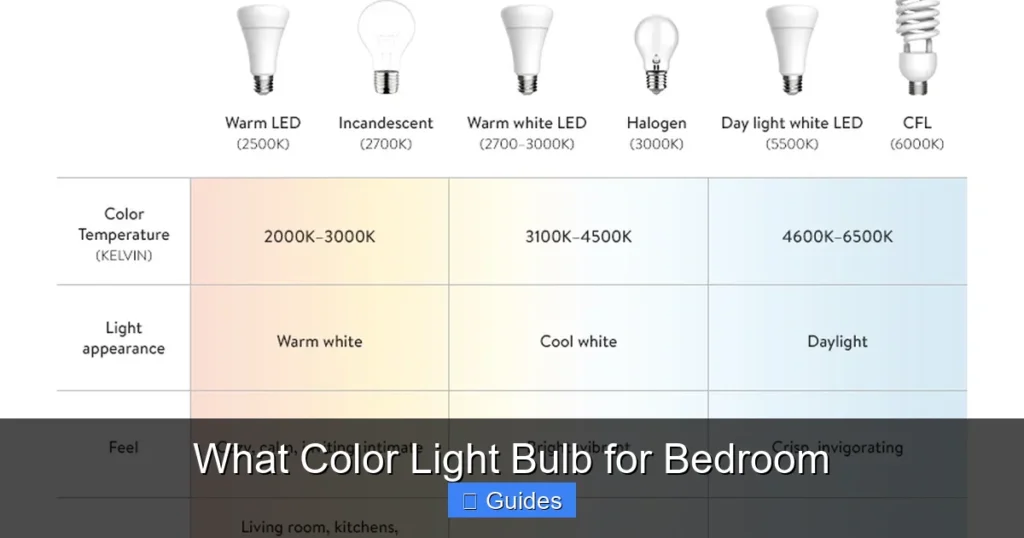
- Understand Color Temperature: Light color is measured in Kelvins (K). Lower Kelvin values (2200K-3000K) produce warm, cozy light, while higher values (3500K-6500K) create cooler, more energizing light.
- Prioritize Sleep Health: Blue light from cooler bulbs can disrupt melatonin production, making it harder to fall asleep. Opt for warm amber or red-toned lights in the hours before bed to support your natural circadian rhythm.
- Match Light to Activity: Consider how you use your bedroom. Warm, dim lighting is ideal for relaxation, slightly brighter warm light for reading, and neutral white for tasks like getting ready.
- Embrace Smart Lighting: Smart bulbs offer unparalleled flexibility, allowing you to change color temperature, dimness, and even create custom schedules directly from your phone or voice assistant.
- Layer Your Lighting: Don’t rely on a single overhead light. Incorporate bedside lamps, floor lamps, and accent lighting to create versatile zones and adjust the ambiance as needed.
- Dimmer Switches are Essential: The ability to dim your lights is just as important as the color. Dimmers allow you to fine-tune the intensity, shifting from bright task lighting to soft, ambient glow instantly.
- Personal Preference Matters: While guidelines exist, the “best” light color ultimately comes down to what feels most comfortable and supportive to *your* personal routine and preferences. Experiment!
Quick Answers to Common Questions
What is the best color light for sleep in a bedroom?
The best color light for sleep is a very warm, dim light, typically in the amber or red spectrum (2200K or lower). These colors have the least impact on melatonin production, helping your body prepare for rest.
What Kelvin temperature is best for a bedroom?
For general ambiance and relaxation in a bedroom, a Kelvin temperature of 2200K-3000K (warm white) is generally recommended. For specific tasks like reading, you might use a slightly higher, but still warm, neutral white around 3000K-3500K, ideally dimmable.
Is blue light bad for the bedroom?
Yes, blue light, which is prevalent in cooler white light (4000K+) and electronic screens, is detrimental in the bedroom, especially in the evening. It suppresses melatonin, making it harder to fall asleep and disrupting your natural sleep cycle.
Can I use smart bulbs to choose what color light bulb for bedroom?
Absolutely! Smart bulbs are an excellent choice because they allow you to adjust the color temperature, brightness, and even change to RGB colors, providing unparalleled flexibility to tailor your bedroom lighting to any activity or time of day.
How can I make my bedroom feel cozier with light?
To make your bedroom feel cozier with light, choose warm white bulbs (2200K-2700K), use dimmer switches to reduce brightness, and incorporate multiple layered light sources like bedside lamps and accent lighting instead of just an overhead fixture.
📑 Table of Contents
- Understanding the Language of Light: Color Temperature Explained
- The Crucial Link: How Light Color Impacts Your Sleep
- Matching Light to Life: Best Hues for Every Bedroom Activity
- Beyond the Spectrum: Embracing RGB and Smart Lighting for Your Bedroom
- Practical Tips for Choosing the Perfect Bedroom Lighting
- Conclusion
Understanding the Language of Light: Color Temperature Explained
Before we can decide what color light bulb for bedroom is best, we need to understand how light color is measured and categorized. It’s not about primary colors like red or blue from a rainbow, but rather the “warmth” or “coolness” of white light. This is known as color temperature.
The Kelvin Scale: Your Guide to Warmth and Coolness
Light color temperature is measured in units called Kelvins (K). The Kelvin scale ranges from around 1,000K (very warm, like candlelight) to 10,000K (very cool, like a clear blue sky). What’s interesting is that lower Kelvin numbers actually correspond to “warmer” looking light (more yellow/orange), while higher Kelvin numbers correspond to “cooler” looking light (more blue/white).
- Lower Kelvins (e.g., 2200K-3000K): These produce warm white light, often described as soft white or yellowish. Think of the cozy glow of an old incandescent bulb or a sunset.
- Mid-Range Kelvins (e.g., 3500K-4500K): These offer a neutral white light, sometimes called cool white or bright white. It’s less yellow than warm white but not overtly blue.
- Higher Kelvins (e.g., 5000K-6500K): These emit a cool, bluish-white light, often referred to as daylight. This mimics the bright light of midday sun.
Understanding this scale is the first step in making an informed decision about what color light bulb for bedroom will create the atmosphere you desire.
Warm White (2200K-3000K): The Cozy Comfort Zone
When asking what color light bulb for bedroom creates a relaxing and inviting atmosphere, warm white is often the answer. Bulbs in this range cast a soft, often yellowish or amber glow. This light color is incredibly soothing and is ideal for winding down, promoting a sense of calm and comfort. It’s perfect for creating a cozy ambiance, making your bedroom feel like a true haven. Many people find that warm white light helps them feel sleepy and relaxed, making it a top contender for the primary lighting in a bedroom, especially during evening hours.
Neutral White (3000K-4000K): Balanced Brightness
If you need a bit more clarity than warm white but don’t want the starkness of daylight, neutral white bulbs (also sometimes called bright white) are a great middle-ground. This range offers a clean, clear light that’s still quite inviting but is better for tasks that require a little more visual accuracy, like reading or tidying up. It’s less yellow than warm white, giving a truer representation of colors. For a bedroom where you might read a lot or do light tasks, a neutral white bulb might be a good choice for a bedside lamp, complementing warmer general lighting.
Cool White & Daylight (4000K-6500K): Energizing and Alert
Bulbs in the cool white and daylight range emit a bright, bluish-white light that closely mimics natural sunlight. This type of light is excellent for concentration and boosting alertness. It’s often used in offices, kitchens, or bathrooms where detailed tasks and high energy levels are desired. However, for a bedroom, particularly in the evening, this light color can be counterproductive. The blue light component can interfere with your body’s natural sleep cycle, making it harder to relax and fall asleep. While it might seem appealing for waking up, using it as your primary light source in the evening can be detrimental to your sleep health when considering what color light bulb for bedroom.
The Crucial Link: How Light Color Impacts Your Sleep
Beyond aesthetics, the choice of what color light bulb for bedroom has a profound impact on your body’s internal clock, also known as your circadian rhythm, and consequently, your sleep quality. This is where light color becomes not just a preference but a health consideration.

Visual guide about What Color Light Bulb for Bedroom
Image source: thespruce.com
The Melatonin Connection: Why Blue Light is the Enemy of Sleep
Our bodies naturally produce a hormone called melatonin, which signals to our brain that it’s time to sleep. Melatonin production is highly sensitive to light exposure. Specifically, blue light – which is abundant in cooler light temperatures (like those from daylight bulbs, phone screens, and computer monitors) – is incredibly effective at suppressing melatonin production. When you expose yourself to cool, blue-rich light in the hours leading up to bedtime, your brain thinks it’s still daytime, disrupting your natural sleep cycle and making it harder to fall asleep and stay asleep. This is a critical factor when deciding what color light bulb for bedroom.
The Power of Red and Amber: Your Sleep-Friendly Allies
Conversely, warm, dim lights, especially those with amber or red tones, have the least impact on melatonin production. These light colors don’t trick your brain into thinking it’s daytime. In fact, some studies suggest that red light might even help promote relaxation and sleep. This is why many sleep experts recommend limiting blue light exposure and switching to very warm, dim lighting (think 2200K or lower, or even a dedicated red light setting on smart bulbs) in the evening hours. When considering what color light bulb for bedroom to use before bed, amber and red are your best friends.
Timing is Everything: Preparing Your Body for Rest
It’s not just the color, but also *when* you expose yourself to certain light colors. As evening approaches, your body naturally expects light levels to drop and become warmer (like a sunset). Mimicking this natural cycle with your bedroom lighting can significantly improve your sleep. About 1-2 hours before you plan to sleep, try to switch all your lights to the warmest, dimmest settings available. This includes reducing screen time or using blue light filters on devices. This gradual transition helps your body prepare for rest, making the decision about what color light bulb for bedroom crucial for your evening routine.
Matching Light to Life: Best Hues for Every Bedroom Activity
Your bedroom isn’t a static space; it accommodates various activities. The best what color light bulb for bedroom will cater to these different needs, creating a versatile and functional environment. Let’s look at specific scenarios.
For Ultimate Relaxation and Winding Down
For the hours leading up to sleep, and for creating a truly relaxing vibe, the answer to what color light bulb for bedroom is almost always warm white, amber, or even red light at a very low intensity.
- Recommendation: Bulbs in the 2200K-2700K range. If you have smart bulbs, experiment with pure amber or soft red settings.
- Practical Tip: Use bedside lamps or a floor lamp with these warm bulbs, rather than a bright overhead light. Dim them significantly as you get closer to bedtime. Think about the glow of a fireplace or candlelight.
For Reading Aloud or Quiet Reflection
Reading in bed requires enough light to see clearly without straining your eyes, but not so much that it’s stimulating. You want a light that offers good contrast without being overly cool or bright.
- Recommendation: A slightly brighter warm white or neutral white, around 2700K-3000K.
- Practical Tip: A dedicated reading lamp with a focused beam (like an adjustable gooseneck lamp) next to your bed is ideal. Ensure the light source is positioned so it doesn’t create glare on your book or screen. The ability to dim this light is a huge bonus, allowing you to fine-tune the intensity.
For Mornings and Getting Ready
If you get ready in your bedroom, you might occasionally need a brighter, more color-accurate light. This is especially true for tasks like applying makeup or choosing outfits, where seeing true colors is important.
- Recommendation: Neutral white light, around 3500K-4000K, for a short period.
- Practical Tip: This light should ideally come from a different source than your primary relaxation lights, perhaps a vanity light or a specific task light that you only turn on when needed. Crucially, turn these off and switch to warmer lights as soon as you’re done, especially if it’s still dark outside. This avoids disrupting your circadian rhythm too early or for too long.
For General Ambiance and Mood Setting
Sometimes you just want general, pleasant light in your bedroom. This is where layering different light sources with adjustable colors comes in handy.
- Recommendation: A primary overhead fixture with warm white light (2700K-3000K) that is dimmable. Supplement with accent lights (table lamps, floor lamps) in the same or slightly warmer range.
- Practical Tip: Use smart bulbs that allow you to adjust the color temperature throughout the day. Start with slightly brighter neutral white in the morning, gradually shifting to warm white in the afternoon, and very warm, dim amber in the evening. This flexibility is key when considering what color light bulb for bedroom offers the most versatility.
Beyond the Spectrum: Embracing RGB and Smart Lighting for Your Bedroom
The conversation around what color light bulb for bedroom has evolved significantly with the advent of smart lighting technology. Modern LED bulbs, especially smart bulbs, offer capabilities far beyond just warm or cool white, opening up a world of possibilities for personalization.
The Fun of Full-Color Control
RGB (Red, Green, Blue) smart bulbs allow you to choose from millions of colors, not just shades of white. While you might not want a vibrant purple bedroom all the time, these bulbs offer incredible flexibility. You can use them for:
- Accent Lighting: Add a splash of color to highlight artwork or architectural features.
- Mood Enhancement: Select a calming blue for a spa-like feel, or a soft green for a connection to nature.
- Themed Evenings: A romantic red, a festive holiday hue, or a specific color to match a movie night.
The key is to use these vibrant colors thoughtfully and sparingly, especially in the hours leading up to sleep, as many of them, particularly blues and greens, can be stimulating.
Smart Bulbs: Your Personal Light Concierge
If you’re wondering what color light bulb for bedroom offers the ultimate control and flexibility, smart bulbs are the answer. They connect to your home Wi-Fi and can be controlled via an app on your smartphone, voice assistant (like Alexa or Google Assistant), or even smart switches. Their benefits are numerous:
- Tunable White: Most smart white bulbs allow you to adjust the color temperature from very warm (2200K) to very cool (6500K) with a swipe. This means one bulb can serve multiple purposes throughout the day.
- Dimming Capabilities: Fine-tune the brightness to perfection without needing a separate dimmer switch.
- Scheduling: Program your lights to automatically dim and warm up in the evening, and gently brighten in the morning to simulate a sunrise alarm, which is a fantastic way to wake up more naturally.
- Scenes and Routines: Create pre-set lighting “scenes” for different activities (e.g., “Relax,” “Reading,” “Good Morning”) and activate them with a single tap or voice command.
Creating Dynamic Scenes and Routines
With smart bulbs, you can automate your bedroom lighting to support your daily rhythm. Imagine your lights:
- Morning Routine: Gradually brightening from a warm glow to a neutral white over 30 minutes, mimicking a sunrise to gently wake you.
- Evening Wind-Down: Slowly dimming and shifting from a neutral white to a very warm, amber tone starting an hour before your bedtime, signaling your body to prepare for sleep.
- Nighttime Safety: A motion sensor triggered, very dim, warm light that turns on if you need to get up during the night, preventing harsh light exposure.
This level of dynamic control makes smart bulbs an excellent investment for anyone serious about optimizing what color light bulb for bedroom to enhance their sleep and overall comfort.
Practical Tips for Choosing the Perfect Bedroom Lighting
Making the right choice about what color light bulb for bedroom involves more than just picking a Kelvin number. It’s about integrating various elements to create a harmonious and functional lighting scheme.
Embrace Layered Lighting
Never rely on a single overhead light for your bedroom. Layered lighting combines different types of fixtures to provide flexibility and depth:
- Ambient/General Lighting: This is your main light source, typically an overhead fixture. Choose a dimmable warm white (2700K-3000K) or a tunable white smart bulb.
- Task Lighting: Bedside lamps for reading, or a dedicated vanity light. These should offer slightly brighter or more focused light. Again, dimmable and tunable options are best.
- Accent Lighting: Small lamps, picture lights, or LED strips that highlight features or create mood. These are great for very warm, low-intensity light, or even soft RGB colors for special occasions.
This approach allows you to adjust the lighting precisely for any activity, truly answering the question of what color light bulb for bedroom is most versatile.
Don’t Underestimate the Power of Dimmer Switches
The ability to control the intensity of your light is just as important as its color. Even the warmest light can feel harsh if it’s too bright, especially in the evening. Install dimmer switches on all your primary bedroom lights. This allows you to smoothly transition from functional brightness to a soft, ambient glow, perfectly complementing your choice of what color light bulb for bedroom.
Consider Your Room’s Decor and Wall Colors
The light color will interact with your bedroom’s existing palette. Warm light can enhance warm-toned walls (reds, oranges, yellows) and make them feel cozier. Cool light can make cool-toned walls (blues, greens, grays) feel crisper, but might also make them feel clinical if not balanced. Think about how your chosen what color light bulb for bedroom will complement or contrast with your decor.
LED is Your Best Friend
When selecting what color light bulb for bedroom, always opt for LED bulbs. They are energy-efficient, long-lasting, and most importantly, offer the widest range of color temperatures and dimming capabilities (especially smart LEDs). They also generate less heat, which is a bonus in a bedroom.
Experiment and Observe
Ultimately, personal preference plays a huge role. What one person finds relaxing, another might find too dim or too bright. Don’t be afraid to buy a few different bulbs with varying Kelvin temperatures (e.g., 2700K, 3000K, 3500K) and try them out in your actual bedroom. Live with them for a few days, observe how they feel at different times of the day, and pay attention to how they impact your mood and sleep. This hands-on approach is the best way to confidently choose what color light bulb for bedroom is perfect for you.
Conclusion
The question of what color light bulb for bedroom is not trivial; it’s a doorway to a more comfortable, serene, and sleep-friendly living space. By understanding the Kelvin scale, recognizing the profound impact of light on your circadian rhythm, and thoughtfully matching light colors to your daily activities, you can transform your bedroom into the ultimate sanctuary.
Whether you opt for the calming embrace of warm amber tones for a perfect night’s sleep, a slightly brighter neutral white for focused reading, or the dynamic versatility of smart bulbs that adapt to your every need, the power is in your hands. Remember to embrace layered lighting, invest in dimmers, and most importantly, listen to your body and your preferences.
Making informed choices about what color light bulb for bedroom is an investment in your comfort, your mood, and your health. So go ahead, experiment, customize, and illuminate your personal haven in a way that truly supports your well-being. Sweet dreams await!
Frequently Asked Questions
Should bedroom lights be warm or cool?
Generally, bedroom lights should be predominantly warm (2200K-3000K). Warm light promotes relaxation, creates a cozy atmosphere, and is less disruptive to your natural sleep cycle compared to cooler, bluer lights. While cooler lights might be used briefly for morning tasks, warm light is ideal for the majority of the time spent in a bedroom.
Is white light okay for bedroom?
Yes, white light is okay for the bedroom, but the *type* of white light matters significantly. Warm white light (2200K-3000K) is excellent for relaxation and sleep. Neutral white (3500K-4000K) can be suitable for task lighting like reading, but should be used sparingly in the evenings. Avoid cool white or daylight (4000K+) as primary bedroom lighting, especially before bed, due to its stimulating blue light component.
What’s the best light color for reading in bed?
For reading in bed, a slightly brighter warm white or neutral white light, typically around 2700K-3500K, is often preferred. This range offers good clarity for text without being overly stimulating. It’s best delivered via a dedicated, adjustable reading lamp to focus the light where needed, and ideally, it should be dimmable so you can adjust the intensity.
How does light affect mood in the bedroom?
Light profoundly affects mood in the bedroom. Warm, dim light fosters feelings of calm, comfort, and relaxation, making the space feel inviting and serene. Cooler, brighter lights, on the other hand, can create a more energized or even sterile environment, potentially leading to increased alertness and anxiety if used at the wrong time, disrupting the desired peaceful mood.
Are smart bulbs worth it for a bedroom?
Yes, smart bulbs are absolutely worth it for a bedroom. Their ability to change color temperature, dimness, and even create custom schedules allows you to perfectly tailor the lighting for every activity—from gentle wake-up calls with simulated sunrises to warm, melatonin-friendly wind-down routines, greatly enhancing comfort and sleep quality.
Can bright lights ruin sleep?
Yes, bright lights, especially those with a high blue light content, can significantly ruin sleep. Exposure to bright light in the evening hours signals to your brain that it’s daytime, suppressing the production of melatonin, the hormone responsible for signaling sleep. This disruption to your natural circadian rhythm can make it harder to fall asleep and lead to poorer quality rest.
