



As an Amazon Associate, We earn from qualifying purchases.
When you ask, “what size is a regular light bulb?”, you’re usually thinking of the A19 bulb with an E26 medium screw base. This classic pear-shaped bulb is the most common for general household fixtures in North America. Understanding bulb shapes like ‘A’ (standard), ‘G’ (globe), and ‘R’ (reflector), along with base types like E26 (standard) and E12 (candelabra), is key to choosing the correct light for your home.
Ever found yourself staring blankly at a wall of light bulbs at the store, wondering, “what size is a regular light bulb?” You’re not alone! It seems like a simple question, but the world of light bulbs can be surprisingly complex, filled with letters, numbers, and technical jargon that can make choosing the right one feel like solving a puzzle.
The good news is, once you understand a few key principles, selecting the perfect bulb becomes incredibly straightforward. Most of the confusion stems from the fact that “regular” isn’t a single, universally defined term when it comes to light bulbs. However, there’s definitely a dominant champion in the household lighting arena – one that most people instinctively picture when they hear “regular light bulb.” Let’s demystify it together and equip you with the knowledge to confidently pick the right bulb every time.
Key Takeaways
- The “Regular” Standard: The most common answer to “what size is a regular light bulb” is the A19 bulb with an E26 medium screw base.
- A19 Shape Explained: The ‘A’ denotes its classic, pear-like shape, and ’19’ indicates its maximum diameter is 19 eighths of an inch (or 2.375 inches).
- E26 Base: The ‘E26′ refers to the Edison screw base, with ’26’ signifying its diameter in millimeters, making it the standard screw-in base in North America.
- Beyond A19: Many other bulb sizes and shapes exist, such as ‘G’ for globe, ‘B’ or ‘CA’ for candelabra, and ‘BR’ or ‘PAR’ for reflector bulbs, each suited for different fixtures and purposes.
- Decoding Sizing: Light bulb sizes are universally described by a letter (shape) followed by a number (diameter in eighths of an inch), ensuring consistency across brands.
- Check Your Fixture: Always consult your existing bulb’s markings or the fixture’s instructions to confirm the required bulb shape and base size before purchasing a replacement.
- E26 vs. E27: While E26 is standard in North America and E27 in Europe, they are often physically interchangeable due to similar thread dimensions, though specific regional electrical standards may differ.
Quick Answers to Common Questions
What is the most common “regular” light bulb size?
The most common “regular” light bulb size is the A19 bulb, typically with an E26 medium screw base.
What does “A19” mean on a light bulb?
The “A” denotes the bulb’s classic pear-like shape, and “19” indicates its maximum diameter is 19 eighths of an inch (approximately 2.375 inches).
What is an E26 base?
An E26 base is the standard medium screw-in base in North America, with ‘E’ for Edison and ’26’ for its 26-millimeter diameter.
Can an E26 bulb fit into an E27 socket?
Yes, E26 and E27 bases are often physically interchangeable due to very similar thread dimensions, although they are designed for different regional electrical standards.
How do I know what size light bulb to buy for my lamp?
Check the markings on your old bulb or look for a label inside the lamp fixture’s socket, which usually specifies the required bulb shape and base type.
📑 Table of Contents
The Undisputed King: The A19 Bulb with an E26 Base
When you ask “what size is a regular light bulb?” in a North American context, the answer you’re most likely thinking of is the A19 bulb with an E26 medium screw base. This is the classic, pear-shaped bulb that has illuminated homes for generations, from the incandescent era to today’s modern LEDs.
What does “A19” mean?
The “A” in A19 refers to the bulb’s traditional, somewhat pear-like shape. It’s the standard general-purpose bulb shape that we’ve all grown up with. It’s designed to provide omnidirectional light, meaning it disperses light fairly evenly in all directions, making it ideal for general room illumination in lamps and ceiling fixtures.
The “19” in A19 indicates the maximum diameter of the bulb in eighths of an inch. So, if you divide 19 by 8, you get 2.375 inches. This means an A19 bulb is approximately 2 and 3/8 inches wide at its widest point. This standardized sizing helps ensure that an A19 from one brand will fit into a fixture designed for an A19 from another.
Understanding the E26 Base
The “E26” part refers to the screw base of the bulb, which is the metal part that twists into your lamp or fixture socket. The ‘E’ stands for Edison, honoring Thomas Edison, who developed the screw-in base. The ’26’ signifies the diameter of the base in millimeters. So, an E26 base is 26 millimeters wide.
In North America, the E26 base is the “medium” or “standard” screw base. It’s by far the most common base type you’ll encounter in household lamps, ceiling fixtures, and recessed lighting. If you pick up an A19 bulb, it will almost certainly have an E26 base, making it the perfect answer to “what size is a regular light bulb?” for most homes.
Decoding Light Bulb Shapes: Beyond the “A”
While the A19 is the regular light bulb, it’s just one player in a much larger team. Light bulbs come in a fascinating array of shapes, each designed for specific aesthetic and functional purposes. Understanding these codes will help you make sense of other bulbs you might encounter.
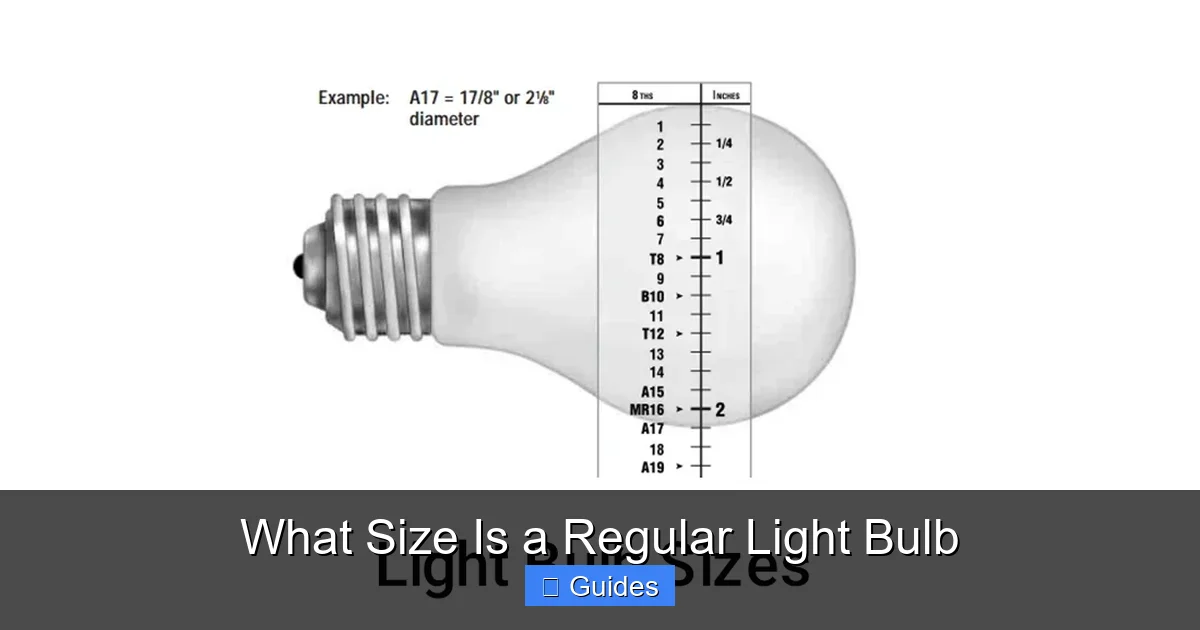
Visual guide about What Size Is a Regular Light Bulb
Image source: cdn.shopify.com
Common Bulb Shape Codes:
- A (Arbitrary/Standard): As discussed, this is the classic pear or teardrop shape. Examples: A19, A21. Used for general lighting.
- B (Bulpous) or CA (Candelabra): These are typically smaller, often torpedo-shaped or flame-tipped bulbs. They’re commonly used in decorative fixtures like chandeliers and sconces where the bulb itself is visible. Examples: B10, CA10.
- G (Globe): These bulbs are spherical or nearly spherical. They’re popular in vanity lights, pendant fixtures, and exposed bulb designs where a clean, round aesthetic is desired. Examples: G16 (small), G25 (medium), G30 (large).
- R (Reflector), BR (Bulged Reflector), PAR (Parabolic Aluminized Reflector): These shapes are designed to direct light in a specific direction, making them ideal for recessed lighting, track lighting, and outdoor floodlights. They often have an internal reflective coating.
- R: Standard reflector, often used in recessed cans. Example: R20.
- BR: Bulged reflector, provides a wider flood of light than R-types, common in recessed lighting. Example: BR30, BR40.
- PAR: Parabolic aluminized reflector, offers more precise beam control and is often used for outdoor floodlights or commercial applications. Examples: PAR30, PAR38.
- T (Tubular): These are long, slender bulbs, often used in decorative fixtures, signs, or specialized applications like under-cabinet lighting. Examples: T8, T10.
- MR (Multifaceted Reflector): Small, compact, often used for accent lighting or track lighting, especially with halogen or LED technologies. Examples: MR16.
Remember, the number following the letter always represents the maximum diameter of the bulb in eighths of an inch. So, a G25 bulb is a globe-shaped bulb with a maximum diameter of 25 eighths of an inch (3.125 inches).
Beyond E26: Understanding Other Light Bulb Bases
Just as there are different bulb shapes, there are also various base types, each designed to fit specific fixtures. The base is crucial because it’s the electrical connection point.
Common Screw-in (Edison) Bases:
- E26 (Medium/Standard Edison Screw): This is the most common screw base in North America, as found on our “regular light bulb” (the A19). If you’re buying a general-purpose household bulb, chances are it’s E26.
- E12 (Candelabra Edison Screw): This is a smaller screw base, 12 millimeters in diameter. It’s commonly used for decorative bulbs like B-type or CA-type bulbs found in chandeliers, nightlights, and some smaller decorative lamps.
- E39 (Mogul Edison Screw): A much larger screw base, 39 millimeters in diameter, typically used for high-wattage bulbs in industrial settings, large outdoor fixtures, or specialized applications.
- E14 (Small Edison Screw) & E27 (Medium Edison Screw): These are the European equivalents of E12 and E26, respectively. While E26 and E27 are technically slightly different (26mm vs. 27mm), they are often physically interchangeable due to similar thread dimensions. However, it’s always best to use the specified base for your region or fixture due to differing electrical standards.
Other Common Bases:
- GU10 (Bi-Pin Base): This base features two short, thick pins that are pushed in and twisted to lock. It’s common in track lighting, recessed lighting, and spotlights, particularly for PAR16 or MR16 type bulbs.
- Bi-Pin (G4, G6.35, G9, GX5.3): These bases have two pins that push straight into the socket. The number refers to the distance between the pin centers in millimeters. They are often found in accent lighting, under-cabinet lights, or older halogen MR16 bulbs.
Always double-check the base type required by your fixture. An E26 bulb will not fit into an E12 socket, and vice-versa.
When “Regular” Isn’t the Right Fit: Other Household Lighting Needs
While the A19 E26 is our go-to “what size is a regular light bulb” answer, there are many situations where a different size or shape is not only necessary but also aesthetically preferred. Knowing these can elevate your home’s lighting design and ensure functionality.
Specific Scenarios and Bulb Types:
- Chandeliers and Decorative Fixtures: These often require smaller, more ornate bulbs. Think of the torpedo-shaped B10 or flame-tipped CA10 bulbs, typically with an E12 candelabra base. Their slim profile and decorative appearance complement the fixture’s design.
- Bathroom Vanities: Globe-shaped bulbs (G25 or G30 with an E26 base) are a popular choice for vanity strips. Their rounded shape provides soft, diffused light, reducing harsh shadows.
- Recessed Lighting (Can Lights): This is where R, BR, or PAR type bulbs truly shine.
- For general flood lighting in a recessed can, a BR30 (often 4.75 inches in diameter) or BR40 (often 5 inches in diameter) with an E26 base is common.
- For smaller cans or more focused light, an R20 (2.5 inches in diameter) or PAR20 (2.5 inches in diameter) might be used.
- Larger outdoor floodlights often use PAR38 (4.75 inches in diameter) bulbs.
These shapes are designed to direct light downwards and control glare, making them efficient for specific area illumination.
- Accent Lighting and Track Lighting: Here, you’ll often find MR16 bulbs, usually with a GU10 or a bi-pin base. These small, powerful bulbs are excellent for highlighting artwork, architectural features, or creating focused beams of light.
- Ceiling Fan Lights: Depending on the fan’s design, you might use A19 bulbs, but sometimes smaller B10 or even G16 (small globe) bulbs with an E26 or E12 base might be necessary to fit within the decorative housing.
The key takeaway here is to always consider the fixture itself. Does it have a shade that limits bulb size? Does it require a specific beam angle? Answering these questions will guide you away from the generic “what size is a regular light bulb” towards the perfect fit.
Practical Tips for Choosing the Right Light Bulb Size
Navigating the various options can still feel daunting, but with these practical tips, you’ll be a bulb-sizing pro in no time.
- Examine the Old Bulb: The easiest way to find the right replacement is to look at the old bulb. Most bulbs have their shape, size, and base type printed on the glass or the base itself (e.g., “A19,” “E26,” “BR30”).
- Check the Fixture’s Socket or Label: If the old bulb isn’t available or readable, inspect the fixture. Many fixtures, especially recessed cans or decorative lamps, have a label inside or near the socket indicating the maximum wattage and the required bulb type/base (e.g., “Max 60W, Type A, E26 Base”).
- Measure if Necessary: If you’re replacing a unique or older bulb and can’t find markings, carefully measure its maximum diameter and the diameter of its base. Use these measurements to help match it to a new bulb. Remember, diameter numbers usually refer to eighths of an inch!
- Consider Physical Fit: Even if the base is correct, the bulb itself needs to fit within any shades, globes, or enclosures of the fixture. A common mistake is buying a bulb that’s too wide or too long to fit inside the intended lamp.
- Think About Light Distribution: Does your fixture need omnidirectional light (like an A19) or more focused light (like a BR or PAR)? Choose the shape that best serves the room’s lighting needs.
- When in Doubt, Bring It Along: If you’re truly unsure, take the old bulb or a clear picture of its base and any markings to the store. A lighting specialist can help you find the perfect match.
Conclusion
So, what size is a regular light bulb? For most everyday household needs in North America, the answer is a straightforward A19 bulb with an E26 medium screw base. This iconic shape and widely used base form the backbone of residential lighting. However, as we’ve explored, the world of light bulbs offers a fantastic variety of shapes and sizes, each perfectly designed for different fixtures and lighting tasks.
By understanding the simple codes – the letter for shape, the number for diameter in eighths of an inch, and the ‘E’ for Edison screw bases – you’re now equipped to confidently navigate the lighting aisle. No more guesswork! You can now choose not just a “regular” bulb, but the right bulb for every lamp, every fixture, and every corner of your home, ensuring optimal light and fit every single time.
Frequently Asked Questions
What’s the difference between an A19 and an A21 light bulb?
Both A19 and A21 bulbs share the same classic “A” (arbitrary) shape. The difference lies in their maximum diameter: an A19 is 19 eighths of an inch wide (2.375 inches), while an A21 is slightly larger at 21 eighths of an inch (2.625 inches). You’ll typically find an A19 when asking what size is a regular light bulb, but an A21 might be used for higher wattage needs or in larger fixtures.
Are all LED bulbs the same size as old incandescent bulbs?
LED bulbs are designed to be retrofittable, meaning many come in the same standard shapes and sizes as incandescent bulbs (like A19, BR30, G25) to fit existing fixtures. However, due to their different internal components, some LED bulbs might be slightly heavier, have heat sinks, or feature slightly altered dimensions, but they generally conform to the established sizing standards to ensure compatibility.
What does a “G” bulb size refer to?
A “G” bulb size refers to a globe-shaped bulb, which is spherical or nearly spherical. The number following the “G” (e.g., G25, G30) indicates its maximum diameter in eighths of an inch. These bulbs are often used in bathroom vanities, pendant lights, or decorative fixtures where a clean, round aesthetic is desired, differing from the common A19 “what size is a regular light bulb” answer.
Why do some bulbs have a “C” or “B” in their size, like C7 or B10?
Bulbs with “C” or “B” in their size, such as C7 or B10, refer to specific decorative shapes. “C” typically means candle or cone shape, often used for nightlights or small accent lights. “B” or “CA” (candelabra) refers to a bulpous or torpedo shape, commonly found in chandeliers and sconces. These are smaller and more ornamental than a regular A19 light bulb.
Can I use any size bulb in any lamp as long as the base fits?
No, while the base must fit, the bulb’s physical size and shape also need to be considered. The bulb must fit within the fixture’s enclosure or shade without touching it, and it must not exceed the fixture’s maximum wattage rating (even for low-heat LEDs, the physical fit is crucial). Always check the fixture’s instructions or the old bulb’s specifications to ensure proper fit and safety.
What’s the difference between an E26 and an E12 base?
The primary difference between an E26 and an E12 base is their diameter. An E26 base (medium screw) is 26 millimeters wide and is the standard for a regular light bulb in North America. An E12 base (candelabra screw) is smaller at 12 millimeters wide and is typically used for smaller, decorative bulbs in chandeliers, sconces, or nightlights. They are not interchangeable due to the size difference.
