


As an Amazon Associate, We earn from qualifying purchases.
For decades, we chose light bulbs by their wattage, assuming higher watts meant brighter light. However, what do watts mean on a light bulb today has changed significantly. Watts actually measure energy consumption, not brightness. With modern LED and CFL bulbs, you need to look at lumens to understand brightness, while watts tell you how much power the bulb uses.
What Do Watts Mean on a Light Bulb
Have you ever stood in the lighting aisle, scratching your head, wondering why a new LED bulb says “10W equivalent to 60W”? Or perhaps you’ve simply picked up a bulb, looked at the big “60W” on the box, and thought, “Yep, that’s the one I need for my lamp.” You’re not alone! For generations, we’ve relied on watts to tell us how bright a light bulb would be. It was simple, it was familiar, and it largely worked – until now.
The world of lighting has changed dramatically over the last couple of decades. With the widespread adoption of energy-efficient technologies like LEDs and CFLs, the traditional way we understood light bulbs has been turned on its head. So, what do watts mean on a light bulb in today’s context? The answer might surprise you, and understanding it is key to making smart choices for your home, your wallet, and the planet. Let’s shed some light on this common confusion and empower you to pick the perfect bulb every single time.
The Traditional Role of Watts: A Trip Down Memory Lane
For the longest time, choosing a light bulb was straightforward. You’d find a lamp that needed a bulb, look at the socket or the old bulb, see “60W,” and grab a new 60-watt incandescent bulb. Everyone knew what a 60-watt bulb felt like – it provided a decent amount of light for a living room lamp. A 100-watt bulb was brighter, and a 40-watt bulb was dimmer. Simple, right? This simple association worked because, for incandescent bulbs, there was a fairly direct relationship between the amount of electricity consumed (watts) and the amount of light produced. More power in, more light out.
Deconstructing the Watt: Power Consumption Explained
So, if watts don’t truly mean brightness anymore, then what do watts mean on a light bulb? At its core, a “watt” (W) is a unit of power. It tells you how much electrical energy a device, like a light bulb, consumes when it’s operating. Think of it like this: if you have a car, its horsepower rating tells you how much power its engine can produce. For a light bulb, watts tell you how much power it draws from your electrical outlet.
Watts and Your Electricity Bill
The more watts a bulb uses, the more electricity it consumes over time. Your electricity bill is calculated based on kilowatt-hours (kWh), which is 1,000 watts used for one hour. So, a 100-watt bulb running for 10 hours uses 1,000 watt-hours, or 1 kWh. A 10-watt LED bulb running for 10 hours only uses 100 watt-hours, or 0.1 kWh. This direct link between watts and energy consumption is crucial for understanding why lower wattage bulbs are so popular and beneficial.
Key Takeaways
- Watts measure energy consumption, not brightness: The number of watts on a light bulb indicates how much electrical power it uses, not how much light it produces.
- Lumens are the true measure of brightness: For modern energy-efficient bulbs (LEDs, CFLs), always look at the lumen (lm) rating to understand how bright the bulb will be. Higher lumens mean brighter light.
- Incandescent vs. LED Watts: An old 60-watt incandescent bulb is roughly equivalent in brightness to an 8-12 watt LED bulb. This illustrates the massive efficiency gains in modern lighting.
- Energy Efficiency: Choosing lower wattage bulbs (with sufficient lumens) directly translates to lower electricity bills because they consume less power.
- Beyond Brightness: Consider other factors like color temperature (Kelvin), color rendering index (CRI), and dimmability for optimal lighting in your home.
- Read the Lighting Facts Label: This label, found on most modern light bulb packaging, provides essential information including lumens, watts, estimated annual energy cost, and color temperature.
- Match Lumens to Your Needs: Different rooms and tasks require different light levels. For example, a living room might need 1500-3000 lumens, while a bathroom vanity needs brighter task lighting.
Quick Answers to Common Questions
What do watts mean on a light bulb?
Watts on a light bulb refer to the amount of electrical power the bulb consumes, not its brightness. It’s a measure of energy use.
What is the equivalent lumen rating for a 60-watt incandescent bulb?
A 60-watt incandescent bulb typically produces around 800 lumens. When buying an LED, look for one rated at approximately 8-12 watts that produces 800 lumens.
Do lower wattage bulbs save energy?
Yes, generally, lower wattage bulbs consume less electricity. If you choose an LED bulb that provides the same lumens (brightness) as an older incandescent but uses far fewer watts, you will save a significant amount of energy.
What is the importance of lumens on a light bulb?
Lumens are the direct measure of a light bulb’s brightness. The higher the lumen number, the more light the bulb emits, regardless of its wattage. This is the key metric for brightness in modern lighting.
Can I put an LED bulb with a lower wattage but higher lumen rating into an old fixture?
Yes, absolutely! An LED bulb using fewer actual watts (e.g., 10W) but producing high lumens (e.g., 800lm, equivalent to a 60W incandescent) is perfectly safe and often better for older fixtures because it generates significantly less heat than the incandescent it replaces.
📑 Table of Contents
The Big Shift: Why Watts No Longer Equal Brightness
The introduction of energy-efficient lighting technologies completely disrupted the old wattage-equals-brightness rule. Incandescent bulbs generated light by heating a filament until it glowed white-hot. A lot of the energy used by an incandescent bulb was wasted as heat, not light. This meant they were relatively inefficient.
Enter LEDs and CFLs: A New Era of Efficiency
When Compact Fluorescent Lamps (CFLs) and, more recently, Light Emitting Diodes (LEDs) came onto the scene, everything changed. These technologies generate light in fundamentally different ways, making them vastly more efficient than their incandescent predecessors.
* CFLs: These bulbs pass an electric current through a tube containing argon and a small amount of mercury vapor, creating ultraviolet (UV) light that then excites a fluorescent coating on the inside of the tube, producing visible light.
* LEDs: LEDs produce light when an electric current passes through a semiconductor material. They are incredibly efficient, converting a much higher percentage of electricity into light rather than heat.
Because these bulbs waste far less energy as heat, they can produce the same amount of light as an incandescent bulb using significantly fewer watts. This is why you see an LED bulb consuming only 10 watts to produce the same light as a 60-watt incandescent. The watts still tell you the power consumption, but that consumption no longer directly correlates to perceived brightness across different bulb types.
Lumens: The True Measure of Light Output

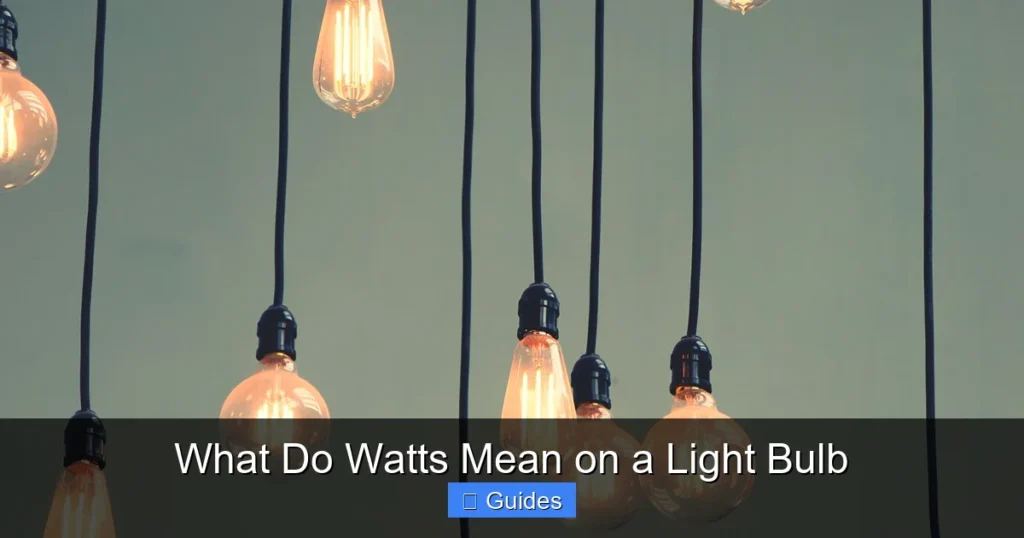
Visual guide about What Do Watts Mean on a Light Bulb
Image source: daviesdecor.com
If “what do watts mean on a light bulb” is about power consumption, then what is the correct term for brightness? The answer is “lumens.” Lumens (lm) are the standard unit of measurement for the total amount of visible light produced by a source. When you’re choosing a light bulb, especially a modern one, the lumen rating is what you should be looking for to understand how bright it will be.
Understanding Lumen Levels
The higher the lumen number, the brighter the light. It’s that simple! This is the most important number to check when you’re comparing different bulbs.
* Replacing a 40-watt incandescent: Look for an LED bulb with around 450 lumens.
* Replacing a 60-watt incandescent: Look for an LED bulb with around 800 lumens.
* Replacing a 75-watt incandescent: Look for an LED bulb with around 1100 lumens.
* Replacing a 100-watt incandescent: Look for an LED bulb with around 1600 lumens.
This “lumen equivalency” is often listed prominently on LED bulb packaging to help consumers transition from the old wattage mindset.
Matching Lumens to Your Space
Different rooms and tasks require different levels of illumination. Here’s a general guide to help you decide how many lumens you need:
* Ambient/General Lighting (Living Rooms, Bedrooms): You generally want softer, overall illumination. Aim for 1500-3000 lumens for an average-sized room, distributed across multiple fixtures.
* Task Lighting (Kitchen Counters, Reading Nooks, Desks): Here, you need focused, brighter light. Individual task lights might range from 400-800 lumens.
* Accent Lighting (Highlighting artwork, Architectural Features): These are usually lower lumens, around 100-400 lumens, to create specific focal points.
* Bathrooms/Vanity: Bright, shadow-free light is key. Often 1000-2000 lumens for the general room, with additional task lighting around mirrors.
Remember, these are guidelines. Personal preference and room finishes (darker walls absorb more light) will also play a role.
Beyond Watts and Lumens: Other Key Light Bulb Characteristics
While understanding what do watts mean on a light bulb (energy) and lumens mean (brightness) is paramount, modern light bulbs offer a host of other features that can dramatically impact your lighting experience. Don’t overlook these important details!
Color Temperature (Measured in Kelvin)
Color temperature (K) describes the perceived warmth or coolness of the light emitted.
- Warm White (2700K-3000K): Similar to traditional incandescent bulbs, these lights have a yellowish glow, creating a cozy and inviting atmosphere. Ideal for living rooms, bedrooms, and dining areas.
- Cool White (3500K-4100K): More neutral, pure white light. Good for kitchens, bathrooms, offices, and utility rooms where clarity is important.
- Daylight (5000K-6500K): Mimics natural daylight with a bluish-white hue. Great for task lighting, workshops, garages, and areas where high visibility and energy are desired.
Color Rendering Index (CRI)
CRI is a measure of how accurately a light source reveals the true colors of objects compared to natural daylight. It’s rated on a scale from 0 to 100.
- High CRI (80+): Essential for areas where accurate color perception is important, such as kitchens (so food looks appetizing), bathrooms (for makeup application), art studios, or retail spaces. Most quality LED bulbs today offer a CRI of 80 or higher.
- Lower CRI: May make colors appear dull or distorted. Not ideal for main living spaces.
Dimmability
Not all LED bulbs are dimmable, and even dimmable ones require compatible dimmer switches. Using a non-dimmable LED bulb with a standard dimmer can cause flickering, buzzing, or even damage the bulb. Always check the packaging for a “dimmable” label. If you plan to dim your lights, invest in bulbs specifically designed for dimming and ensure your dimmer switch is LED-compatible.
Beam Angle
This characteristic describes how wide or narrow the light beam is.
- Narrow Beam Angle (Spotlight): Ideal for accent lighting, highlighting specific objects, or providing focused task lighting.
- Wide Beam Angle (Floodlight): Best for general illumination, spreading light broadly across a room.
Lifespan (Hours)
One of the major advantages of LEDs is their incredibly long lifespan, often rated for 15,000 to 50,000 hours or more. This means fewer bulb changes and less waste. The estimated lifespan is typically listed on the packaging.
Choosing the Right Bulb for Your Needs: A Practical Guide
Now that you understand what do watts mean on a light bulb, the importance of lumens, and other key terms, let’s put it all together to help you make informed decisions.
1. Identify Your Brightness Needs (Lumens First!)
Forget the old wattage numbers. Instead, think about how much light you truly need for the space.
- Is it a primary light source or accent lighting?
- What activities happen in this room (reading, cooking, relaxing)?
- Do you have dark walls or furniture that absorb light?
Use the lumen equivalency chart and the room-specific lumen guide as your starting point.
2. Consider Color Temperature
Match the light’s mood to the room’s function.
- Warm: For coziness and relaxation (living rooms, bedrooms).
- Cool/Daylight: For alertness and task focus (kitchens, home offices, bathrooms).
3. Check for Dimmability
If you have dimmer switches or plan to install them, ensure your chosen bulbs are explicitly labeled as dimmable. Look for “dimmable LED” on the box.
4. Evaluate CRI for Color Accuracy
For spaces where accurate color perception is important (kitchens, bathrooms, craft rooms), aim for a CRI of 80 or higher.
5. Don’t Forget the Fixture
Always check your lamp or light fixture for its maximum allowable wattage. While an LED bulb will consume far fewer actual watts, some older fixtures (especially enclosed ones) might have heat dissipation concerns. Using a high-lumen LED in a fixture rated for, say, a 60W incandescent bulb is perfectly safe, as the LED’s actual wattage is much lower, meaning it generates far less heat.
6. Read the “Lighting Facts” Label
Just like nutrition labels on food, modern light bulbs have a “Lighting Facts” label that clearly outlines:
- Brightness (Lumens)
- Estimated Annual Energy Cost
- Life Expectancy (Years/Hours)
- Light Appearance (Color Temperature)
- Energy Used (Watts)
This label is your best friend in the lighting aisle!
7. Calculate Your Savings
Switching from old incandescent bulbs to LEDs is one of the easiest ways to save money on your electricity bill. An LED bulb uses about 85% less energy than an incandescent to produce the same amount of light and lasts 15-25 times longer. The initial cost might be higher, but the long-term savings are significant.
The Future of Lighting and the Evolving Role of Watts
As technology continues to advance, the emphasis on “what do watts mean on a light bulb” will further diminish for the average consumer, at least in terms of brightness. Smart lighting systems are becoming more prevalent, allowing you to control brightness (lumens), color temperature, and even color directly from your phone or voice assistant. In these systems, you’re adjusting the light output, not thinking about the underlying power consumption.
Manufacturers are continually pushing the boundaries of efficiency, producing even brighter bulbs with fewer watts. The trend is clear: more light, less energy. While the term “watt” will always describe energy consumption, its role as a proxy for brightness is firmly in the past. Embrace lumens, explore color temperature, and enjoy a smarter, more efficient way to light your home.
Conclusion
Understanding what do watts mean on a light bulb in today’s energy-efficient world is fundamental to making smart lighting choices. No longer a measure of brightness, watts now primarily tell us about a bulb’s energy consumption – how much power it draws and, consequently, how much it will cost to run. The true indicator of brightness is lumens.
By shifting your focus from watts to lumens, and considering factors like color temperature, CRI, and dimmability, you gain the power to create the perfect ambiance, improve visibility for tasks, and significantly reduce your energy footprint. So next time you’re buying a bulb, don’t just grab the old “60W equivalent.” Look at the lumens, check the color, and choose a light that truly fits your needs and helps you save energy and money. Happy lighting!
Frequently Asked Questions
What is the primary difference between watts and lumens?
Watts measure the electrical power consumed by a light bulb, indicating its energy usage. Lumens, on the other hand, measure the total amount of visible light emitted by the bulb, which tells you how bright it will be.
Why did watts used to indicate brightness for older bulbs?
For traditional incandescent bulbs, there was a direct and relatively consistent relationship between the electrical power consumed (watts) and the amount of light produced. More watts meant a hotter filament and therefore more light, making watts a convenient proxy for brightness.
How can I convert old incandescent wattage to new LED lumens?
A common rule of thumb is that a 40W incandescent equals about 450 lumens, 60W equals 800 lumens, 75W equals 1100 lumens, and 100W equals 1600 lumens. Most LED packaging will clearly state its lumen output and the incandescent wattage it replaces.
Are “warm white” and “cool white” related to watts?
No, “warm white” and “cool white” refer to the color temperature of the light, measured in Kelvin (K), not its wattage or energy consumption. Warm white (lower Kelvin) light has a yellowish tint, while cool white (higher Kelvin) light is bluer.
Will choosing lower wattage bulbs dim my room?
Not if you choose the right lumen output! You can get a very bright LED bulb that uses significantly fewer watts than an older incandescent. The key is to match the lumen rating to your desired brightness, not the wattage.
Why is there an “equivalent wattage” on LED bulb packaging?
The “equivalent wattage” helps consumers transition from the old incandescent system by providing a familiar reference point for brightness. It means the LED bulb produces a similar amount of light (lumens) as an incandescent bulb of that wattage, even though the LED consumes far fewer actual watts.
