


As an Amazon Associate, We earn from qualifying purchases.
A dimmable light bulb allows you to adjust its brightness, offering unparalleled control over your home’s ambiance and energy consumption. These special bulbs require compatible dimmer switches to function correctly, enabling smooth transitions from bright illumination to subtle, mood-setting light. Understanding their technology and compatibility is key to unlocking the full potential of personalized lighting in any space.
Imagine walking into a room and instantly setting the perfect mood with just a touch. From a bright, energetic glow for morning tasks to a soft, warm flicker for a cozy evening, the power of light can completely transform a space. This magic is largely thanks to a simple yet incredibly versatile invention: what is a dimmable light bulb?
For years, our lighting choices were often limited to “on” or “off.” But today, the world of home illumination has evolved, offering us incredible control over our environments. A dimmable light bulb isn’t just a fancy accessory; it’s a fundamental component of modern lighting design, allowing you to tailor your light levels precisely to your needs and desires. Whether you’re hosting a dinner party, reading a book, or simply relaxing, the ability to adjust your lighting can make all the difference. Let’s dive deep into understanding these clever little bulbs and how they can revolutionize your home.
In this guide, we’ll explore everything you need to know about what is a dimmable light bulb, from how it works to how to choose the right one for your home. We’ll uncover the different types available, the benefits they offer, and essential tips for ensuring compatibility and a smooth setup. Get ready to illuminate your understanding and brighten your world in a whole new way!
Key Takeaways
- Definition: A dimmable light bulb is specifically designed to work with a dimmer switch, allowing you to control its light output from full brightness down to a very low level.
- Compatibility is Crucial: Not all light bulbs are dimmable, and a non-dimmable bulb can be damaged or cause issues when used with a dimmer switch. Always check the packaging for a “dimmable” label.
- Requires a Specific Dimmer Switch: Dimmable bulbs need a compatible dimmer switch to function properly. Different bulb types (especially LEDs) often require specific dimmer switch technologies (e.g., LED-compatible dimmers).
- Benefits Beyond Ambiance: Dimmable lighting offers more than just mood setting; it can also extend the lifespan of your bulbs and significantly reduce energy consumption when dimmed.
- LEDs are the Modern Standard: While incandescents and halogens are inherently dimmable, modern dimmable LED light bulbs offer superior energy efficiency, longer life, and excellent dimming performance when paired correctly.
- Common Issues Exist: Flickering, buzzing, or bulbs not dimming fully are common issues, often stemming from incompatibility between the bulb and the dimmer switch, or exceeding load limits.
Quick Answers to Common Questions
Can I use a dimmable light bulb in a regular switch?
Yes, you can absolutely use a dimmable light bulb in a regular on/off switch fixture. It will simply operate at 100% brightness and function just like a non-dimmable bulb, but you won’t be able to dim it.
Will a non-dimmable bulb work in a dimmer switch?
While a non-dimmable bulb might light up in a dimmer switch, it’s not recommended. It will likely not dim, and could flicker, buzz, or quickly fail. It can also potentially damage the bulb and the dimmer switch itself over time.
Do dimmable LED light bulbs save more energy than non-dimmable ones?
When dimmed, a dimmable LED light bulb will save more energy than if it were operating at full brightness. A non-dimmable LED will always operate at full power, so a dimmable one offers the potential for greater savings through reduced light output.
How do I know if a bulb is dimmable?
Always check the bulb’s packaging or the bulb itself for a “dimmable” label or symbol. If it’s not explicitly stated, assume the bulb is non-dimmable.
Can dimmable bulbs extend their lifespan?
Yes, operating a dimmable light bulb, especially an LED, at reduced brightness (dimmed) generally reduces stress on its components, which can contribute to a longer lifespan compared to running it constantly at full power.
📑 Table of Contents
What Exactly is a Dimmable Light Bulb?
At its core, a dimmable light bulb is a light source specifically designed to have its brightness adjusted. Unlike standard “on/off” bulbs, these specialized bulbs can smoothly transition through various levels of light output, from 100% illumination down to a subtle glow, and everything in between. This capability isn’t just about personal preference; it’s about functionality, energy efficiency, and creating dynamic atmospheres.
Beyond On and Off: The Core Idea
Think about a light switch. For decades, it was a binary choice: light is either fully on or completely off. A dimmable light bulb breaks free from this limitation. It allows you to fine-tune the amount of light emitted, giving you unprecedented control over the ambiance and utility of any room. This means you can have bright light for detailed tasks like cooking or reading, then smoothly dim it down for a relaxed movie night or a romantic dinner. The primary differentiator of a dimmable light bulb is its internal circuitry and design, which can handle variations in electrical current without being damaged or failing prematurely.
The Technology Behind the Glow
The ability of a dimmable light bulb to change brightness comes down to how it interacts with the electrical current. Essentially, a dimmer switch (which we’ll cover in more detail) reduces the amount of power flowing to the bulb. A non-dimmable bulb is engineered to operate at a fixed voltage and current. If you try to reduce that power, it often won’t respond predictably; it might flicker, buzz, or simply fail to dim at all. Worse, it could significantly shorten the bulb’s lifespan or even damage the dimmer switch itself.
Dimmable bulbs, on the other hand, are built with components that can handle this fluctuating power supply gracefully. They are designed to interpret the reduced current in a way that translates into a smooth decrease in light output, often without noticeable flickering or buzzing. This careful engineering ensures that the dimming process is not only effective but also gentle on the bulb, preserving its longevity and providing a pleasant user experience.
How Dimmable Light Bulbs Work
Understanding how a dimmable light bulb achieves its variable brightness involves looking at the interplay between the bulb itself and the dimmer switch. It’s a bit of electrical wizardry, but quite straightforward once you grasp the basics.
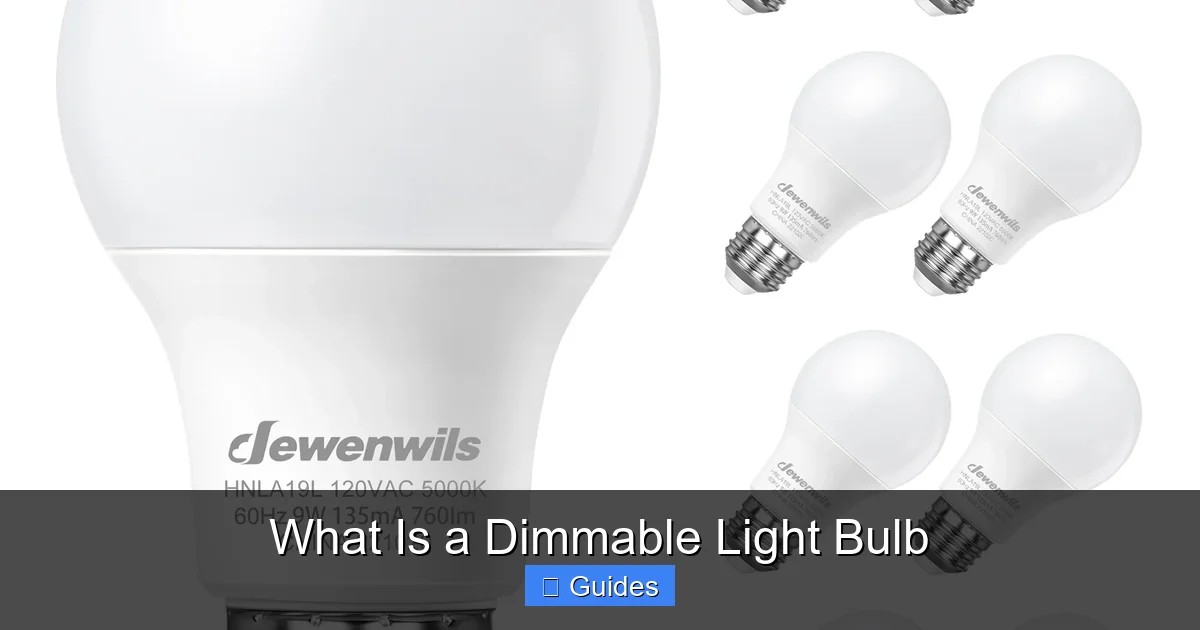
Visual guide about What Is a Dimmable Light Bulb
Image source: dewenwils.com
The Role of the Dimmer Switch
A dimmable light bulb doesn’t dim on its own; it requires a special partner: a dimmer switch. Unlike a regular on/off switch, which simply completes or breaks an electrical circuit, a dimmer switch actively modulates the electricity flowing to the bulb. The most common type of dimmer switch works by rapidly turning the power on and off many times per second – so fast that your eye perceives it as a continuous light source that is simply less bright.
Imagine your electricity as a wave. A standard dimmer switch essentially “chops off” parts of that wave, reducing the total amount of energy reaching the bulb over time. The more “chopped off,” the less power the bulb receives, and the dimmer it appears. This is why compatibility between the bulb and the switch is paramount. The bulb needs to be able to handle this intermittent power supply without issues.
Understanding Dimmer Types
Not all dimmer switches are created equal, and understanding their differences is vital, especially in the age of LED lighting:
- Leading-Edge (Forward-Phase) Dimmers: These are the older, traditional dimmers typically used for incandescent and halogen bulbs. They work by cutting off the leading edge of the AC current waveform. While effective for resistive loads (like old filament bulbs), they can cause issues like flickering or buzzing with modern LED or CFL bulbs because those bulbs react differently to power fluctuations.
- Trailing-Edge (Reverse-Phase) Dimmers: These are newer and generally more sophisticated dimmers. They cut off the trailing edge of the AC current waveform, providing a smoother power supply. Trailing-edge dimmers are almost always recommended for dimmable LED light bulbs, as they are designed to handle the complex electronics within LEDs more effectively, leading to smoother dimming and less noise.
- Smart Dimmers: These are the latest evolution, often integrated into smart home systems. They can be controlled via apps, voice commands, or scheduled routines. Many smart dimmers are trailing-edge by design and offer advanced features like fine-tuning the dimming range for specific bulbs to prevent flickering at very low levels.
When selecting a dimmable light bulb and a dimmer switch, always ensure they are designed to work together. Manufacturers will typically specify the compatible dimmer types on the bulb’s packaging or in its product description. Mixing incompatible types is the most common reason for dimming issues.
Types of Dimmable Light Bulbs
The world of lighting has seen significant innovation, and dimmability is now available across various bulb technologies. Each type has its own characteristics when it comes to dimming performance.
Dimmable LEDs: The Modern Choice
LEDs (Light Emitting Diodes) are the undisputed champions of energy efficiency and longevity. When it comes to dimmable light bulbs, modern LEDs have come a long way. Early dimmable LEDs sometimes struggled with flickering, buzzing, or not dimming to very low levels. However, today’s “dimmable LED” bulbs are specifically engineered for smooth performance. They contain internal circuitry (drivers) that can interpret the chopped waveform from a dimmer switch and translate it into a steady, flicker-free dimming experience.
- Pros: Extremely energy-efficient, very long lifespan, available in a wide range of color temperatures and brightnesses, and excellent dimming performance when matched with the correct dimmer (usually trailing-edge).
- Cons: Generally higher upfront cost, and strict dimmer compatibility requirements. Using a non-LED-compatible dimmer can cause poor performance or damage.
Tip: Always look for LEDs explicitly labeled “dimmable.” Some manufacturers even provide lists of compatible dimmer switches for their specific LED products.
The Traditional Dimmable Incandescent and Halogen
Incandescent bulbs, with their glowing filaments, were the original inherently dimmable light bulbs. Because their light output is directly related to the amount of electrical current heating the filament, simply reducing the voltage with a standard leading-edge dimmer would dim them smoothly. Halogen bulbs work on a similar principle, offering brighter, whiter light and slightly better efficiency than traditional incandescents, while also being easily dimmable with standard dimmers.
- Pros: Excellent, smooth dimming performance with basic dimmers, warm light output.
- Cons: Very inefficient, short lifespan compared to LEDs, and generate a lot of heat. They are being phased out in many regions due to energy regulations.
The Curious Case of Dimmable CFLs (and why they’re rare)
CFLs (Compact Fluorescent Lamps) were once touted as the energy-efficient alternative to incandescents. However, dimming CFLs proved to be a significant challenge. Standard CFLs are typically non-dimmable. Dimmable CFLs do exist, but they require specialized internal ballasts and specific dimmers to function without flickering, buzzing, or drastically reducing their lifespan. Their dimming range often isn’t as wide or smooth as incandescents or modern LEDs, and they are generally much less common today.
- Pros: More efficient than incandescents (though less than LEDs).
- Cons: Poor dimming range and quality, specific dimmer requirements, contain mercury (disposal concerns), and significantly outclassed by LEDs in almost every metric.
The Benefits of Going Dimmable
Beyond the technical aspects of what is a dimmable light bulb, the real value lies in the tangible benefits they bring to your living spaces. It’s about more than just light; it’s about control, comfort, and smart living.
Crafting the Perfect Atmosphere
This is arguably the most celebrated benefit of dimmable light bulbs. Light has a profound impact on our mood and perception of a space. Bright, cool light can energize you for work, while warm, dim light can create a relaxing, intimate setting. With dimmable lighting, you can:
- Set the Mood: Transform a dining room from a brightly lit space for homework into a romantic haven for dinner, or turn a living room into a cozy movie theater.
- Enhance Visual Comfort: Adjust the brightness to prevent glare or eye strain, especially during evening hours or when working on screens.
- Highlight Features: Use varied light levels to draw attention to artwork, architectural details, or specific areas within a room.
Saving Energy and Extending Bulb Life
While often overlooked, the practical advantages of energy savings and longevity are substantial:
- Reduced Energy Consumption: Dimming a light bulb reduces the amount of electricity it consumes. With LEDs, dimming them even slightly can lead to noticeable energy savings over time, contributing to lower electricity bills and a smaller carbon footprint.
- Extended Bulb Lifespan: Operating a light bulb at less than full power reduces stress on its internal components, especially true for LED and incandescent bulbs. This means your dimmable light bulb will likely last much longer than if it were always run at 100% brightness, saving you money on replacement bulbs and the hassle of changing them.
Enhancing Home Versatility
Dimmable lighting adds incredible versatility to any room, allowing it to serve multiple functions throughout the day:
- Multi-functional Rooms: A single room can easily adapt from a brightly lit play area for children to a softly lit guest room or an office space.
- Circadian Rhythm Support: Align your home’s lighting with your natural body clock. Bright, cool light in the morning can help with alertness, while warmer, dim light in the evening can promote relaxation and prepare you for sleep.
- Smart Home Integration: Many dimmable light bulbs and dimmer switches are now smart-enabled, allowing you to control them remotely, set schedules, and integrate them into broader smart home automation routines for ultimate convenience.
Choosing the Right Dimmable Setup
Now that you know what a dimmable light bulb is and why you might want one, the next step is to choose the right components and ensure they work together seamlessly. This is where compatibility becomes your best friend.
Checking Bulb and Dimmer Compatibility
This is the golden rule of dimmable lighting: always ensure your bulbs and dimmer switch are compatible.
- Look for the “Dimmable” Label: This seems obvious, but it’s the first and most critical step. If a bulb doesn’t explicitly state “dimmable” on its packaging, assume it is not.
- Match Bulb Type to Dimmer Type: As discussed, traditional incandescent/halogen dimmers (leading-edge) often don’t work well with dimmable LEDs. For dimmable LED light bulbs, always choose an LED-compatible dimmer, which is typically a trailing-edge dimmer. Some advanced LEDs might even specify “universal” or “multi-load” dimmers.
- Consult Manufacturer Lists: Many reputable LED bulb manufacturers provide compatibility lists on their websites, detailing which dimmer switches work best with their specific dimmable LED light bulb models. This takes the guesswork out of the equation.
Understanding Load Requirements
Dimmer switches have both minimum and maximum wattage ratings:
- Minimum Load: Many older dimmers (designed for high-wattage incandescents) have a relatively high minimum load requirement. If you connect only a few low-wattage dimmable LED light bulbs, the total wattage might fall below the dimmer’s minimum load, leading to flickering, buzzing, or the bulbs not dimming correctly. LED-compatible dimmers are designed with much lower minimum load requirements.
- Maximum Load: Never exceed the maximum wattage rating of your dimmer switch. Sum the wattage of all the bulbs connected to the dimmer. For LEDs, even though they have low individual wattages, ensure the total combined wattage doesn’t exceed the dimmer’s maximum.
Example: An old dimmer might have a minimum load of 40W. If you replace 4x100W incandescent bulbs (400W total) with 4x10W dimmable LED light bulbs (40W total), the LED bulbs might only just meet the minimum load, or even fall below it if you use fewer bulbs, causing problems.
Installation Tips and Safety First
- Turn Off Power: Always turn off the power at the circuit breaker before installing or replacing any light fixture or switch.
- Follow Instructions: Read the installation instructions for both the dimmable light bulb and the dimmer switch carefully.
- When in Doubt, Hire a Pro: If you’re uncomfortable working with electrical wiring, it’s always best to hire a qualified electrician to install new dimmer switches.
Smart Dimmers: The Future of Lighting Control
For ultimate convenience and control, consider smart dimmers and smart dimmable light bulbs. These can be integrated into your home Wi-Fi network and controlled via smartphone apps, voice assistants (like Amazon Alexa or Google Assistant), or even automatically through schedules and sensors. Many smart dimmers are designed to be highly compatible with a wide range of dimmable LED light bulbs, often offering advanced features like fine-tuning dimming curves to eliminate issues.
Troubleshooting Common Dimmable Light Issues
Even with careful planning, you might encounter some issues with your dimmable lighting setup. Don’t worry, many common problems have straightforward solutions, usually related to compatibility or installation.
Why Your Lights Might Be Flickering
Flickering is one of the most common and annoying problems with dimmable lighting. Here’s why it might be happening:
- Incompatible Dimmer Switch: This is the most frequent culprit. If you’re using dimmable LED light bulbs with a traditional leading-edge dimmer designed for incandescents, flickering is highly likely.
- Minimum Load Not Met: If the total wattage of your dimmable light bulbs is below the minimum load requirement of your dimmer switch, it can cause unstable operation and flickering.
- Faulty Bulb or Dimmer: Occasionally, a dimmable light bulb might be defective, or the dimmer switch itself could be faulty. Try swapping out a bulb to test, or if possible, the dimmer.
- Loose Wiring: Check for any loose wire connections at the switch or the fixture. Always turn off power first!
The Buzz About Buzzing
Another common complaint is an audible buzzing sound coming from either the dimmable light bulb or the dimmer switch. Here’s why:
- Incompatible Dimmer or Bulb: Again, an incompatible pairing is often the cause. The rapid on/off cycling of a leading-edge dimmer can sometimes cause the electronic components within an LED driver to vibrate, producing a buzzing sound.
- Electromagnetic Interference (EMI): Poorly designed dimmers or dimmable light bulbs can sometimes generate EMI, which can be heard as a buzz.
- Overloaded Dimmer: Exceeding the dimmer’s maximum wattage can also lead to buzzing due to electrical stress.
Solution: Upgrading to a high-quality, LED-compatible trailing-edge dimmer often resolves buzzing issues, especially with dimmable LED light bulbs.
When Dimmers Don’t Dim
If your dimmable light bulb isn’t dimming at all, or only dims to a certain point:
- Non-Dimmable Bulb: Double-check that the bulb is indeed labeled “dimmable.” A non-dimmable bulb will typically stay at full brightness or turn off completely when power is reduced.
- Dimmer Malfunction: The dimmer switch itself might be faulty or improperly wired.
- Incomplete Dimming Range: Some older dimmers or less sophisticated dimmable light bulbs might not have a wide dimming range, meaning they won’t go down to a very low light level. This is less common with modern, good-quality dimmable LEDs and LED-specific dimmers.
Most dimming problems can be avoided by carefully checking the compatibility between your dimmable light bulb and your dimmer switch before purchase and installation. When in doubt, invest in quality components and consult manufacturer specifications.
Conclusion
Understanding what is a dimmable light bulb unlocks a world of possibilities for your home lighting. It’s no longer just about turning lights on and off; it’s about crafting experiences, setting moods, and optimizing your environment for comfort and efficiency. From the vibrant energy of a well-lit workspace to the tranquil serenity of a softly glowing sanctuary, dimmable lighting puts the power of transformation directly into your hands.
By choosing the right dimmable light bulb – especially modern, energy-efficient dimmable LED light bulbs – and pairing them with compatible dimmer switches, you can enjoy significant energy savings, extend the life of your bulbs, and create the perfect ambiance for any occasion. While navigating compatibility might seem a little daunting at first, remembering the key principle of matching your bulb to your dimmer will guide you to success.
Embrace the flexibility and benefits that dimmable lighting offers. Take the leap, experiment with different light levels, and watch as your home comes alive with personalized illumination. Your spaces, and your energy bill, will thank you for it!
Frequently Asked Questions
What causes dimmable LED light bulbs to flicker?
Flickering in dimmable LED light bulbs is most often caused by incompatibility between the LED bulb and the dimmer switch. Traditional dimmers designed for incandescent bulbs (leading-edge) often don’t provide the stable power required by LED drivers, leading to erratic operation. Insufficient minimum load on the dimmer or loose wiring can also contribute to flickering.
Do I need special wiring for dimmable lights?
No, generally you do not need special wiring. Dimmable light bulbs and dimmer switches use the same standard household electrical wiring as regular on/off switches. The key is to replace your standard wall switch with a compatible dimmer switch and use appropriately labeled dimmable light bulbs.
Can I use smart dimmable light bulbs with a regular dimmer switch?
It depends on the specific smart bulb. Some smart dimmable light bulbs are designed to be dimmed exclusively through their app or smart hub, and attempting to dim them with a physical wall dimmer can cause issues like buzzing, flickering, or even damage. Always check the manufacturer’s instructions for your smart bulb regarding physical dimmer compatibility.
What’s the difference between a dimmable light bulb and a smart light bulb?
A dimmable light bulb can have its brightness adjusted when paired with a compatible dimmer switch. A smart light bulb, on the other hand, often includes dimming capabilities along with other features like color changing, scheduling, and remote control via a smartphone app or voice assistant, usually without needing a separate dimmer switch on the wall (though smart wall dimmers also exist).
Why is my dimmable bulb not dimming all the way down?
If your dimmable light bulb doesn’t dim to a very low level, it could be due to several reasons. The dimmer switch itself might have a limited dimming range, or it could be an older model not optimized for modern LEDs. Some dimmer switches have adjustable trim screws that allow you to fine-tune the minimum dimming level, which can resolve this issue.
Are dimmable light bulbs more expensive?
Dimmable light bulbs, especially dimmable LED light bulbs, often have a slightly higher upfront cost than their non-dimmable counterparts due to the more complex internal circuitry required for smooth dimming. However, the benefits of energy savings, extended bulb life, and enhanced ambiance often justify this initial investment over the long term.
