



As an Amazon Associate, We earn from qualifying purchases.
The light bulb’s primary function is to convert electrical energy into visible light, illuminating our homes, workplaces, and public spaces. It has evolved significantly, from the early incandescent filament bulbs to highly efficient LEDs, each type using different scientific principles to produce light. Beyond mere illumination, light bulbs play crucial roles in safety, productivity, mood setting, and even communication, profoundly shaping our modern world.
What if you woke up tomorrow, and the world was plunged into perpetual darkness after sunset? No streetlights, no lamps in your home, no glow from your smartphone screen. It’s a daunting thought, isn’t it? For most of human history, this was the reality, limited to the flicker of candles, the warmth of a fire, or the pale glow of the moon. Then, something truly revolutionary happened. The invention and subsequent evolution of the light bulb changed everything, fundamentally reshaping how we live, work, and interact with the world around us.
You might think the answer to “what does the light bulb do” is simple: “it makes light!” And while that’s certainly true, it’s also just the tip of the iceberg. The humble light bulb is a marvel of engineering, a product of centuries of scientific inquiry, and a constant companion in nearly every aspect of our modern lives. It’s not just about dispelling darkness; it’s about creating atmosphere, enhancing safety, boosting productivity, and even impacting our very well-being.
Join us on a journey to explore the multifaceted world of the light bulb. We’ll peel back the layers of its seemingly simple function to uncover the fascinating science behind its glow, trace its incredible evolution, and discover the countless ways this indispensable invention continues to shape our illuminated existence. Get ready to see the light bulb in a whole new light!
Key Takeaways
- Core Function: A light bulb’s fundamental purpose is to transform electrical energy into visible light, making spaces brighter and enabling us to see in the dark.
- Technological Evolution: Light bulbs have progressed from basic incandescent designs (using heat to produce light) to more advanced fluorescent and highly energy-efficient LED technologies (using gas excitation and semiconductors, respectively).
- Beyond Illumination: Light bulbs do more than just provide light; they influence mood, enhance safety, improve productivity, support plant growth, and even facilitate communication in smart home systems.
- Efficiency and Longevity: Modern light bulbs, especially LEDs, offer significantly higher energy efficiency and much longer lifespans compared to their predecessors, leading to energy savings and reduced waste.
- Key Metrics Matter: Understanding terms like lumens (brightness), watts (energy consumption), Kelvin (color temperature), and CRI (color rendering index) helps in selecting the most appropriate light bulb for specific applications and desired ambiance.
- Diverse Applications: Light bulbs are not one-size-fits-all; they are specifically designed for various purposes, from general room lighting and task-specific illumination to decorative accents, medical uses, and specialized industrial functions.
Quick Answers to Common Questions
Question 1?
What is the primary function of a light bulb?
Answer 1?
The primary function of a light bulb is to convert electrical energy into visible light, allowing us to see and illuminate spaces.
Question 2?
Which type of light bulb is the most energy-efficient?
Answer 2?
LED (Light-Emitting Diode) bulbs are currently the most energy-efficient type of light bulb, consuming significantly less power and lasting much longer than incandescent or fluorescent bulbs.
Question 3?
What does “lumens” refer to when choosing a light bulb?
Answer 3?
Lumens (lm) measure the brightness of a light bulb. A higher lumen count means the bulb will produce more visible light, regardless of its wattage.
Question 4?
What is the difference between warm white and daylight color temperatures?
Answer 4?
Warm white (around 2700K-3000K) produces a yellowish, cozy light, similar to traditional incandescents. Daylight (5000K-6500K) produces a bright, bluish-white light that mimics natural sunlight, often used for task lighting or in workspaces.
Question 5?
Can all LED bulbs be dimmed?
Answer 5?
No, not all LED bulbs are dimmable. If you intend to use a dimmer switch, you must purchase LED bulbs specifically labeled as “dimmable” to ensure proper function and avoid damage.
📑 Table of Contents
The Fundamental Purpose: Illuminating Our World
At its very core, the light bulb does one primary thing: it converts electrical energy into visible light. This might sound straightforward, but the implications are profound. Before reliable artificial light, human activity was largely dictated by the sun’s rhythm. With the advent of the light bulb, we gained the power to extend our days, work through the night, and conquer the shadows.
Why We Need Artificial Light
Our eyes are incredible organs, but they rely entirely on light to function. Without it, we are essentially blind. So, the most basic reason we need light bulbs is for vision. They allow us to:
- See Clearly: Whether reading a book, preparing a meal, or navigating a room, adequate light is crucial for performing daily tasks safely and efficiently.
- Enhance Safety: Well-lit streets, homes, and workplaces reduce accidents and deter crime. Imagine a dark stairway or a dimly lit parking lot – the risks are immediately apparent.
- Improve Productivity: In offices, factories, and schools, proper lighting reduces eye strain, improves concentration, and contributes to better performance and fewer errors.
- Support Health and Well-being: Light, particularly its spectrum and intensity, plays a role in regulating our circadian rhythms, affecting our sleep patterns, mood, and overall health. Light bulbs help us maintain these rhythms even when natural light isn’t available.
Beyond Simple Illumination: Setting the Mood
The light bulb doesn’t just illuminate; it also creates ambiance. Think about the cozy glow of a bedside lamp compared to the bright, stark light of a hospital room. Different types of light bulbs, with their varying brightness, color temperatures, and dimming capabilities, allow us to tailor the atmosphere of any space. From vibrant party lighting to a serene, relaxing glow, the light bulb is a master of mood.
A Journey Through Light Bulb Technologies
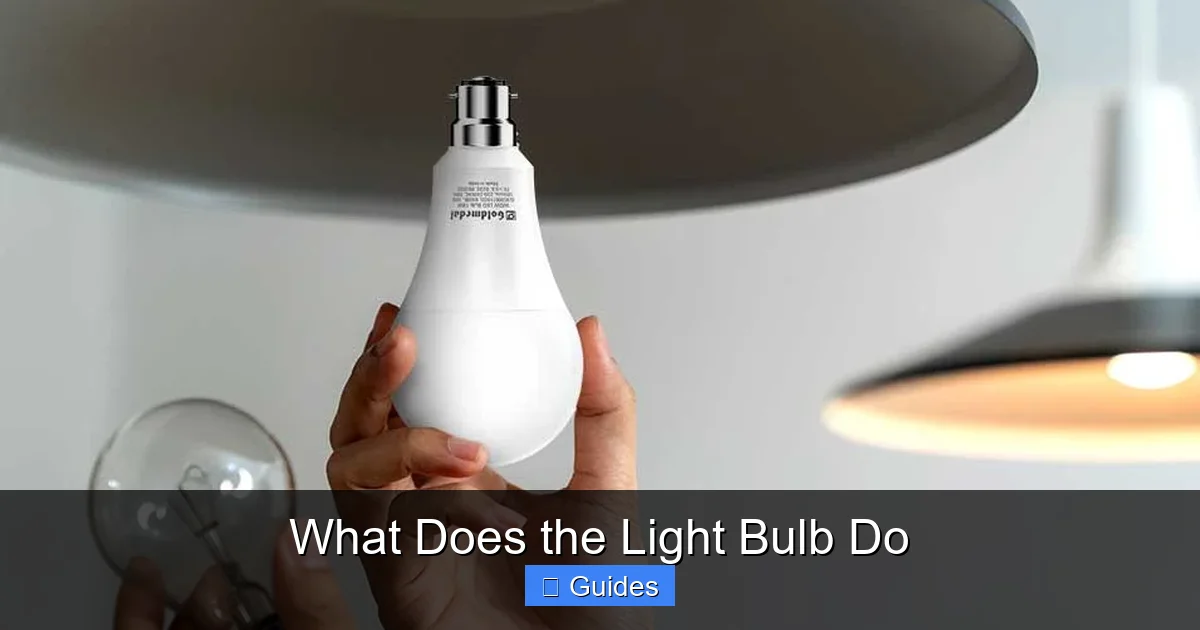
Visual guide about What Does the Light Bulb Do
Image source: goldmedalindia.com
The light bulb hasn’t always looked or worked the way it does today. It has undergone a remarkable evolution, driven by the desire for more efficient, durable, and versatile lighting.
Incandescent Bulbs: The Classic Glow
For over a century, the incandescent light bulb was the king. Patented by Thomas Edison (though many contributed to its development), it works on a simple principle: electricity heats a thin wire filament (usually tungsten) inside a glass bulb until it glows white-hot, producing light.
- How they work: Current flows through the filament, which has high electrical resistance. This resistance generates heat, and when hot enough, the filament emits light and heat (incandescence).
- Pros: Instant on, excellent color rendering (making colors look natural), relatively inexpensive to produce.
- Cons: Extremely inefficient (about 90% of energy is wasted as heat), short lifespan (typically 750-1,000 hours), fragile.
Many countries have phased out incandescent bulbs due to their inefficiency, paving the way for newer technologies.
Halogen Bulbs: An Incandescent Upgrade
Halogen bulbs are essentially an improved version of the incandescent bulb. They still use a tungsten filament, but it’s encased in a compact quartz envelope filled with halogen gas (like iodine or bromine).
- How they work: The halogen gas helps to regenerate the tungsten filament, allowing it to burn hotter and brighter without quickly degrading.
- Pros: Brighter, more compact, slightly more efficient than traditional incandescents, excellent color rendering.
- Cons: Still generate a lot of heat, shorter lifespan than CFLs or LEDs, can be very hot to the touch.
Fluorescent Bulbs: The Energy Savers
Fluorescent technology was a major leap forward in energy efficiency. These include the long tube lights often seen in offices and the compact fluorescent lamps (CFLs) that became popular as direct replacements for incandescent bulbs.
- How they work: An electric current passes through a tube containing argon gas and a small amount of mercury vapor. This creates invisible ultraviolet (UV) light, which then excites a phosphor coating on the inside of the tube, causing it to emit visible light.
- Pros: Much more energy-efficient than incandescents (using about 75% less energy), longer lifespan (6,000-15,000 hours).
- Cons: Contain small amounts of mercury (requiring special disposal), take a moment to reach full brightness, can flicker or buzz, color rendering can be less natural than incandescents (though improved over time).
LED Bulbs: The Modern Marvel
Light-Emitting Diodes (LEDs) represent the pinnacle of current lighting technology. They have rapidly become the standard for both residential and commercial lighting.
- How they work: LEDs are semiconductors. When an electric current passes through them, electrons combine with “holes” (a type of charge carrier), releasing energy in the form of photons – light. There’s no filament to burn out, no gas to ionize.
- Pros: Extremely energy-efficient (up to 90% less energy than incandescents), incredibly long lifespan (25,000-50,000+ hours), durable (no glass bulb to shatter), instant on, highly directional light, versatile in color and dimming, generate very little heat.
- Cons: Higher upfront cost (though rapidly decreasing), light quality can vary, some cheaper models might have poor color rendering.
LEDs are the future, and their capabilities extend far beyond simple illumination, as we’ll see.
The Science Behind the Glow: How Light Bulbs Work
Understanding what the light bulb does requires a quick peek at the fundamental physics behind each technology. It’s not magic, but clever application of scientific principles!
Incandescence: The Heat Method
The simplest method involves heating something until it glows. Think of a blacksmith’s forge or a hot poker. In an incandescent light bulb, the filament’s tiny size and specific material (tungsten) mean it can get incredibly hot (around 2,700°C or 4,900°F) very quickly with relatively little current. The vacuum inside the bulb prevents the filament from oxidizing (burning up) instantly. Halogen bulbs improve on this by introducing halogen gas, which recaptures evaporated tungsten atoms, redepositing them on the filament, thereby extending its life and allowing for higher operating temperatures and greater efficiency.
Fluorescence: Gas Excitation and Phosphor Coating
Fluorescent bulbs use a completely different approach. It starts with a ballast (a component that regulates current) which creates a high voltage spike to ionize the mercury vapor inside the tube. This creates an arc of electricity that passes through the gas, causing the mercury atoms to emit UV radiation. This invisible UV light then strikes a phosphor coating on the inner surface of the glass tube. The phosphor absorbs the UV energy and re-emits it as visible light. The composition of the phosphor determines the color of the light produced.
Electroluminescence: The Semiconductor Solution
LEDs rely on electroluminescence, a phenomenon where certain materials emit light when an electric current passes through them. An LED consists of a semiconductor material (typically gallium arsenide or gallium nitride) with two layers, one doped to have excess electrons (N-type) and the other with a deficit of electrons, or “holes” (P-type). When voltage is applied, electrons from the N-type layer cross the junction to recombine with holes in the P-type layer, releasing energy in the form of photons (light particles). The color of the light depends on the specific semiconductor material used. To create white light, blue LEDs are often coated with a yellow phosphor, which mixes blue and yellow light to appear white to our eyes.
Key Light Bulb Metrics to Understand
When talking about what a light bulb does, these terms are essential:
- Lumens (lm): This is the most important measure of a light bulb’s brightness. It tells you how much visible light is produced. More lumens mean more light.
- Watts (W): This measures the amount of electrical power a light bulb consumes. Historically, we associated higher watts with brighter bulbs (e.g., a 100W incandescent), but with modern efficient bulbs, high lumens can be achieved with very low watts.
- Color Temperature (Kelvin – K): This describes the “warmth” or “coolness” of the light. Lower Kelvin values (2700K-3000K) produce warm, yellowish light (like an incandescent). Higher values (4000K-5000K+) produce cooler, bluer light (like daylight or office lighting).
- Color Rendering Index (CRI): This measures how accurately a light source reveals the true colors of objects compared to natural daylight. A higher CRI (80+) means colors will look more vibrant and natural.
Beyond Basic Illumination: The Light Bulb’s Diverse Roles
The light bulb’s function extends far beyond simply making things visible. It has become an integral part of countless specialized applications.
Tailored Lighting for Every Need
- Task Lighting: Focused light for specific activities, such as under-cabinet lighting in a kitchen, a desk lamp for reading, or a spotlight for artwork. The light bulb here is designed for precision and intensity.
- Ambient Lighting: General, soft illumination that fills a room, providing a comfortable level of brightness without harsh shadows. Ceiling fixtures, chandeliers, and floor lamps often provide ambient light.
- Accent Lighting: Used to highlight specific features or create dramatic effects, like track lighting pointing at a collection or recessed lights emphasizing architectural details.
- Decorative Lighting: Light bulbs that are themselves part of the aesthetic, like Edison-style filament bulbs or intricate pendant lights, where the bulb contributes to the overall design.
Smart Lighting and Connectivity
Modern light bulbs, particularly LEDs, have embraced smart technology. What does the light bulb do in a smart home? A lot!
- Remote Control: Turn lights on/off, dim them, or change their color from your smartphone, even when you’re away from home.
- Automation: Schedule lights to turn on at sunset, integrate with motion sensors, or sync with your alarm clock.
- Color Changing: RGB (Red, Green, Blue) LEDs can produce millions of colors, allowing you to completely transform the mood of a room with a tap of your finger.
- Voice Control: Integrate with smart assistants like Alexa or Google Assistant for hands-free control.
- Li-Fi (Light Fidelity): An emerging technology that uses light bulbs to transmit data, potentially offering faster and more secure wireless communication than Wi-Fi.
Specialized Applications of Light Bulbs
The versatility of the light bulb is truly astonishing:
- Horticulture (Grow Lights): Special light bulbs emit specific spectrums of light (often blue and red) that are essential for plant photosynthesis, allowing indoor gardening year-round.
- Medical Uses: UV light bulbs are used for sterilization (germicidal lamps), phototherapy for skin conditions, and even seasonal affective disorder (SAD) treatment. Infrared light bulbs provide therapeutic heat.
- Entertainment: Stage lighting, club lighting, projector lamps, and theatrical effects all rely on specialized light bulbs to create immersive experiences.
- Automotive Lighting: Headlights, taillights, interior lights – the light bulb is critical for vehicle safety and visibility.
- Indicator Lights: Tiny LEDs are everywhere, from your laptop’s power indicator to the warning lights on your car dashboard, simply telling you if something is on or off, working or not.
Choosing the Right Light Bulb for Your Needs
With so many options, how do you pick the perfect light bulb? Understanding what the light bulb does, and the metrics discussed earlier, makes it easier.
Tips for Selecting Light Bulbs
- Start with Lumens, Not Watts: Forget the old “100-watt equivalent.” Look for the lumen rating to know how bright the bulb will be. A general guide:
- 450 lumens for a 40W incandescent equivalent
- 800 lumens for a 60W incandescent equivalent
- 1100 lumens for a 75W incandescent equivalent
- 1600 lumens for a 100W incandescent equivalent
- Consider Color Temperature (K):
- 2700K-3000K (Warm White/Soft White): Creates a cozy, inviting atmosphere, best for bedrooms, living rooms, and dining areas.
- 3500K-4000K (Neutral White/Cool White): Good for kitchens, bathrooms, offices, and workspaces where you need more alertness.
- 5000K-6500K (Daylight): Provides crisp, bright light, ideal for task lighting, workshops, garages, or areas where true color representation is crucial.
- Check the CRI: For areas where color accuracy is important (like kitchens, art studios, or bathrooms), look for a CRI of 80 or higher.
- Dimmability: If you plan to dim your lights, ensure the light bulb is explicitly labeled as “dimmable.” Not all LEDs are.
- Shape and Base Type: Make sure the bulb’s shape fits your fixture and that the base matches your lamp’s socket (e.g., E26/E27 for standard screw-in, GU10 for spotlights).
- Energy Star Rating: Look for the Energy Star label, indicating the bulb meets strict energy efficiency guidelines set by the EPA.
Environmental Impact and Cost Savings
The shift towards LED light bulbs has significant environmental benefits. Their low energy consumption reduces demand on power grids, leading to fewer greenhouse gas emissions from power plants. Their incredibly long lifespan means fewer bulbs end up in landfills, reducing waste. While the upfront cost of an LED light bulb can be higher, the energy savings over its lifetime, combined with not having to replace it for many years, results in substantial cost savings in the long run. The light bulb is no longer just a source of light; it’s a tool for sustainability and economy.
Conclusion
From the fragile glow of Edison’s early experiments to the sophisticated, connected illumination systems of today, the light bulb has undergone an extraordinary transformation. It does far more than simply “make light.” It empowers us to work and learn irrespective of the sun’s schedule, creates the perfect ambiance for every occasion, enhances our safety, and even contributes to our health and well-being.
The light bulb is a testament to human ingenuity, constantly evolving to become more efficient, versatile, and intelligent. As technology continues to advance, we can only imagine what new capabilities future light bulbs will bring. But one thing is certain: our illuminated world, forever changed by this brilliant invention, will continue to rely on its humble yet profound ability to banish the dark and brighten our lives. So next time you flip a switch, take a moment to appreciate the incredible journey and multifaceted impact of the light bulb.
Frequently Asked Questions
What is the most significant environmental benefit of modern light bulbs?
The most significant environmental benefit of modern light bulbs, especially LEDs, is their high energy efficiency. They consume far less electricity, which reduces the demand for power generation and subsequently lowers greenhouse gas emissions and overall carbon footprint. Their long lifespan also means less waste in landfills.
How does a smart light bulb differ from a regular one?
A smart light bulb connects to your home’s Wi-Fi or another wireless protocol, allowing it to be controlled remotely via a smartphone app, voice assistant, or smart home hub. This enables features like remote on/off, dimming, color changing, scheduling, and integration with other smart devices, which traditional bulbs cannot do.
Why are incandescent bulbs being phased out in many regions?
Incandescent bulbs are being phased out primarily due to their extreme inefficiency. Approximately 90% of the energy they consume is converted into heat rather than light, making them wasteful. Regulations in many countries aim to encourage the use of more energy-efficient lighting alternatives to save energy and reduce environmental impact.
What does CRI mean, and why is it important?
CRI stands for Color Rendering Index, and it measures how accurately a light source reveals the true colors of objects compared to natural daylight. A higher CRI (typically 80 or above) means colors will appear more vibrant, natural, and true-to-life under that light, which is important for tasks requiring color accuracy, like cooking or applying makeup.
Can light bulbs affect my mood or sleep?
Yes, light bulbs can significantly affect your mood and sleep. Exposure to cool, blue-rich light (high Kelvin) in the evening can suppress melatonin production, making it harder to fall asleep. Warmer, dimmer light (low Kelvin) in the hours before bed is generally more conducive to relaxation and a healthy sleep cycle, as it more closely mimics natural sunset.
Is it worth upgrading to LED bulbs if my current ones still work?
In most cases, yes, it is worth upgrading to LED bulbs even if your current ones still work. LEDs offer substantial long-term savings through lower electricity bills and infrequent replacements due to their extended lifespan. The improved light quality, durability, and often smart features also provide a better overall lighting experience, quickly recouping the initial investment.
