


As an Amazon Associate, We earn from qualifying purchases.
Most people mistakenly believe a light bulb’s wattage measures its brightness. However, wattage actually indicates the amount of electrical power a bulb consumes, not how much light it produces. With the rise of energy-efficient LEDs and CFLs, lumens have become the definitive measure of brightness, helping you choose the right light while saving energy and money.
What Does the Wattage of a Light Bulb Mean?
Have you ever found yourself standing in the light bulb aisle, staring at a dizzying array of numbers and symbols? Perhaps you’re looking for a “60-watt bulb,” only to find an LED package proudly proclaiming it’s a “9-watt bulb, 60-watt equivalent.” It’s enough to make anyone scratch their head! For generations, we’ve used wattage as the primary way to describe how bright a light bulb is. The higher the watts, the brighter the light seemed to be. But with the incredible advancements in lighting technology, particularly with the rise of CFLs and LEDs, that simple rule-of-thumb no longer holds true.
This shift has created a common point of confusion for many homeowners. What exactly does wattage mean when we’re talking about light bulbs today? Is a 60-watt LED brighter than a 40-watt LED? And why do modern bulbs consume so much less wattage than their older counterparts while still producing plenty of light? Understanding the true meaning of wattage is crucial not just for getting the right light for your space, but also for saving energy and making smart, informed choices for your home. Let’s shed some light on this topic and demystify the numbers.
In this comprehensive guide, we’ll dive deep into the world of light bulb wattage. We’ll explore its historical significance, how it relates to different types of bulbs, and most importantly, why lumens have taken over as the new measure of brightness. By the end, you’ll feel confident navigating the bulb aisle, picking out the perfect light, and understanding the real implications of a bulb’s wattage for your home and your wallet.
Key Takeaways
- Wattage Measures Power Consumption: A light bulb’s wattage tells you how much electricity it uses, not how bright it is. Higher wattage generally means more energy consumed.
- Lumens Measure Brightness: For modern light bulbs, lumens (lm) are the true indicator of how much visible light a bulb emits. More lumens mean a brighter light.
- Incandescent Bulbs are Different: Historically, for traditional incandescent bulbs, there was a direct correlation between wattage and brightness, leading to the common misconception.
- Energy Efficiency is Key Today: LEDs and CFLs produce the same amount of light (lumens) as older incandescent bulbs but consume significantly less wattage, resulting in lower energy bills.
- “Equivalent Wattage” Helps Transition: Many energy-efficient bulbs label their “equivalent wattage” (e.g., “60W equivalent”) to help consumers relate their brightness to familiar incandescent standards.
- Check Lumens and Watts for Smart Choices: When buying bulbs, prioritize lumens for desired brightness and check actual wattage for energy consumption. Consider color temperature (Kelvin) for ambiance.
- Fixture Limits are About Heat: The maximum wattage rating on light fixtures is primarily a safety measure to prevent overheating from bulbs that draw too much power, regardless of bulb type.
Quick Answers to Common Questions
What is the primary purpose of knowing a light bulb’s wattage?
The primary purpose of knowing a light bulb’s wattage is to understand how much electrical power it consumes, which directly impacts your electricity bill.
Does higher wattage always mean a brighter light?
No, not anymore. While it was true for traditional incandescent bulbs, modern energy-efficient bulbs like LEDs produce the same or more light (lumens) at significantly lower wattages.
What unit should I look for to determine a bulb’s brightness?
You should look for lumens (lm) to determine a bulb’s brightness. The higher the lumen count, the brighter the light.
Can I put an LED bulb with “60W Equivalent” brightness into a fixture rated “Max 40W”?
Yes, you can. The “Max 40W” rating refers to the actual power consumption. A “60W Equivalent” LED typically consumes only 8-10 watts, which is well below the 40W maximum rating, making it safe to use.
Why do modern bulbs have much lower wattage than old ones?
Modern bulbs, especially LEDs, are far more energy-efficient. They convert a much higher percentage of the electricity they consume directly into visible light, wasting less energy as heat, thus requiring significantly lower wattage to produce the same amount of light.
📑 Table of Contents
The Basics: What is Wattage, Really?
Before we can understand what does the wattage of a light bulb mean today, it’s essential to go back to basics and define wattage itself. In the simplest terms, a “watt” is a unit of power. Specifically, it measures the rate at which electrical energy is consumed or produced. Think of it like this: if you’re driving a car, the engine’s horsepower (a measure of power) tells you how much work it can do. For a light bulb, wattage tells you how much electrical energy it uses to do its work – which, in this case, is producing light and heat.
So, when you see “60W” on an older incandescent bulb, it means that bulb consumes 60 watts of electrical power every second it’s on. This consumption directly translates to how much you’re paying on your electricity bill. The higher the wattage, the more electricity the bulb is drawing, and consequently, the more it costs to run.
Power vs. Brightness: The Core Misconception
Here’s where the biggest misunderstanding comes in. For a long time, people equated higher wattage with brighter light. And for traditional incandescent bulbs, that was largely true. A 100-watt incandescent bulb was indeed brighter than a 60-watt incandescent bulb because it used more power, and a greater portion of that power was converted into visible light (along with a lot of heat).
However, this was a correlation, not a direct definition of brightness. Wattage *never* officially measured brightness. It always measured power consumption. The misconception arose because for one specific type of bulb (incandescent), the amount of power consumed happened to be a decent proxy for how much light it produced. Modern lighting technology has broken this link entirely, making it crucial to understand the distinction.
A Brief History: Incandescent Bulbs and the Wattage Myth
To truly grasp what does the wattage of a light bulb mean, we need to consider its origins. Thomas Edison’s incandescent bulb, invented in 1879, revolutionized lighting. These bulbs work by passing an electric current through a thin wire filament, usually made of tungsten. This filament heats up to extreme temperatures, glowing brightly and producing light.
The fundamental design of incandescent bulbs meant that a significant amount of the electrical energy they consumed was wasted as heat. In fact, only about 10% of the energy was converted into visible light; the other 90% was released as heat. Because increasing the wattage (power consumption) was the only way to make these bulbs hotter and thus brighter, the association between wattage and brightness became deeply ingrained in public consciousness. When you wanted more light, you simply bought a higher-wattage bulb. This simple relationship worked for over a century, cementing the “wattage myth.”
The Evolution of Light: Beyond Incandescents
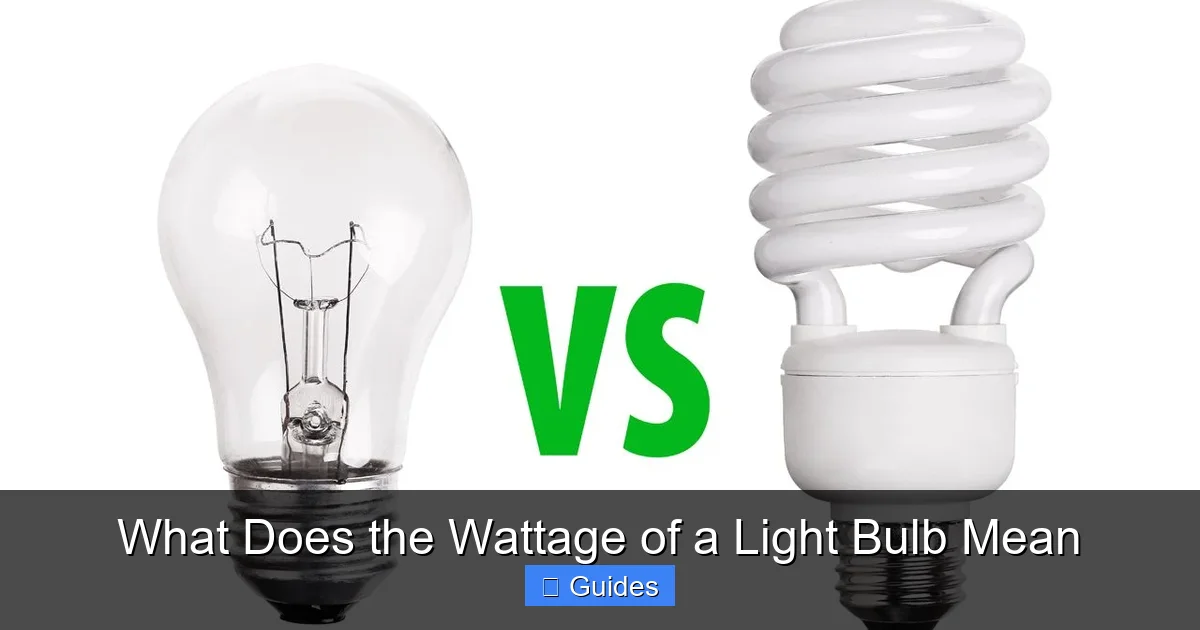
Visual guide about What Does the Wattage of a Light Bulb Mean
Image source: blog.lightup.com
The world of lighting didn’t stand still. As concerns about energy efficiency grew, new technologies emerged, challenging the incandescent bulb’s dominance and fundamentally changing what does the wattage of a light bulb mean.
CFLs: A Step Towards Efficiency
Compact Fluorescent Lamps (CFLs) were among the first widely adopted energy-efficient alternatives. Instead of heating a filament, CFLs work by passing an electric current through a tube containing argon and a small amount of mercury vapor. This excites the mercury atoms, which then produce ultraviolet (UV) light. A phosphor coating on the inside of the tube converts this UV light into visible light.
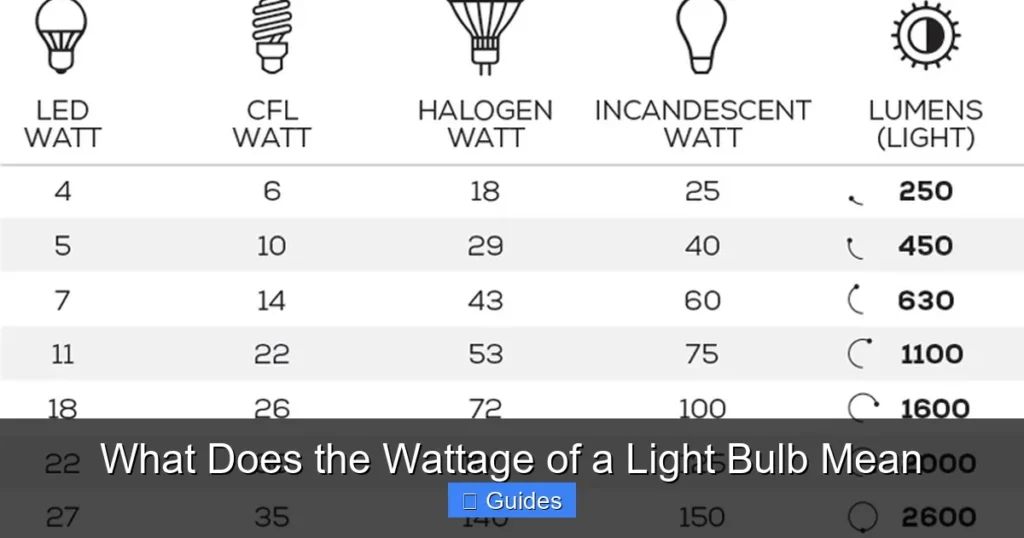
CFLs were a game-changer because they produced the same amount of visible light as an incandescent bulb but used significantly less electricity. For example, a 13-watt CFL could produce as much light as a 60-watt incandescent bulb. This was the first major blow to the idea that wattage equals brightness. Suddenly, a 13-watt bulb was just as bright as a 60-watt one, but consumed much less power.
LEDs: The Modern Marvel of Light
Light Emitting Diodes (LEDs) represent the pinnacle of modern lighting efficiency. LEDs produce light when an electric current passes through a semiconductor material. This process is incredibly efficient, converting a much higher percentage of electrical energy directly into visible light, with very little wasted as heat.
This superior efficiency means that LED bulbs can produce an incredible amount of light using very little wattage. An LED bulb that provides the same amount of light as a 60-watt incandescent might only consume 8-10 watts. Some high-efficiency LEDs can be even lower. This dramatically alters what does the wattage of a light bulb mean; it now signifies minimal power consumption for maximum light output.
The “Equivalent Wattage” Explained
With the advent of CFLs and LEDs, manufacturers faced a challenge: how to communicate the brightness of these new, lower-wattage bulbs to consumers who were still thinking in “incandescent watts.” The solution was the “equivalent wattage” label.
When you see an LED bulb package that says “9W (60W Equivalent),” it means the 9-watt LED bulb produces roughly the same amount of visible light as an old 60-watt incandescent bulb. It’s a bridge between the old way of thinking and the new, more accurate way of measuring light: lumens. This “equivalent wattage” doesn’t change what does the wattage of a light bulb mean in terms of power consumption (it still consumes only 9 watts); it merely helps you compare its *brightness* to a familiar standard.
What Does Wattage Mean for Different Bulb Types?
The true meaning of wattage varies depending on the technology inside the bulb. Let’s break down how wattage plays out across common bulb types.
Incandescent Bulbs: A Direct Relationship (Mostly)
As we discussed, for traditional incandescent bulbs, there was a fairly direct correlation between wattage and perceived brightness. A 40W bulb was dimmer than a 60W, which was dimmer than a 100W. This is because they all used the same inefficient method of generating light, so more power (wattage) directly led to more heat and, as a byproduct, more light. The “what does the wattage of a light bulb mean” question was simple here: higher wattage, more light, more electricity used.
Halogen Bulbs: Slightly More Efficient
Halogen bulbs are a type of incandescent bulb, but with a few improvements. They contain halogen gas, which helps to recycle evaporated tungsten back onto the filament, making them last longer and operate at higher temperatures. This makes them slightly more efficient than standard incandescents, but they still operate on the same principle of heating a filament. A 43-watt halogen bulb might produce the same light as a 60-watt incandescent, meaning its wattage is still primarily about power consumption, but it’s a more efficient consumption for the light produced.
CFL Bulbs: Lower Watts, More Lumens
CFLs significantly decoupled wattage from brightness. A CFL uses a fraction of the wattage of an incandescent bulb to produce the same amount of light. For example, a 13W CFL often replaces a 60W incandescent. Here, what does the wattage of a light bulb mean is purely about how much electricity it pulls from the grid, not about how much light you’ll see. The focus shifted from wattage to the actual light output, measured in lumens.
LED Bulbs: The Most Efficient of All
LEDs take the efficiency even further. An 8-watt LED bulb can easily match the light output of a 60-watt incandescent. This dramatic reduction in wattage for the same brightness is why LEDs are so popular. When asking “what does the wattage of a light bulb mean” for an LED, the answer is “very little power consumption for impressive light output.” It signifies incredible energy efficiency.
Why Lumens are the New Wattage
If wattage no longer reliably tells us how bright a bulb is, what does? The answer is “lumens.”
Understanding Lumens: The True Measure of Brightness
A lumen (lm) is the international standard unit for measuring the total amount of visible light emitted by a source. Simply put, lumens directly measure brightness. The higher the lumen rating, the brighter the light produced by the bulb.
This is the key piece of information you should look for when buying new light bulbs today. Whether it’s an incandescent, a CFL, or an LED, the lumen rating will consistently tell you how much light you can expect.
Here’s a rough guide to “incandescent equivalent” lumens:
- 40W incandescent ≈ 450 lumens
- 60W incandescent ≈ 800 lumens
- 75W incandescent ≈ 1100 lumens
- 100W incandescent ≈ 1600 lumens
So, if you’re replacing a traditional 60-watt bulb, look for an LED or CFL that produces around 800 lumens, regardless of its actual wattage.
How to Choose the Right Lumens for Your Space
Choosing the right lumen output depends entirely on the size and purpose of your room. Here are some general guidelines:
- Task Lighting (e.g., reading lamp, under-cabinet): 400-800 lumens per fixture.
- Accent Lighting (e.g., picture light): 200-400 lumens.
- Ambient Lighting (General Room Illumination):
- Small bathroom/hallway: 300-500 lumens.
- Small bedroom: 800-1200 lumens.
- Kitchen/larger bedroom: 1500-3000 lumens (often from multiple fixtures).
- Living room/Dining room: 1500-2500 lumens.
These are just starting points. Factors like ceiling height, wall colors (darker colors absorb more light), and personal preference will also influence your ideal lumen count.
Color Temperature (Kelvin) and Other Considerations
While lumens tell you how bright a light is, wattage tells you its energy consumption, and Kelvin (K) tells you its color appearance. Color temperature describes the warmth or coolness of the light.
- Warm White (2700K-3000K): Similar to incandescent bulbs, creating a cozy, inviting atmosphere. Ideal for bedrooms, living rooms.
- Cool White/Bright White (3500K-4100K): More neutral, good for kitchens, bathrooms, workspaces.
- Daylight (5000K-6500K): Very bright, bluish-white light, simulating natural daylight. Best for task lighting, garages, or areas where true color representation is important.
Other factors like dimmability, beam angle (for spot vs. flood lights), and smart features (Wi-Fi connectivity, color changing) also play a role in choosing the perfect bulb.
Practical Implications of Wattage Choices
Understanding what does the wattage of a light bulb mean goes beyond just theoretical knowledge; it has very real, practical implications for your home and finances.
Energy Bills: Saving Money with Lower Wattage
This is perhaps the most direct and impactful consequence of wattage. Since wattage measures power consumption, choosing lower-wattage bulbs directly translates to lower electricity bills. Swapping out a dozen 60-watt incandescent bulbs for 9-watt LEDs can save you a significant amount of money over the bulbs’ lifespan. Not only do the LEDs use less power when lit, but they also last much, much longer, reducing replacement costs. This is the primary driver behind the global shift towards energy-efficient lighting.
Bulb Compatibility and Fixture Limits
Many light fixtures have a maximum wattage rating (e.g., “Max 60W”). This rating is a crucial safety measure. It indicates the maximum amount of heat the fixture is designed to safely dissipate without causing damage to the wiring, socket, or surrounding materials, which could lead to a fire hazard.
When you see “Max 60W,” it means you shouldn’t put a bulb that *consumes* more than 60 watts into that fixture. This is where understanding what does the wattage of a light bulb mean becomes critical.
- Incandescent: If your fixture says “Max 60W,” you absolutely cannot put a 75W or 100W incandescent bulb in it.
- LED/CFL: If your fixture says “Max 60W,” you *can* safely put an LED bulb that *consumes* only 9 watts (even if it’s “60W equivalent” in brightness). Because the LED consumes so little power, it generates very little heat, well within the fixture’s safety limits.
Always adhere to the fixture’s maximum wattage rating for safety, but remember that for LEDs and CFLs, their actual wattage is typically much lower than their incandescent brightness equivalent.
Environmental Impact
The energy consumed by light bulbs contributes to your carbon footprint. By opting for lower-wattage, energy-efficient LED bulbs, you’re not only saving money but also reducing the demand for electricity generation, which often relies on fossil fuels. This means a smaller environmental impact, contributing to a more sustainable future. The widespread adoption of LEDs is a significant step towards global energy conservation efforts.
Making Smart Choices: Tips for Buying Light Bulbs Today
Now that you’re armed with a better understanding of what does the wattage of a light bulb mean, here are some practical tips for your next trip to the store:
Look for Lumens, Not Watts
Forget the old “wattage equals brightness” rule. When you’re trying to figure out how bright a bulb will be, prioritize the lumen (lm) rating. Decide how much light you need for a specific area, and then select a bulb with the appropriate lumen output. Remember our general guide: 450 lm for a 40W equivalent, 800 lm for 60W equivalent, etc.
Check for Energy Star Certification
Energy Star is a government-backed symbol for energy efficiency. Products that earn the Energy Star label meet strict energy performance standards. When you see this label on a light bulb, it assures you that the bulb is energy-efficient, will save you money, and meets quality and performance criteria.
Consider Dimmability and Smart Features
Not all LEDs are dimmable, and some dimmable LEDs require specific dimmer switches to function correctly without flickering. If you plan to use a dimmer, always check the packaging for “dimmable” compatibility. Also, consider smart bulbs that offer features like color changing, scheduling, and control via smartphone apps or voice assistants, adding convenience and customization to your lighting.
Match Bulb Type to Your Needs
While LEDs are generally the most efficient and versatile, there might be specific situations where another bulb type is suitable. However, for most general lighting purposes, LEDs are the superior choice due to their energy efficiency, long lifespan, and steadily decreasing cost. If you’re simply trying to understand what does the wattage of a light bulb mean for your daily purchases, always default to thinking about the low wattage of LEDs and their high lumen output.
Conclusion
For generations, the question “what does the wattage of a light bulb mean?” had a simple, if misleading, answer: it meant brightness. A 60-watt bulb was brighter than a 40-watt bulb, and that was that. But the rapid evolution of lighting technology, particularly with the advent of CFLs and LEDs, has fundamentally changed this understanding. Today, wattage tells us how much power a bulb consumes, directly impacting our energy bills and carbon footprint, while lumens tell us how much light it actually produces.
Embracing this new perspective is key to making intelligent choices for your home. By shifting your focus from watts to lumens for brightness, checking the actual wattage for energy efficiency, and considering factors like color temperature and fixture limits, you can illuminate your home beautifully, safely, and economically. So next time you’re in the light bulb aisle, remember: you’re no longer just buying watts; you’re investing in light, efficiency, and a brighter future.
Frequently Asked Questions
What’s the difference between watts and lumens?
Watts measure the amount of electrical power a light bulb consumes, which directly affects your energy bill. Lumens, on the other hand, measure the total amount of visible light the bulb emits, which is the true indicator of its brightness.
Why do old light fixtures have a maximum wattage rating?
Old light fixtures have a maximum wattage rating primarily as a safety measure. It indicates the maximum amount of heat the fixture can safely handle from a bulb without risking damage to wiring, the socket, or creating a fire hazard.
Is it safe to put a low-wattage LED bulb (e.g., 9W) in a fixture rated for a much higher wattage (e.g., Max 100W)?
Yes, it is perfectly safe to put a low-wattage LED bulb in a fixture rated for a much higher maximum wattage. LEDs consume very little power and produce minimal heat, so they will be well within the fixture’s safety limits.
How can I estimate the lumens I need if I only remember the old incandescent wattage?
As a rough guide, a 40-watt incandescent is equivalent to about 450 lumens, a 60-watt to 800 lumens, a 75-watt to 1100 lumens, and a 100-watt to 1600 lumens. Look for these lumen numbers on the packaging of new LED bulbs.
Do lower wattage bulbs last longer?
Generally, yes, especially when comparing LEDs to incandescents. LED bulbs achieve high lumen output with very low wattage, meaning they operate cooler and under less stress, contributing to their significantly longer lifespan compared to higher-wattage, heat-generating incandescent bulbs.
Does color temperature (Kelvin) relate to wattage or brightness?
No, color temperature (measured in Kelvin) does not relate to wattage or brightness. It describes the appearance of the light, indicating whether it’s warm (more yellow/orange, like 2700K) or cool (more blue/white, like 5000K daylight).
