


As an Amazon Associate, We earn from qualifying purchases.
A type G light bulb, often called a globular or globe bulb, is characterized by its distinct spherical shape, designated by the letter “G” followed by a number indicating its diameter in eighths of an inch. These decorative and functional bulbs are widely used in exposed fixtures like vanity lights, chandeliers, and pendant lights, offering both illumination and aesthetic appeal. They come in various sizes and technologies, including LED, to suit diverse lighting needs.
Have you ever found yourself staring at a wall of light bulbs at the store, feeling a little overwhelmed? There are so many shapes, sizes, and numbers! It’s easy to get lost in the jargon. But don’t worry, you’re not alone. One type of bulb that often catches the eye is the “type G” light bulb. It has a distinctive look that sets it apart. But what exactly is a type G light bulb, and why might you choose one for your home?
Imagine a light bulb that isn’t just about giving off light, but also about looking good while doing it. That’s essentially the heart of a type G light bulb. These aren’t your average, everyday pear-shaped bulbs that you hide behind a lampshade. Oh no, type G bulbs are often meant to be seen, to become a part of your decor. They bring a touch of elegance and style to any fixture where they are used.
In this comprehensive guide, we’re going to dive deep into the world of type G light bulbs. We’ll explore what makes them unique, decipher their naming conventions, and discover where they truly shine. By the end, you’ll be a pro at understanding and choosing the perfect type G light bulb for your needs, whether you’re revamping a bathroom vanity or adding a cozy glow to your patio.
Key Takeaways
- Globular Shape: A type G light bulb is defined by its characteristic round or spherical “globe” shape, which makes it aesthetically pleasing for exposed fixtures.
- Size Designation: The “G” in type G light bulb stands for globular, and the number following it (e.g., G25, G40) indicates the bulb’s diameter in eighths of an inch.
- Versatile Applications: These bulbs are popular in vanity mirrors, chandeliers, pendant lights, string lights, and other decorative fixtures where the bulb itself is visible.
- Range of Technologies: Type G light bulbs are available across different lighting technologies, including traditional incandescent, energy-efficient LED, and sometimes halogen, offering various benefits.
- Aesthetic and Functional: They serve both as a primary light source and as a design element, contributing significantly to the overall look and feel of a space.
- Considerations for Purchase: When choosing a type G light bulb, factors like size, lumen output, color temperature (Kelvin), dimmability, and energy efficiency (LED is recommended) are crucial.
Quick Answers to Common Questions
What does the “G” stand for in a type G light bulb?
The “G” stands for “globular” or “globe,” indicating the bulb’s distinctive spherical or round shape.
How do I know the size of a type G light bulb?
The number following the “G” (e.g., G25, G40) indicates the bulb’s diameter in eighths of an inch. So, a G25 is 25/8 inches wide.
Are type G light bulbs only for decorative use?
While often used for decorative purposes due to their shape, type G light bulbs also provide functional illumination, especially in vanity lights, pendant lights, and chandeliers.
Can I get an LED version of a type G light bulb?
Yes, LED technology is widely available for type G light bulbs, offering energy efficiency, a long lifespan, and various brightness and color temperature options.
What’s a common application for a G25 light bulb?
A G25 light bulb is very commonly used in bathroom vanity fixtures and makeup mirrors due to its appealing size and diffused light.
📑 Table of Contents
- What Defines a Type G Light Bulb? Understanding the “Globe” Shape
- Where Do Type G Light Bulbs Shine? Popular Applications
- Choosing the Right Type G Light Bulb: Beyond Just Shape
- Installation and Maintenance Tips for Your Type G Light Bulb
- Beyond the Basics: Aesthetics and Environmental Considerations
- Conclusion
What Defines a Type G Light Bulb? Understanding the “Globe” Shape
When we talk about a “type G light bulb,” the most defining characteristic is its shape. The “G” stands for “globular” or “globe,” which perfectly describes its round, spherical form. Unlike the more common A-type bulbs (which have that classic pear shape), G bulbs are perfectly round or nearly round, giving them a softer, more decorative appearance.
The Naming Convention: G + Number
It’s not just “G” though; you’ll often see a number following it, like G16, G25, G30, or G40. This number isn’t just random. It tells you the diameter of the bulb at its widest point, measured in eighths of an inch.
* G16 light bulb: This means the bulb is 16 eighths of an inch wide. To convert this to inches, you divide 16 by 8, which gives you 2 inches. So, a G16 bulb is 2 inches in diameter. These are on the smaller side, great for subtle accents.
* G25 light bulb: A G25 type G light bulb is 25 eighths of an inch, or approximately 3.125 inches (just over 3 inches) in diameter. These are quite popular for vanity lighting.
* G30 light bulb: Moving up, a G30 light bulb is 30 eighths of an inch, or 3.75 inches in diameter. These offer a more substantial presence.
* G40 light bulb: The G40 is a larger globular bulb, measuring 40 eighths of an inch, which is exactly 5 inches across. These make a bold statement.
This naming system is super helpful because it allows you to quickly understand the physical size of the type G light bulb you’re looking at, ensuring it fits your fixture and achieves the desired aesthetic.
Common Base Types
While the shape is consistent, type G light bulbs come with various base types to fit different sockets. The most common ones you’ll encounter are:
* Edison screw bases: These are the standard screw-in bases.
* E26 (Medium Base): This is the most common screw-in base in North America, fitting most standard light fixtures. You’ll find many G-shaped bulbs with an E26 base.
* E12 (Candelabra Base): Smaller than E26, this base is often found in chandeliers and decorative fixtures, where smaller G bulbs (like G16s) might be used.
* Other bases: Less common but still present are bayonet bases or even GU10 bases, especially for specialty G-shaped bulbs used in track lighting or certain recessed fixtures, though these are rarer for true “globe” applications.
Always double-check the base type your fixture requires before purchasing a type G light bulb.
Where Do Type G Light Bulbs Shine? Popular Applications
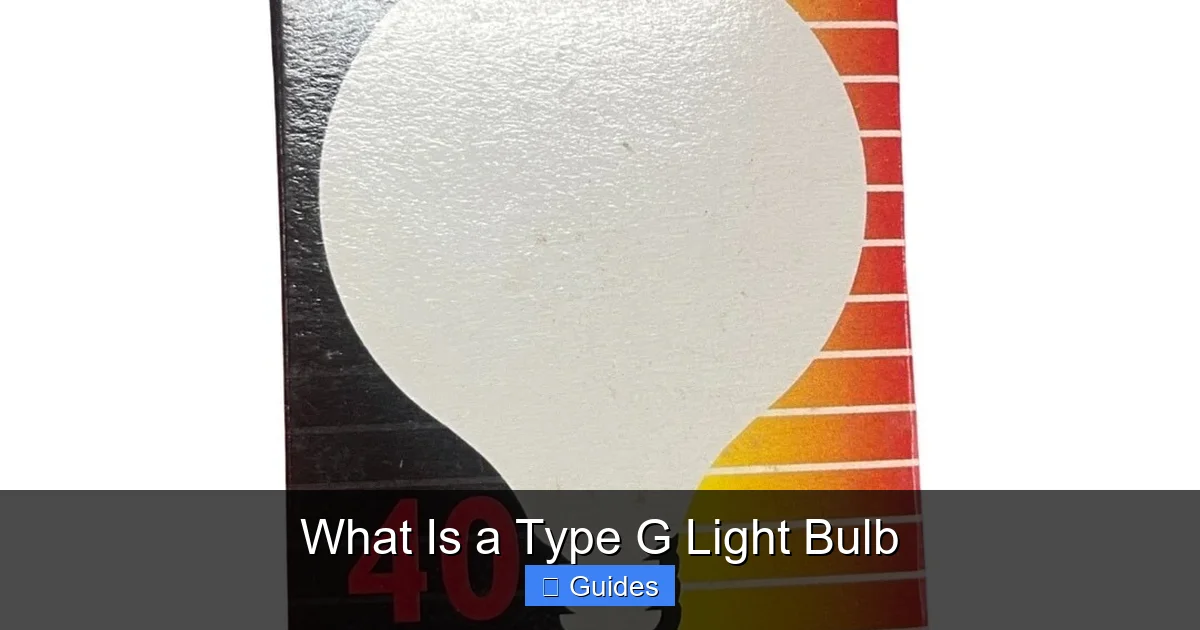
Visual guide about What Is a Type G Light Bulb
Image source: i.ebayimg.com
The unique shape and often exposed nature of type G light bulbs make them ideal for specific lighting applications where aesthetics play a significant role. They are not just about light; they are about design.
Bathroom Vanity Lighting
Perhaps the most iconic use for a type G light bulb is around a bathroom vanity mirror. Imagine those classic Hollywood-style makeup mirrors with a row of round, glowing bulbs. That’s often a G25 or G30 at work! Their soft, diffused light, combined with their uniform shape, provides excellent, even illumination for applying makeup or shaving, minimizing harsh shadows. The uniform glow of a type G light bulb is perfect here.
Decorative Fixtures and Chandeliers
Type G light bulbs are a staple in many decorative lighting fixtures, including modern chandeliers, pendant lights, and wall sconces where the bulb is fully visible. Their clean, spherical design complements various interior styles, from minimalist contemporary to elegant traditional. They can add a touch of sophistication without being overly ornate. When you see a beautiful, exposed bulb in a trendy cafe or restaurant, there’s a good chance it’s a type G light bulb.
Outdoor String Lights and Patio Decor
Think of festive outdoor gatherings, string lights draped across a patio, or around a gazebo. Often, these string lights feature larger, round bulbs – these are frequently G30 or G40 type G light bulbs. Their robust, spherical form looks charming and festive, creating a warm, inviting ambiance for outdoor entertaining. They stand up well to outdoor conditions and provide a wonderful glow.
Exposed Bulbs in Modern Design
In recent years, there’s been a strong trend towards exposed bulb fixtures in home decor. Industrial, Scandinavian, and minimalist design styles often feature bare bulbs as a focal point. Type G light bulbs are perfect for this aesthetic, offering a clean, sculptural element that contributes to the overall design. They prove that sometimes, the simplest shapes are the most striking.
Choosing the Right Type G Light Bulb: Beyond Just Shape
While the “G” shape is a primary factor, selecting the perfect type G light bulb involves considering several other key aspects to ensure it meets your functional and aesthetic needs.
Light Output (Lumens)
Gone are the days when wattage was the sole indicator of brightness. Today, you should look for lumens. Lumens measure the actual brightness of the light produced.
* For accent lighting: 200-400 lumens might be sufficient.
* For vanity lighting (general use): 450-800 lumens per bulb is a good range, depending on how many bulbs are in the fixture and how bright you want the space. For task-oriented areas, brighter is usually better.
* For decorative mood lighting: Lower lumens might be desired to create a softer, more ambient glow.
Remember, more lumens equal brighter light. Match the lumen output to the purpose of the type G light bulb in your fixture.
Color Temperature (Kelvin – K)
Color temperature, measured in Kelvin (K), describes the “warmth” or “coolness” of the light.
* Warm White (2700K-3000K): This produces a cozy, inviting yellow-orange glow, similar to traditional incandescent bulbs. Ideal for bedrooms, living rooms, and dining areas where a relaxed atmosphere is desired. Many decorative type G light bulbs aim for this warm look.
* Cool White/Neutral White (3500K-4500K): Offers a more crisp, less yellow light. Good for task lighting, offices, kitchens, and sometimes bathrooms where you need clearer visibility. A G25 in a bathroom often benefits from a slightly cooler temperature.
* Daylight (5000K-6500K): Mimics natural daylight, producing a very bright, bluish-white light. Excellent for areas requiring high visibility, like workshops or utility rooms, though less common for decorative type G light bulbs in homes.
Dimmability
If your fixture is connected to a dimmer switch, you’ll need to choose dimmable type G light bulbs. Not all LEDs are dimmable, and some dimmable LEDs require specific types of dimmer switches to function correctly without flickering or buzzing. Always check the packaging for “dimmable” compatibility.
Energy Efficiency: LED vs. Incandescent
This is a big one. The technology inside your type G light bulb significantly impacts its energy consumption and lifespan.
* LED (Light Emitting Diode): By far the most energy-efficient option. LED type G light bulbs consume significantly less power, last much longer (thousands of hours), and produce less heat. While they might have a higher upfront cost, they save money in the long run on electricity bills and replacement bulbs. They also come in a wide range of color temperatures and lumen outputs. Many modern G-shaped bulbs are LED.
* Incandescent: The traditional bulb type. These are less efficient, generate a lot of heat, and have a much shorter lifespan. While some people prefer the specific warm glow of incandescent, their energy consumption makes them less desirable for continuous use. You’ll still find some for specialty decorative purposes, often with a clear glass and exposed filament for a “vintage” look, but they are increasingly being phased out.
* Halogen: A slightly more efficient version of incandescent, but still far less efficient than LED. These are less common for true G-shaped bulbs.
For most applications, an LED type G light bulb is the smartest and most sustainable choice.
Finish and Appearance
Type G light bulbs come in various finishes:
* Clear: Offers maximum light output and allows the filament (or LED elements) to be visible, which is great for a vintage or industrial look.
* Frosted/Opal: Diffuses the light, creating a softer, more uniform glow and hiding the internal components of the bulb. This is often preferred for vanity lighting to reduce glare.
* Amber/Smoked: Provides a very warm, decorative glow, often used for aesthetic purposes rather than primary illumination.
Installation and Maintenance Tips for Your Type G Light Bulb
Proper handling and a little care can extend the life of your type G light bulbs and ensure they look great.
Safety First
Always turn off the power to the fixture at the wall switch or circuit breaker before installing or replacing any light bulb. This prevents electric shock.
Handling with Care
When installing a type G light bulb, especially clear or vintage filament types, try to avoid touching the glass directly with your bare hands. Oils from your skin can create hot spots on the bulb, potentially leading to premature failure. If you do touch it, gently wipe the bulb with a clean, lint-free cloth or a dry paper towel before turning on the power.
Proper Tightening
Screw the bulb in until it’s snug, but don’t overtighten it. Overtightening can damage the socket or the bulb’s base. For decorative bulbs, ensure they are straight and aesthetically pleasing once installed.
Cleaning Your Bulbs
If your type G light bulb is exposed, it can accumulate dust over time. Ensure the power is off and the bulb is cool before wiping it gently with a dry, lint-free cloth. For tougher grime, a slightly damp cloth can be used, but ensure the bulb is completely dry before restoring power.
Beyond the Basics: Aesthetics and Environmental Considerations
The beauty of the type G light bulb goes beyond just its functional light. It’s a design element.
Enhancing Room Aesthetics
With their graceful curves and often visible design, G bulbs contribute significantly to the aesthetic of a room. They can be chosen to match a specific era (like vintage filaments) or to enhance a minimalist modern look. Think about the overall feel you want for your space – do you want a warm, inviting glow, or a crisp, clean light? The type G light bulb you choose can help achieve that.
The Rise of Smart G Bulbs
Just like other light bulb types, type G light bulbs are also entering the smart home arena. You can find smart G bulbs that allow you to control brightness, color temperature, and even full RGB color spectrums via an app or voice assistant. This adds another layer of versatility and convenience, allowing you to fine-tune your lighting experience with ease.
Environmental Impact
Choosing LED type G light bulbs is a decision that benefits both your wallet and the planet. Their reduced energy consumption lowers your carbon footprint, and their longer lifespan means fewer bulbs end up in landfills. As environmental awareness grows, opting for energy-efficient lighting solutions becomes an increasingly important consideration for every homeowner.
Conclusion
The type G light bulb, with its distinctive globular shape, is far more than just a source of illumination. It’s a statement piece, a design element, and a functional component of countless beautiful lighting fixtures. From the classic elegance of a bathroom vanity to the festive charm of outdoor string lights, these bulbs bring a unique aesthetic appeal wherever they are used.
Understanding the “G” for globular, the number indicating its size, and the importance of lumens, Kelvin, and LED technology empowers you to make informed choices. By carefully considering your needs for brightness, color, and energy efficiency, you can select the perfect type G light bulb to enhance your home’s ambiance and style. So, the next time you’re shopping for bulbs, you’ll know exactly what to look for, and you can confidently pick the G-shaped gem that best fits your vision. Happy lighting!
Frequently Asked Questions
What is the difference between an A-type and a G-type light bulb?
The primary difference lies in their shape. An A-type bulb has the classic, pear-like shape that tapers at the top, while a type G light bulb has a distinctly round or spherical “globe” shape. G-type bulbs are often chosen for fixtures where the bulb itself is visible.
Do type G light bulbs come in different light colors (color temperatures)?
Yes, type G light bulbs are available in various color temperatures, measured in Kelvin (K). You can find them in warm white (2700K-3000K) for a cozy feel, cool white (3500K-4500K) for a crisper light, and even daylight (5000K-6500K) options, especially with LED versions.
Are type G light bulbs dimmable?
Whether a type G light bulb is dimmable depends on the specific bulb and its technology. Many LED G-type bulbs are dimmable, but you must always check the product packaging to ensure compatibility with your dimmer switch.
Why are type G light bulbs popular for vanity mirrors?
Type G light bulbs are popular for vanity mirrors because their spherical shape and often frosted finish provide a soft, even, and diffused light. This helps reduce harsh shadows, making them ideal for tasks like applying makeup or shaving, and contributing to a flattering appearance.
Can I use a larger G-type bulb (e.g., G40) in a fixture designed for a smaller one (e.g., G25)?
You can use a larger G-type bulb if it physically fits within the fixture without touching any surfaces and if its base type matches the socket. However, always ensure there’s adequate clearance to prevent heat buildup and that the larger size doesn’t look disproportionate in the fixture.
How do I choose the correct base for my type G light bulb?
To choose the correct base, you need to know the type of socket in your fixture. The most common in North America are E26 (medium/standard screw-in) and E12 (candelabra screw-in). You can usually find this information in your fixture’s manual or by looking at the base of the bulb you are replacing.
