


As an Amazon Associate, We earn from qualifying purchases.
When searching for the brightest light bulb, forget watts and focus on lumens – the true measure of light output. While LEDs offer the highest brightness per watt and superior efficiency, factors like color temperature and beam angle also significantly influence how bright a bulb *feels*. Choosing the right bulb means balancing lumen output with your specific needs for a comfortable and well-lit space.
Ever walked into the lighting aisle of a hardware store and felt completely overwhelmed? Rows upon rows of bulbs, different shapes, sizes, numbers – it can be a real head-scratcher. And if your main goal is simply to find the brightest light bulb possible, you might feel even more lost. Gone are the days when you just picked a 100-watt bulb and called it a day!
Today, the world of lighting is far more sophisticated, efficient, and, frankly, a little confusing if you don’t know what to look for. That age-old question, “Which light bulb is the brightest?” has a surprisingly nuanced answer. It’s not just about a single number anymore; it’s about understanding a few key concepts that will empower you to choose the perfect, most luminous bulb for any space.
In this guide, we’re going to demystify light bulb brightness. We’ll ditch the outdated notions, introduce you to the real metrics that matter, and explore the different technologies vying for the title of “brightest.” By the end, you’ll be able to confidently navigate the lighting aisle, knowing exactly which light bulb is the brightest for your specific needs, and how to get the most out of your illumination.
Key Takeaways
- Lumens are King: Forget watts! Lumens measure the actual light output, making them the most important factor when determining which light bulb is the brightest. A higher lumen count means a brighter bulb.
- LEDs Lead the Pack: Light Emitting Diodes (LEDs) are currently the most efficient and brightest light bulb technology available, offering significantly more lumens per watt than incandescent, halogen, or CFL bulbs, with longer lifespans.
- Watts Measure Energy, Not Brightness: Watts indicate how much energy a bulb consumes, not how much light it produces. Modern efficient bulbs produce the same or more light (lumens) using far fewer watts.
- Perceived Brightness is Subjective: Beyond lumens, factors like color temperature (Kelvin), beam angle, and Color Rendering Index (CRI) can make a bulb *feel* brighter or impact the quality of light, even if lumen output is identical.
- Match Brightness to Your Needs: The “brightest” bulb isn’t always the best. Consider the room size, purpose (task lighting, ambient light), and personal preference to choose an appropriate lumen level for comfort and functionality.
- Efficiency Saves Money: Brighter, more efficient bulbs (like LEDs) might have a higher upfront cost but save considerable money over their lifespan due to lower energy consumption and infrequent replacement.
Quick Answers to Common Questions
What is the most important factor when choosing a bright light bulb?
The most important factor is lumens, which measure the total amount of visible light produced. Forget watts, as they only indicate energy consumption.
Are LEDs really the brightest light bulbs?
Yes, LEDs are generally the brightest and most efficient light bulbs for residential and most commercial uses, offering high lumen output per watt and a long lifespan.
Does color temperature affect how bright a bulb feels?
Absolutely. Cooler color temperatures (higher Kelvin numbers, like 4000K-6500K) often make a light source feel brighter and more invigorating, even if the lumen output is the same as a warmer bulb.
Can a bulb be too bright?
Yes, a bulb can be too bright for a given space or task, leading to glare, eye strain, and an uncomfortable atmosphere. It’s important to match lumen output to your needs.
What is the difference between lumens and watts?
Lumens measure the actual light output or brightness of a bulb, while watts measure the amount of electricity (energy) the bulb consumes.
📑 Table of Contents
Understanding Brightness: Lumens vs. Watts
Let’s start by clearing up the biggest misconception in lighting: watts do NOT measure brightness. For decades, we were conditioned to think that a 100-watt bulb was brighter than a 60-watt bulb. And in the world of incandescent bulbs, that was generally true. But those days are long gone. With modern lighting technology, particularly LEDs, watts tell you only one thing: how much energy the bulb consumes.
Watts: The Old Way of Thinking
Think of watts as a measure of power, much like how many gallons of gas your car uses per mile. A high-wattage incandescent bulb was indeed bright, but it achieved that brightness by using a lot of electricity and generating a lot of heat. It was like a gas-guzzling car that went fast but wasn’t very efficient. If you’re still looking for a high-wattage bulb to guarantee brightness, you’re missing out on the incredible efficiency of newer options.
Lumens: The True Measure of Brightness
If watts measure energy consumption, what measures brightness? The answer is lumens. Lumens are the international standard unit for measuring the total amount of visible light emitted by a source. When you’re asking, “Which light bulb is the brightest?”, you should be looking for the bulb with the highest lumen count, not the highest wattage.
- More Lumens = More Light: It’s that simple. A bulb emitting 1600 lumens is twice as bright as a bulb emitting 800 lumens, regardless of their respective wattages.
- Efficiency in Action: An LED bulb might produce 800 lumens using only 9 watts, while an old incandescent bulb needed 60 watts to produce the same amount of light. This is why focusing on lumens is crucial for both brightness and energy savings.
Converting Watts to Lumens (Rough Guide)
To give you a better idea of what lumen levels you might need, here’s a general guide comparing old incandescent wattages to modern LED lumen outputs:
- 25-watt incandescent: Around 200-300 lumens
- 40-watt incandescent: Around 450 lumens
- 60-watt incandescent: Around 800 lumens (a common standard for general lighting)
- 75-watt incandescent: Around 1100 lumens
- 100-watt incandescent: Around 1600 lumens
- 150-watt incandescent: Around 2600 lumens
So, if you used to buy 100-watt bulbs for your living room and found them just right, you’d now look for an LED bulb that offers approximately 1600 lumens. This is a fundamental shift in how we think about light bulbs and crucial for understanding which light bulb is the brightest.
The Brightness Battle: Different Bulb Types
Now that we understand lumens, let’s look at how different light bulb technologies stack up when it comes to producing light and claiming the title of “which light bulb is the brightest.” Each type has its own characteristics in terms of efficiency, lifespan, and overall light output.
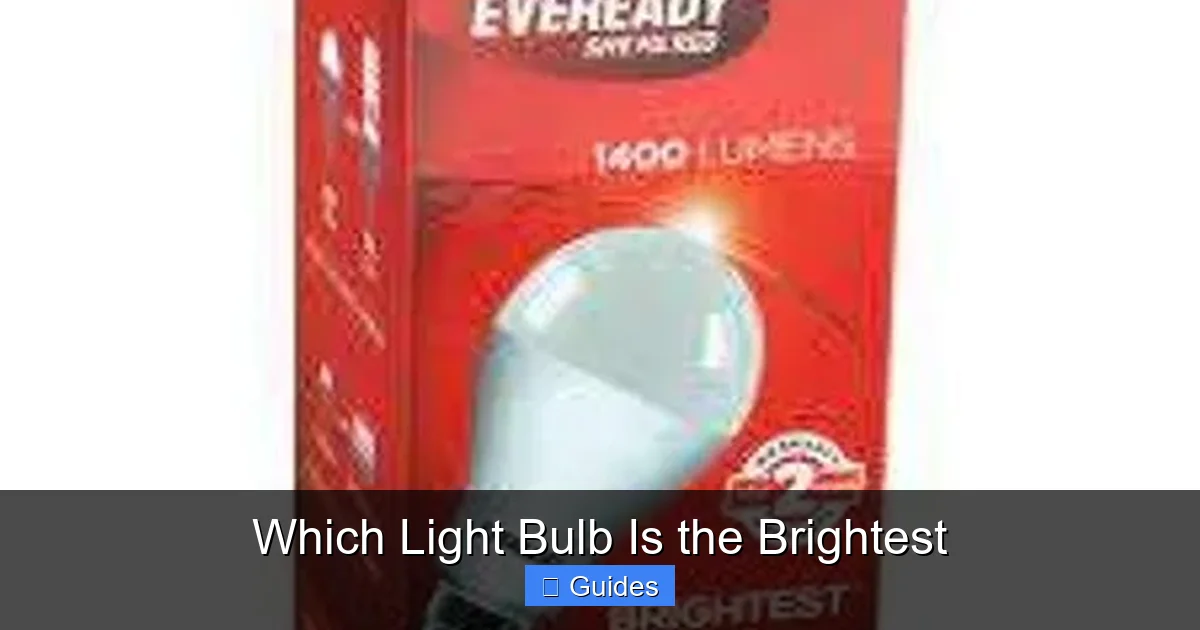
Visual guide about Which Light Bulb Is the Brightest
Image source: tiimg.tistatic.com
Incandescent Bulbs: The Legacy Choice
These are the traditional bulbs with a glowing filament. They produce a warm, familiar light. While they can be very bright at high wattages (e.g., a 150W or 200W incandescent), they are incredibly inefficient at converting electricity into light, wasting most of their energy as heat. They also have a very short lifespan. Most are now phased out or hard to find due to energy regulations, making them a poor choice if you’re looking for an efficient bright bulb.
Halogen Bulbs: A Brighter Incandescent
Halogen bulbs are a type of incandescent bulb, but they use a halogen gas to improve efficiency and lifespan slightly. They produce a brighter, whiter light than standard incandescents of the same wattage. However, they still generate a lot of heat and consume a fair amount of energy compared to newer technologies. They can achieve high lumen counts but are still far from the most efficient option.
Compact Fluorescent Lamps (CFLs): The Energy Saver (of Yesteryear)
CFLs were revolutionary when they first appeared, offering significant energy savings over incandescents. They produce light by sending an electric discharge through mercury vapor, which then excites a phosphor coating. While efficient, they often have a slower start-up time, their light quality can be variable, and they contain small amounts of mercury, requiring special disposal. They are typically not the go-to choice for maximum brightness and are being rapidly replaced by LEDs.
Light Emitting Diodes (LEDs): The Brightness King
When it comes to answering “which light bulb is the brightest” in terms of efficiency and sustained output, LEDs are the undisputed champions. LEDs generate light through semiconductors, making them incredibly efficient, long-lasting, and versatile. They offer:
- Exceptional Lumens per Watt: LEDs convert a much higher percentage of electricity into light, meaning they can produce significantly more lumens while using far less energy than any other bulb type. This is why you can easily find 1600-lumen (100W equivalent) LED bulbs consuming only 15-20 watts.
- Instant Brightness: Unlike CFLs, LEDs turn on to full brightness instantly.
- Long Lifespan: LEDs can last 25,000 to 50,000 hours or more, meaning fewer replacements.
- Versatility: Available in a vast range of shapes, sizes, color temperatures, and dimmable options.
For almost any household or commercial application where you want high brightness and efficiency, LEDs are the clear winner. You can find very high lumen output LEDs, such as 3000-5000 lumens, suitable for garages, workshops, or large open-plan areas.
High-Intensity Discharge (HID) Bulbs: Specialized Brilliance
While not typically used in homes, it’s worth mentioning HID bulbs (like metal halide or high-pressure sodium) for their sheer brightness. These bulbs are used in applications requiring massive amounts of light, such as stadium lighting, streetlights, and industrial settings. They can produce tens of thousands of lumens from a single bulb but require special ballasts and are not practical or safe for general residential use.
So, for home use, if you’re asking which light bulb is the brightest, the answer is overwhelmingly an LED bulb, especially when considering lumens per watt and overall practicality.
Factors Affecting Perceived Brightness
You might have two bulbs with the exact same lumen rating, but one just *feels* brighter than the other. How can this be? It’s because brightness isn’t just about the raw lumen number. Several other factors play a crucial role in how we perceive light.
Color Temperature (Kelvin – K): The Warmth or Coolness of Light
Color temperature is measured in Kelvin (K) and describes the “color” of the light itself, ranging from warm (yellowish) to cool (bluish-white). This significantly impacts perceived brightness:
- Warm Light (2700K – 3000K): This is the cozy, yellowish light typically associated with incandescent bulbs. It creates a relaxing atmosphere but can make a room feel less “bright” or invigorating.
- Cool White Light (3500K – 4500K): This light is whiter and more neutral. It’s often used in kitchens, offices, or workshops because it enhances alertness and makes tasks easier. Even at the same lumen level, cool white light often *feels* brighter and more intense than warm light.
- Daylight/Blue-White Light (5000K – 6500K): Mimicking natural daylight, this very cool, sometimes slightly bluish light is excellent for task lighting where precision is needed. It will almost always feel significantly brighter than warmer temperatures, even if the lumen output is identical.
So, if you want a bulb that *feels* brighter, opt for a higher Kelvin number (cooler light) within your desired lumen range.
Beam Angle and Light Distribution
How the light is spread out also affects perceived brightness. Imagine a flashlight: a tight, focused beam appears much brighter in that specific spot than a wide, diffused beam, even if both flashlights emit the same total number of lumens.
- Narrow Beam (Spotlights, Floodlights): Bulbs designed with a narrow beam angle concentrate their lumens into a smaller area. This makes the illuminated spot incredibly bright and intense, perfect for accent lighting, task lighting, or outdoor security.
- Wide Beam (Omnidirectional Bulbs): Most general-purpose bulbs are designed to spread light evenly in all directions (omnidirectional). While they might have a high lumen count, the light is distributed over a larger area, so no single point will feel as intensely bright as a focused beam.
When selecting which light bulb is the brightest for a specific task, consider whether you need focused brightness or general ambient illumination.
Color Rendering Index (CRI): Quality of Light
CRI measures how accurately a light source reveals the true colors of objects compared to natural daylight. A higher CRI (on a scale of 0-100, with 100 being perfect) means colors will look more vibrant and true-to-life. While CRI doesn’t directly measure brightness, a high CRI can make a space *feel* better lit and clearer, as colors pop and details are more discernible. Low CRI light can make colors look dull or washed out, indirectly impacting the perception of brightness and clarity.
Beyond Just Brightness: Efficiency and Lifespan
While your primary question might be “which light bulb is the brightest?”, it’s essential to consider the bigger picture. Modern lighting is about more than just raw light output; it’s also about how efficiently that light is produced and how long the bulb will last. These factors heavily influence your long-term satisfaction and cost.
Lumens Per Watt (Efficacy): The True Efficiency Metric
This is where efficiency really shines. Efficacy (lumens per watt, or LPW) tells you how many lumens of light a bulb produces for every watt of electricity it consumes. A higher LPW means a more efficient bulb.
- Incandescent: Very low, typically 10-15 LPW.
- Halogen: Slightly better, 15-25 LPW.
- CFL: Good, 50-70 LPW.
- LED: Excellent, often 80-120+ LPW, and constantly improving.
Choosing a high LPW bulb means you get more light for less energy, directly impacting your electricity bill. If you want the brightest bulb that also saves you money, look for high lumens AND high LPW.
Lifespan: Long-Term Value
The longevity of a bulb is another critical factor. While some bulbs might be cheap upfront, frequent replacements can add up in cost and hassle.
- Incandescent: ~750 – 1,000 hours
- Halogen: ~1,000 – 2,000 hours
- CFL: ~8,000 – 10,000 hours
- LED: ~25,000 – 50,000 hours (or even more for some commercial grades)
The incredibly long lifespan of LEDs means that once you install them, you often won’t need to replace them for many years, even a decade or more, depending on usage. This is a significant advantage, especially for hard-to-reach fixtures.
Choosing the Brightest Bulb for Your Needs
So, how do you put all this knowledge into practice to find which light bulb is the brightest and best for you? It’s about combining lumen output with your specific requirements and preferences.
Assess the Room and Task
Before you even look at a bulb, think about where it’s going and what it’s for. Different areas require different brightness levels:
- Ambient Lighting (General Room Illumination): For a living room or bedroom, you might want around 1500-3000 lumens total, often achieved with multiple bulbs or a single very bright fixture.
- Task Lighting (Reading, Cooking, Working): Areas like kitchen counters, desks, or reading nooks benefit from brighter, more focused light, perhaps 800-1100 lumens per specific task area. Cooler color temperatures (4000K+) can be beneficial here.
- Accent Lighting (Highlighting Features): This uses less overall brightness (200-500 lumens) with a narrow beam to draw attention to artwork or architectural details.
- Large Areas/Garages/Workshops: These spaces often benefit from very high lumen counts, easily 3000-5000+ lumens, to ensure no shadows and maximum visibility.
Consider Existing Fixtures and Compatibility
- Dimmer Switches: If you have a dimmer, make sure the bulb you choose is “dimmable.” Not all LEDs are, and using a non-dimmable LED on a dimmer can cause flickering or damage.
- Enclosed Fixtures: Some LED bulbs are not designed for fully enclosed fixtures, as heat build-up can shorten their lifespan. Always check the bulb’s packaging.
- Socket Type: Ensure the base of the bulb (e.g., E26 standard, GU10, candelabra) matches your fixture.
Don’t Overdo It: Brightness Can Be Uncomfortable
While the goal is often the brightest light bulb, there’s such a thing as *too* bright. Excessive brightness can cause glare, eye strain, and create an uncomfortable, clinical environment. Balance the desire for brightness with comfort and the overall ambiance you want to create.
Mix and Match for Layers of Light
The best lighting designs often incorporate layers: general ambient light, task lighting, and accent lighting. You don’t need one “brightest” bulb for everything. Instead, choose different lumen outputs and color temperatures for different fixtures to create a versatile and inviting space.
Practical Example: For a home office, you might use an overhead fixture with two 1600-lumen (100W equivalent) 4000K LEDs for general illumination, and then a desk lamp with a single 800-lumen (60W equivalent) 5000K LED for focused task lighting. This combination provides ample brightness where needed without making the entire room feel like an operating theater.
Safety and Smart Lighting Considerations
A final thought on choosing which light bulb is the brightest involves safety and embracing modern features.
Heat Output
While LEDs are much cooler than incandescent bulbs, they still produce some heat. This heat is dissipated through a heat sink, often visible as fins at the base of the bulb. It’s why some LEDs aren’t suitable for fully enclosed fixtures, as the heat can’t escape, leading to premature failure. Always check the bulb’s specifications if you plan to use it in an enclosed space.
Smart Bulbs
For ultimate control over brightness, consider smart bulbs. Many smart LEDs allow you to adjust the lumen output (brightness) and even the color temperature via an app or voice commands. This means you can have a very bright bulb that you can dim down to a subtle glow, or change from a cool work light to a warm evening light, all from your phone. This gives you unparalleled flexibility in managing perceived brightness throughout the day.
Conclusion
The quest for “which light bulb is the brightest” is no longer a simple matter of choosing the highest wattage. Today, the savvy shopper looks for lumens – the true measure of light output. LEDs stand out as the undisputed champions, offering superior brightness per watt, incredible efficiency, and a lifespan that far surpasses any other technology.
But remember, brightness isn’t just a number. Factors like color temperature, beam angle, and CRI profoundly influence how bright a space *feels*. By understanding these elements and considering the specific needs of your room and tasks, you can make informed choices that not only deliver powerful illumination but also create a comfortable, energy-efficient, and beautifully lit environment. So go ahead, shine bright!
Frequently Asked Questions
What lumen level do I need for a typical room?
For a typical room like a living room or bedroom, you’ll generally want around 1500-3000 lumens total for general ambient lighting. Kitchens and task-oriented areas might benefit from higher individual bulb lumens (800-1100 lumens per light source) or a higher total lumen count.
Why do some “bright” bulbs feel harsh?
A bulb might feel harsh if its color temperature is too cool (e.g., 5000K-6500K daylight white) for the setting, if its lumen output is excessive for the room size, or if it produces a lot of glare due to a narrow beam angle or improper placement. Balance is key to comfortable brightness.
Are bright LED bulbs safe? Do they get hot?
Bright LED bulbs are generally very safe. While they produce significantly less heat than traditional incandescent bulbs, they do still generate some heat that is dissipated through a heat sink. It’s important to use them in appropriate fixtures, especially avoiding fully enclosed ones if the bulb isn’t rated for them, to prevent premature failure.
Can I replace my old 100-watt bulb with a bright LED?
Yes, absolutely! To replace an old 100-watt incandescent bulb, you should look for an LED bulb that provides around 1600 lumens. This LED will use significantly less energy (typically 15-20 watts) while providing comparable or even greater brightness.
What is Color Rendering Index (CRI) and why does it matter for brightness?
CRI measures how accurately a light source reveals the true colors of objects compared to natural daylight. While not a direct measure of brightness, a high CRI (90+) makes colors appear more vibrant and distinct, which can make a space feel better lit and clearer, enhancing the overall perception of quality brightness.
Do smart bulbs offer more brightness control?
Yes, smart bulbs offer excellent control over brightness. Many smart LEDs allow you to adjust the lumen output (dim or brighten) and often even the color temperature directly from an app or smart home system, providing unparalleled flexibility to tailor the light level to any mood or activity.
