


As an Amazon Associate, We earn from qualifying purchases.
When you think of a traditional light bulb, chances are you’re picturing a Type A light bulb. This iconic, pear-shaped bulb is the most common form factor for general lighting, evolving from early incandescent designs to modern, energy-efficient LED versions. Understanding what defines a Type A light bulb involves recognizing its standard shape, common base, and appreciating its versatility for everyday illumination in homes and offices worldwide.
What Is Type a Light Bulb
Have you ever walked into a store, looked at the overwhelming array of light bulbs, and wondered what all the different letters and numbers mean? It’s a common experience! One of the most fundamental classifications you’ll encounter is the “Type A light bulb.” It sounds a bit mysterious, but the truth is, if you’ve ever changed a light bulb in your home, you’ve likely handled a Type A bulb without even realizing it.
The Type A light bulb is, quite simply, the most common and recognizable form of general-purpose light bulb. It’s the classic shape we all picture when someone says “light bulb” – that familiar, slightly elongated pear shape with a standard screw-in base. But there’s a lot more to this everyday hero than just its looks. Understanding what defines a Type A light bulb is crucial for making informed choices about your home’s lighting, ensuring efficiency, and setting the right mood. Let’s shed some light on this ubiquitous illuminator.
Key Takeaways
- Iconic Shape: The term “Type A” primarily refers to the classic pear-shaped or “arbitrary” bulb, making it the most recognizable and widely used form factor for general lighting.
- Versatility for General Lighting: Type A light bulbs are designed for broad, diffuse illumination, perfect for lamps, ceiling fixtures, and everyday spaces.
- Evolution of Technology: While traditionally incandescent, the Type A light bulb has overwhelmingly transitioned to LED technology, offering significant energy savings and longer lifespans.
- Beyond Watts: Modern Type A light bulbs are primarily chosen based on lumens (brightness), color temperature (light appearance), and features like dimmability, rather than just wattage.
- Standard Base: Most Type A bulbs utilize a medium screw base (E26 in North America, E27 in Europe/Asia), ensuring compatibility with a vast majority of common light fixtures.
- Energy Efficiency and Cost Savings: Opting for an LED Type A light bulb dramatically reduces electricity consumption and the need for frequent bulb replacements, saving money and helping the environment.
- Understanding Specifications is Key: To select the best Type A light bulb, always check its lumen output, Kelvin rating, base type, and whether it’s suitable for enclosed fixtures or dimmers.
Quick Answers to Common Questions
What does “Type A” mean on a light bulb?
The “Type A” designation primarily refers to the classic pear-shaped or “arbitrary” form factor of a light bulb, which is the most common shape for general household lighting.
Are all Type A light bulbs incandescent?
No, while Type A bulbs were traditionally incandescent, the term now refers to the shape. Most Type A light bulbs sold today are energy-efficient LEDs or, less commonly, CFLs, designed to fit the same fixtures.
How do I know what brightness to get for a Type A light bulb?
You should look at the lumen (lm) rating, not just the wattage. For general room lighting, an 800-lumen LED Type A bulb is equivalent to an old 60-watt incandescent.
What is the most common base type for a Type A light bulb?
The most common base type for Type A light bulbs in North America is the E26 (medium screw base), while E27 is standard in many other parts of the world.
Can I use an LED Type A light bulb in any fixture?
Most LED Type A bulbs can be used in standard fixtures. However, always check if the bulb is suitable for enclosed fixtures or dimmers, as some LEDs may have specific requirements for heat dissipation or dimming compatibility.
📑 Table of Contents
Decoding the “Type A” Designation: Shape and Form
The “A” in Type A light bulb primarily refers to its specific shape, also known as the A-series bulb. It stands for “Arbitrary” or “Standard” and describes the classic incandescent pear-shaped bulb. This iconic design has been the staple of home lighting for over a century, and its form factor continues to dominate the market even with modern lighting technologies.
The Incandescent Legacy and the A-Series Shape
When Thomas Edison first commercialized the light bulb, it evolved into this distinct pear shape. This form was optimized for incandescent technology, allowing enough space for the filament and gases while providing a broad distribution of light. The widest part of the bulb is typically around the middle, tapering towards the top and the base, giving it a soft, gentle appearance that blends seamlessly into most fixtures. This smooth, rounded design helps to diffuse light evenly, preventing harsh shadows and providing comfortable illumination for general use.
Beyond Incandescent: LED and CFL Type A Bulbs
Even though incandescent bulbs are largely being phased out due to energy inefficiency, the Type A light bulb shape lives on. Manufacturers of Compact Fluorescent Lamps (CFLs) and Light Emitting Diode (LED) bulbs quickly adopted the A-series shape to ensure compatibility with existing fixtures. This strategic move made the transition from old incandescent bulbs to newer, more efficient technologies much smoother for consumers. When you buy an LED Type A light bulb today, you’re getting the same familiar shape, but with vastly improved energy performance, longer lifespan, and often better light quality. The continuity in shape means you can swap an old 60-watt incandescent Type A bulb for an LED Type A bulb without worrying if it will fit or look out of place.
Understanding Light Bulb Specifications Beyond Type A
Visual guide about What Is Type a Light Bulb
Image source: visualcomfort.com
While the Type A light bulb shape tells you a lot about its physical form, it doesn’t tell you everything you need to know about its performance. To truly choose the right Type A light bulb, you need to understand a few other key specifications. These apply whether you’re looking at a traditional incandescent, a CFL, or a modern LED Type A light bulb.
Watts vs. Lumens: The Real Brightness Metric
For decades, we associated brightness with watts. A 60-watt bulb was “bright,” a 40-watt bulb was “dimmer.” However, wattage actually measures energy consumption, not brightness. With the advent of energy-efficient lighting like LEDs, a bulb can produce the same amount of light as an old 60-watt incandescent while using only 8-10 watts.
This is where *lumens* come in. Lumens are the true measure of a light bulb’s brightness. The higher the lumen count, the brighter the light. When buying a Type A light bulb, especially an LED, always look for the lumen rating instead of just the wattage equivalent.
- 450 lumens: Equivalent to a 40-watt incandescent.
- 800 lumens: Equivalent to a 60-watt incandescent (the most common brightness for general room lighting).
- 1100 lumens: Equivalent to a 75-watt incandescent.
- 1600 lumens: Equivalent to a 100-watt incandescent.
Understanding lumens helps you choose the right brightness for your space, whether you need soft ambient light or bright task lighting, irrespective of the bulb’s energy usage.
Color Temperature (Kelvin): Setting the Mood
Light isn’t just bright or dim; it also has a “color” or “warmth.” This is measured in Kelvins (K) and is known as color temperature. It describes how warm or cool the light appears.
- Warm White (2700K – 3000K): This is the cozy, yellowish glow reminiscent of traditional incandescent bulbs. It’s ideal for living rooms, bedrooms, and dining areas where you want a relaxed and inviting atmosphere.
- Cool White / Bright White (3500K – 4100K): A more neutral, whiter light. Good for kitchens, bathrooms, and workspaces where you need better clarity without feeling sterile.
- Daylight (5000K – 6500K): A very crisp, bluish-white light that mimics natural daylight. Excellent for reading nooks, task lighting, garages, or areas where true color rendering is important.
Choosing the right color temperature for your Type A light bulb can dramatically impact the ambiance of a room, so consider the purpose and desired mood of the space.
Base Types: E26, E27, and Others
Most Type A light bulbs come with a standard screw-in base. The most common types are:
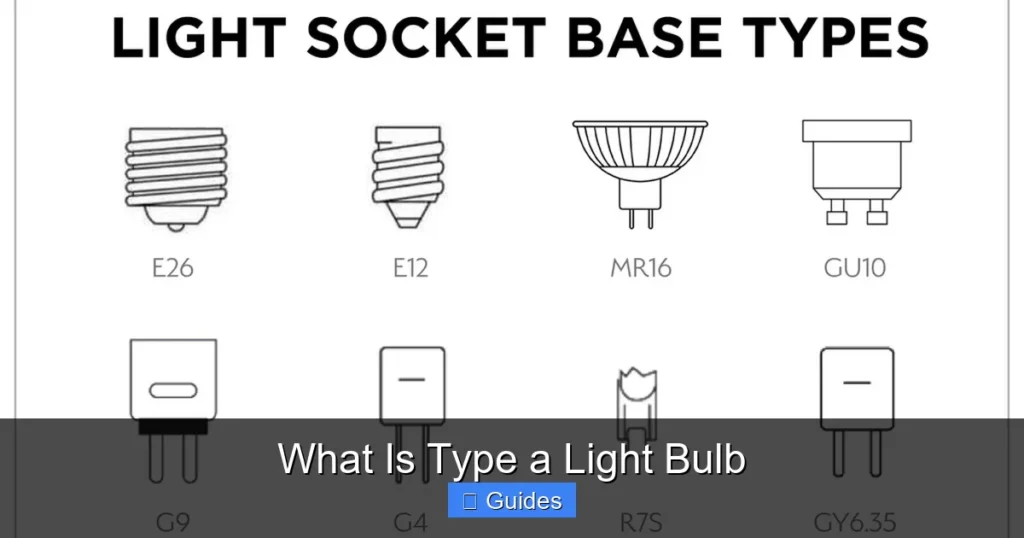
- E26 (Medium Screw Base): This is the standard base size in North America. The “E” stands for Edison, and “26” refers to the diameter in millimeters. Most common household lamps and fixtures use an E26 base.
- E27: This is the slightly larger, standard screw base used in Europe, Asia, and many other parts of the world. While an E26 bulb might physically fit into an E27 socket, and vice-versa, it’s not recommended due to potential electrical safety issues and improper fit. Always match the base type to your socket.
Less common for Type A bulbs but good to know are E12 (candelabra base) and E17 (intermediate base), which are generally for smaller, decorative bulbs, not the standard A-series.
Dimmability and Smart Features
Not all Type A light bulbs are dimmable. If you plan to use your bulb with a dimmer switch, make sure the packaging clearly states “dimmable.” Using a non-dimmable bulb with a dimmer can lead to flickering, buzzing, or even damage to the bulb or dimmer.
Modern LED Type A light bulbs also come with smart features. These bulbs can be controlled via Wi-Fi or Bluetooth through a smartphone app, allowing you to adjust brightness, color temperature, and even change colors (for RGB bulbs). Some can be integrated into smart home ecosystems like Amazon Alexa or Google Home for voice control.
The Evolution of Type A: From Incandescent to LED
The journey of the Type A light bulb is a fascinating story of innovation driven by the need for efficiency. What began as a glowing filament in a vacuum has transformed into a sophisticated semiconductor device, all while maintaining its familiar outward appearance.
The Phase-Out of Incandescents
For over a century, the incandescent Type A light bulb was king. It was simple, inexpensive, and provided a warm, familiar light. However, it was also incredibly inefficient. About 90% of the energy consumed by an incandescent bulb was converted into heat, not light. This meant a lot of wasted electricity. Concerns over energy consumption and environmental impact led governments worldwide to begin phasing out incandescent bulbs in the early 21st century, encouraging the adoption of more energy-efficient alternatives.
Why LED Type A Bulbs Reign Supreme
The void left by incandescents was quickly filled by LED Type A light bulbs, and for good reason. LEDs (Light Emitting Diodes) represent a monumental leap in lighting technology.
- Energy Efficiency: LED Type A bulbs use significantly less energy to produce the same amount of light. An 8-watt LED can easily replace a 60-watt incandescent, leading to substantial savings on electricity bills.
- Long Lifespan: A typical LED Type A light bulb can last 15,000 to 25,000 hours or even more, compared to an incandescent’s 1,000-2,000 hours. This means fewer replacements and less hassle.
- Durability: LEDs are solid-state devices with no filaments to break, making them much more robust and resistant to vibrations and impacts.
- Cooler Operation: LEDs produce very little heat compared to incandescents, reducing the risk of burns and heat buildup in fixtures.
- Versatility: LED Type A bulbs are available in a vast range of color temperatures, brightness levels, and often include dimmable and smart features.
These benefits make the LED Type A light bulb the go-to choice for virtually all general lighting needs today.
The Role of CFLs (Compact Fluorescent Lamps)
Before LEDs became widely affordable, CFLs offered an energy-efficient alternative to incandescents. Many CFLs were designed in the familiar Type A shape, with their coiled tubes hidden within a frosted globe. While CFLs were more efficient than incandescents and had a longer lifespan, they had drawbacks:
- They often took time to “warm up” to full brightness.
- Their light quality wasn’t always as desirable as incandescents or LEDs.
- They contain a small amount of mercury, requiring special disposal.
With the rapid advancements and price drops in LED technology, CFLs have largely been supplanted as the preferred energy-efficient Type A light bulb.
Choosing the Right Type A Light Bulb for Your Home
Now that you understand what makes a Type A light bulb special and the technology behind it, let’s look at how to pick the perfect one for your specific needs. It’s not just about grabbing the cheapest option; a little thought goes a long way in creating a well-lit and comfortable home.
Matching Lumens to Your Needs
Think about the purpose of the room or fixture.
- Ambient Lighting (General): For living rooms, bedrooms, or hallways, 400-800 lumens per bulb is often sufficient, providing a comfortable overall glow. Multiple bulbs in a fixture can add up.
- Task Lighting (Focused): For reading lamps, kitchen counters, or craft areas, you might want brighter bulbs, perhaps 800-1100 lumens, to ensure clarity and reduce eye strain.
- Accent Lighting (Decorative): Often less critical for brightness, focusing more on color temperature and beam angle (though Type A is usually for broad light).
Consider the size of the room and how many light sources are present. A large room might need several 800-lumen bulbs, while a small bathroom might only need one or two.
Selecting the Right Color Temperature
This is where you truly set the mood.
- Cozy Spaces: For areas where you relax and unwind (living room, bedroom), opt for 2700K-3000K (Warm White) for a traditional, inviting feel.
- Functional Spaces: In kitchens, bathrooms, or home offices, 3500K-4100K (Cool White/Bright White) can provide better visibility and a more energetic atmosphere.
- Daylight Effect: For areas where you need to mimic natural light, such as a laundry room, garage, or a study where you do detailed work, 5000K-6500K (Daylight) is a good choice.
Don’t be afraid to mix and match color temperatures in different rooms to suit their specific functions.
Considering Dimmability and Smart Home Integration
If your fixture is on a dimmer switch, always verify that your Type A light bulb is labeled “dimmable.” Not all LEDs are, and using the wrong type can cause problems. For smart home enthusiasts, consider Wi-Fi or Bluetooth enabled LED Type A bulbs. These allow for app control, voice commands, and scheduling, adding convenience and advanced customization to your lighting. They can even change colors, adding a fun dynamic to your space.
Energy Efficiency and Cost Savings
Always choose LED Type A light bulbs over CFLs or incandescents for maximum energy savings. While the initial cost of an LED might be slightly higher, the long-term savings on electricity and replacement bulbs are substantial. Many LED bulbs now come with an Energy Star rating, indicating they meet strict energy-efficiency guidelines. This also contributes to a smaller carbon footprint, making them an environmentally friendly choice.
Beyond the Standard: When Type A Isn’t the Answer
While the Type A light bulb is incredibly versatile and suitable for the vast majority of general lighting applications, there are situations where another bulb shape might be more appropriate. Understanding these differences can help you navigate specific lighting needs.
Specialty Shapes for Specific Fixtures
Sometimes, the aesthetics or function of a fixture require a different bulb shape.
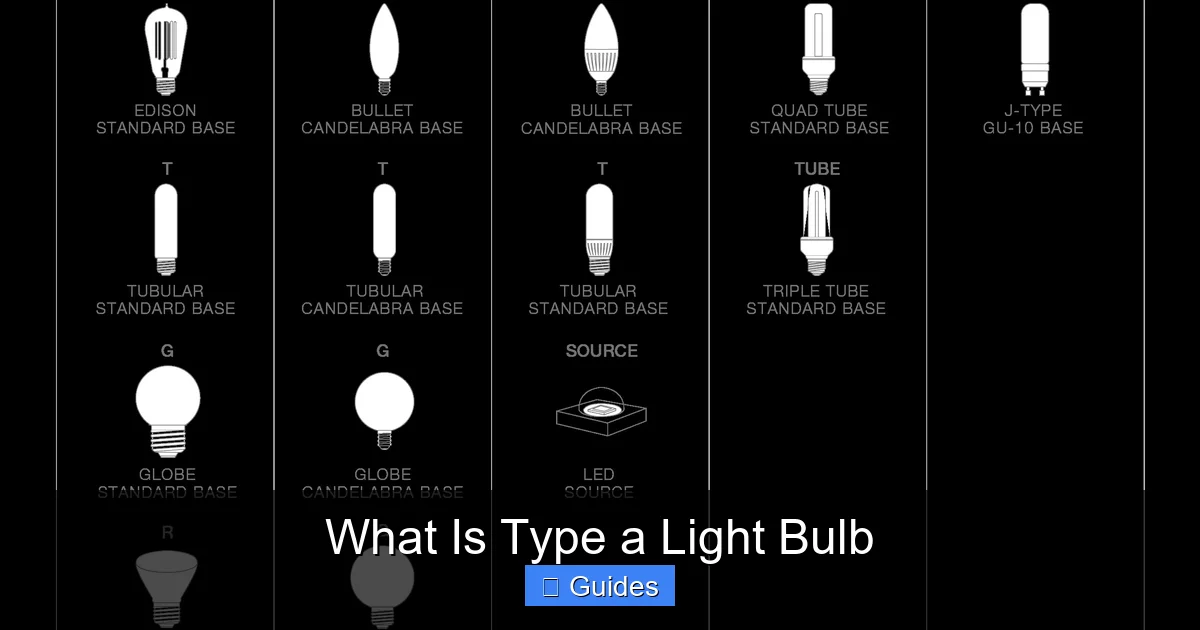
- Candelabra (B, CA, F shapes): These bulbs, often shaped like a flame or bullet, are designed for chandeliers, wall sconces, and decorative fixtures where the bulb itself is visible and contributes to the design. They typically have a smaller E12 (candelabra) base.
- Globe (G shapes): Rounder than Type A bulbs, G-shaped bulbs are often used in vanity lights or bare-bulb fixtures where a softer, more decorative look is desired. They come in various sizes (e.g., G25, G30).
- Edison/Vintage (ST shapes): These bulbs often have exposed filaments (usually LED filaments now) and a distinct antique look, used for decorative purposes where the bulb’s appearance is a key design element.
Directional Lighting Needs
Type A light bulbs provide broad, omnidirectional light. However, for applications where you need to focus light in a specific direction, other types of bulbs are better suited:
- Reflector (R, BR, PAR shapes): These bulbs have an internal reflector that directs light forward, making them ideal for recessed lighting, track lighting, and outdoor floodlights. BR (bulged reflector) and PAR (parabolic aluminized reflector) bulbs are common in these applications.
- MR (Multifaceted Reflector) shapes: Smaller, often low-voltage bulbs used in track lighting, display lighting, and landscaping for very focused beams.
So, while the Type A light bulb covers your general room lighting, don’t hesitate to explore these other shapes when specific aesthetic or directional lighting effects are needed.
Conclusion
The Type A light bulb might seem like a simple, everyday object, but as we’ve explored, it’s a product of continuous innovation and a cornerstone of modern illumination. From its humble incandescent beginnings to its current dominance as an energy-efficient LED, the Type A light bulb has consistently adapted to meet our lighting needs, all while retaining its iconic and familiar shape.
Understanding what makes a Type A light bulb what it is – its pear shape, standard base, and key performance metrics like lumens and color temperature – empowers you to make smarter choices for your home. By opting for LED Type A light bulbs, you’re not just buying light; you’re investing in energy efficiency, long-lasting performance, and the ability to perfectly tailor the ambiance of every room. So next time you need a bulb, you’ll know exactly what a Type A light bulb is and how to choose the right one to brighten your world.
🎥 Related Video: How to Choose a Lightbulb | Lowe's How-to
📺 Lowe’s Home Improvement
There are so many lightbulbs to choose from, so how do you know which one will work for you? Join DIY expert Caroline as she …
Frequently Asked Questions
What is the difference between a Type A and a Type B light bulb?
A Type A light bulb has the classic pear shape, providing broad, omnidirectional light. A Type B light bulb, also known as a Candelabra or B-shape, typically has a torpedo or bullet-like shape, often used in decorative fixtures like chandeliers or sconces.
Why are LED Type A light bulbs better than incandescent ones?
LED Type A light bulbs are vastly superior because they are far more energy-efficient, using significantly less electricity to produce the same amount of light. They also have a much longer lifespan, emit less heat, and are more durable than their incandescent counterparts.
How does color temperature affect a Type A light bulb’s performance?
Color temperature, measured in Kelvins (K), determines the perceived warmth or coolness of the light. A lower Kelvin (e.g., 2700K) produces a warm, yellowish light, ideal for relaxing spaces, while a higher Kelvin (e.g., 5000K) emits a cool, bluish-white light, suitable for task-oriented areas.
Can I put a Type A light bulb in an outdoor fixture?
You can use a Type A light bulb in an outdoor fixture, but you must ensure both the bulb and the fixture are rated for outdoor use and weather resistance. Look for “suitable for wet locations” or “enclosed fixture rated” on the bulb’s packaging, especially for LED Type A bulbs.
What does “equivalent wattage” mean on an LED Type A light bulb?
“Equivalent wattage” on an LED Type A light bulb indicates the incandescent wattage it can replace to achieve a similar brightness level. For example, an 8W LED bulb labeled “60W equivalent” means it uses 8 watts but produces as much light as a traditional 60-watt incandescent bulb.
Do Type A light bulbs work with smart home systems?
Many modern LED Type A light bulbs are specifically designed to work with smart home systems. These smart bulbs typically connect via Wi-Fi or Bluetooth, allowing control through apps, voice assistants, and integration into broader smart home ecosystems for features like scheduling, dimming, and color changes.
