


As an Amazon Associate, We earn from qualifying purchases.
Choosing the right light bulb for your bathroom is crucial for both functionality and mood. LEDs are generally the superior choice due to their energy efficiency, longevity, and versatility in brightness and color temperature. Consider lumens for brightness, Kelvin for color, and CRI for accurate color rendering, especially around mirrors.
What Type of Light Bulb for Bathroom?
Stepping into your bathroom shouldn’t feel like entering a dimly lit cave or a sterile operating room. The right lighting can transform this essential space from purely functional to a personal sanctuary. It can make your morning routine smoother, help you apply makeup flawlessly, and even set the mood for a relaxing evening soak. But with so many options out there, how do you decide what type of light bulb for bathroom installations is truly the best fit?
It’s easy to feel overwhelmed by lumens, Kelvin, CRI, and all the different bulb types. Don’t worry, you’re not alone! Many people just grab whatever seems to fit or whatever’s on sale, only to realize later that their bathroom light isn’t quite right. Maybe it casts strange shadows, makes you look sickly, or just doesn’t feel bright enough. This guide is here to demystify the world of bathroom lighting, helping you choose the perfect bulbs to create a space that’s both beautiful and practical.
We’ll walk through everything from understanding your bathroom’s specific needs to diving into the different types of bulbs available, and then break down the key factors to consider for each area of your bathroom. By the end, you’ll feel confident knowing exactly what type of light bulb for bathroom use will elevate your space and make every moment spent there more enjoyable. Let’s shed some light on this!
Key Takeaways
- LEDs are the Best Choice: Opt for LED bulbs for bathrooms due to their superior energy efficiency, long lifespan, durability, and wide range of color temperatures and brightness levels.
- Layer Your Lighting: Combine ambient (general), task (vanity, shower), and accent (decorative) lighting to create a functional and inviting bathroom space.
- Prioritize Color Temperature and CRI: Choose bulbs with a color temperature between 2700K-3000K for a warm, inviting feel, or 3500K-4000K for a brighter, more energizing look. A high Color Rendering Index (CRI of 90+) is essential for accurate skin tones and makeup application around mirrors.
- Mind Lumens for Brightness: Aim for roughly 75-100 lumens per square foot for ambient lighting. Vanity areas need brighter task lighting, often achieved with multiple bulbs.
- Ensure Safety with Wet/Damp Ratings: Any light fixtures or bulbs directly above a shower or within reach of splashes must be specifically rated for damp or wet locations to prevent electrical hazards.
- Consider Dimming Capabilities: Dimmable LED bulbs offer flexibility to adjust the mood and brightness, allowing for both bright task lighting and relaxing ambient light.
- Think About Beam Angle: For task lighting like over a vanity, a narrower beam angle can provide focused light, while wider angles are better for general ambient illumination.
Quick Answers to Common Questions
What is the best type of light bulb for a bathroom?
The best type of light bulb for a bathroom is overwhelmingly LED (Light Emitting Diode) due to its superior energy efficiency, long lifespan, instant full brightness, and wide range of available color temperatures and brightness levels.
How many lumens do I need for a bathroom?
For general ambient lighting in a bathroom, aim for approximately 75-100 lumens per square foot. For vanity task lighting, you’ll need additional, more focused lumens, often achieved with multiple bulbs totaling 1500-2000 lumens around the mirror.
What color temperature is best for a bathroom vanity?
For a bathroom vanity, a color temperature between 3500K-4000K (neutral white) is generally recommended. This range provides clear, accurate light for grooming and makeup application without being too harsh or too warm.
Do bathroom lights need to be dimmable?
While not strictly necessary, dimmable light bulbs are highly recommended for bathrooms. They offer flexibility to adjust the mood and brightness, allowing for bright task lighting when needed and softer, more relaxing light for unwinding.
What does “CRI” mean and why is it important for bathrooms?
CRI stands for Color Rendering Index, which measures how accurately a light source reveals the true colors of objects. A high CRI (90+) is crucial in bathrooms, especially around the vanity, to ensure accurate representation of skin tones and makeup colors.
📑 Table of Contents
Understanding Your Bathroom’s Lighting Needs
Before you even think about specific bulbs, it’s crucial to understand that a bathroom isn’t just one big lighting zone. It usually requires a combination, or “layers,” of light to be truly effective and comfortable. Neglecting this is a common mistake when choosing what type of light bulb for bathroom use.
Ambient Lighting: The Foundation
This is your general, overall illumination. Ambient lighting makes sure you can safely navigate the room without bumping into things. It typically comes from an overhead fixture, like a flush-mount ceiling light or recessed lighting. For your bathroom, ambient light should be bright enough to banish shadows, but not so harsh that it’s uncomfortable. Think of it as the base layer upon which all other lighting builds.
Task Lighting: For Precision and Purpose
Task lighting is exactly what it sounds like: light focused on specific tasks. In a bathroom, the most critical task lighting is around the vanity mirror. This is where you shave, apply makeup, brush your teeth, and style your hair. Proper task lighting here is vital to prevent shadows on your face and ensure accurate color perception. Other task areas might include within the shower or above a toilet.
Accent Lighting: Adding Style and Depth
Accent lighting is all about aesthetics. It highlights architectural features, artwork, or decorative elements. While not strictly necessary for functionality, accent lighting adds a layer of sophistication and mood to your bathroom. It can make a small bathroom feel larger or a modern bathroom feel more luxurious. Think of small recessed lights in a niche, or dimmable strip lights under a floating vanity.
Safety Considerations: Damp and Wet Ratings
Safety is paramount in a bathroom due to the presence of water and moisture. When you’re choosing what type of light bulb for bathroom fixtures, especially in areas prone to splashes or steam, you must check their “damp-rated” or “wet-rated” status.
- Damp-rated fixtures/bulbs: These can withstand moisture, condensation, and indirect splashing. They are suitable for general bathroom areas, above a sink, or outside the direct shower zone.
- Wet-rated fixtures/bulbs: These are designed to withstand direct contact with water. They are essential for inside the shower enclosure or directly above a bathtub where direct water exposure is likely. Always ensure your chosen light bulb for bathroom use matches the fixture’s rating.
The Main Contenders: Types of Light Bulbs
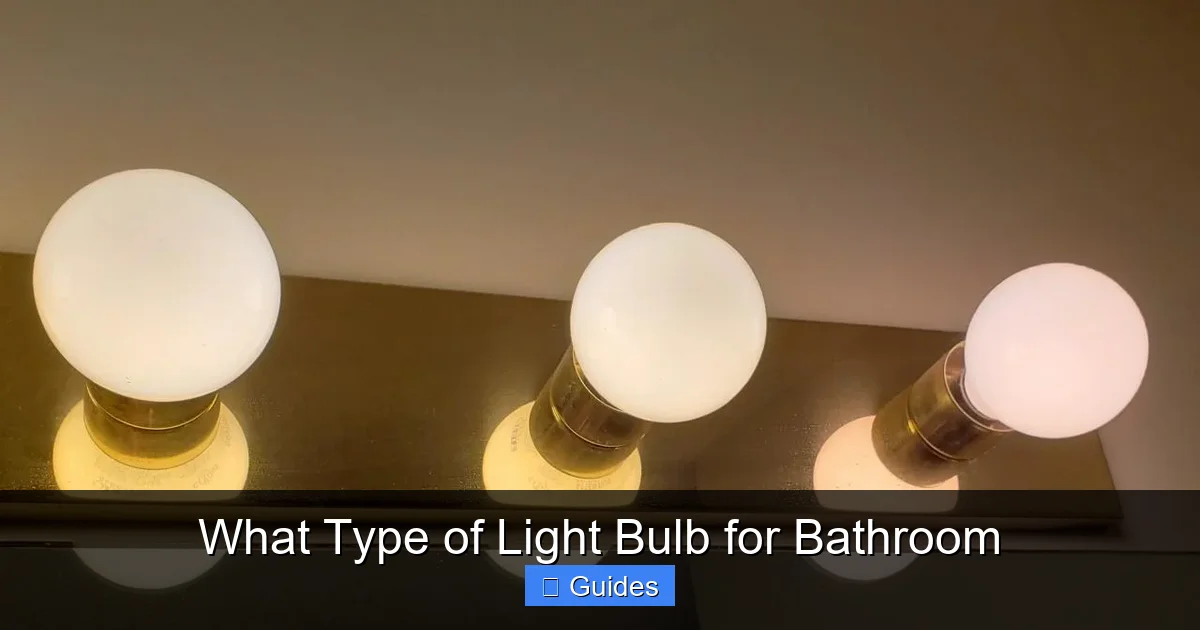
Visual guide about What Type of Light Bulb for Bathroom
Image source: storables.com
Over the years, the technology behind light bulbs has evolved dramatically. Understanding the pros and cons of each type will guide you toward the best light bulb for bathroom applications.
Incandescent Bulbs: The Old Guard (Almost Extinct)
Incandescent bulbs are the traditional, glowing filament bulbs we grew up with. They produce a warm, comforting light and are relatively inexpensive upfront.
- Pros: Warm light, good color rendering, inexpensive.
- Cons: Extremely inefficient (most energy lost as heat), short lifespan, being phased out in many regions.
- Bathroom Use: Generally not recommended due to inefficiency and heat output in a small space. You’ll rarely find what type of light bulb for bathroom solutions still relying on incandescents.
Halogen Bulbs: Brighter Incandescents
Halogen bulbs are essentially an improved version of incandescents. They use a halogen gas to increase efficiency and lifespan slightly, producing a brighter, whiter light.
- Pros: Bright, crisp light, good color rendering, dimmable.
- Cons: Still inefficient compared to newer technologies, produce significant heat, shorter lifespan than LEDs.
- Bathroom Use: Can work for task lighting but are energy hogs. Better alternatives exist for what type of light bulb for bathroom applications.
CFL Bulbs: The Early Energy Savers
Compact Fluorescent Lamps (CFLs) were the first widely available energy-efficient alternative. They work by passing an electric current through a tube containing argon and a small amount of mercury vapor, producing UV light that then excites a fluorescent coating.
- Pros: More energy-efficient than incandescent/halogen, longer lifespan.
- Cons: Can take time to warm up to full brightness, contain mercury (require special disposal), not always dimmable, can produce a “cold” light unless carefully selected.
- Bathroom Use: While more efficient, the warm-up time can be annoying in a bathroom where you need instant light. The mercury content is also a concern.
LED Bulbs: The Modern Champion
Light Emitting Diodes (LEDs) are the current gold standard for lighting. They work by passing current through a semiconductor, producing light very efficiently. This is definitely the leading candidate when considering what type of light bulb for bathroom use.
- Pros: Extremely energy-efficient (up to 90% less than incandescent), incredibly long lifespan (25,000+ hours), instant full brightness, durable, available in a vast range of color temperatures and brightness levels, many are dimmable and smart-enabled.
- Cons: Higher upfront cost (though quickly recouped in energy savings), some cheap LEDs can have poor color rendering.
- Bathroom Use: Hands down, LEDs are the best light bulb for bathroom applications. Their efficiency, longevity, and versatility make them ideal for all layers of bathroom lighting.
Key Factors When Choosing a Bathroom Light Bulb
Now that we know LEDs are the way to go, let’s talk about the specific characteristics to look for in your LED light bulb for bathroom use.
Brightness (Lumens): How Much Light Do You Need?
Forget watts; lumens are the true measure of a bulb’s brightness. Watts only tell you how much energy a bulb consumes.
- Ambient Lighting: For a typical bathroom, aim for roughly 75-100 lumens per square foot. A 5×8 foot bathroom (40 sq ft) might need 3000-4000 lumens total from its ambient sources.
- Task Lighting (Vanity): This area needs more focused brightness. You might use several bulbs around the mirror, each providing 400-800 lumens, depending on their proximity and the overall desired effect.
- Shower Lighting: A single recessed wet-rated bulb might provide 600-800 lumens for good illumination in the shower.
Don’t be afraid to go a little brighter initially, as you can always dim LEDs if they’re too much.
Color Temperature (Kelvin): Setting the Mood and Tone
Color temperature, measured in Kelvin (K), tells you how warm or cool the light appears.
- Warm White (2700K-3000K): Creates a cozy, inviting atmosphere, similar to traditional incandescent bulbs. Great for relaxing baths.
- Cool White/Neutral White (3500K-4000K): Offers a cleaner, more energizing light, excellent for tasks and morning routines. Many prefer this for vanity areas for true-to-life colors.
- Daylight (5000K-6500K): Very bright, bluish-white light, mimicking natural daylight. Can be harsh in a small bathroom but preferred by some for highly accurate task work (like intricate makeup).
For vanity lighting, many people find 3500K-4000K to be the sweet spot, providing clarity without being too sterile.
Color Rendering Index (CRI): Seeing True Colors
CRI is a measure (from 0-100) of how accurately a light source reveals the true colors of objects compared to natural daylight. This is SUPER important for your vanity area.
- CRI 80-89: Good for general ambient lighting.
- CRI 90+: Excellent. This is what you should look for in bulbs around your vanity mirror. A high CRI ensures your skin tone looks natural and makeup colors appear as they truly are, preventing “makeup disasters” when you step out into natural light.
Energy Efficiency (Watts): Saving on Bills
While lumens tell you brightness, watts tell you energy consumption. LED bulbs use significantly fewer watts to produce the same number of lumens as older bulb types, leading to substantial savings on your electricity bill. Always look for the lumen rating first, then consider the low wattage as an added benefit.
Dimming Capability: Flexibility is Key
A dimmable light bulb for bathroom use is a game-changer. It allows you to adjust the brightness to suit different activities. Bright for morning prep, dim for a relaxing evening soak. Ensure both your LED bulbs and your dimmer switch are compatible with each other to avoid flickering or buzzing.
Wet-Rated/Damp-Rated: Safety First
As mentioned before, always ensure that any light bulb for bathroom use in damp or wet locations meets the appropriate safety ratings. Look for packaging that explicitly states “suitable for damp locations” or “suitable for wet locations.”
Beam Angle: Where the Light Goes
The beam angle describes how widely the light spreads from the bulb.
- Narrow Beam (e.g., 20-40 degrees): Creates a more focused “spotlight” effect. Useful for accent lighting or highlighting specific areas.
- Wide Beam (e.g., 90-120 degrees): Provides a broad spread of light, ideal for general ambient lighting or washing a wall with light.
For vanity lighting, you often want a balance – enough spread to illuminate your face evenly, but not so wide that it spills too much into the room.
Specific Bathroom Zones and Bulb Recommendations
Let’s break down what type of light bulb for bathroom use works best in different areas.
Vanity/Mirror Lighting: Your Personal Glam Station
This is arguably the most important lighting zone in your bathroom.
- Placement: Ideally, you want light sources on both sides of the mirror (sconces or vertical light bars) at eye level, complemented by an overhead light if needed. Avoid single overhead lights directly above the mirror, which cast harsh shadows on your face.
- Bulb Type: Dimmable LED bulbs are essential.
- Color Temperature: 3500K-4000K (neutral white) is usually preferred for accurate color rendering.
- CRI: Aim for CRI 90+ to ensure true colors for makeup and grooming.
- Brightness: A combination of several bulbs, each typically 400-800 lumens (equivalent to 40-60W incandescent), will provide ample task lighting.
Shower/Wet Area Lighting: Safe and Bright
Safety and functionality are key here.
- Placement: Recessed lighting directly within the shower enclosure.
- Bulb Type: Wet-rated LED bulbs, often integrated into a wet-rated recessed fixture.
- Color Temperature: 3000K-4000K for clear visibility.
- Brightness: 600-800 lumens from a single bulb is usually sufficient.
- Special Features: Look for shower trims that create a sealed enclosure to prevent moisture from reaching the electrical components.
General Overhead Lighting: Ambient Glow
This provides your primary ambient light.
- Placement: Centered in the room, or multiple recessed lights for larger bathrooms.
- Bulb Type: Dimmable LED bulbs.
- Color Temperature: 2700K-3000K for a warmer, more relaxing feel, or 3500K-4000K for a brighter, more functional space.
- Brightness: Sum up the total lumens needed based on room size (75-100 lumens/sq ft) and divide among your chosen bulbs.
- Fixture Type: Can be a ceiling flush mount, semi-flush mount, or recessed lights.
Accent/Niche Lighting: The Finishing Touch
This is where you can get creative and add personality.
- Placement: Inside decorative niches, under floating vanities, or to highlight architectural features.
- Bulb Type: Small LED puck lights, strip lights, or small recessed bulbs.
- Color Temperature: Often warmer (2700K-3000K) to create a relaxed, spa-like ambiance.
- Brightness: Low lumens, just enough to create a glow or highlight.
- Special Features: Often dimmable or even color-changing (RGB) for ultimate mood control.
Tips for a Perfectly Lit Bathroom
Beyond just choosing what type of light bulb for bathroom use, here are some overall tips for creating a harmonious lighting scheme.
Layer, Layer, Layer!
Never rely on just one overhead light. Combining ambient, task, and accent lighting is the secret to a versatile and beautifully lit bathroom. This layering allows you to adjust the lighting for different moods and activities.
Mind the Shadows
Especially around the vanity, aim for cross-illumination. Light coming from the sides of the mirror (sconces) prevents harsh shadows under your chin and nose that a single overhead light would create.
Think About Fixture Compatibility
Always ensure the bulb type and size you choose are compatible with your existing or new light fixtures. Check the maximum wattage (though less critical with LEDs) and the base type (e.g., E26, GU10).
Don’t Forget Dimmers
Seriously, dimmers are your best friend in a bathroom. They offer incredible flexibility, letting you switch from bright, functional light to soft, relaxing mood lighting with a simple slide.
Consider Smart Lighting
For those who love technology, smart LED bulbs or smart switches can add another layer of convenience. You can control lights with your voice, a smartphone app, or even set schedules, allowing you to fine-tune your bathroom ambiance effortlessly.
Maintenance and Lifespan
One of the best things about modern LED light bulb for bathroom use is their incredible lifespan. Once you install them, you won’t have to think about changing bulbs for years, even decades! This is especially convenient for hard-to-reach fixtures.
Conclusion
Choosing the right light bulb for your bathroom is far more than just screwing in a bulb. It’s about creating a space that feels right, functions perfectly, and even enhances your daily routine. By understanding the different types of light bulbs, focusing on key factors like lumens, Kelvin, and CRI, and strategically layering your lighting, you can transform your bathroom into a truly remarkable and enjoyable part of your home.
So, the next time you’re wondering what type of light bulb for bathroom applications to pick, remember the power of LEDs, the importance of layering, and the magic of good color rendering. Invest a little time and thought into your choices, and you’ll be rewarded with a beautifully illuminated bathroom that you’ll love for years to come. Happy lighting!
🎥 Related Video: How to Choose a Lightbulb | Lowe's How-to
📺 Lowe’s Home Improvement
There are so many lightbulbs to choose from, so how do you know which one will work for you? Join DIY expert Caroline as she …
Frequently Asked Questions
What is the difference between damp-rated and wet-rated light bulbs?
Damp-rated light bulbs and fixtures are suitable for areas with moisture, condensation, or indirect splashing, like general bathroom spaces. Wet-rated bulbs and fixtures are designed to withstand direct contact with water, making them essential for inside a shower or above a bathtub.
Can I use smart bulbs in my bathroom?
Yes, you can absolutely use smart bulbs in your bathroom, provided they are rated appropriately for the moisture level (damp or wet, if applicable). Smart bulbs offer convenient control over brightness and color temperature via apps or voice commands, enhancing your bathroom’s ambiance.
Why is my bathroom light making my skin look bad?
If your bathroom light makes your skin look bad, it’s likely due to a low Color Rendering Index (CRI) or an inappropriate color temperature. A low CRI distorts colors, while very cool (high Kelvin) or very warm (low Kelvin) lights can cast unflattering tones. Opt for high CRI (90+) bulbs around 3500K-4000K for accurate skin tones.
Should all lights in my bathroom have the same color temperature?
Not necessarily. While a consistent color temperature across ambient and task lighting can create a cohesive look, you might choose a slightly warmer color for accent lighting (e.g., 2700K) to enhance a spa-like mood, while keeping task lighting at a brighter 3500K for functionality.
Are LED bulbs safe for bathroom use?
Yes, LED bulbs are very safe for bathroom use. They produce very little heat compared to traditional bulbs, reducing fire risk, and are available in damp-rated and wet-rated versions suitable for all areas of a bathroom, including inside showers.
How often do I need to replace LED bathroom bulbs?
One of the biggest advantages of LED bulbs is their incredibly long lifespan. High-quality LED bulbs can last 25,000 to 50,000 hours or more, meaning you might not need to replace them for 10-20 years, even with daily use, making them an excellent long-term investment for your bathroom.
