


As an Amazon Associate, We earn from qualifying purchases.
Choosing the correct light bulb for your ceiling fan can seem tricky, but it boils down to understanding your fan’s specific requirements. Always check the socket type (E26, E12), maximum wattage, and physical dimensions to ensure safety and proper function. LEDs are often the best modern choice due to efficiency and cooler operation, especially “enclosed fixture rated” varieties.
Finding the perfect light bulb for any fixture can sometimes feel like a small quest, but when it comes to your ceiling fan, it often adds an extra layer of complexity. You might wonder, “What size light bulb for ceiling fan do I actually need?” It’s not just about screwing in any old bulb; ceiling fans have unique requirements that, if overlooked, can lead to dim lighting, premature bulb failure, or even safety concerns.
Ceiling fans are designed to move air, but many also integrate a light kit, serving a dual purpose in your room. Unlike open lamps, these light kits often encase the bulbs in glass globes or shades. This enclosed environment impacts how heat dissipates and limits the physical size of the bulbs you can use. Understanding these nuances is key to making an informed choice and ensuring your fan’s light works optimally for years to come. This guide will walk you through everything you need to know about what size light bulb for ceiling fan is right for your home, from deciphering specifications to choosing the best modern options.
Key Takeaways
- Check Your Fan’s Specifications: Always consult the owner’s manual, labels near the light kit, or the bulb socket itself for maximum wattage, required base type (e.g., E26, E12), and physical size constraints.
- Understand Socket Types: Most ceiling fans use standard E26 (medium base) or candelabra E12 (small base) bulbs. Matching the base is non-negotiable for installation.
- Prioritize Wattage Limits: Never exceed the maximum wattage listed for your fan’s light kit. Overheating can damage the fan, fixture, or pose a fire hazard. Lumens, not watts, indicate brightness.
- Consider Enclosed Fixture Rated Bulbs: Many ceiling fan light kits are enclosed. For optimal performance and lifespan, especially with LED bulbs, choose ones specifically rated for enclosed fixtures to prevent premature failure due to heat buildup.
- LEDs Are Generally Best: LED bulbs offer superior energy efficiency, longer lifespan, and produce less heat compared to incandescent or halogen bulbs, making them ideal for ceiling fan applications.
- Match Physical Dimensions: Even if the base and wattage are correct, a bulb might be too large to fit inside the globe or shade. Measure the available space if you’re unsure.
- Dimming Requires Compatibility: If your fan has a dimmer, ensure any new bulbs (especially LEDs) are clearly labeled as “dimmable” to avoid flickering or damage.
Quick Answers to Common Questions
What is the most common light bulb size for ceiling fans?
The most common light bulb sizes (base types) for ceiling fans are E26 (standard medium base) and E12 (candelabra base). Always check your fan’s socket or manual to confirm.
Can I use any LED bulb in my ceiling fan?
While many LED bulbs will physically fit, it’s crucial to use LEDs specifically rated as “suitable for enclosed fixtures” if your fan’s light kit has a globe or shade that traps heat. Standard LEDs can overheat and fail prematurely in enclosed spaces.
How do I know the maximum wattage my ceiling fan light kit can handle?
The maximum wattage is typically printed on a label inside the light kit, near the bulb sockets, or in your ceiling fan’s owner’s manual. Never exceed this specified wattage to prevent overheating and potential damage.
What does “lumens” mean, and why is it important for ceiling fan bulbs?
Lumens measure the brightness of a light bulb. When choosing a new bulb for your ceiling fan, look at the lumen output to determine how bright the light will be, rather than solely focusing on watts (which measure energy consumption).
My ceiling fan lights are flickering. What could be the cause?
Flickering lights in a ceiling fan can be caused by a loose bulb, an incompatible dimmer switch (if using non-dimmable LEDs with a dimmer), a faulty bulb, or sometimes an electrical issue like a loose wire or tripped circuit breaker.
📑 Table of Contents
Understanding the Basics: Why Ceiling Fans Are Different
Before diving into specific bulb types, it’s crucial to understand why choosing what size light bulb for ceiling fan isn’t the same as picking one for a table lamp. Ceiling fan light kits present unique challenges due to their design and function.
The Enclosed Fixture Factor
Many ceiling fan light kits feature globes or shades that completely enclose the light bulbs. While aesthetically pleasing, this design traps heat. Traditional incandescent bulbs generate a lot of heat, and when that heat can’t escape, it can significantly shorten the bulb’s lifespan and potentially damage the fixture or wiring. This is a primary reason why you can’t just use any bulb; you need to consider how the bulb handles heat.
Heat Dissipation Concerns
Excessive heat isn’t just bad for the bulb; it can also affect the ceiling fan’s motor or other electrical components over time. Manufacturers set maximum wattage limits for a reason – to prevent overheating. Sticking within these limits is paramount for safety and the longevity of your entire ceiling fan unit. When you’re thinking about what size light bulb for ceiling fan, remember that ‘size’ refers not just to physical dimensions but also to its energy output and heat generation.
Physical Size Matters
This might seem obvious, but it’s a common oversight. The globe or shade of your ceiling fan’s light kit dictates the maximum physical dimensions of the bulb you can use. A bulb might have the correct base and wattage, but if it’s too long or too wide, it simply won’t fit inside the enclosure. Always measure the available space if you’re unsure, especially when upgrading to larger LED bulbs.
Decoding Your Ceiling Fan’s Light Kit
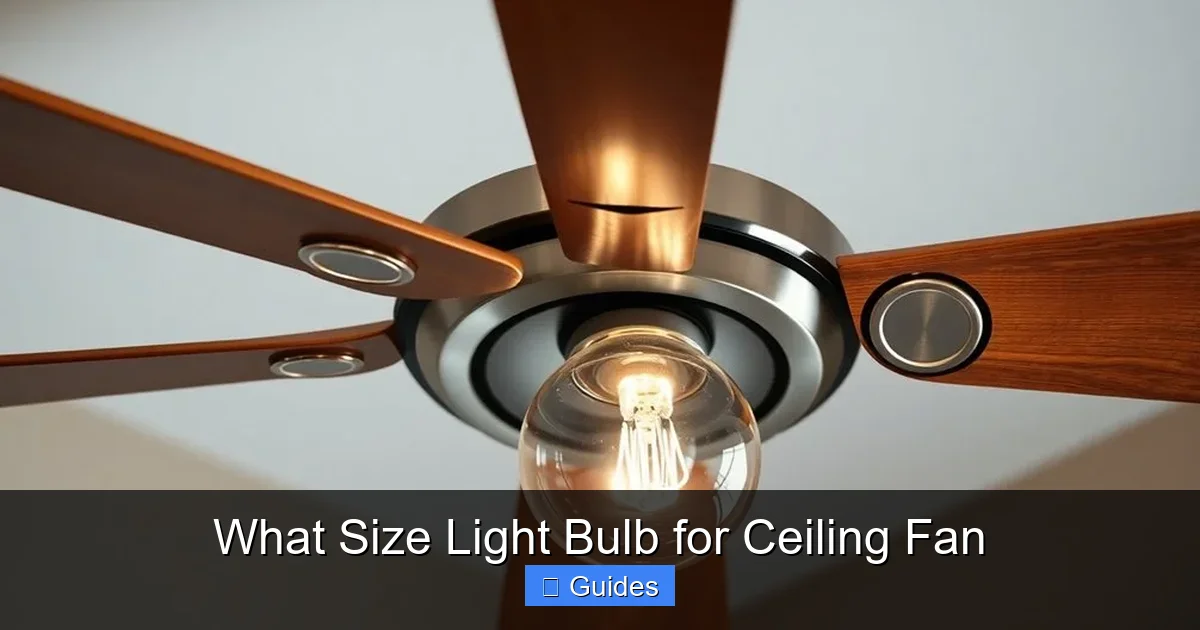
Visual guide about What Size Light Bulb for Ceiling Fan
Image source: topceilingfans.net
The first step in determining what size light bulb for ceiling fan you need is to gather information directly from your fan or its documentation. This information is non-negotiable.
Checking the Socket Itself
The most direct way to find out what base type you need is to look at the socket where the bulb screws in. Most ceiling fans will use one of two common Edison screw bases:
- E26 (Medium Base): This is the most common screw-in base size in North America, often called a “standard” or “A19” bulb base. If your fan uses bulbs similar to those found in everyday lamps, it’s likely E26.
- E12 (Candelabra Base): Smaller than the E26, the E12 base is often found in decorative light fixtures, including some ceiling fan light kits, especially those with smaller globes or multiple smaller bulbs.
Sometimes, the base type will be stamped directly on the metal of the socket.
Consulting the Owner’s Manual
If you still have your ceiling fan’s owner’s manual, it’s a treasure trove of information. It will clearly state the required bulb type, maximum wattage, and sometimes even recommended bulb shapes or brands. This is the definitive source for what size light bulb for ceiling fan you should be using.
Looking for Labels and Stickers
If the manual is long gone, don’t despair! Most ceiling fan light kits have a sticker or label, often hidden inside the globe, on the light kit’s housing, or near the sockets. This label will typically specify:
- Maximum Wattage: This is critical. For example, “MAX 60W TYPE A” or “MAX 40W TYPE B.” Never exceed this wattage.
- Bulb Type: Sometimes it will specify the base type (E26, E12) or a general shape (e.g., “Type A” for standard, “Type B” for candelabra/blunt tip).
Taking a moment to find and read this label can save you a lot of guesswork and potential headaches when deciding what size light bulb for ceiling fan to buy.
Common Light Bulb Types for Ceiling Fans
Once you know the socket type and wattage limit, you can explore the different bulb technologies available. The evolution of lighting has given us many options, each with its own pros and cons for ceiling fan use.
Incandescent Bulbs (The Classic)
These are the traditional bulbs we grew up with, producing light by heating a filament.
- Pros: Inexpensive to buy, instant full brightness, excellent color rendering.
- Cons: Very inefficient (most energy lost as heat), short lifespan, high heat output (problematic in enclosed fixtures).
Due to their heat output and inefficiency, incandescent bulbs are generally a poor choice for enclosed ceiling fan light kits, leading to frequent replacements. Many types have also been phased out in favor of more energy-efficient alternatives.
Halogen Bulbs (Brighter Incandescent)
Halogen bulbs are an improvement on traditional incandescents, offering brighter light and slightly better efficiency.
- Pros: Brighter than incandescents of the same wattage, good color rendering, dimmable.
- Cons: Still generate significant heat, relatively short lifespan compared to LEDs, higher energy consumption than CFLs or LEDs.
While better than standard incandescents, halogen bulbs still pose heat challenges in enclosed fan fixtures.
CFL Bulbs (Energy Savers with Caveats)
Compact Fluorescent Lamps (CFLs) were once the go-to for energy efficiency before LEDs became widespread.
- Pros: Much more energy-efficient than incandescents, longer lifespan.
- Cons: Can have a warm-up period to reach full brightness, often not fully dimmable or hum when dimmed, some contain mercury (requiring special disposal), shape can be bulky and may not fit well in small fan globes, heat can still be an issue in enclosed fixtures.
CFLs are generally not ideal for ceiling fans due to their start-up time, dimming issues, and shape constraints. Plus, they can still overheat in enclosed environments.
LED Bulbs (The Modern Champion)
LEDs (Light Emitting Diodes) are the current gold standard for home lighting. When choosing what size light bulb for ceiling fan, LEDs are often the best answer.
- Pros: Extremely energy-efficient (up to 90% less energy than incandescents), very long lifespan (thousands of hours), produce very little heat (critical for enclosed fan fixtures), instant full brightness, available in various color temperatures, many are dimmable.
- Cons: Higher upfront cost (though quickly offset by energy savings), some older LED bulbs were not compatible with all dimmers, need to specifically look for “enclosed fixture rated” LEDs.
Crucial Tip for LEDs in Ceiling Fans: While LEDs produce less heat than other bulb types, the heat they *do* generate needs to dissipate properly for them to last their advertised lifespan. If an LED bulb is used in an enclosed fixture without being specifically rated for it, the trapped heat can cause its internal electronics to fail prematurely. Always look for LEDs labeled “suitable for enclosed fixtures” or “damp rated” when choosing what size light bulb for ceiling fan, especially if your fan has a sealed globe.
Beyond Type: Lumens, Watts, and Color Temperature
Once you’ve narrowed down the bulb type and confirmed the base, there are other factors to consider for optimal lighting.
Lumens vs. Watts: What Really Matters for Brightness
Forget watts when thinking about brightness. Watts measure energy consumption. Lumens measure brightness.
- Lumens: This is the true indicator of how much light a bulb emits.
- Watts: This tells you how much energy the bulb consumes.
For example, a 60-watt incandescent bulb might produce around 800 lumens. An LED bulb producing the same 800 lumens might only consume 9-10 watts. When replacing an old bulb, aim for an LED with a similar lumen output, staying well within your fan’s maximum wattage rating. So, if your fan says “MAX 60W,” you can easily put in a 9W LED that produces 800 lumens and get the same brightness with far less heat and energy use.
Color Temperature (Kelvin): Setting the Mood
Light bulbs aren’t just bright or dim; they also have a “color” or “warmth.” This is measured in Kelvins (K).
- Warm White (2700K-3000K): Emits a soft, yellowish glow, similar to traditional incandescents. Ideal for creating a cozy, inviting atmosphere in living rooms, bedrooms.
- Cool White / Bright White (3500K-4100K): More neutral light, less yellow, slightly bluer. Good for kitchens, bathrooms, workspaces where you need more clarity.
- Daylight (5000K-6500K): Mimics natural daylight, very bright and blue-white. Best for task lighting, offices, or areas where maximum alertness is desired.
Consider the function of the room when choosing the color temperature.
Dimming Compatibility: Essential for Control
If your ceiling fan’s light kit is connected to a dimmer switch, it’s absolutely crucial that the bulbs you buy are “dimmable.” Not all LEDs are dimmable, and using a non-dimmable bulb with a dimmer can lead to flickering, buzzing, or premature bulb failure. Always check the packaging for clear “dimmable” labeling. For best performance, some LED dimmers are specifically designed to work with LED loads.
Installation Tips and Safety Precautions
Once you’ve purchased what size light bulb for ceiling fan you need, here are some tips for safe and effective installation.
Always Turn Off the Power!
Before unscrewing old bulbs or installing new ones, always turn off the power to the ceiling fan at the wall switch AND the circuit breaker. This prevents accidental shocks and is a fundamental electrical safety rule.
Don’t Exceed Max Wattage
We’ve said it before, but it bears repeating: never, ever exceed the maximum wattage indicated on your fan’s light kit. Even with energy-efficient LEDs, the wattage rating on the fan itself refers to the *maximum power draw it can safely handle*, not necessarily the brightness equivalent. An 800-lumen LED might be equivalent to a 60W incandescent, but it only *draws* 9W. So, if your fan says “MAX 60W,” an 800-lumen, 9W LED is perfectly safe.
Mind the Bulb’s Physical Dimensions
As discussed, make sure the bulb fits within the globe or shade. If you’re upgrading from smaller incandescents to larger, more efficient LEDs, always double-check the length and diameter measurements.
Consider Enclosed-Fixture Rated LEDs
This is one of the most important considerations for ceiling fans. Even though LEDs run cooler than incandescent bulbs, the heat generated by their internal driver circuitry still needs to dissipate. In a completely sealed or enclosed fixture, this heat can build up and cause the LED to fail prematurely. Look for packaging that explicitly states “suitable for enclosed fixtures,” “rated for enclosed luminaires,” or “damp rated.” These bulbs are designed with better heat management for these conditions, ensuring you get the full lifespan promised by LED technology.
Proper Disposal of Old Bulbs
Incandescent and halogen bulbs can typically be disposed of with regular household trash (check local regulations). CFLs, however, contain a small amount of mercury and should be recycled at designated collection points. LEDs are generally safe for regular trash, but recycling them is better for the environment and helps recover valuable materials.
Troubleshooting Common Light Bulb Issues in Ceiling Fans
Even with the right bulbs, sometimes issues can arise. Here are a couple of common problems and what to check.
Lights Flickering or Not Turning On
- Loose Connection: First, ensure the bulb is screwed in tightly (but not overly forcefully). A loose connection is a common culprit.
- Dimmer Incompatibility: If you have a dimmer, confirm your LED bulbs are dimmable. Non-dimmable LEDs will often flicker or not turn on properly when connected to a dimmer.
- Circuit Issue: Check your circuit breaker. If other lights or outlets on the same circuit are also off, it might be a tripped breaker.
- Faulty Bulb: Even new bulbs can sometimes be faulty. Try a known good bulb in the socket.
- Fan Wiring: If all else fails, there might be a wiring issue within the fan itself or the wall switch, which might require professional assistance.
Bulbs Burning Out Too Quickly
- Exceeding Max Wattage: The most common reason. If you’re using bulbs that exceed the fan’s specified maximum wattage, they will overheat and fail quickly.
- Enclosed Fixture Issues (especially with LEDs): If you’re using standard LEDs in an enclosed fan globe, the trapped heat can drastically reduce their lifespan. Switch to “enclosed fixture rated” LEDs.
- Loose Connections: Constant vibrations from a ceiling fan can sometimes loosen bulbs, causing intermittent contact and heat buildup, leading to premature failure.
- Voltage Fluctuations: In rare cases, inconsistent household voltage can shorten bulb life.
- Fan Vibration: Excessive wobble or vibration from the fan can also stress bulb filaments (in older incandescents) or internal components (in LEDs), leading to premature failure. Ensure your fan is balanced.
Conclusion
Choosing what size light bulb for ceiling fan doesn’t have to be a daunting task. By taking a few moments to understand your fan’s specific requirements – checking the socket type, max wattage, and physical space – you’re well on your way to making the right choice. Embracing modern LED technology, especially those rated for enclosed fixtures, will provide you with energy-efficient, long-lasting, and bright lighting while keeping your ceiling fan operating safely and effectively. Remember, a little knowledge goes a long way in illuminating your space beautifully and efficiently.
🎥 Related Video: DIY Ceiling Fan Light Bulb Replace and Sizes "Quick Fix"
📺 Average Joe’s Jim’s Home Projects
Average Joe’s Jim does projects and maintenance at home that even an Average Joe can accomplish. This Episode is a “Quick …
Frequently Asked Questions
How do I find out the correct light bulb base type for my ceiling fan?
To find the correct base type, inspect the metal screw-in part of your current bulb or the socket itself. Most ceiling fans use either a standard E26 (medium base) or a smaller E12 (candelabra base). The owner’s manual or a label on the fan’s light kit can also provide this information.
Is it safe to use a higher wattage bulb if it’s an LED and consumes less power?
No, you should never exceed the maximum wattage rating listed on your ceiling fan’s light kit, even if you are using a low-wattage LED. The wattage rating refers to the maximum power the fixture is designed to handle safely, not just the brightness equivalent. Using a bulb that’s “equivalent” to a higher wattage than the fan’s rating could still indicate an issue if the fan’s internal wiring or components are sensitive to current draw, even if it’s rare with modern LEDs.
What is the benefit of using “enclosed fixture rated” LED bulbs in a ceiling fan?
Enclosed fixture rated LED bulbs are designed with special heat dissipation mechanisms to withstand the elevated temperatures found inside sealed light globes. This prevents premature failure and ensures the LED bulb lasts its full advertised lifespan, which is crucial for ceiling fan light kits that often enclose the bulbs.
Can I use smart bulbs in my ceiling fan?
Yes, you can typically use smart bulbs (Wi-Fi or Bluetooth enabled) in your ceiling fan, provided they match the correct base type, fit physically within the globe, and adhere to the fan’s maximum wattage limit. Ensure they are also “enclosed fixture rated” if your fan’s light kit is enclosed, just like any other LED bulb.
My ceiling fan’s light kit has multiple small sockets. What kind of bulbs do these usually take?
Ceiling fan light kits with multiple small sockets most commonly take E12 candelabra base bulbs. These are smaller than standard E26 bulbs and often come in decorative shapes like torpedo or blunt tip. Always confirm the base type and max wattage per socket from the fan’s label or manual.
Why do my ceiling fan lights burn out so frequently, even with new bulbs?
Frequent burnouts can be due to exceeding the maximum wattage rating, using non-“enclosed fixture rated” LEDs in a sealed globe (causing overheating), loose connections (which can cause arcing and heat), or excessive vibration from an unbalanced fan. Address these factors to extend bulb life.
