


As an Amazon Associate, We earn from qualifying purchases.
Understanding what watt light bulb to choose has changed dramatically with modern LED technology. Forget watts as a primary measure of brightness; they now primarily indicate energy consumption. Instead, focus on lumens to determine how bright a bulb is, ensuring you select the right illumination for any space while saving energy and making an informed decision about your next light bulb purchase.
Ever stood in the lighting aisle, scratching your head, wondering “what watt light bulb” do I actually need? You’re not alone. For decades, choosing a light bulb was simple: you picked a 40-watt, 60-watt, or 100-watt bulb, and you knew exactly how bright it would be. That familiar system, however, has gone the way of flip phones and dial-up internet.
Today, with the rise of energy-efficient LED technology, the world of light bulbs has become a bit more complex, yet infinitely more powerful and efficient. Watts no longer tell the whole story of brightness. In fact, they tell very little of it. So, how do you navigate this new landscape and ensure you’re picking the right bulb for your home? This guide is here to shine a light on the confusion, helping you understand the real metrics that matter when selecting your next light bulb.
We’ll break down the jargon, explain the crucial difference between watts and lumens, and give you practical advice on how to choose the perfect light for every room, ensuring your home is beautifully lit and energy-efficient. Let’s demystify what watt light bulb you need!
Key Takeaways
- Watts Measure Power, Not Brightness: In modern lighting, especially with LEDs, a “watt light bulb” refers to its energy consumption, not how bright it is. Lower watts typically mean less energy used.
- Lumens are the True Measure of Brightness: Always look for lumens (lm) when deciding how bright you want a light bulb to be. More lumens mean a brighter light.
- LEDs Offer Superior Efficiency: LED bulbs use significantly fewer watts to produce the same amount of lumens as older incandescent or CFL bulbs, leading to substantial energy savings and a longer lifespan.
- Match Lumens to Room Function: Different rooms and tasks require different brightness levels. For example, kitchens need more lumens than bedrooms for optimal lighting.
- Consider More Than Just Brightness: Beyond lumens and watts, factors like color temperature (Kelvin), Color Rendering Index (CRI), and dimmability are crucial for creating the perfect ambiance and functionality.
- Old Watts to New Lumens Conversion: A traditional 60-watt incandescent bulb is roughly equivalent to an 800-lumen LED bulb, providing a good baseline for comparison when switching.
Quick Answers to Common Questions
What is the most important factor when buying a light bulb for brightness?
The most important factor is lumens (lm), which indicates how much light a bulb emits. Forget watts as a measure of brightness.
Are lower watt light bulbs always dimmer?
Not anymore! With LED technology, a lower watt light bulb often means it’s more energy-efficient, producing the same or even more lumens (brightness) than an old, higher-wattage incandescent bulb.
What’s the lumen equivalent of a traditional 60-watt bulb?
A traditional 60-watt incandescent bulb is roughly equivalent to an LED bulb producing around 800-850 lumens.
What does Kelvin (K) mean for a light bulb?
Kelvin (K) measures the color temperature of the light. Lower Kelvin numbers (e.g., 2700K) mean warmer, more yellow light, while higher numbers (e.g., 5000K) mean cooler, bluer light.
Can I use any LED bulb in any fixture?
Always check the bulb’s base type (e.g., E26) for compatibility with your fixture. Also, ensure the LED bulb is rated for enclosed fixtures if needed, as trapped heat can shorten its lifespan.
📑 Table of Contents
The Evolution of the Light Bulb: From Watts to Lumens
To truly understand modern lighting, we first need to look back at how we used to think about light and why that thinking no longer applies. The journey from the incandescent era to the LED revolution fundamentally changed what watt light bulb meant.
Understanding Watts: The Power Story
For most of the 20th century, when you asked “what watt light bulb should I get?”, you were essentially asking about its brightness. A 100-watt incandescent bulb was brighter than a 60-watt one. This was because, with incandescent technology, there was a direct, predictable relationship: more watts meant more electrical power consumed, which, in turn, produced more heat and, as a byproduct, more light. So, watts became a convenient proxy for brightness. However, what watts truly measure is the amount of electricity a device consumes to operate, not the amount of light it produces.
Understanding Lumens: The Brightness Story
Enter lumens (lm). If watts tell you how much energy a light bulb uses, lumens tell you how much visible light it emits. Lumens are the true, objective measure of a light bulb’s brightness. Think of it this way: if you’re buying a car, horsepower tells you about the engine’s power, but miles per gallon tells you about its fuel efficiency. Similarly, lumens tell you about the light output, while watts tell you about the energy input. When you’re choosing what watt light bulb to buy, you should primarily be looking for the lumen rating.
The Incandescent Era: Where Watts = Brightness (Mostly)
In the good old days of incandescent bulbs, the connection between watts and lumens was fairly consistent. A typical 60-watt incandescent bulb produced about 800 lumens. A 40-watt produced around 450 lumens, and a 100-watt produced about 1600 lumens. This consistency allowed us to use wattage as a simple, albeit indirect, guide for brightness. But as technology advanced, that simplicity faded.
Decoding Modern Light Bulbs: LEDs and the Lumen Revolution
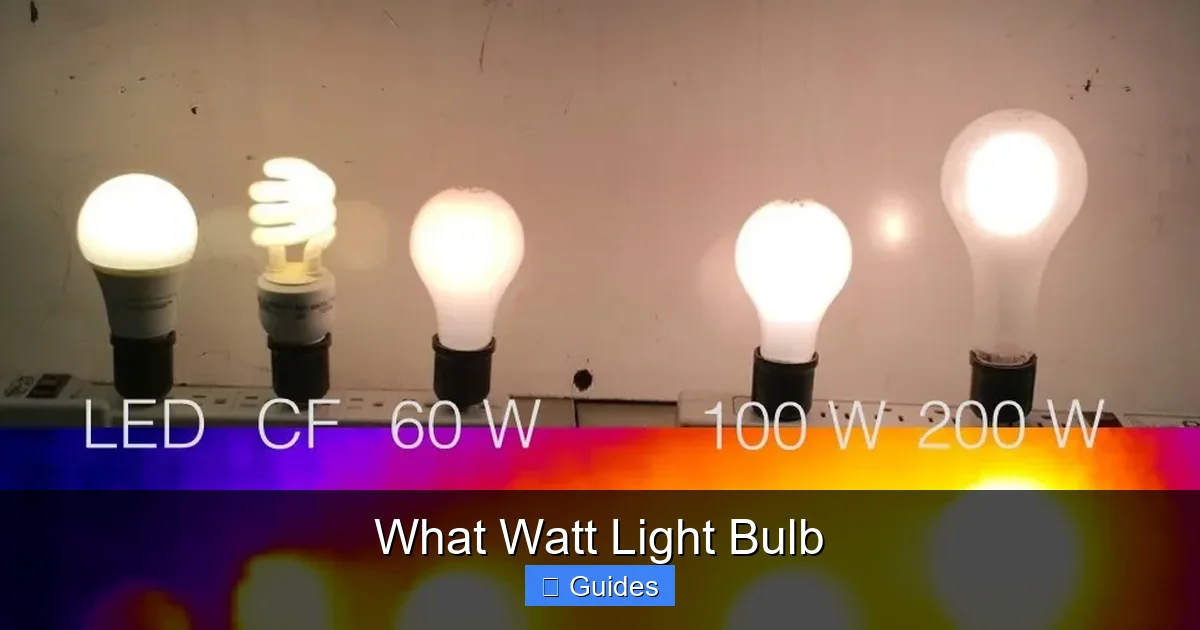
The advent of new lighting technologies, particularly Light Emitting Diodes (LEDs), completely disrupted the old “watts for brightness” rule. LEDs are incredibly efficient, meaning they can produce a lot of light (lumens) while consuming very little electricity (watts).
Visual guide about What Watt Light Bulb
Image source: media.wired.com
Why LEDs Changed Everything
LEDs don’t rely on heating a filament to produce light, like incandescents do. Instead, they use semiconductors to convert electricity directly into light, generating very little heat in the process. This fundamental difference means an LED bulb can produce the same 800 lumens as an old 60-watt incandescent bulb, but only consume about 9-10 watts of power! This is why asking “what watt light bulb” no longer makes sense for brightness.
- Energy Efficiency: LEDs use 75-80% less energy than incandescents.
- Longer Lifespan: LEDs can last 25,000 hours or more, compared to 1,000 hours for incandescents.
- Durability: No fragile filaments, making them more resistant to breakage.
- Cooler Operation: Less heat generated means less strain on air conditioning and less risk of burns.
How to Convert Old Watts to New Lumens (Roughly)
Since we’re all so used to thinking in watts, many LED packaging still includes an “equivalent wattage” to help us bridge the gap. Here’s a quick guide to help you transition from thinking “what watt light bulb” to “how many lumens do I need?”:
- 25-watt incandescent equivalent: Look for 200-300 lumens (LEDs typically use 3-4 watts)
- 40-watt incandescent equivalent: Look for 450-500 lumens (LEDs typically use 5-6 watts)
- 60-watt incandescent equivalent: Look for 800-850 lumens (LEDs typically use 8-10 watts)
- 75-watt incandescent equivalent: Look for 1100-1150 lumens (LEDs typically use 11-13 watts)
- 100-watt incandescent equivalent: Look for 1600-1700 lumens (LEDs typically use 14-16 watts)
This conversion chart is a great starting point when you’re comparing what watt light bulb would have been appropriate in the past versus the lumen output you need today.
Energy Efficiency: The Real Benefit of Lower Watts
The lower wattage of LED bulbs directly translates to significant energy savings on your electricity bill. By switching out older bulbs for energy-efficient LEDs, you can reduce your lighting energy consumption dramatically. For example, replacing just five 60-watt incandescent bulbs with 9-watt LED equivalents can save you substantial money over the lifespan of the LEDs. So, when you consider what watt light bulb to buy, think of the lower watt number as a symbol of smart energy use.
Choosing the Right Brightness (Lumens) for Every Room
Now that you understand that lumens are your go-to for brightness, how do you decide how many lumens are right for each space in your home? It’s not a one-size-fits-all answer. The ideal brightness depends on the room’s function, its size, ceiling height, and even the wall colors.
Kitchens and Task Lighting
Kitchens are activity hubs where precision and visibility are key. You’ll need bright, clear light for cooking, cleaning, and reading recipes.
- General Lighting: 5,000-10,000 total lumens. For example, recessed lighting could be 700-1000 lumens per fixture.
- Under-cabinet/Task Lighting: Additional 300-500 lumens per linear foot for counters.
When selecting what watt light bulb equivalent for your kitchen, prioritize high lumen output combined with good color rendering for safety and accuracy.
Living Rooms and General Illumination
Living rooms are versatile spaces used for relaxing, entertaining, and reading. You’ll want flexible lighting that can adapt to different moods and activities.
- General Lighting: 1,500-3,000 total lumens, often achieved with multiple light sources (overhead, floor lamps, table lamps).
- Accent/Reading Lights: Individual bulbs around 400-800 lumens.
Dimmable LED bulbs are an excellent choice here, allowing you to adjust the ambiance from bright for board games to soft for movie nights. Thinking “what watt light bulb” for a living room should mean considering multiple lower-wattage, dimmable LED options.
Bedrooms and Relaxing Light
Bedrooms typically require softer, more ambient lighting for relaxation and sleep. While you might need some brighter light for dressing or cleaning, the overall tone should be calming.
- General Lighting: 1,000-2,000 total lumens.
- Bedside Lamps: 300-500 lumens per lamp for reading without disturbing others.
Warm color temperatures are often preferred in bedrooms to promote a cozy atmosphere. When you’re considering what watt light bulb for a bedroom, remember that a low wattage LED can still provide ample lumens for comfort without being overly bright.
Bathrooms and Vanity Lighting
Bathrooms need bright, even lighting, especially around the mirror, for tasks like shaving, applying makeup, and grooming. Avoid harsh shadows.
- General Lighting: 2,000-4,000 total lumens.
- Vanity Lighting: 1,000-1,500 lumens specifically for the mirror area (e.g., two 500-750 lumen bulbs).
Look for bulbs with a good Color Rendering Index (CRI) to ensure colors appear true, which is essential for makeup application. Your choice of what watt light bulb equivalent here should focus on high lumens for clear visibility.
Hallways and Accent Lighting
Hallways, entryways, and accent lighting typically don’t require high lumen outputs. They often serve to provide safe passage or highlight architectural features.
- Hallways/Entryways: 800-1,200 total lumens, depending on length.
- Accent Lights (e.g., for artwork): 200-500 lumens, focused.
For these areas, low-wattage LEDs are perfect, providing enough light without being overpowering. The focus is less on “what watt light bulb” and more on subtle illumination.
Beyond Lumens: Other Factors to Consider for the Perfect Light
While lumens are crucial for brightness, there’s more to great lighting than just intensity. Other factors play a significant role in how a room looks and feels.
Color Temperature (Kelvin): Warm, Cool, or Daylight?
Color temperature, measured in Kelvin (K), describes the hue of the light.
- Warm White (2700K-3000K): Mimics incandescent bulbs, with a yellowish glow. Ideal for creating cozy, relaxing environments like bedrooms and living rooms.
- Cool White (3500K-4100K): A more neutral, crisp white. Good for kitchens, bathrooms, and offices where task lighting is needed.
- Daylight (5000K-6500K): Emulates natural daylight, with a bluish-white appearance. Best for workshops, garages, or areas where very bright, energizing light is desired.
Choosing the right color temperature is just as important as deciding what watt light bulb equivalent you need for brightness.
Color Rendering Index (CRI): Seeing True Colors
CRI measures how accurately a light source reveals the true colors of objects compared to natural sunlight. A CRI of 100 is ideal, like natural daylight.
- CRI 80+: Good for general household use.
- CRI 90+: Excellent for kitchens, bathrooms, and areas where color accuracy is important (e.g., art studios, makeup areas).
High CRI bulbs make everything look more vibrant and true-to-life. Don’t overlook this when you’re deciding what watt light bulb you want to buy, especially for critical areas.
Dimmability: Control Your Ambiance
Not all LED bulbs are dimmable, and not all dimmers work with LEDs. If you want to adjust the brightness, ensure both your LED bulb and your dimmer switch are compatible with LED dimming. Using a non-dimmable bulb on a dimmer, or the wrong dimmer, can lead to flickering, buzzing, or premature bulb failure.
Smart Features: The Future of Lighting
Many modern LED bulbs now come with smart features. These bulbs can be controlled via an app on your phone, voice commands (with smart assistants), and often allow you to change color temperature, color, and brightness. While not directly related to what watt light bulb you choose for fundamental brightness, these features add incredible versatility and convenience to your lighting setup.
Installation and Safety Tips for Your New Bulbs
Once you’ve picked the perfect what watt light bulb equivalent based on lumens and other factors, a few practical considerations ensure safe and effective use.
Checking Socket Compatibility
Most household light fixtures use standard Edison screw bases (E26 in North America, E27 in Europe/Asia, E12 candelabra, etc.). Always check that the base of your new bulb matches your fixture. While most LEDs come in standard sizes, specialty fixtures might require specific bases.
Understanding Enclosed Fixtures
Some recessed lighting or fully enclosed fixtures can trap heat. While LEDs produce less heat than incandescents, prolonged exposure to high temperatures can still shorten their lifespan. Look for LED bulbs specifically labeled “suitable for enclosed fixtures” or “wet rated” if applicable.
Proper Disposal
Unlike old CFLs, most LED bulbs do not contain mercury and can be safely disposed of with regular household waste. However, some municipalities or manufacturers offer recycling programs, which are always a good option to minimize environmental impact.
Conclusion
The days of simply picking a 60-watt bulb and knowing what to expect are long gone. The question “what watt light bulb” has evolved, shifting our focus from power consumption to actual light output. By embracing lumens as your primary guide for brightness, understanding color temperature, and considering other features like CRI and dimmability, you’re now equipped to make informed decisions that enhance your home’s aesthetics and energy efficiency.
LED technology has brought us into an era of unprecedented control and efficiency in lighting. So, the next time you’re in the lighting aisle, remember: it’s not about the watts for brightness anymore. It’s about how many lumens you need to perfectly illuminate your life. Go forth and light up your world, brilliantly and efficiently!
Frequently Asked Questions
What is the difference between watts and lumens?
Watts measure the amount of electrical power a light bulb consumes to operate, essentially its energy usage. Lumens, on the other hand, measure the actual amount of visible light emitted by the bulb, indicating its brightness. With modern LEDs, a low-watt bulb can produce a high number of lumens.
Why do LED bulbs have such low wattage compared to old incandescent bulbs?
LED bulbs use a completely different technology to produce light compared to incandescents. Incandescents generate light by heating a filament, which is inefficient as much energy is lost as heat. LEDs convert electricity directly into light, making them far more energy-efficient and allowing them to produce the same brightness with significantly fewer watts.
How do I know what lumen output I need for a specific room?
The ideal lumen output depends on the room’s size, ceiling height, and primary function. For example, kitchens and bathrooms generally require more lumens (2,000-4,000 total) for task lighting, while bedrooms and living rooms might need less (1,000-3,000 total) for a more ambient feel. It’s often helpful to multiply the room’s square footage by a general lumen-per-square-foot guideline.
What is Color Rendering Index (CRI) and why is it important?
CRI measures how accurately a light source reveals the true colors of objects compared to natural daylight. A higher CRI (closer to 100) means colors will appear more vibrant and true-to-life under that light. It’s important for areas like kitchens, bathrooms, or art spaces where color accuracy is crucial.
Can I use dimmable LED bulbs with my old dimmer switch?
Not necessarily. While many LED bulbs are dimmable, they require specific LED-compatible dimmer switches to function correctly without flickering, buzzing, or premature failure. Always check that both your bulb and your dimmer are rated for LED dimming to ensure proper operation.
Are “daylight” bulbs always the best choice?
“Daylight” bulbs (typically 5000K-6500K) provide a bright, bluish-white light that mimics natural daylight, which can be energizing and great for task-oriented areas like workshops or offices. However, they can feel harsh and less cozy in living rooms or bedrooms. The best choice depends on the desired ambiance and function of the space.
