


As an Amazon Associate, We earn from qualifying purchases.
The question of who invented the light bulb first is more complex than commonly believed. While Thomas Edison is credited with inventing the first commercially viable, long-lasting incandescent light bulb system, numerous scientists and inventors contributed vital discoveries and improvements over several decades. It was a collaborative evolution, not a single eureka moment by one individual.
Who Invented the Light Bulb First
Imagine a world without electric light. A world where darkness truly reigned after sunset, where productivity stopped, and daily life was dictated by the sun’s rhythm or the flicker of candles and gas lamps. It’s almost impossible for us to picture, isn’t it? The incandescent light bulb, though now largely replaced by more efficient technologies like LEDs, was a revolutionary invention that utterly transformed human civilization. It extended our days, boosted industry, and profoundly shaped modern life.
But if you ask most people, “Who invented the light bulb first?”, you’ll likely get one answer: Thomas Edison. While Edison certainly played a monumental role in making electric light a practical reality for homes and businesses, the truth is far more nuanced and fascinating than a simple one-person story. The invention of the light bulb, much like many great technological leaps, was a long, collaborative journey involving numerous brilliant minds across different continents and decades.
So, let’s turn on the lights, figuratively speaking, and illuminate the true history behind one of humanity’s most important inventions. We’re going to dive deep into the fascinating saga of electric light, exploring the many inventors who contributed to its development and understanding why Edison’s contribution became so iconic. Prepare to have your understanding of this household staple – and the nature of invention itself – fundamentally reshaped.
Key Takeaways
- No Single Inventor: The light bulb was not invented by one person but was the result of decades of cumulative research and improvements by many scientists and inventors.
- Early Pioneers Paved the Way: Scientists like Humphry Davy and Joseph Swan made significant breakthroughs in creating electric light long before Edison, demonstrating early incandescent lamps.
- Edison’s Key Contribution: Thomas Edison’s genius lay in developing a *practical, long-lasting, and commercially viable* incandescent light bulb system, including a high-resistance filament and a vacuum-sealed bulb, alongside a complete electrical distribution network.
- Joseph Swan’s Parallel Development: Joseph Swan independently developed a long-lasting incandescent light bulb around the same time as Edison, leading to patent disputes and eventual collaboration.
- A System, Not Just a Bulb: Edison’s success stemmed from creating an entire electrical lighting system, encompassing generators, wiring, and suitable bulbs, making electric light accessible to the masses.
- Continuous Evolution: The light bulb continued to evolve significantly after Edison and Swan, with later innovations like the tungsten filament greatly improving efficiency and lifespan.
Quick Answers to Common Questions
Who is often mistakenly credited as the sole inventor of the light bulb?
Thomas Edison is often mistakenly credited as the sole inventor of the light bulb due to his successful commercialization and development of a complete electrical lighting system.
What was Humphry Davy’s contribution to electric light?
Humphry Davy invented the “electric arc lamp” in 1802, which was the first practical demonstration of electric light, though it was too bright and impractical for everyday use.
What was unique about Edison’s approach to the light bulb?
Edison’s unique approach was to develop not just a bulb, but an entire practical and commercially viable electrical lighting *system*, including generators, wiring, and a long-lasting, high-resistance bulb.
Did Joseph Swan invent a light bulb similar to Edison’s?
Yes, Joseph Swan independently developed a long-lasting incandescent light bulb with a carbonized cotton thread filament in England around the same time as Edison, leading to their eventual collaboration.
What was the key material that greatly improved light bulb efficiency after Edison?
The key material that greatly improved light bulb efficiency and lifespan after Edison was the tungsten filament, which replaced carbon and allowed for brighter, whiter light.
📑 Table of Contents
The Incandescent Dream: Early Sparks of Innovation
The idea of producing light from electricity wasn’t new when Edison entered the scene in the late 1870s. Scientists had been experimenting with electric light for decades, driven by the desire to create a brighter, safer, and more convenient alternative to existing lighting methods. The fundamental principle of an incandescent light bulb – where an electric current heats a filament until it glows – was understood long before a practical device was developed.
Humphry Davy and the Electric Arc Lamp
Our story really begins in the early 19th century. In 1802, British chemist Humphry Davy invented the “electric arc lamp.” He demonstrated that by connecting two charcoal electrodes to a battery and bringing them close together, an intense light arc would form. This was the first practical demonstration of electric light, and while it was incredibly bright and revolutionary for its time, it had major drawbacks. Arc lamps were too bright for indoor use, required constant adjustment of the electrodes, and consumed enormous amounts of power. They were more suited for large public spaces or lighthouses, not for lighting homes.
Early Filaments and Vacuum Experiments
After Davy, many other inventors tinkered with the concept of incandescence. The challenge was finding a material that would glow brightly without burning out quickly, and creating an environment where it could do so efficiently.
* Joseph Wilson Swan (1860): In 1860, British physicist Joseph Swan experimented with carbonized paper filaments in a vacuum-sealed glass bulb. He achieved a brief glow, but the vacuum pumps of the era weren’t powerful enough, and the filaments didn’t last long. Still, his work was a significant step towards a truly functional incandescent bulb.
* Heinrich Goebel (1850s): German immigrant Heinrich Goebel claimed to have developed long-lasting incandescent light bulbs using carbonized bamboo filaments inside evacuated bottles as early as the 1850s. While he displayed his lamps and even used them to light his New York store, his claims were largely overlooked and his work was not widely publicized or commercialized at the time, leading to later legal disputes.
* William Sawyer and Albon Man (1870s): In the United States, William Sawyer and Albon Man developed an incandescent lamp with a nitrogen-filled glass bulb and a carbon rod filament, patenting their design in 1878. They were also close to a practical solution, highlighting the simultaneous efforts happening globally.
These early efforts demonstrated the *possibility* of electric light but consistently faced hurdles: short filament lifespan, inefficient power consumption, and the inability to create a strong enough vacuum within the glass bulb. The race for a practical, affordable, and durable light bulb was well and truly on.
Joseph Swan: Edison’s Often-Forgotten Rival
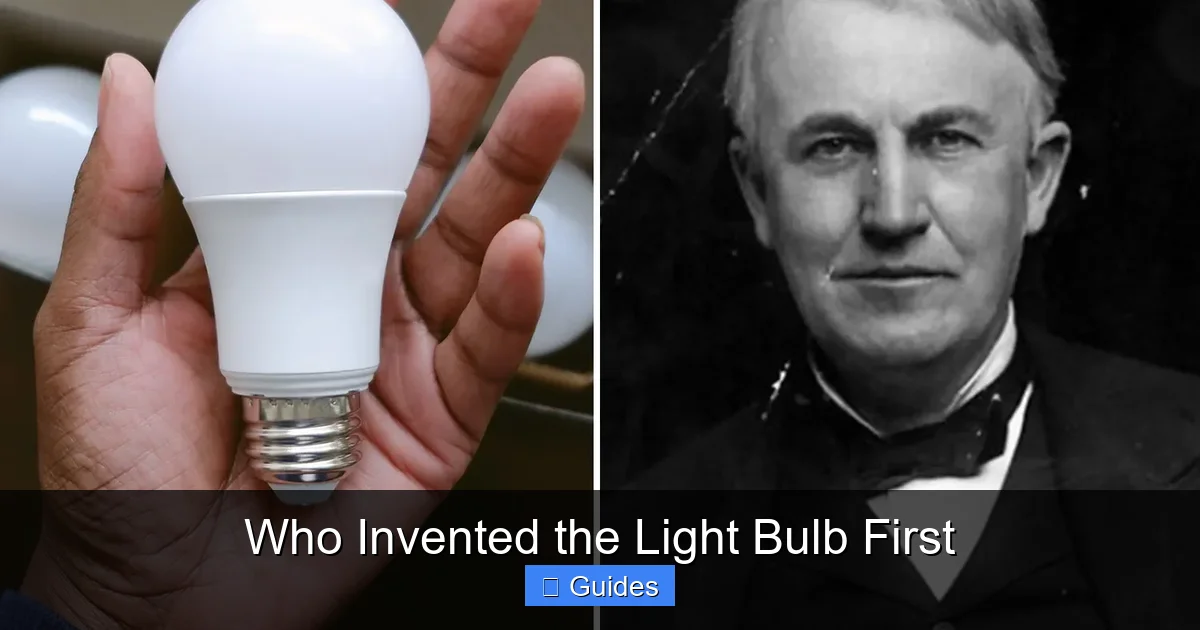
Visual guide about Who Invented the Light Bulb First
Image source: the-sun.com
As we discuss who invented the light bulb first, it’s crucial to give Joseph Swan his due. His contributions are often overshadowed by Edison’s fame, especially in American narratives, but his work was groundbreaking and incredibly close to what we recognize as a modern incandescent bulb.
Swan’s Breakthrough in England
Joseph Swan, a brilliant British physicist and chemist, had been working on incandescent lighting for decades. Building on his earlier attempts, by the late 1870s, he made significant advancements. Crucially, improvements in vacuum pump technology allowed him to create a much better vacuum inside his glass bulbs. In 1878, Swan publicly demonstrated a carbon filament lamp that could glow for a significant amount of time. His filament was made from a carbonized cotton thread, which was similar to Edison’s later breakthrough.
Swan’s demonstrations in England, including lighting up his own home and public buildings, predated Edison’s most famous public display. His lamp was effective, and he received a British patent for it. He even established the first successful commercial company for incandescent lighting in Britain, the Swan Electric Light Company.
Patent Battles and Collaboration
Naturally, with two brilliant inventors working on similar problems around the same time, patent disputes arose. Edison patented his improved light bulb in the U.S. in 1879, while Swan held a strong patent in Britain. The conflict was resolved when the two inventors, recognizing the validity of each other’s work and the benefits of collaboration, decided to merge their British companies in 1883, forming the Edison & Swan United Electric Light Company, commonly known as “Ediswan.” This partnership effectively combined their strengths and allowed them to dominate the British market. This outcome perfectly illustrates that the invention of the light bulb was a story of concurrent discovery and shared progress.
Thomas Edison: The Architect of Practical Illumination
When people ask, “who invented the light bulb first?”, Thomas Edison’s name inevitably comes up, and for good reason. While not the *first* to make a bulb glow, Edison’s genius wasn’t just in inventing a better bulb; it was in inventing a *system* that made electric light practical, affordable, and accessible for everyone. He wasn’t just building a device; he was building an industry.
The “Invention Factory” at Menlo Park
Edison’s laboratory in Menlo Park, New Jersey, was famously dubbed an “invention factory.” Here, he and his team of researchers and engineers adopted a systematic approach to invention, conducting thousands of experiments, meticulously documenting their findings, and pursuing solutions with relentless determination. Edison understood that for electric light to truly revolutionize society, it needed more than just a glowing bulb. It required an entire infrastructure: reliable generators, efficient wiring, durable switches, and a bulb that was long-lasting and easy to manufacture.
The Quest for the Perfect Filament
Edison’s team famously experimented with over 6,000 different materials for the filament. They tried everything from platinum to human hair. His key insight was that a filament with *high resistance* was crucial. A high-resistance filament would allow a smaller current to produce a lot of light, which meant thinner, cheaper copper wires could be used for distribution, making the whole system more economical.
His breakthrough came in late 1879. After testing carbonized cotton sewing thread (similar to Swan’s earlier work), Edison’s team found that a carbonized bamboo fiber filament could burn for over 1,200 hours. This was an unprecedented lifespan for an incandescent bulb and a game-changer. Coupled with an improved vacuum pump to remove air from the bulb (preventing the filament from oxidizing and burning out), Edison had a practical, durable, and relatively inexpensive light bulb.
More Than Just the Bulb: The Edison System
Edison’s true genius and why he is so strongly associated with the light bulb was his vision for an entire electric lighting *system*. He didn’t just invent a bulb; he invented:
* A high-resistance bulb: Allowing for parallel circuits, meaning if one bulb burned out, the others would stay lit (unlike series circuits).
* Improved vacuum technology: Crucial for extending filament life.
* A practical and reliable generator: To produce electricity on a large scale.
* A distribution network: Wires, fuses, meters, and switches to get electricity to homes and businesses.
* Standardized sockets: Making bulbs easy to install and replace.
On December 31, 1879, Edison gave a public demonstration of his incandescent lighting system at Menlo Park, dazzling thousands of visitors. This was followed by the establishment of the Edison Electric Light Company and the world’s first central power station in New York City in 1882, providing electricity to customers in Manhattan. This comprehensive approach is why Edison is often credited with “inventing” the light bulb – he was the one who made it work *for the world*.
A Global Effort: Beyond Edison and Swan
The story of who invented the light bulb first isn’t limited to just Edison and Swan, although they are arguably the most prominent figures. Many other brilliant minds made significant contributions, often working independently and simultaneously across the globe.
Other Notable Contributors and Patent Challenges
* **Hiram Maxim:** An American inventor, perhaps best known for inventing the machine gun, also developed and patented incandescent light bulbs in the 1870s. He founded the U.S. Electric Lighting Company, a competitor to Edison’s firm.
* **Charles F. Brush:** Another American inventor, who developed an improved arc lamp and also dabbled in incandescent lighting, but his primary focus remained on arc lights.
* **Alessandro Cruto:** An Italian inventor who patented an improved incandescent lamp with a carbon filament in 1880, also achieving long burning times. His lamp was used to illuminate several Italian cities.
The sheer number of inventors working on similar problems around the same time highlights a common theme in technological innovation: when the scientific and technological foundations are in place, multiple individuals often arrive at similar conclusions independently. This led to numerous patent disputes throughout the late 19th century, with companies battling in courts to establish priority and rights to the lucrative electric light market. In many cases, these disputes were settled through mergers, cross-licensing agreements, or simply by the market deciding which technology was superior.
The Light Bulb’s Continuous Evolution
The “invention” of the light bulb didn’t stop with Edison’s bamboo filament or Swan’s cotton thread. The technology continued to evolve dramatically, leading to more efficient, brighter, and longer-lasting bulbs.
From Carbon to Tungsten
The carbon filament bulb, while revolutionary, still had its limitations. It produced a yellowish light and was relatively inefficient. The next major leap came with the introduction of the tungsten filament.
* Osmium and Tantalum Filaments (early 1900s): Before tungsten, some inventors experimented with metals like osmium and tantalum for filaments, which offered improvements over carbon.
* Tungsten’s Triumph (1900s): Tungsten proved to be the ideal material. It has the highest melting point of all metals, allowing it to glow much brighter and whiter than carbon without melting. The first commercially successful tungsten filament bulb was patented by Hungarian inventors Sándor Just and Franjo Hanaman in 1904. General Electric, recognizing its superiority, eventually acquired the rights and perfected its manufacturing.
* Gas-Filled Bulbs: Early incandescent bulbs had a vacuum to prevent the filament from oxidizing. However, it was discovered that filling the bulb with an inert gas like argon or nitrogen (at low pressure) could further reduce filament evaporation, allowing it to burn hotter and brighter without quickly degrading. This innovation, pioneered by Irving Langmuir at General Electric in 1913, significantly improved the efficiency and lifespan of tungsten filament bulbs.
These advancements meant that the light bulb, which started as a flickering novelty, evolved into the ubiquitous, powerful, and reliable source of illumination that served the world for over a century.
Beyond Incandescence: A Glimpse into the Future
While this article focuses on the incandescent bulb, it’s worth noting that electric lighting continues its evolution. Fluorescent lamps, halogen lamps, and more recently, Light Emitting Diodes (LEDs), have each offered new levels of efficiency and performance. Today, LEDs are rapidly replacing incandescent bulbs due to their incredible energy efficiency and very long lifespan, marking another chapter in the ongoing story of electric light.
Conclusion: The Collective Genius Behind the Glow
So, who invented the light bulb first? The answer, as we’ve seen, is not a simple name. It’s a story of collective human endeavor, persistent experimentation, and incremental improvements built upon the work of many. No single person can claim sole credit for inventing the light bulb.
What we often credit Thomas Edison for is not merely the light bulb itself, but the invention of the *entire system* that brought electric light out of the laboratory and into our homes and streets. He took existing scientific principles and prototypes, applied immense resources and ingenuity, and engineered a practical, affordable, and robust solution. Joseph Swan, among others, deserves immense recognition for his parallel and equally significant contributions.
The light bulb stands as a powerful testament to how innovation truly happens: it’s rarely a sudden spark of genius from one isolated individual. Instead, it’s a gradual, often messy, and wonderfully collaborative process, where each inventor builds upon the knowledge and discoveries of those who came before them. The next time you flip a switch and your room is bathed in light, remember the countless minds that contributed to that simple, yet profound, act of illumination.
Frequently Asked Questions
Was Thomas Edison the first person to create electric light?
No, Thomas Edison was not the first person to create electric light. Earlier inventors like Humphry Davy demonstrated electric arc lamps decades before Edison, and others like Joseph Swan were developing incandescent bulbs concurrently.
What made Edison’s light bulb invention so significant?
Edison’s invention was significant because he developed the first *commercially practical, long-lasting, and affordable* incandescent light bulb. Crucially, he also created an entire system for generating and distributing electricity to power these bulbs, making electric light accessible to the public.
Who was Joseph Swan, and what was his role in the light bulb’s invention?
Joseph Swan was a British physicist and chemist who independently developed a functional incandescent light bulb using a carbonized filament in an evacuated glass bulb around the same time as Edison. His work was highly influential, especially in the UK, leading to a merger with Edison’s company there.
Were there any patent disputes over the light bulb?
Yes, there were numerous patent disputes, particularly between Edison and Swan, as well as with other inventors like William Sawyer and Albon Man, and Heinrich Goebel. These disputes highlighted the concurrent development of similar technologies by different inventors.
How long did Edison’s initial practical light bulb last?
Edison’s initial practical light bulb, which used a carbonized bamboo filament, was capable of burning for over 1,200 hours. This was an unprecedented lifespan compared to earlier designs and was a critical factor in its commercial success.
What material eventually replaced carbon as the filament in incandescent bulbs?
Tungsten eventually replaced carbon as the filament material in incandescent bulbs. Tungsten has a much higher melting point, allowing bulbs to glow brighter and more efficiently, significantly improving their performance and lifespan.
