


As an Amazon Associate, We earn from qualifying purchases.
Understanding how long a light bulb lasts depends heavily on its type, with modern LEDs offering significantly longer lifespans than traditional incandescents. While factors like voltage and heat can impact longevity, choosing the right bulb and following simple usage tips can dramatically extend your light bulb’s life, saving you time and money on replacements. It’s not just about the hours, but also about the quality and environment.
Ah, the humble light bulb! It’s one of those everyday items we often take for granted until it suddenly plunges us into darkness. One moment you’re reading a book, the next you’re fumbling for your phone’s flashlight. In that moment, a common question pops into mind: “How long does a light bulb last, anyway?”
It’s a fantastic question, and one without a simple, one-size-fits-all answer. The truth is, the lifespan of a light bulb has changed dramatically over the years, evolving alongside technology. What might have been true for your grandmother’s incandescent bulbs is vastly different from the high-tech LED shining in your living room today. Understanding these differences isn’t just about curiosity; it’s about making smarter choices for your home, your wallet, and even the environment.
In this guide, we’re going to pull back the curtain on light bulb longevity. We’ll explore the different types of bulbs, what those mysterious “hours” ratings actually mean, and perhaps most importantly, what you can do to ensure your light bulbs stay bright for as long as possible. So, grab a cup of coffee, and let’s shed some light on this illuminating topic!
Key Takeaways
- Bulb Type Matters Most: Incandescent bulbs last around 750-1,000 hours, CFLs about 8,000-10,000 hours, and LEDs are the champions, typically lasting 15,000 to 50,000 hours or even more.
- Lifespan Ratings Are Averages: The hours stated on packaging represent an estimated average under ideal conditions, meaning some bulbs will last longer and some shorter.
- External Factors Play a Role: Voltage fluctuations, excessive heat, frequent on/off cycling, and physical vibrations can significantly shorten the lifespan of any light bulb.
- Dimmer Switch Compatibility is Crucial: Using non-dimmable bulbs on a dimmer or incompatible dimmers can lead to premature failure, flickering, or even safety hazards.
- Quality Pays Off: Higher quality bulbs from reputable brands often have better components and manufacturing, leading to a lifespan closer to their advertised rating.
- Simple Habits Extend Life: Ensuring proper airflow, avoiding over-tightening, and cleaning bulbs can help maximize their operational life.
Quick Answers to Common Questions
Which type of light bulb lasts the longest?
LED (Light Emitting Diode) bulbs last the longest, typically ranging from 15,000 to 50,000 hours, significantly outperforming incandescent, halogen, and CFL bulbs.
Does turning lights on and off frequently shorten their lifespan?
Yes, frequent on/off cycling significantly shortens the lifespan of CFL (Compact Fluorescent Lamp) bulbs. Incandescent and halogen bulbs are less affected, and LED bulbs are generally very resilient to frequent switching.
Can an enclosed light fixture reduce a bulb’s life?
Yes, enclosed fixtures can trap heat, which is detrimental to the lifespan of most bulbs, especially CFLs and LEDs, as it can overheat their internal electronics. Always use bulbs rated for enclosed fixtures.
What is “L70” when referring to LED lifespan?
“L70” is a common LED lifespan metric indicating the number of operating hours after which the bulb’s light output has depreciated to 70% of its initial brightness. It signifies the end of its useful life, rather than complete failure.
Is it worth replacing a working incandescent bulb with an LED just for longevity?
Absolutely. While an incandescent might still be working, replacing it with an LED will drastically reduce energy consumption (saving money on electricity) and extend the time until the next replacement by many years, making it a worthwhile upgrade.
📑 Table of Contents
A Journey Through Light Bulb Lifespans: From Old to New
The history of artificial lighting is a fascinating tale of innovation, and nowhere is that more evident than in the ever-increasing lifespan of our light bulbs. Let’s take a stroll down memory lane and see how long a light bulb lasts depending on its type.
The Incandescent Era: Warm Glow, Short Life
For over a century, the incandescent light bulb was the undisputed king of illumination. Think of Edison’s original invention, and you’re picturing an incandescent. These bulbs work by heating a thin tungsten filament until it glows white-hot. They provide a warm, inviting light, which many still prefer today.
However, their simplicity came with a significant drawback: efficiency and longevity. A huge portion of the energy incandescents consume is released as heat, not light. This inefficiency also limits how long a light bulb lasts. Typically, an incandescent bulb will last anywhere from 750 to 1,000 hours. If you use a light for about 3 hours a day, that means replacing it roughly every 9 to 12 months. Not terrible, but certainly not ideal for hard-to-reach fixtures.
Halogen’s Brief Moment: Brighter, Slightly Longer
Halogen bulbs are essentially an improved version of the incandescent. They also use a tungsten filament, but it’s encased in a compact capsule filled with halogen gas. This gas allows the filament to burn at a higher temperature, producing a brighter, whiter light while preventing the tungsten from evaporating as quickly. This clever design helps the filament last longer.
So, how long does a light bulb last if it’s a halogen? You can generally expect a halogen bulb to last between 1,500 and 2,000 hours. This is about double the lifespan of a traditional incandescent, which was a decent improvement. However, they still generate a lot of heat and are far less efficient than newer technologies.
CFLs Arrive: Energy-Saving, But with Quirks
The compact fluorescent lamp (CFL) marked a significant shift in lighting technology. These bulbs use a tube filled with gas that produces ultraviolet (UV) light when electricity passes through it. A phosphor coating on the inside of the tube converts this UV light into visible light. CFLs became popular for their energy efficiency compared to incandescents.
In terms of lifespan, CFLs offered a considerable leap forward. You could expect a CFL to last anywhere from 8,000 to 10,000 hours. This meant far fewer replacements – potentially years of use from a single bulb! However, CFLs had their quirks: they often took a moment to warm up to full brightness, some people disliked their cooler light color, and they contained a small amount of mercury, requiring special disposal.
LEDs Dominate: The Longevity Champions
Light Emitting Diodes, or LEDs, are the current reigning champions of lighting technology, and for very good reason. They are incredibly energy-efficient, producing very little heat and converting almost all their energy into light. Plus, they offer a vast array of light colors and designs.
When it comes to the question of “how long does a light bulb last,” LEDs truly stand out. A typical LED bulb can last anywhere from 15,000 to 50,000 hours. Some premium LED products even boast lifespans of 75,000 to 100,000 hours! To put that in perspective, a 25,000-hour LED used 3 hours a day would last over 22 years. This phenomenal longevity is a game-changer for homes and businesses alike, drastically reducing maintenance and replacement costs.
Decoding the Lifespan Rating: What Do Those Numbers Mean?
You’ve seen the numbers on the packaging: 1,000 hours, 10,000 hours, 25,000 hours. But what do these figures truly represent? Are they a guarantee? Let’s peel back the layers of light bulb lifespan ratings.
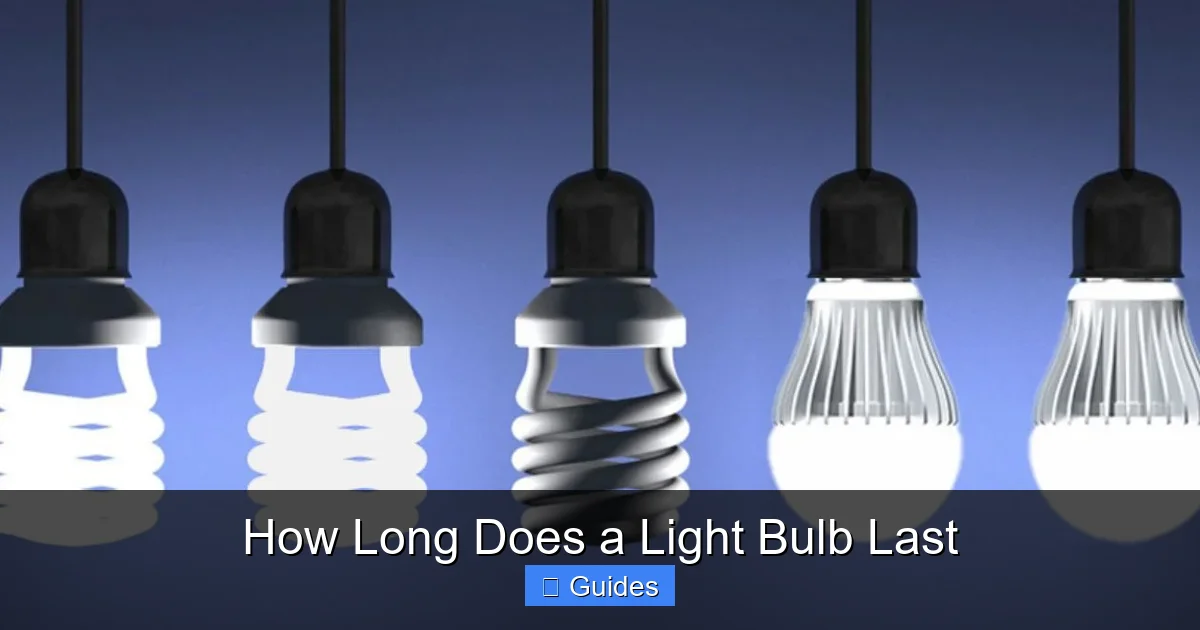
Visual guide about How Long Does a Light Bulb Last
Image source: storables.com
Understanding L70 and L50 (for LEDs)
For traditional bulbs, the lifespan rating was often when about 50% of the bulbs in a test batch had failed. For LEDs, the rating system is a bit more sophisticated because they rarely “burn out” in the same way. Instead, their light output gradually diminishes over time – a process called lumen depreciation.
- L70: This is a common metric, especially for LEDs. It indicates the number of operating hours after which the light output from the bulb has depreciated to 70% of its initial lumen output. Most people consider an LED to be at the end of its useful life when it reaches L70 because the dimming becomes noticeable.
- L50: Less common now, L50 indicates when the light output has fallen to 50% of its initial output. By this point, the bulb is noticeably dimmer and likely needs replacement.
So, when you see an LED rated for 25,000 hours (L70), it means that after 25,000 hours, it will still be producing 70% of its original brightness. It won’t suddenly stop working.
Hours of Operation vs. Cycles
The lifespan rating typically refers to continuous operating hours. However, the number of times a bulb is switched on and off (known as “switching cycles”) can also impact how long a light bulb lasts, particularly for certain types.
- Incandescent and Halogen: These are fairly robust to frequent switching. The main wear comes from the filament heating and cooling, which can eventually lead to breakage, but it’s less of a primary failure mode compared to sheer hours.
- CFLs: Frequent on/off cycling is a notorious lifespan killer for CFLs. Each switch-on places stress on the ballast and internal components. If you have a light that’s turned on and off many times a day (like in a bathroom or closet), a CFL’s lifespan could be significantly reduced from its rated hours.
- LEDs: LEDs are generally very resistant to frequent switching. In fact, it often has little to no impact on their overall lifespan, making them ideal for high-traffic areas or smart lighting systems where lights are frequently toggled.
The “Average” Lifespan Caveat
It’s crucial to remember that lifespan ratings are *averages* derived from testing under controlled conditions. This means:
- Some bulbs will fail before the rated hours.
- Many bulbs will exceed the rated hours.
- Your specific usage and environment can significantly alter how long a light bulb lasts in your home.
Think of it like the MPG rating on a car – it’s an estimate, and your actual mileage may vary based on your driving habits and road conditions.
Beyond the Bulb Type: Other Factors That Shorten or Extend Life
While the type of light bulb (incandescent, CFL, LED) is the primary determinant of its inherent lifespan, it’s not the only factor. Many environmental and usage conditions can dramatically impact how long a light bulb lasts. Ignoring these can turn a 25,000-hour LED into a 5,000-hour disappointment.
Voltage Fluctuations: The Silent Killer
Light bulbs are designed to operate within a specific voltage range (e.g., 120V in North America). If the voltage supplied to your home or a specific fixture frequently spikes above or dips below this range, it can put undue stress on the bulb’s components.
- High Voltage: Over-voltage is particularly damaging. It causes filaments to burn hotter (for incandescents/halogens) or internal drivers to overheat (for CFLs/LEDs), leading to premature failure. Even a slight increase (e.g., 5% above nominal) can cut a bulb’s lifespan in half.
- Low Voltage: While less damaging than high voltage, consistently low voltage can cause bulbs to operate inefficiently, sometimes leading to flicker or a duller light, and can still stress components over time.
If you experience frequent power surges or brownouts, consider investing in surge protectors for sensitive electronics, and consult an electrician to check your home’s wiring and voltage supply.
Heat and Enclosed Fixtures: A Hot Topic
Heat is the enemy of almost all electronics, and light bulbs are no exception – especially LEDs and CFLs, which rely on internal electronic drivers. Incandescent and halogen bulbs are designed to produce a lot of heat, but even for them, excessive external heat can accelerate wear.
- Enclosed Fixtures: Many modern light fixtures are “enclosed,” meaning they don’t allow for much airflow around the bulb. If you place a bulb that generates a lot of heat (like an incandescent) or one with sensitive electronics (like an LED or CFL) in an enclosed fixture, that heat gets trapped. This trapped heat causes the internal components to operate at higher temperatures than designed, significantly shortening how long a light bulb lasts.
- Solution: Always check the bulb and fixture’s ratings. Many LED bulbs are specifically labeled “for enclosed fixtures” or “damp rated” if they are designed to handle these conditions. Otherwise, opt for an open fixture or a bulb with a lower heat output.
Frequent On/Off Cycling: Especially for Some Bulbs
As discussed earlier, turning lights on and off repeatedly can affect certain bulb types more than others. While LEDs are largely immune, CFLs are particularly vulnerable. Each ignition cycle stresses the internal ballast and can degrade the electrodes, reducing how long a light bulb lasts far below its rated hours.
For areas where lights are frequently switched (e.g., closets, hallways with motion sensors), consider using LEDs exclusively. They handle rapid cycling with grace.
Dimmer Switch Compatibility: A Common Misstep
Using the wrong bulb with a dimmer switch is a very common reason for premature bulb failure, flickering, buzzing, and even safety issues. Not all bulbs are dimmable, and even among dimmable bulbs, not all dimmers are compatible.
- Non-Dimmable Bulbs on Dimmers: If you put a non-dimmable LED or CFL on a dimmer switch, it will likely flicker, buzz, or simply fail very quickly. It can also damage the bulb’s driver and potentially the dimmer switch itself.
- Incompatible Dimmers: Older dimmers designed for incandescent bulbs may not work well with modern LED or CFL bulbs, even if they are labeled “dimmable.” LEDs require specific “LED-compatible” or “universal” dimmers that are designed to handle their lower wattage and specific electrical characteristics.
Always check the bulb’s packaging for dimmability, and ensure your dimmer switch is compatible with the type of bulb you’re using. This is crucial for maximizing how long a light bulb lasts and ensuring optimal performance.
Physical Vibration and Shock: Handle with Care
While modern bulbs are more robust than Edison’s fragile originals, physical stress can still reduce how long a light bulb lasts. Bulbs in ceiling fan fixtures, garage door openers, or industrial settings with machinery can experience significant vibration.
- Incandescent and Halogen: Their delicate filaments are most susceptible to vibration, which can cause them to break.
- CFLs and LEDs: While more durable, severe or prolonged vibration can loosen internal connections or damage components within their electronic drivers.
For high-vibration environments, look for “rough service” bulbs or specifically designed LED bulbs that are built to withstand more physical stress.
Practical Tips to Make Your Light Bulbs Last Longer
Now that you understand what influences light bulb longevity, let’s put that knowledge into action! Here are some practical, easy-to-implement tips to help you get the most out of your light bulbs and extend their lifespan.
1. Choose the Right Bulb for the Fixture
This is perhaps the most critical tip. Always pay attention to the fixture’s maximum wattage rating and whether it’s enclosed or open. If a fixture says “Max 60W,” don’t put a 100W equivalent incandescent in it. For enclosed fixtures, use only bulbs specifically rated for enclosed use, especially LEDs. Trapping heat is a quick way to reduce how long a light bulb lasts.
2. Ensure Proper Voltage
While you can’t control the grid, you can ensure your home’s wiring isn’t contributing to voltage issues. If you suspect frequent surges or dips, or if bulbs in one specific fixture burn out unusually fast, consider having an electrician check your wiring. Using surge protectors can also help protect valuable electronics, although direct bulb protection is less common.
3. Avoid Over-Tightening
When screwing in a light bulb, tighten it until it’s snug, but don’t over-tighten. Over-tightening can damage the bulb’s base or the socket’s internal components, leading to poor connection or even short circuits. A good connection is essential for proper current flow and optimal lifespan.
4. Minimize Frequent Switching (for CFLs)
If you still have CFLs in your home, try to avoid putting them in areas where lights are frequently turned on and off throughout the day. For these high-traffic spots, upgrade to an LED. For rooms where the light stays on for longer periods, a CFL might still be acceptable, but consider replacing it with an LED when it eventually fails.
5. Opt for Quality Brands
While a cheap bulb might seem like a good deal upfront, very low-cost LEDs, in particular, often use inferior components (especially in their drivers) that can fail long before the advertised lifespan. Investing a little more in reputable brands known for quality can significantly increase how long a light bulb lasts and provide better performance.
6. Use Compatible Dimmers
If you’re using dimmer switches, ensure both the bulb and the dimmer are compatible. Always use dimmable bulbs with dimmers, and ideally, upgrade to LED-compatible dimmers when switching to LED bulbs. This prevents flickering, buzzing, and premature bulb failure, ensuring your dimmable light bulbs last as long as they should.
7. Clean Your Bulbs (Yes, Really!)
Over time, dust, dirt, and even insect buildup can accumulate on light bulbs. This layer can act as an insulator, trapping heat and causing the bulb to run hotter, especially for LEDs. Regularly and *gently* wipe down cool bulbs with a soft, dry cloth. This not only extends their life but also ensures they emit their full brightness.
When to Replace: Beyond Just “Burned Out”
For most of us, a light bulb is replaced only when it completely stops working. But sometimes, it makes sense to replace a bulb even if it hasn’t “burned out” entirely. Here’s when to consider an early replacement to maintain optimal lighting and efficiency.
Dimming or Flickering
If your incandescent or halogen bulb is noticeably dimmer than it used to be, it might be nearing the end of its life. For CFLs, frequent flickering or difficulty starting up indicates internal component degradation. While LEDs fade more gradually (L70), if you notice an LED is significantly dimmer than others of the same age and type, its driver might be failing. Replacing these early prevents potential annoyance and ensures consistent lighting.
Color Shift
Some older CFLs and even some lower-quality LEDs can experience a “color shift” over time. This means the light they emit changes hue, becoming greener, pinker, or simply less pleasant. If your light bulb’s color temperature no longer matches its companions or creates an unappealing ambiance, it might be time for a fresh one.
Energy Efficiency Degradation
While a light bulb might still be working, its efficiency can degrade. Older CFLs, for example, might draw more power or produce less light over time, effectively becoming less energy-efficient. Replacing these with new, efficient LEDs can actually save you money on your electricity bill, even if the old bulb hasn’t completely failed.
The Cost-Benefit of Early Replacement
Consider the cost and hassle of replacing a bulb. If a bulb is in a hard-to-reach fixture, like a vaulted ceiling or an outdoor security light, replacing it slightly early with a fresh, long-lasting LED might save you future trips up a ladder or hiring a professional. It’s often better to do it on your schedule rather than waiting for a complete failure at an inconvenient time.
Conclusion
The question of “how long does a light bulb last” is clearly much more nuanced than it first appears. From the short-lived glow of traditional incandescents to the decades-long brilliance of modern LEDs, light bulb technology has come an incredibly long way. Understanding the inherent lifespans of different bulb types is your first step towards making informed choices for your home’s lighting.
Beyond the bulb itself, remember that external factors like heat, voltage, and even how often you flip the switch play a crucial role. By selecting the right bulb for the right fixture, ensuring proper installation, and paying attention to your home’s electrical environment, you can significantly extend the life of your light bulbs.
So, the next time you’re shopping for light bulbs or simply wondering why one burned out prematurely, you’ll be armed with the knowledge to make your lighting last longer, shine brighter, and contribute to a more efficient and well-lit home. Happy lighting!
🎥 Related Video: This 120 Year Old Light Bulb Still Works!
📺 Inside Edition
A light bulb at California’s Livermore-Pleasanton Fire Department has been flickering since 1901. The Centennial Light was …
Frequently Asked Questions
How do I know if my dimmer switch is compatible with LED bulbs?
Most modern LED bulbs require specific “LED-compatible” or “universal” dimmer switches. Older dimmers designed for incandescent bulbs may not work correctly, leading to flickering, buzzing, or reduced bulb life. Check the dimmer’s packaging or manufacturer’s website for compatibility with LED loads, and always ensure your LED bulbs are labeled “dimmable.”
Why do some cheap LED bulbs fail faster than expected?
Cheaper LED bulbs often use lower-quality components, particularly in their internal driver (the electronic part that converts AC power to DC for the LEDs). This driver is critical for regulating current and managing heat. When these components are substandard, they can overheat or fail prematurely, leading to a much shorter lifespan than advertised.
Can voltage spikes really damage my light bulbs?
Yes, voltage spikes and frequent fluctuations are very detrimental to all types of light bulbs. For incandescents, over-voltage causes the filament to burn hotter and break faster. For CFLs and LEDs, it stresses and can damage the sensitive electronic drivers, leading to premature failure. Consistent, stable voltage is crucial for optimal bulb longevity.
What’s the difference between “rough service” bulbs and standard bulbs?
“Rough service” bulbs are specifically designed to withstand vibrations, shocks, and physical impacts better than standard bulbs. They typically feature stronger filaments or more robust internal construction. They are ideal for applications like garage door openers, industrial settings, or work lights where bulbs are exposed to frequent movement or jarring.
Should I clean my light bulbs? How often?
Yes, cleaning your light bulbs can help. Dust, dirt, and insect buildup can act as an insulating layer, trapping heat around the bulb and potentially shortening its lifespan, especially for heat-sensitive LEDs. Gently wipe cool bulbs with a soft, dry, lint-free cloth every few months or whenever you notice significant accumulation. This also ensures maximum light output.
Do LED bulbs ever truly “burn out” like incandescents?
LED bulbs typically don’t “burn out” in the dramatic fashion of an incandescent bulb (where the filament breaks and the light goes dark instantly). Instead, LEDs experience lumen depreciation, meaning their light output gradually diminishes over time. While the individual diodes might eventually fail, more often the internal driver components fail first, causing the bulb to flicker, dim significantly, or stop working.
