


As an Amazon Associate, We earn from qualifying purchases.
Choosing the right light bulb can feel overwhelming, but it doesn’t have to be. This guide simplifies the process, teaching you how to tell what kind of light bulb you need by focusing on key factors. You’ll learn to identify the correct socket size, understand lumens for brightness, select the perfect color temperature (Kelvin) for your space, and choose energy-efficient bulb types like LEDs for long-lasting illumination.
How to Tell What Kind of Light Bulb I Need
Ever stood in the lighting aisle, staring blankly at a wall of light bulbs, feeling completely overwhelmed? You’re not alone! With so many shapes, sizes, numbers, and technologies, it’s easy to get confused. From traditional incandescent bulbs to modern LEDs, understanding the nuances of each can make a huge difference in your home’s ambiance, energy bill, and even your mood.
The good news is that figuring out *how to tell what kind of light bulb I need* isn’t as complicated as it seems. It’s all about knowing a few key pieces of information and understanding what those numbers and letters on the packaging actually mean. Once you grasp these basics, you’ll be able to confidently pick the perfect bulb for every lamp and fixture in your home, creating the ideal lighting for any situation.
In this guide, we’ll break down everything you need to know, step-by-step. We’ll cover socket types, brightness, color, energy efficiency, and special features. By the end, you’ll be a light bulb expert, ready to illuminate your world just the way you like it! Let’s dive in and demystify the wonderful world of light bulbs.
Key Takeaways
- Socket Size is Crucial: Always match the socket type (e.g., E26, E12, GU10) and bulb shape/size to your fixture to ensure a safe and proper fit.
- Brightness is Measured in Lumens: Forget watts for brightness! Lumens indicate how much light a bulb emits, allowing you to choose the right amount of illumination for any room.
- Color Temperature Sets the Mood: Kelvin (K) measures color temperature. Lower Kelvin numbers (2700K-3000K) create warm, cozy light, while higher numbers (4000K-5000K+) produce cooler, brighter, more task-oriented light.
- LEDs are the Modern Standard: Light Emitting Diodes (LEDs) are the most energy-efficient, long-lasting, and versatile bulb type, offering significant savings and environmental benefits over older technologies.
- Consider Special Features: Dimmability, smart home compatibility, and beam angle are important factors that can enhance your lighting experience and should be checked before purchase.
- Read the Packaging: All essential information, including lumens, Kelvin, wattage equivalent, dimmability, and estimated lifespan, is clearly listed on the bulb’s packaging.
Quick Answers to Common Questions
What do the letters and numbers on a light bulb base mean?
The letters usually indicate the base type (e.g., ‘E’ for Edison screw, ‘GU’ for bi-pin), and the numbers often refer to the diameter of the base in millimeters or the distance between pins.
Can I put an LED bulb in any lamp fixture?
Generally, yes, as long as the socket type, size, and voltage match. However, enclosed fixtures can sometimes shorten an LED’s lifespan due to heat buildup, and old dimmer switches might not be fully compatible with all LED bulbs without causing flickering.
What’s the difference between “soft white” and “daylight” bulbs?
“Soft white” typically refers to a warm color temperature (around 2700K-3000K), which creates a cozy, yellowish light. “Daylight” refers to a much cooler, bluish-white light (around 5000K-6500K) that mimics natural sunlight and is often used for tasks.
My lamp says “max 60W.” Can I put in an LED bulb with a 100W equivalent?
Yes, absolutely! The “max wattage” rating for fixtures refers to the amount of heat generated by traditional incandescent bulbs. Since an LED bulb uses significantly less actual wattage (e.g., 15W for a 100W equivalent) and produces much less heat, it’s perfectly safe to use a higher “equivalent” LED bulb.
Why do my LED bulbs flicker on a dimmer switch?
LED flickering on a dimmer switch often happens because the dimmer is designed for older incandescent bulbs, which require a higher minimum load. Many traditional dimmers aren’t compatible with the low wattage of LEDs. Replacing the old dimmer with an LED-compatible dimmer switch will usually solve this issue.
📑 Table of Contents
Understanding the Basics: Socket Size and Bulb Shape
The very first thing you need to know when trying to figure out how to tell what kind of light bulb I need is the physical fit. This involves two main components: the socket type and the bulb’s shape and size. If it doesn’t fit, it won’t work!
Socket Types: Matching the Base
The socket, or base, of the light bulb must match the receptacle in your fixture. These are often identified by a letter and a number. The letter usually indicates the base type, and the number refers to its diameter in millimeters or the distance between pins.
- Edison Screw Bases (E): This is perhaps the most common type, named after Thomas Edison.
- E26: The standard “medium” screw-in base in North America. Chances are, most of your household lamps use an E26 bulb.
- E12: Often called a “candelabra” base. You’ll find these on smaller decorative fixtures, chandeliers, or night lights.
- E17: A less common “intermediate” base, sometimes found in appliances or older fixtures.
- E27: The standard “medium” screw-in base in Europe and other regions. While it looks similar to E26, it’s technically slightly different (27mm vs. 26mm). An E26 bulb can often fit into an E27 socket, but it’s not always ideal or vice-versa.
- Bi-Pin Bases (G, GU, GX, R): These bulbs don’t screw in; instead, they have two pins that push or twist into the socket.
- GU10: A common twist-and-lock bi-pin base, often found in track lighting or recessed fixtures. The 10 refers to the distance between the pins in millimeters.
- GU24: A two-pin twist-and-lock base designed for energy-efficient bulbs, often mandated in newer construction.
- G4, G6.35, G9: Smaller bi-pin bases, typically used in decorative fixtures, under-cabinet lighting, or specialized lamps. The number indicates the pin spacing.
- Bayonet Bases (B, BA, BC): Less common in North America for general lighting, these bulbs have two pins on the side that slot into an L-shaped track and twist to lock.
- BA15d: A double-contact bayonet base, sometimes found in marine or automotive applications.
- Fluorescent Pin Bases (G13, G5, GX23, G24q): These are specific to fluorescent tubes and compact fluorescent lamps (CFLs), with varying pin configurations depending on the tube length and wattage.
Practical Tip: When replacing a bulb, always take the old one with you to the store! It’s the easiest way to ensure you match the socket type exactly. If you don’t have the old bulb, check the fixture itself for labels or look up the fixture’s specifications online.
Bulb Shapes and Sizes: Aesthetics and Function
Beyond the base, the physical shape and size of the bulb are important for fitting into the fixture and for aesthetic reasons. Bulb shapes are usually identified by a letter indicating the shape and a number representing its diameter in eighths of an inch.
- A-Type (A19, A21): The classic “standard” or “traditional” pear shape that comes to mind when you think of a light bulb. A19 is the most common for general household use.
- Globe (G): Spherical bulbs, often used in decorative fixtures, vanity lights, or where the bulb is exposed. Examples include G16.5, G25, G30.
- Candelabra (B, CA, F): Flame-tip (CA) or blunt-tip (B) bulbs, designed to mimic candle flames. Often used in chandeliers and decorative fixtures. B10, C7, C9 are common sizes.
- Reflector (R, BR, PAR): These bulbs have a reflective coating inside to direct light forward, creating a focused beam.
- R (Reflector): Simple reflector bulbs, often used in recessed lighting. R20, R30, R40.
- BR (Bulged Reflector): A more efficient reflector shape that produces a wider beam. BR30, BR40 are common for recessed cans.
- PAR (Parabolic Aluminized Reflector): Durable, weather-resistant bulbs with a precise beam, often used outdoors or for accent lighting. PAR20, PAR30, PAR38.
- MR (Multifaceted Reflector): Small, low-voltage bulbs with a pressed-glass reflector and multifaceted surface, typically used in track lighting or display cases. MR16 is a common size.
- Tube (T): Long, tubular bulbs, found in fluorescent fixtures or some decorative incandescent/LED applications. T8, T12 are common for fluorescents, T6, T10 for some decorative LEDs.
Practical Tip: Always check the maximum wattage or equivalent lumen rating specified by your light fixture. Using a bulb that’s too powerful can be a fire hazard, especially if the fixture is enclosed.
Brightness: Lumens, Not Watts, Tell the True Story
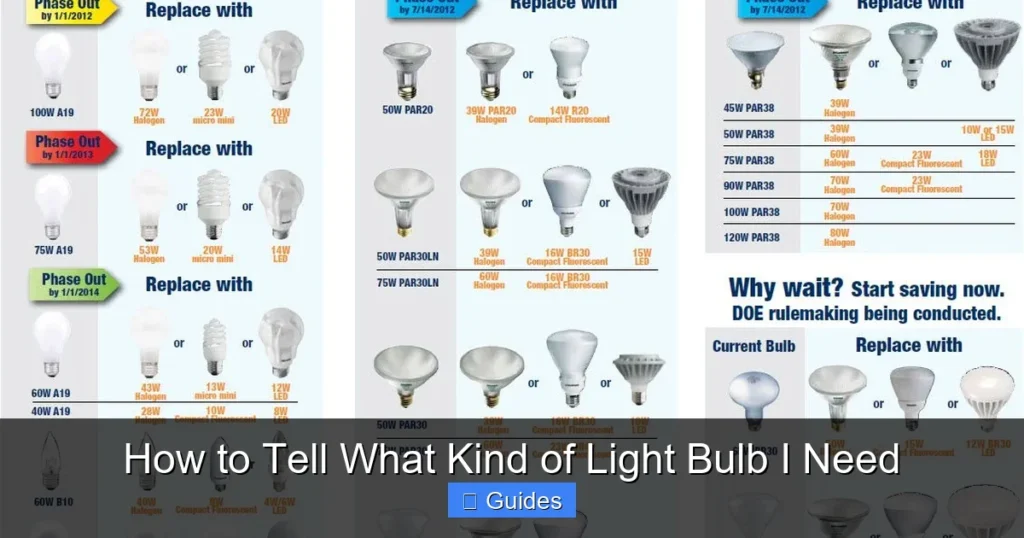
For years, we’ve associated brightness with watts. “I need a 60-watt bulb!” we’d say. But with energy-efficient lighting like LEDs and CFLs, watts no longer tell you how bright a bulb is. This is a crucial piece of information for *how to tell what kind of light bulb I need*.
What are Lumens?
Lumens (lm) are the true measure of a light bulb’s brightness. A lumen is a unit of luminous flux, essentially how much visible light is emitted by a source. The higher the lumen number, the brighter the light.
How Many Lumens Do I Need?
The ideal lumen output depends on the room size, the task, and your personal preference. Here’s a general guideline:
- Reading Nooks/Accent Lighting: 400-800 lumens (equivalent to a 40-60W incandescent)
- Bedrooms/Living Rooms: 800-1100 lumens (equivalent to a 60-75W incandescent)
- Kitchens/Bathrooms/Work Spaces: 1100-1600+ lumens (equivalent to a 75-100W+ incandescent)
Remember, these are per room, not per bulb. If you have multiple fixtures in a room, divide the total desired lumens among them. For example, a kitchen might need 3000-4000 total lumens, which could be achieved with four 800-lumen bulbs.
Visual guide about How to Tell What Kind of Light Bulb I Need
Image source: yourenergyanswers.com
The Wattage Myth: Incandescent vs. LED Equivalents
When shopping for modern bulbs, you’ll still see “wattage equivalent” on the packaging. This is a helpful guide to bridge the gap from old habits. For example, an LED bulb might be labeled “9W (60W equivalent).” This means the LED consumes only 9 watts of electricity but produces the same amount of light (lumens) as an old 60-watt incandescent bulb. Always prioritize lumens for brightness and watts for energy consumption.
Color Temperature: Setting the Mood with Kelvin
Beyond how bright a bulb is, *how to tell what kind of light bulb I need* also involves knowing what kind of mood you want to create. This is where color temperature comes in.
What is Color Temperature?
Color temperature describes the perceived “warmth” or “coolness” of the light emitted by a bulb. It’s measured in Kelvin (K). Despite what intuition might suggest, lower Kelvin numbers indicate a warmer, more yellowish light, while higher Kelvin numbers indicate a cooler, bluer light.
Choosing the Right Kelvin for Your Space
- Warm White (2200K – 3000K):
- Description: Soft, warm, yellowish light, similar to traditional incandescent bulbs or candlelight. It creates a cozy, inviting, and relaxing atmosphere.
- Best For: Bedrooms, living rooms, dining rooms, family rooms, or anywhere you want a comfortable, intimate feel. Also great for decorative purposes.
- Examples: 2700K is a common “soft white,” 3000K is slightly whiter but still warm.
- Cool White / Bright White (3500K – 4100K):
- Description: A more neutral, crisp, and energetic white light. It’s less yellow than warm white but not as blue as daylight.
- Best For: Kitchens, bathrooms, home offices, workshops, or utility areas where you need good visibility for tasks.
- Examples: 4000K is often labeled “cool white” or “bright white.”
- Daylight (5000K – 6500K):
- Description: Mimics natural daylight on a clear, sunny day. It’s a very bright, bluish-white light that enhances contrast and color accuracy.
- Best For: Task-oriented areas requiring high precision, such as garages, art studios, display areas, or for seasonal affective disorder (SAD) therapy lamps. Can be too harsh for general living spaces.
- Examples: 5000K-6500K are common “daylight” options.
Practical Tip: If you’re replacing multiple bulbs in one fixture or room, try to match their Kelvin ratings for a consistent look. Mixing very different color temperatures can make a space feel jarring.
Energy Efficiency and Bulb Types: The Modern Choice
The type of bulb technology you choose significantly impacts energy consumption, lifespan, and initial cost. Understanding these differences is key to *how to tell what kind of light bulb I need* for long-term satisfaction.
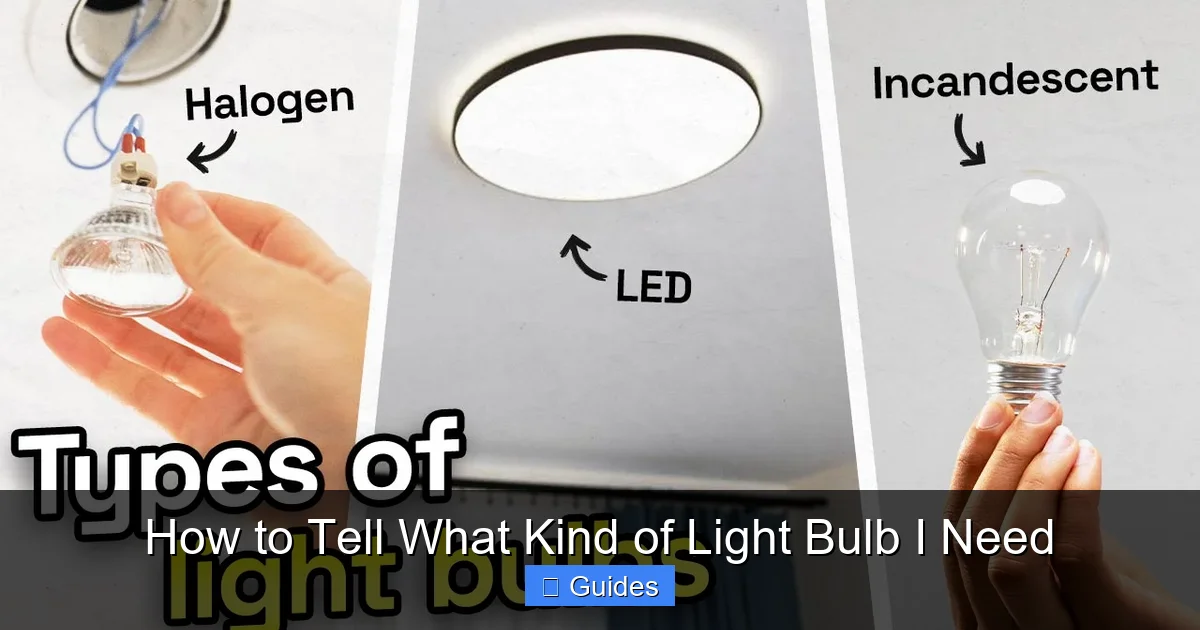
Incandescent Bulbs
- How they work: Light is produced by heating a filament until it glows.
- Pros: Inexpensive to buy, produces a warm, pleasant light.
- Cons: Extremely inefficient (most energy is lost as heat), very short lifespan (around 750-1,000 hours), being phased out in many regions.
- When to use: Mostly for decorative or specialty purposes where specific light quality is desired and energy efficiency isn’t a primary concern.
Halogen Bulbs
- How they work: A type of incandescent bulb with halogen gas that allows the filament to burn hotter and brighter.
- Pros: Brighter and slightly more efficient than traditional incandescents, excellent color rendering, dimmable.
- Cons: Still inefficient compared to LEDs, hot to the touch, shorter lifespan than LEDs (around 2,000-4,000 hours).
- When to use: Good for task lighting or applications needing crisp, bright light where LEDs might not offer the exact aesthetic or dimming range (though LED dimming has vastly improved).
CFL Bulbs (Compact Fluorescent Lamps)
- How they work: Electricity excites mercury vapor, producing UV light that then causes a phosphor coating on the bulb’s interior to glow.
- Pros: Much more energy-efficient than incandescents, longer lifespan (around 8,000-10,000 hours).
- Cons: Contain small amounts of mercury (require special disposal), often take time to reach full brightness, can have a “cold” or unflattering light, can hum or flicker, dimming capability varies.
- When to use: Less common now due to LED superiority, but can still be found in some older fixtures or for specific applications.
LED Bulbs (Light Emitting Diodes)
- How they work: Light is produced when an electric current passes through a semiconductor material.
- Pros: Highly energy-efficient (up to 90% less energy than incandescents), extremely long lifespan (25,000-50,000+ hours), instant full brightness, cool to the touch, available in a wide range of colors and shapes, many are dimmable and smart-enabled.
- Cons: Higher initial cost (though prices have come down significantly and are quickly recouped in energy savings), some cheaper LEDs may not dim smoothly or have poor color rendering.
- When to use: Almost everywhere! LEDs are the best choice for general home lighting, task lighting, accent lighting, and specialty applications. They are the clear winner for efficiency and longevity.
Practical Tip: Replacing just one incandescent 60-watt bulb with an equivalent LED can save you around $5-10 per year in electricity costs, and the bulb will last 25 times longer! The savings add up quickly across your entire home.
Special Features and Considerations
Once you’ve nailed down the basics of socket, shape, brightness, and color, there are a few extra features that can help you truly fine-tune *how to tell what kind of light bulb I need*.
Dimmability: Adjusting the Ambiance
Not all bulbs are dimmable. If you plan to use a dimmer switch, you *must* purchase bulbs specifically labeled “dimmable.” Using a non-dimmable bulb on a dimmer switch can cause flickering, buzzing, or even damage the bulb or switch. LEDs designed for dimming have special circuitry, and even then, some dimmer switches (especially older ones) might not be fully compatible, leading to limited dimming range or flicker. Always check bulb packaging for dimmability, and consider upgrading old dimmer switches if you experience issues with new LED bulbs.
Smart Bulbs: Connectivity and Control
Smart bulbs offer incredible flexibility and control, allowing you to change brightness, color temperature, and even the color of the light with your smartphone, voice assistant, or smart home hub. They typically connect via Wi-Fi or Bluetooth. If you’re building a smart home system or just want ultimate control over your lighting, smart bulbs are a fantastic option. Just ensure they are compatible with your existing smart home ecosystem (e.g., Apple HomeKit, Google Home, Amazon Alexa).
Specialty Bulbs: Beyond General Lighting
Some fixtures require very specific bulbs:
- Appliance Bulbs: Smaller, often rugged bulbs designed to withstand vibrations or extreme temperatures in ovens, refrigerators, or sewing machines.
- Outdoor/Wet-Rated Bulbs: For exterior fixtures, look for bulbs rated for outdoor or wet locations to ensure they can withstand the elements.
- 3-Way Bulbs: Designed for 3-way lamps, these bulbs offer multiple brightness levels (e.g., 50/100/150 watts) from a single bulb. Ensure your lamp has a 3-way socket.
- Decorative/Filament Bulbs: Often used in exposed fixtures, these bulbs mimic the look of old incandescent filaments but use LED technology. They prioritize aesthetics over pure brightness.
Beam Angle: Directing the Light
For certain applications, especially recessed lighting or spotlights, the beam angle matters. This refers to how wide or narrow the light spread is.
- Narrow Beam (Spot): Less than 20-25 degrees, ideal for highlighting specific objects or architectural features.
- Medium Beam (Flood): 25-45 degrees, good for general task lighting or illuminating a specific area.
- Wide Beam (Wide Flood/General): Greater than 45 degrees, provides broad, ambient illumination.
Most standard A-type bulbs provide omnidirectional light (light in all directions), but reflector bulbs (PAR, BR, MR) are designed with specific beam angles in mind.
Conclusion: Empowering Your Lighting Choices
Congratulations, you’re now well on your way to becoming a light bulb wizard! Deciphering *how to tell what kind of light bulb I need* might have seemed daunting at first, but by focusing on a few key elements, it becomes a straightforward process.
Remember these essential steps:
- Check the Socket: Match the old bulb’s base or the fixture’s specifications (e.g., E26, GU10).
- Consider the Shape and Size: Ensure the new bulb fits aesthetically and physically (e.g., A19, BR30, G25).
- Determine Brightness (Lumens): Decide how much light you need for the space and task (e.g., 800 lm for a living room).
- Choose Color Temperature (Kelvin): Pick the mood you want to create (e.g., 2700K for cozy, 4000K for task).
- Opt for Energy Efficiency (LED): Save money and energy by choosing LED bulbs whenever possible.
- Factor in Special Features: Dimmability, smart capabilities, or specialty ratings.
With this knowledge, you can confidently navigate the lighting aisle, make informed decisions, and create beautifully lit spaces throughout your home. Say goodbye to guesswork and hello to perfect illumination!
Frequently Asked Questions
What is the most important factor when choosing a replacement bulb?
The most important factor is the socket type and size to ensure the bulb physically fits your fixture. After that, lumens (for brightness) and Kelvin (for color temperature) are key to achieving your desired lighting effect and functionality.
Are more expensive light bulbs worth it?
Often, yes. While the initial cost of high-quality LED bulbs might be higher, their significantly longer lifespan and drastically lower energy consumption usually lead to substantial savings over time, making them a more economical choice in the long run.
How do I know if a bulb is dimmable?
The bulb’s packaging will clearly state whether it is dimmable or not. Look for explicit labeling like “Dimmable” or a dimmer icon. If it doesn’t say it’s dimmable, assume it is not.
Can I mix different color temperatures in the same room?
While you can, it’s generally recommended to stick to one or two complementary color temperatures within a single room for a cohesive look. Mixing too many different Kelvin ratings can create a visually disjointed and less aesthetically pleasing environment.
What does “CRI” mean on a light bulb package?
CRI stands for Color Rendering Index, which measures how accurately a light source reveals the true colors of objects compared to natural light. A higher CRI (closer to 100) means colors will appear more vibrant and true-to-life under that bulb’s light.
How often should I replace my LED bulbs?
LED bulbs have an exceptionally long lifespan, often rated for 25,000 to 50,000 hours or more. For a bulb used 3 hours a day, 25,000 hours equates to over 22 years, meaning you likely won’t need to replace them very often, if at all, during your occupancy of a home.
