


As an Amazon Associate, We earn from qualifying purchases.
An LED light bulb is a highly efficient, long-lasting illumination device that uses light-emitting diodes (LEDs) to produce light. Unlike traditional bulbs that generate light primarily through heat or gas, LEDs convert electricity directly into light, making them incredibly energy-efficient and cool to the touch. They offer superior durability, a wide range of colors, and significantly reduce energy costs, making them a smart choice for modern lighting needs.
Remember the good old days of incandescent light bulbs? That warm, comforting glow often came with a hefty electricity bill and the recurring chore of screwing in a new bulb every few months. Then came the curly, often slow-to-brighten compact fluorescent lamps (CFLs), which offered better efficiency but sometimes had a harsh light and contained mercury.
But today, there’s a new champion on the block that has truly revolutionized how we light our homes and businesses: the LED light bulb. If you’ve walked into any modern home improvement store, you’ve seen them everywhere. They promise incredible energy savings, a lifespan that seems almost unbelievable, and light quality that can transform any space. But what exactly *is* an LED light bulb, and what makes it so special?
Join us on a journey to demystify this modern marvel of illumination. We’ll break down the technology behind these fascinating devices, explore their myriad benefits, help you understand their often-confusing specifications, and guide you on choosing the perfect LED light bulb for every corner of your life. Get ready to shed some light on the future of lighting!
Key Takeaways
- Energy Efficiency: LED light bulbs consume significantly less electricity than incandescent or CFL bulbs, leading to substantial savings on energy bills.
- Exceptional Longevity: LEDs can last for tens of thousands of hours, drastically reducing the frequency of bulb replacements and maintenance efforts.
- Cool Operation: Unlike traditional bulbs, LED light bulbs produce very little heat, which makes them safer, more comfortable, and reduces strain on air conditioning systems.
- Instant Brightness & Durability: LEDs turn on instantly to full brightness and, being solid-state devices, are much more resistant to breakage from impacts or vibrations.
- Versatile Lighting Options: Modern LED light bulbs offer a wide spectrum of color temperatures (from warm to cool), dimmability, and even color-changing capabilities to suit any mood or application.
- Eco-Friendly Choice: They contain no mercury or other hazardous materials, making them a safer and more environmentally conscious lighting solution compared to older technologies.
- Understanding Specifications: Key terms like Lumens (brightness), Kelvin (color temperature), and CRI (color rendering index) are crucial for choosing the right LED light bulb for your specific needs.
Quick Answers to Common Questions
What does LED stand for?
LED stands for Light-Emitting Diode.
Do LED light bulbs get hot?
While the light itself is cool, the internal components of an LED light bulb do generate some heat, which is managed by a heatsink to ensure longevity. They produce far less heat than incandescent bulbs.
Are LED light bulbs dimmable?
Some LED light bulbs are dimmable, but not all. It’s important to check the packaging for a “dimmable” label and ensure you have an LED-compatible dimmer switch.
How much energy do LED light bulbs save compared to incandescent?
LED light bulbs typically use 75-90% less energy than incandescent bulbs to produce the same amount of light (lumens).
What is the average lifespan of an LED light bulb?
A good quality LED light bulb can last anywhere from 25,000 to 50,000 hours, significantly longer than incandescent or CFL bulbs.
📑 Table of Contents
What Exactly Is an LED? Unpacking the Core Technology
At the heart of every LED light bulb is something called an LED. This isn’t a bulb in the traditional sense, but rather a “Light-Emitting Diode.” Let’s break down that name:
The “Diode” Part: A One-Way Street for Electricity
In electronics, a diode is a semiconductor device that essentially acts like a one-way valve for electricity. It allows current to flow in one direction but blocks it in the other. This control over electrical flow is fundamental to how an LED works.
The “Light-Emitting” Part: From Electrons to Photons
The magic happens within the diode itself. LEDs are made from special semiconductor materials, often combinations of elements like gallium, arsenic, and phosphorus. When an electrical current passes through this semiconductor material in the correct direction (thanks to the “diode” part), electrons and “holes” (a type of positive charge carrier) within the material recombine.
This recombination process releases energy in the form of photons – tiny particles of light. Unlike an incandescent bulb, which creates light by heating a filament until it glows white-hot, an LED creates light through a process called electroluminescence. This is a much cooler and more direct way to generate light, which is why LED light bulbs are so much more efficient.
A History of Progress: From Indicators to Illumination
Early LEDs were typically red and were used as indicator lights in electronics (think power buttons on your old VCR). Over time, scientists developed LEDs that could emit other colors, like green and blue. The real breakthrough for general lighting came with the invention of the efficient blue LED in the early 1990s, which then allowed for the creation of white LED light bulbs by combining blue light with a phosphor coating that converts some of the blue light into yellow light, which our eyes perceive as white.
How Does an LED Light Bulb Work? More Than Just a Diode
While the LED itself is tiny, an LED light bulb is a complete package designed to safely and efficiently provide light similar to traditional bulbs. It’s a sophisticated piece of engineering. Here’s what goes into a typical LED light bulb:
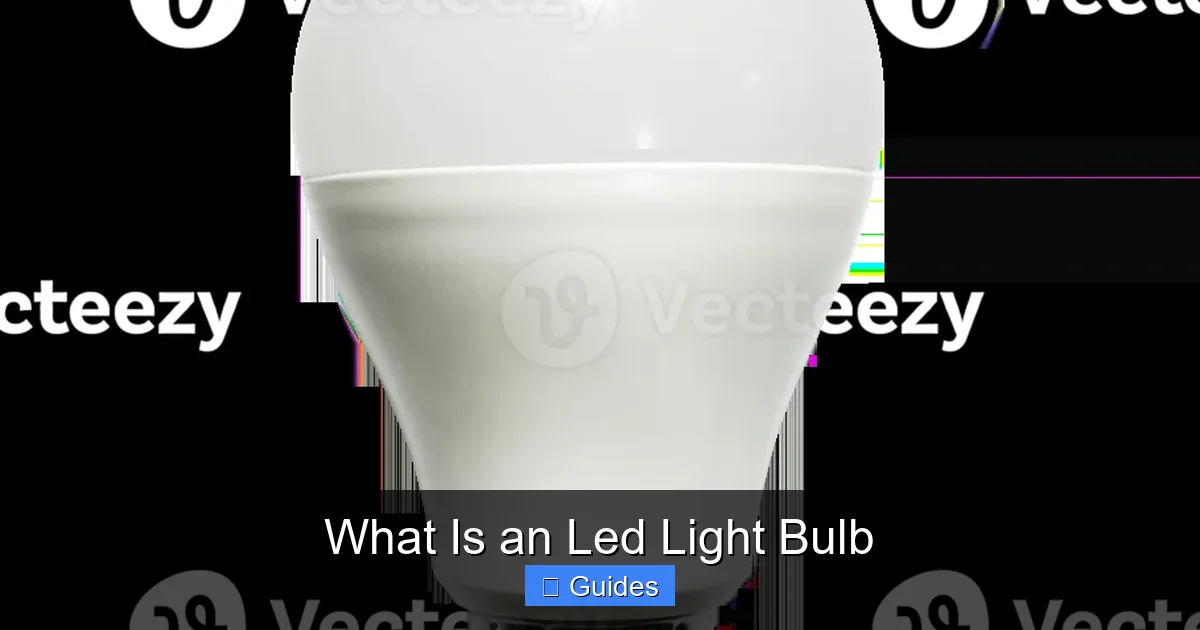
Visual guide about What Is an Led Light Bulb
Image source: static.vecteezy.com
The Key Components
- LED Chip(s): These are the tiny semiconductor devices that actually emit light. A single bulb might contain multiple small LED chips.
- Driver: This is the electronic brain of the bulb. It’s a small circuit board that converts the alternating current (AC) from your home’s wiring into the direct current (DC) that the LEDs need, and it regulates the voltage and current to ensure the LEDs operate efficiently and last a long time.
- Heat Sink: Although LEDs are cool to the touch, they still generate *some* heat, especially at the semiconductor junction. This heat, if not managed, can shorten the LED’s lifespan. The heat sink (often a series of fins or a metal base) draws heat away from the LED chips, allowing them to operate at optimal temperatures. This is crucial for their longevity.
- Diffuser Lens: This is the frosted or clear cover over the LEDs. It helps to spread the light evenly and reduce glare, mimicking the omnidirectional light output of traditional bulbs.
- Base: This is the familiar screw-in (Edison) base, pin base, or other connector that allows the LED light bulb to fit into standard light fixtures and draw power.
The Process: From Outlet to Illumination
When you screw an LED light bulb into a fixture and flip the switch, here’s what happens:
- Electricity (AC) flows from your wall outlet into the bulb’s base.
- The driver circuit within the bulb converts this AC into the low-voltage DC that the LED chips require. It also regulates the current to protect the LEDs.
- The DC current flows through the LED chips, causing electrons and holes to recombine and emit photons (light).
- Any excess heat generated by the LED chips is wicked away by the heat sink.
- The light passes through the diffuser, creating a consistent and comfortable beam of light.
This entire process happens instantaneously, providing immediate, full brightness, unlike older CFLs that often needed time to warm up.
The Unbeatable Benefits of LED Light Bulbs
So, now that you know how an LED light bulb works, let’s talk about why they’ve become the gold standard for lighting. The advantages are truly compelling:
Superior Energy Efficiency
This is arguably the biggest selling point. LED light bulbs use significantly less electricity to produce the same amount of light as older technologies. For example, a 60-watt incandescent bulb can be replaced by an LED light bulb that uses only 8-10 watts, while still providing the same brightness (lumens). This translates to substantial savings on your electricity bill over time.
Exceptional Longevity
LED light bulbs boast incredible lifespans. Where an incandescent might last 1,000-2,000 hours and a CFL around 8,000-10,000 hours, a good quality LED light bulb can last 25,000 to 50,000 hours, or even more. That means if you use an LED light bulb for 3 hours a day, it could last over 20 years! Imagine not having to change bulbs in hard-to-reach fixtures for decades.
Instant On and Full Brightness
Unlike some CFLs that took time to “warm up” and reach full brightness, LED light bulbs turn on instantly and deliver 100% of their light output the moment you flip the switch. There’s no waiting around for your room to fully illuminate.
Durability and Resilience
Because LED light bulbs are solid-state devices (meaning they don’t have a filament or gas to break), they are much more durable and resistant to breakage from impacts, vibrations, or drops compared to fragile incandescent bulbs. This makes them ideal for various applications, including outdoor lighting or areas where bulbs might be bumped.
Minimal Heat Emission
LEDs generate light very efficiently, meaning less energy is wasted as heat. While they do produce some heat at the chip junction, the light itself is cool to the touch. This makes them safer to handle, reduces the risk of fires, and can even lessen the load on your air conditioning system in warmer climates.
Color Versatility and Control
LED light bulbs offer an incredible range of color temperatures, from very warm, cozy yellows (like traditional incandescents) to crisp, cool whites and even bright daylight tones. Many smart LED light bulbs can even change to millions of different colors, allowing you to customize the ambiance of any room with the tap of a finger or a voice command.
Environmentally Friendly
LED light bulbs are a greener choice. They contain no mercury (unlike CFLs) and are fully recyclable. Their long lifespan also means less waste ending up in landfills, further reducing their environmental footprint.
Demystifying LED Specifications: What Do All Those Numbers Mean?
Walking down the lighting aisle can be overwhelming with all the numbers and terms on LED light bulb packaging. Let’s break down the most important ones so you can make informed decisions:
Lumens (lm): The True Measure of Brightness
Forget watts when thinking about brightness! For LED light bulbs, lumens are what you need to look for. Lumens measure the total amount of visible light emitted by a bulb. More lumens mean a brighter light. A general guide:
- 450 lumens: Equivalent to a 40W incandescent
- 800 lumens: Equivalent to a 60W incandescent (most common household bulb)
- 1100 lumens: Equivalent to a 75W incandescent
- 1600 lumens: Equivalent to a 100W incandescent
Watts (W): How Much Energy it Uses (Not Brightness!)
While important for your energy bill, watts for an LED light bulb tell you how much power it consumes, not how bright it is. You’ll notice that LED light bulbs produce significantly more lumens per watt than older bulbs, which is why they’re so efficient. For example, an 800-lumen LED might only use 8-10 watts, while an 800-lumen incandescent would use 60 watts.
Color Temperature (Kelvin – K): Setting the Mood
Color temperature describes the perceived “warmth” or “coolness” of the light. It’s measured in Kelvin (K):
- 2700K – 3000K (Warm White): A soft, yellowish light similar to traditional incandescents. Ideal for bedrooms, living rooms, and creating a cozy atmosphere.
- 3500K – 4100K (Cool White / Neutral White): A more balanced, pure white light. Good for kitchens, bathrooms, offices, or task lighting.
- 5000K – 6500K (Daylight): A very bright, bluish-white light that mimics natural daylight. Excellent for basements, garages, workshops, or for boosting alertness.
Color Rendering Index (CRI): How True Colors Appear
CRI measures how accurately a light source reveals the true colors of objects compared to natural sunlight. It’s rated on a scale from 0 to 100. A higher CRI means colors will look more vibrant and natural. For most general home lighting, a CRI of 80+ is good. For areas where color accuracy is critical (e.g., art studios, makeup vanity, retail displays), look for 90+.
Dimmable: Check the Label
Not all LED light bulbs are dimmable, and not all dimmers are compatible with LEDs. If you plan to use an LED light bulb with a dimmer switch, always look for “dimmable” on the packaging and ensure your dimmer is LED-compatible to avoid flickering or poor performance.
Choosing the Right LED Light Bulb for Your Home
With so many options, how do you pick the perfect LED light bulb? Here’s a practical guide:
1. Determine the Desired Brightness (Lumens)
Think about the function of the room. Do you need bright task lighting for a kitchen or workshop? Or a softer, ambient glow for a bedroom? Use the lumen equivalency chart (e.g., 800 lumens for a standard 60W replacement) as a starting point, and adjust based on the size of the room and number of fixtures.
2. Select the Right Color Temperature (Kelvin)
- Warm White (2700K-3000K): For living rooms, dining rooms, bedrooms – areas where you want to relax and feel comfortable.
- Cool White (3500K-4100K): Ideal for kitchens, bathrooms, home offices – spaces requiring clarity and a neutral feel.
- Daylight (5000K-6500K): Best for utility rooms, garages, basements, or for those who prefer a very crisp, invigorating light.
3. Consider Color Rendering Index (CRI)
For general lighting, a CRI of 80 is usually fine. If you’re a hobbyist, an artist, or just want your home decor to pop, invest in LED light bulbs with a CRI of 90 or higher.
4. Match the Base Type and Bulb Shape
Make sure the LED light bulb’s base (e.g., E26 standard screw-in, GU10 twist-and-lock, candelabra E12) matches your fixture. Also, consider the bulb shape (A19 traditional, BR30 floodlight, MR16 spotlight, G25 globe) for aesthetics and light distribution.
5. Check for Special Features (Dimmable, Smart, Specialty)
- Dimmable: If you use dimmers, confirm the bulb is compatible.
- Smart LED Light Bulbs: For ultimate control, consider Wi-Fi or Bluetooth-enabled bulbs that can be controlled via apps, voice assistants, or schedules. These often offer color-changing capabilities (RGB).
- Specialty Bulbs: Look for specific types like outdoor-rated, wet-location rated, or decorative filament LEDs that combine classic looks with modern efficiency.
The Future is Bright: Innovations in LED Technology
The evolution of the LED light bulb is far from over. Manufacturers are constantly pushing the boundaries of what these amazing devices can do:
Smart Lighting Integration
Beyond simple dimming, smart LED light bulbs can be integrated into entire smart home ecosystems. You can control them from anywhere, create custom lighting scenes, schedule them to turn on or off, and even sync them with music or movies for immersive experiences. Some even have built-in speakers or motion sensors.
Human-Centric Lighting
This emerging field uses LED technology to mimic natural daylight cycles (circadian rhythms). Lights can automatically adjust their color temperature and brightness throughout the day – warmer and dimmer in the evening to promote sleep, and cooler and brighter during the day to enhance focus and mood.
Li-Fi (Light Fidelity)
Imagine your LED light bulb not just illuminating your room, but also transmitting data! Li-Fi uses visible light communication to create high-speed, wireless internet connections. While still in its early stages, it promises a secure and super-fast alternative to Wi-Fi in certain applications.
Miniaturization and Architectural Integration
LED chips are getting smaller and more powerful, allowing for unprecedented design flexibility. They can be integrated seamlessly into walls, ceilings, furniture, and even fabrics, opening up new possibilities for architectural and decorative lighting.
Conclusion
The LED light bulb is more than just a replacement for old technology; it’s a fundamental shift in how we think about and use light. From its humble origins as a simple indicator light, the LED has grown into a powerful, versatile, and environmentally conscious illumination source that saves energy, lasts for decades, and offers unparalleled control over our environments.
Understanding what an LED light bulb is and how to choose the right one empowers you to make smarter choices for your home, your wallet, and the planet. So, the next time you reach for a light bulb, remember the little semiconductor doing big things inside – lighting your way to a brighter, more efficient future.
Frequently Asked Questions
What is the main advantage of an LED light bulb over a traditional incandescent?
The main advantage of an LED light bulb is its superior energy efficiency and longevity. LEDs convert electricity into light much more effectively than incandescents, which waste most of their energy as heat, leading to significant energy savings and far fewer bulb replacements.
Can I put an LED light bulb in any fixture?
Generally, yes, as long as the LED light bulb’s base type (e.g., E26, GU10) matches your fixture. However, ensure the fixture is not fully enclosed unless the LED bulb is rated for enclosed fixtures, as trapped heat can shorten its lifespan.
Do LED light bulbs contain mercury?
No, LED light bulbs do not contain mercury or other hazardous materials, unlike compact fluorescent lamps (CFLs). This makes them a safer and more environmentally friendly option for your home and for disposal.
What does “color temperature” mean for an LED light bulb?
Color temperature, measured in Kelvin (K), describes the perceived color of the light. Lower Kelvin numbers (e.g., 2700K) produce a warm, yellowish light, while higher numbers (e.g., 5000K) produce a cool, bluish-white light, allowing you to choose the mood for your space.
Why are LED light bulbs more expensive upfront?
LED light bulbs typically have a higher initial cost due to the advanced semiconductor technology, complex driver circuitry, and quality components required. However, their long lifespan and significant energy savings mean they quickly pay for themselves over time, offering a lower total cost of ownership.
How do I choose the right brightness for an LED light bulb?
When choosing an LED light bulb, look at the “lumens” (lm) rating, which indicates brightness, rather than watts. For example, to replace a traditional 60-watt incandescent, you’d typically look for an LED light bulb with around 800 lumens.
