


As an Amazon Associate, We earn from qualifying purchases.
Understanding what are lumens in a light bulb is crucial for choosing the right lighting. Lumens measure the total amount of visible light emitted by a bulb, making them the definitive indicator of brightness. Unlike watts, which represent energy consumption, lumens tell you how much light you’ll actually get. Focus on lumens to select the perfect illumination for your space.
What Are Lumens in a Light Bulb
Do you remember the good old days of buying light bulbs? It seemed so simple. You’d just grab a 60-watt bulb for your living room or a 100-watt bulb for a brighter task light. We all knew what those numbers meant, right? They told us how bright the bulb would be. But then, things changed. Incandescent bulbs started fading away, and new, energy-efficient options like CFLs and LEDs came into play. Suddenly, that familiar “wattage” number didn’t tell the whole story about brightness anymore.
This shift left many of us scratching our heads in the light bulb aisle. If a 10-watt LED can replace a 60-watt incandescent, how do we compare their brightness? That’s where lumens step in. Lumens are the new, universal language of light. They are the key to understanding how much light a bulb actually puts out, regardless of how much energy it uses. If you’ve ever felt confused standing in front of dozens of bulb options, wondering which one will actually brighten your space, you’re in the right place. We’re here to demystify what are lumens in a light bulb.
By the time you finish reading, you’ll feel confident in choosing the perfect light bulb for any situation, armed with the knowledge of lumens and a few other crucial lighting terms. Forget guesswork; it’s time to light up your life with clarity and efficiency!
Key Takeaways
- Lumens Measure Brightness: Lumens quantify the total amount of visible light a bulb produces, directly telling you how bright it will be.
- Watts Measure Energy Consumption: Unlike lumens, watts indicate how much energy a bulb uses, not its brightness. For modern bulbs like LEDs, fewer watts can produce more lumens.
- Higher Lumens Mean Brighter Light: If you want more light in a room, look for a bulb with a higher lumen rating.
- Match Lumens to Your Space: The ideal lumen output depends on the room’s size, its function (e.g., reading vs. ambiance), ceiling height, and wall colors.
- LEDs Offer Superior Efficiency: LED bulbs deliver significantly more lumens per watt than old incandescent bulbs, saving energy and money.
- Check the Lumen Label: Always look for the lumen rating on the light bulb packaging to make an informed decision about brightness.
- Consider More Than Just Lumens: While lumens define brightness, also think about color temperature (Kelvin) and Color Rendering Index (CRI) for the best lighting experience.
Quick Answers to Common Questions
What is a lumen?
A lumen is the international standard unit used to measure the total amount of visible light emitted by a light source in all directions. It’s the definitive measure of how bright a light bulb will appear.
How many lumens do I need for a living room?
For a typical living room, you generally need between 1500 to 3000 lumens for ambient (general) lighting. This can be achieved with multiple bulbs and supplemented with task lighting.
Are more lumens always better?
Not necessarily. While more lumens mean more light, too much light can cause glare or make a room feel sterile. The “best” amount of lumens depends on the room’s function, size, and your personal preference for brightness.
Do lumens decrease over time?
Yes, all light bulbs experience some degree of lumen depreciation over their lifespan. Modern LED bulbs are designed to maintain a high percentage of their initial lumen output for a very long time, but a slight decrease is natural.
What’s the difference between lumens and candela?
Lumens measure the total light output in all directions (luminous flux), whereas candela (cd) measures luminous intensity in a specific direction. Candela is useful for directional lights, like spotlights, to describe how intense the light is in a particular beam.
📑 Table of Contents
Demystifying Lumens: What Exactly Are They?
For a long time, we associated light bulb brightness with watts. But watts actually measure energy consumption, not brightness. Think of it this way: a car’s horsepower tells you how powerful its engine is (how much energy it consumes), but it doesn’t directly tell you how fast the car will go or how far it will travel on a tank of gas. For light bulbs, watts tell you how much electricity the bulb uses. Lumens, on the other hand, tell you how much light the bulb produces.
The Scientific Definition of a Lumen
So, what exactly *are* lumens? In simple terms, a lumen (symbol: lm) is the international unit of luminous flux. Luminous flux is a fancy way of saying the total amount of visible light emitted by a source in all directions. Imagine a tiny light source emitting light uniformly in every direction. The total amount of light flowing from that source, as perceived by the human eye, is measured in lumens. The higher the lumen number, the brighter the light source will appear to us. This is the fundamental answer to what are lumens in a light bulb.
It’s important to note that lumens measure *visible* light. Our eyes are more sensitive to certain colors (like yellow-green) than others (like deep red or violet). Lumens take this human perception into account, which is why a light bulb’s lumen rating accurately reflects how bright it will *look* to you.
Why Lumens, Not Watts, Matter for Brightness
The shift from watts to lumens happened for a very good reason: energy efficiency. With older incandescent bulbs, there was a fairly consistent relationship between watts and lumens. A 60-watt incandescent bulb always produced roughly the same amount of light, because the technology was quite inefficient and similar across brands.
However, modern lighting technologies, especially LEDs, have completely changed this. An LED bulb can produce the same amount of light (the same number of lumens) as an old incandescent bulb, but it uses significantly less energy (fewer watts) to do so. For example, a 60-watt equivalent LED might only consume 8-10 watts, yet it still delivers around 800 lumens – the same brightness as the traditional 60-watt incandescent.
If you were to buy an LED based solely on watts, you might end up with a very dim light. Imagine trying to buy a “60-watt” LED. You might find a bulb that uses 60 watts, but it could be incredibly bright, far exceeding the light output of an old 60-watt incandescent, because LEDs are so efficient! This is why focusing on what are lumens in a light bulb is critical. Lumens provide a consistent, technology-agnostic measure of brightness, allowing you to accurately compare light output across different bulb types.
How Lumens Relate to Brightness (and Watts)
Visual guide about What Are Lumens in a Light Bulb
Image source: i.ytimg.com
Understanding the relationship between lumens, brightness, and watts is key to making informed lighting decisions. It’s a simple concept once you get past the old habits.
The Old Way: Watts and Energy Consumption
For decades, we relied on watts to tell us how bright a bulb would be. This was a convenience, not a precise measurement of light output. A 60-watt incandescent bulb consumed 60 watts of electricity, and a certain percentage of that energy was converted into light, while most of it was wasted as heat. Because the technology was relatively consistent, a 60-watt bulb from one manufacturer would be roughly as bright as a 60-watt bulb from another. So, we came to associate 60 watts with a specific level of brightness.
However, this method was flawed. As mentioned, watts measure energy use. If a new technology came along that could produce more light with less energy, using watts as a brightness gauge would no longer work. And that’s exactly what happened with CFLs and especially LEDs.
The New Way: Lumens and Light Output
With the advent of energy-efficient bulbs, the focus shifted to what are lumens in a light bulb. Lumens directly quantify the light output. This is a much more accurate and universal way to talk about brightness.
Here’s a simple comparison:
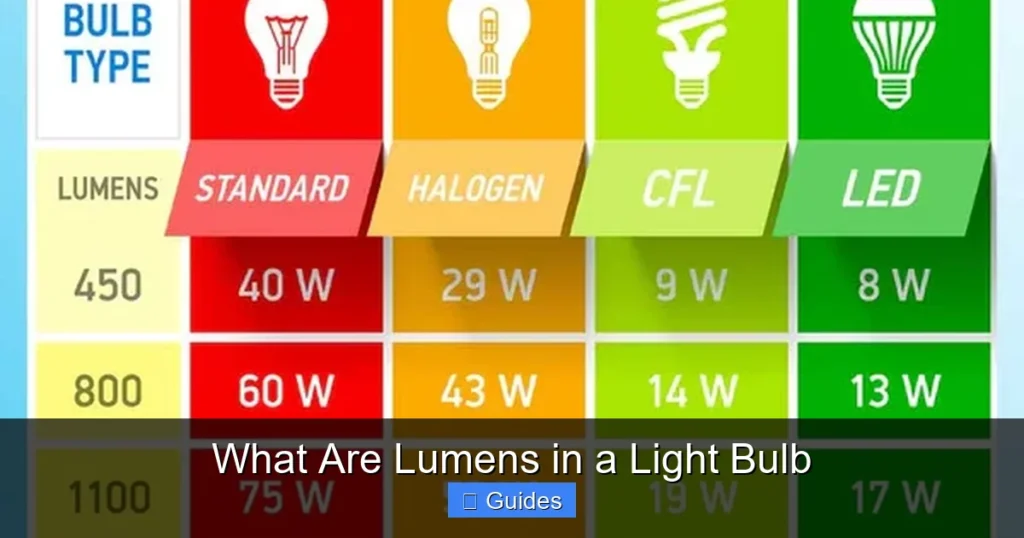
- An old 40-watt incandescent bulb typically produced around 450 lumens.
- An old 60-watt incandescent bulb typically produced around 800 lumens.
- An old 75-watt incandescent bulb typically produced around 1100 lumens.
- An old 100-watt incandescent bulb typically produced around 1600 lumens.
When you’re shopping for a new LED or CFL bulb, you’ll see a “lumens” number prominently displayed on the packaging. This is the number you should pay attention to for brightness. For instance, if you want to replace a traditional 60-watt incandescent bulb, you should look for an LED bulb that provides around 800 lumens. The LED might only consume 8-10 watts, but it will give you the same amount of light. This demonstrates how focusing on what are lumens in a light bulb helps you choose smart.
Converting Watts to Lumens (and Why It’s Tricky)
It’s not a direct conversion because lumens measure light output and watts measure energy input. There’s no single formula to convert watts to lumens because efficiency varies so much between different types of light bulbs.
However, manufacturers often provide “wattage equivalency” on their packaging. This is a helpful guideline, comparing the lumen output of the new bulb to the lumen output of an old incandescent bulb. For example, a package might say “60-watt equivalent” and list “800 lumens” and “10 watts.” This tells you that the 10-watt LED bulb produces the same amount of light as an old 60-watt incandescent, which traditionally produced 800 lumens.
Here’s a general approximation chart to help you transition from thinking in watts to thinking in lumens when you replace your old bulbs:
- 25W Incandescent Equivalent: ~200-300 lumens
- 40W Incandescent Equivalent: ~450 lumens
- 60W Incandescent Equivalent: ~800 lumens
- 75W Incandescent Equivalent: ~1100 lumens
- 100W Incandescent Equivalent: ~1600 lumens
- 150W Incandescent Equivalent: ~2600 lumens
Remember, these are just approximations based on what are lumens in a light bulb for common incandescent equivalents. Always check the actual lumen rating on the package for precise information.
Choosing the Right Lumens for Every Space
Now that you understand what are lumens in a light bulb, the next step is figuring out how many you actually need. There’s no one-size-fits-all answer, as the ideal lumen output depends heavily on the room, its purpose, and your personal preferences.
General Guidelines for Different Room Types
To help you get started, here are some common lumen recommendations for various areas in your home. These are general guidelines for ambient (overall) lighting, and you might need additional lumens for task lighting.
- Kitchen: Kitchens usually need bright, functional lighting for cooking and preparing food. Aim for 3000-6000 lumens in total, spread across multiple fixtures. Under-cabinet lighting might add another 200-400 lumens per foot.
- Living Room: This is often a multi-purpose room, used for relaxing, entertaining, and sometimes reading. A layered approach is best. For general ambient light, 1500-3000 lumens is a good starting point, supplemented by floor lamps or table lamps for task lighting.
- Bedroom: Bedrooms typically require softer, more relaxing light. 1000-2000 lumens for ambient lighting is usually sufficient, with bedside lamps providing additional focused light for reading (e.g., 400-800 lumens per lamp).
- Bathroom: Good lighting is crucial for grooming tasks in the bathroom. Above the mirror or flanking the mirror, aim for 1500-2500 lumens. The main overhead light can be 500-1000 lumens.
- Dining Room: For dining, a comfortable, often dimmable light is preferred. A chandelier might provide 1500-2500 lumens, with additional recessed lights if needed.
- Home Office: Task lighting is key here. A combination of overhead ambient light (around 1000-2000 lumens) and a good desk lamp (400-800 lumens, focused) is ideal to prevent eye strain.
- Hallways & Foyers: These areas need enough light to navigate safely. 800-1200 lumens for a typical hallway or foyer is often adequate.
Remember, these are totals for the *entire* room, not per bulb. You’ll likely use several bulbs to achieve these totals. The question of what are lumens in a light bulb is essential for balancing light levels.
Factors Influencing Lumen Needs (Room Size, Color, Personal Preference)
Several factors can influence how many lumens you truly need:
- Room Size: Larger rooms naturally require more lumens to feel adequately lit. A common recommendation is to aim for 20 lumens per square foot for ambient lighting in living spaces and bedrooms, and 50-70 lumens per square foot for kitchens and bathrooms.
- Ceiling Height: High ceilings mean the light source is further from surfaces, so you might need higher lumen bulbs to achieve the same perceived brightness.
- Wall and Furniture Colors: Darker walls, carpets, and furniture absorb light, making a room appear dimmer. Lighter colors reflect light, making a room feel brighter with fewer lumens. If you have a room with dark decor, you might need to increase your lumen output by 20-30%.
- Natural Light: Rooms with abundant natural light from windows or skylights will require fewer artificial lumens during the day.
- Purpose of the Room: As discussed, a room for reading or precision tasks (like a kitchen counter or home office) will need more lumens than a room primarily used for relaxation (like a bedroom).
- Personal Preference: Ultimately, lighting is subjective. Some people prefer brightly lit spaces, while others like a softer glow. If you’re unsure, it’s often better to slightly overestimate your lumen needs and use a dimmer switch.
Layering Light with Lumens
The best lighting schemes don’t rely on a single overhead bulb. They use layers of light to create depth, functionality, and atmosphere. When planning your lighting, think about:
- Ambient Lighting: This is the general, overall light in a room. It sets the basic brightness level. Examples include ceiling fixtures, recessed lights, or track lighting. This is where your foundational understanding of what are lumens in a light bulb comes into play.
- Task Lighting: Focused light for specific activities like reading, cooking, or working. Desk lamps, under-cabinet lights, and pendant lights over an island are good examples. These often require higher lumen outputs in concentrated areas.
- Accent Lighting: Used to highlight architectural features, artwork, or plants. Lower lumen spot or flood lights are typically used here to draw attention without overwhelming the space.
By combining these layers, you can create a versatile and inviting lighting environment that meets all your needs.
Beyond Brightness: Other Important Light Bulb Terms
While knowing what are lumens in a light bulb is fundamental for brightness, several other terms on light bulb packaging significantly impact the quality and feel of your lighting. Don’t overlook these!
Color Temperature (Kelvin)
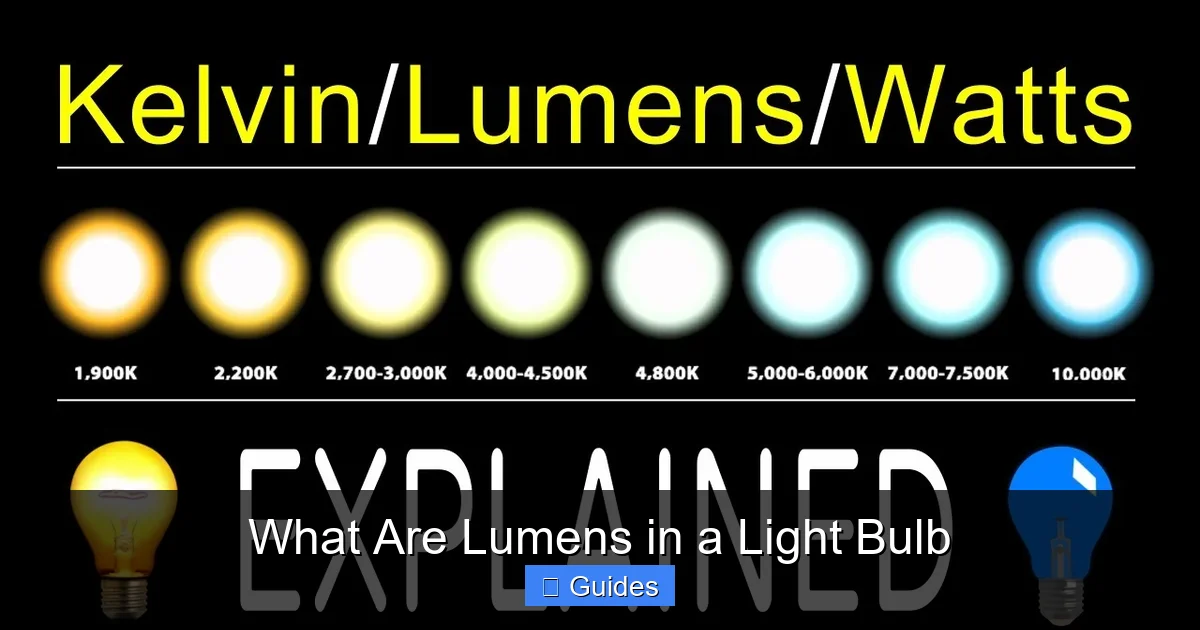
Color temperature, measured in Kelvin (K), describes the perceived “warmth” or “coolness” of the light emitted by a bulb. This isn’t about the physical temperature of the bulb, but the color of the light itself.
- Warm White (2000K-3000K): This light has a yellowish-orange hue, similar to traditional incandescent bulbs or candlelight. It creates a cozy, inviting, and relaxing atmosphere, ideal for living rooms, bedrooms, and dining areas.
- Cool White / Neutral White (3100K-4500K): This light is whiter and more neutral, often used in kitchens, bathrooms, or home offices where tasks require good visibility. It can feel more energizing.
- Daylight (5000K-6500K+): This light mimics natural daylight, with a bluish-white tint. It’s very bright and crisp, excellent for task lighting in workshops, garages, or areas where true color representation is important, like an art studio.
Choosing the right color temperature is crucial for setting the mood and functionality of a room, even more so once you’ve determined what are lumens in a light bulb you need.
Color Rendering Index (CRI)
The Color Rendering Index (CRI) measures how accurately a light source reveals the true colors of objects compared to natural daylight. It’s rated on a scale from 0 to 100.
- CRI 80 and above: Generally considered good for most residential applications. Colors will look reasonably accurate.
- CRI 90 and above: Excellent color rendering. Essential for art studios, retail displays, kitchens where food colors matter, or anywhere accurate color perception is critical.
A high CRI means colors will appear vibrant and true to life, while a low CRI can make colors look dull or washed out, regardless of how many lumens are present.
Beam Angle
The beam angle describes how widely the light spreads from the bulb. This is particularly important for directional bulbs like spot or floodlights.
- Narrow Beam Angle (e.g., 10-30 degrees): Creates a focused “spotlight” effect, ideal for accent lighting to highlight specific objects or areas.
- Medium Beam Angle (e.g., 30-60 degrees): Provides a broader, but still somewhat focused light, good for task lighting or illuminating a specific zone.
- Wide Beam Angle (e.g., 90 degrees or more): Distributes light broadly, suitable for general ambient lighting in larger areas or for recessed lighting where you want widespread illumination.
Understanding the beam angle helps you direct the lumens exactly where you need them.
Practical Tips for Shopping by Lumens
Armed with your newfound knowledge of what are lumens in a light bulb, you’re ready to hit the store. Here are some practical tips to make your shopping experience smooth and successful.
Checking the Lumen Label
The most important thing to do is *always* check the label on the light bulb packaging. By law, manufacturers are required to clearly display the lumen output. Look for a label that prominently features:
- Lumens (lm): This is your primary indicator of brightness.
- Estimated Yearly Energy Cost: Helps you understand the running cost.
- Life in Years: How long the bulb is expected to last.
- Wattage (W): The actual energy consumed by the bulb.
- Light Appearance (Kelvin): The color temperature (e.g., “Soft White,” “Daylight”).
- Energy Star Logo: Indicates higher efficiency.
Focus on the lumen count first. Then consider the wattage to understand its energy efficiency. For example, if you need 800 lumens, compare the wattages of different 800-lumen bulbs to find the most energy-efficient option.
Don’t Overlook Dimmer Compatibility
If you plan to use your new light bulbs with a dimmer switch, it’s absolutely crucial to check for dimmer compatibility. Not all LED bulbs are dimmable, and those that are often require specific types of dimmer switches (LED-compatible dimmers). Using a non-dimmable LED bulb with a standard dimmer can lead to flickering, buzzing, or even damage to the bulb or switch.
The packaging will usually state “Dimmable” or “Not Dimmable.” If you’re upgrading to LEDs, it’s often a good idea to upgrade your old dimmer switches to LED-compatible ones for the best performance. This ensures you can adjust the effective lumen output to your liking.
Energy Efficiency and Lumens
One of the greatest advantages of modern LED bulbs is their incredible energy efficiency. When comparing bulbs, you’re essentially looking for the most lumens per watt. This ratio is sometimes called “luminous efficacy.” A bulb that produces 100 lumens while only using 1 watt (100 lm/W) is far more efficient than a bulb that produces 100 lumens using 10 watts (10 lm/W).
LEDs typically offer the best efficacy. For example, a common LED might give you 80-100 lumens per watt, while an incandescent bulb might only provide 10-15 lumens per watt. This means significant savings on your electricity bill over the lifetime of the bulb. Investing a little more upfront for a high-efficacy LED will pay off handsomely in energy savings. Understanding what are lumens in a light bulb allows you to make these financially smart and environmentally conscious decisions.
Conclusion
Gone are the days of relying solely on watts to gauge light bulb brightness. Now, armed with the knowledge of what are lumens in a light bulb, you are empowered to make intelligent, energy-efficient lighting choices for every space in your home. Lumens are the definitive measure of brightness, telling you exactly how much light you’ll get, while watts only indicate energy consumption.
Remember to consider the purpose and size of your room, the color of your decor, and your personal preferences when determining your ideal lumen needs. Don’t forget to look beyond just lumens to other important factors like color temperature (Kelvin) for mood, Color Rendering Index (CRI) for true colors, and beam angle for light direction. By paying attention to these details and checking the labels, you can confidently navigate the world of modern lighting, creating environments that are both beautifully illuminated and energy-conscious. Go forth and light up your world, brilliantly and efficiently!
🎥 Related Video: 💡 Watts vs Lumens: The New Lighting Standard You Need to Know! 💡
📺 Electrician U
Welcome to another enlightening episode of Electrician U! Today, we’re diving into the bright world of lighting, discussing why …
Frequently Asked Questions
How do I know what are lumens in my current bulb?
If your current bulb is an older incandescent, you can estimate its lumens based on its wattage (e.g., 60W ≈ 800 lumens). For newer bulbs like LEDs or CFLs, the lumen output is clearly printed on the bulb’s packaging, and sometimes on the bulb itself.
Can I mix different lumen bulbs in one fixture?
Yes, you can absolutely mix different lumen bulbs in the same fixture, especially if it has multiple sockets. This can be a great way to customize the overall brightness or to create zones of light within a fixture, as long as the total wattage doesn’t exceed the fixture’s maximum rating.
What is efficacy (lumens per watt)?
Efficacy, often expressed as lumens per watt (lm/W), is a measure of a light bulb’s energy efficiency. It tells you how many lumens of light a bulb produces for each watt of electricity it consumes. Higher efficacy means more light for less energy.
Do smart bulbs also use lumens?
Yes, smart bulbs operate on the same principles as standard LED bulbs, and their brightness is also measured in lumens. Smart bulb packaging will always list their lumen output, and many smart bulbs allow you to adjust their brightness, effectively changing their lumen output via an app or voice command.
Why do some dimmers not work well with LED lumens?
Older dimmer switches were designed for the high electrical load of incandescent bulbs. LEDs consume much less power, which can lead to compatibility issues like flickering, buzzing, or incomplete dimming range with traditional dimmers. Always use LED-compatible dimmers when installing LED bulbs to ensure smooth dimming of their lumen output.
How does a higher CRI affect the perception of lumens?
A higher Color Rendering Index (CRI) doesn’t directly change the *number* of lumens, but it significantly impacts how those lumens are perceived. With a high CRI, colors appear truer and more vibrant under the light, making the overall illumination feel richer and often brighter to the eye, even if the lumen count is the same as a lower CRI bulb.
