


As an Amazon Associate, We earn from qualifying purchases.
An A19 light bulb is the most common and recognizable bulb shape you’ll find, characterized by its traditional “pear-like” or “arbitrary” shape and a specific diameter. It’s the standard for residential lighting, fitting into virtually all common fixtures, and available in various technologies like LED, incandescent, and CFL to suit diverse needs and preferences.
Have you ever stopped to think about the light bulbs that brighten your home every day? Probably not much, right? They’re just… there. Doing their job, letting you see, creating ambiance. But what if I told you that the vast majority of those everyday heroes, the ones tucked into your lamps, ceiling fixtures, and even your smart home setups, belong to one specific family? We’re talking about the unsung champion of illumination: the A19 light bulb.
It sounds a bit technical, doesn’t it? “A19.” It’s not as catchy as “Edison bulb” or as futuristic as “smart bulb.” Yet, the A19 light bulb is the silent workhorse behind almost every standard lighting setup you encounter. From the bedside lamp you read by to the overhead fixture in your kitchen, chances are, you’re looking at or benefitting from an A19. Understanding what “A19” actually means isn’t just about technical jargon; it’s about making informed choices for your home’s lighting, embracing energy efficiency, and ensuring you get the perfect glow for every space.
So, let’s pull back the curtain on this ubiquitous illuminator. We’ll explore its definition, why it’s so incredibly common, the different types available, and how to pick the best A19 light bulb for any situation. By the end of this guide, you’ll not only know what an A19 light bulb is, but you’ll also be an expert in selecting and using them to create the ideal atmosphere in your home.
Key Takeaways
- Universal Standard: The A19 light bulb is the most widely used and recognizable bulb shape globally, serving as the default for countless fixtures and lamps.
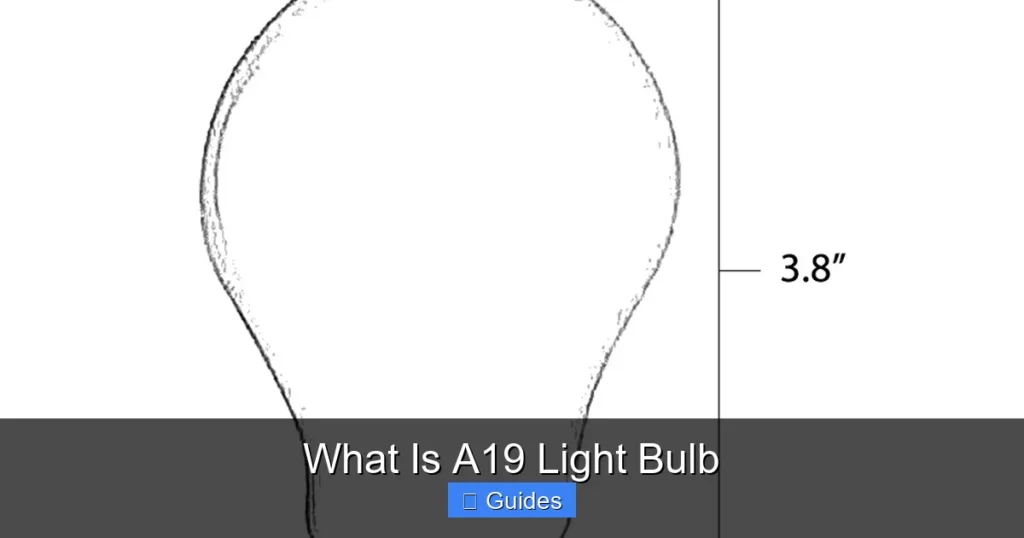
- “A” Shape & “19” Diameter: “A” denotes its classic arbitrary or pear-like shape, while “19” signifies its maximum diameter of 19/8ths of an inch (or 2.375 inches / 60 mm) at its widest point.
- Versatile Applications: Thanks to its standard E26 screw base (in North America) and common size, the A19 fits into most household sockets, making it incredibly versatile for general lighting.
- Available in All Technologies: You can find A19 bulbs in traditional incandescent, energy-efficient LED, compact fluorescent (CFL), and halogen versions, offering choices in energy consumption, lifespan, and light quality.
- Important Lighting Metrics: When choosing an A19 bulb, consider lumens (brightness), color temperature (warm white to cool daylight), dimmability, and energy efficiency to match your specific lighting needs.
- Easy Replacement: Replacing an A19 bulb is straightforward, typically requiring just screwing the old one out and the new one in, but always ensure the wattage (or LED equivalent) matches your fixture’s rating.
Quick Answers to Common Questions
What does A19 mean on a light bulb?
A19 indicates the light bulb’s shape and size. “A” refers to its classic pear-like or “arbitrary” shape, and “19” means its maximum diameter is 19/8ths of an inch (approximately 2.375 inches or 60 mm) at its widest point.
Is an A19 bulb the same as a standard bulb?
Yes, an A19 bulb is generally considered the “standard” or most common household bulb shape and size, especially in North America where it typically comes with an E26 screw base.
What is the most common light bulb size?
The A19 is the most common light bulb size for general residential use, thanks to its versatile shape and dimensions that fit most standard lamps and fixtures.
Can an A19 bulb be used outdoors?
An A19 bulb can be used outdoors if it’s specifically rated for outdoor or wet locations, or if it’s housed within a fully enclosed, weather-resistant outdoor fixture.
Are all A19 bulbs LED?
No, not all A19 bulbs are LED. While LED A19 bulbs are the most popular and energy-efficient choice today, A19 bulbs were historically made in incandescent, halogen, and CFL (compact fluorescent) versions, some of which are still available.
📑 Table of Contents
- What Does “A19” Actually Mean? Deciphering the Code
- Why Is the A19 Light Bulb So Popular and Versatile?
- Beyond Incandescent: A19 in the Age of LEDs
- Choosing the Right A19 Bulb for Your Needs
- Installation and Maintenance Tips for Your A19 Bulbs
- The Future of the A19: Sustainability and Innovation
- Conclusion
What Does “A19” Actually Mean? Deciphering the Code
When you see “A19” printed on a light bulb box, it’s not some random code. It’s a standard designation that tells you two crucial things about the bulb: its shape and its size. Think of it as a universal identifier that lighting manufacturers and consumers alike can understand.
The “A” for Arbitrary or Arc Shape
The “A” in A19 refers to the bulb’s classic shape. This is the traditional, pear-like, somewhat rounded profile that most people picture when they think of a light bulb. It’s often described as an “arbitrary” shape, meaning it’s the common, standard shape without any specific geometric precision like a globe (G) or a flame tip (F). This classic form allows for an even distribution of light, making it highly versatile for general lighting purposes. It’s symmetrical, functional, and visually unobtrusive, allowing it to blend seamlessly into almost any fixture design.
The “19” for Diameter in Eighths of an Inch
Now, for the number “19.” This part indicates the maximum diameter of the bulb at its widest point. However, it’s not measured in whole inches. Instead, it’s measured in eighths of an inch. So, “19” means the bulb is 19/8ths of an inch wide.
Let’s do a little math:
- 19 divided by 8 equals 2.375 inches.
- In metric terms, this translates to approximately 60 millimeters.
So, an A19 light bulb is a bulb with a traditional pear shape that measures about 2.375 inches (or 60 mm) across its widest point. This specific dimension ensures that the A19 light bulb fits perfectly into the vast majority of standard light fixtures and lamps designed for general household use. It’s neither too large to stick out awkwardly nor too small to look out of place.
Why Is the A19 Light Bulb So Popular and Versatile?
Visual guide about What Is A19 Light Bulb
Image source: m.media-amazon.com
The A19 light bulb didn’t become the global standard by accident. Its popularity stems from a perfect combination of practical design, universal compatibility, and consistent performance across various lighting technologies.
Universal Compatibility with E26 Base
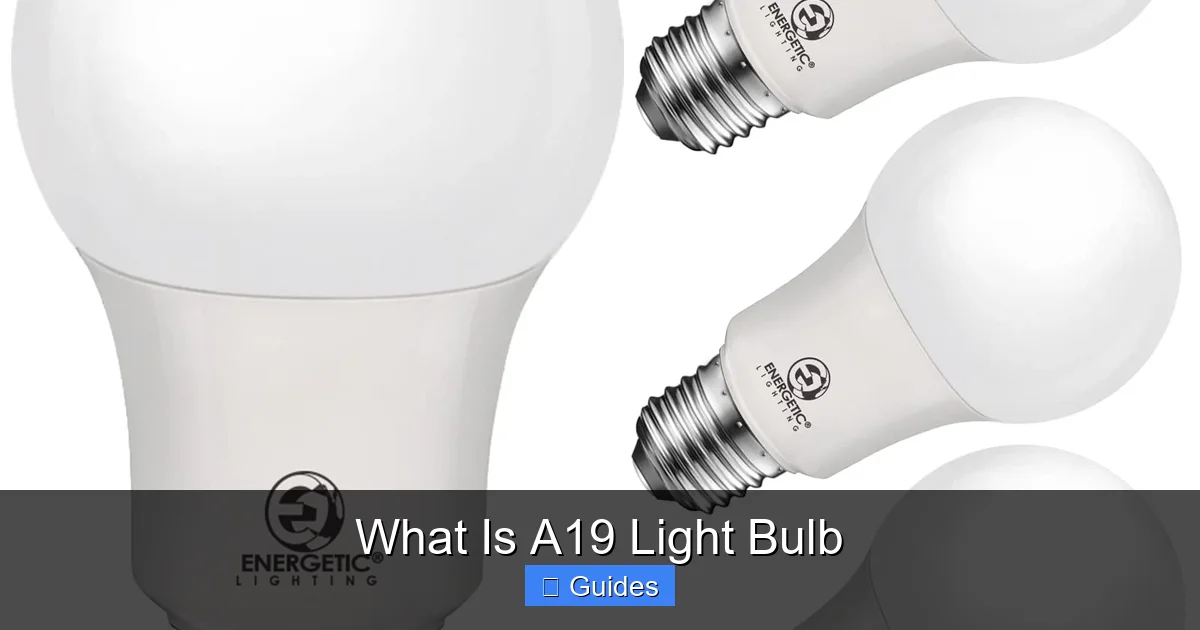
One of the primary reasons for the A19’s dominance is its standard base. In North America, the A19 light bulb almost universally uses an E26 screw base. The “E” stands for Edison, referring to the screw-in design, and “26” indicates the base’s diameter in millimeters. This E26 base is the most common type for household bulbs in the United States and Canada, meaning if your lamp or fixture takes a regular screw-in bulb, it most likely takes an A19 with an E26 base. This widespread compatibility simplifies bulb selection and ensures that A19s are readily available and interchangeable.
Ideal Size for Most Fixtures
The A19’s dimensions—that 2.375-inch diameter—are just right. It’s compact enough to fit inside enclosed fixtures, shades, and decorative housings without obstruction, yet large enough to provide a decent surface area for light emission. This “just right” sizing makes it suitable for:
- Table lamps and floor lamps
- Ceiling fan lights
- Pendant lights
- Flush mount and semi-flush mount ceiling fixtures
- Bathroom vanity lights
- Outdoor porch lights (if rated for outdoor use)
Its unobtrusive nature means it works well in both exposed sockets where the bulb is visible and in fixtures where it’s largely hidden by a shade or diffuser.
Consistent Light Distribution
The classic “A” shape, with its rounded, somewhat elongated form, is excellent for providing omnidirectional light. This means the light spreads out relatively evenly in all directions, creating a broad wash of illumination. For general ambient lighting in a living room, bedroom, or kitchen, this consistent light distribution is highly desirable, as it minimizes harsh shadows and creates a comfortable, well-lit environment. Unlike directional bulbs like spotlights (PAR or BR shapes), the A19 is designed for widespread, general-purpose lighting.
Beyond Incandescent: A19 in the Age of LEDs
While the A19 shape was originally conceived for incandescent bulbs, its enduring popularity means that almost every new lighting technology has adopted this familiar form factor. Today, when you shop for an A19 light bulb, you have a wide array of options beyond the traditional glowing filament.
Incandescent A19 Bulbs (The Originals)
These are the traditional bulbs with a filament that heats up and glows when electricity passes through it. They produce a warm, familiar light, often with excellent color rendering. However, they are the least energy-efficient option, converting most of their energy into heat rather than light, and have a relatively short lifespan. Many countries have phased them out due to energy regulations, but some specialty versions or decorative ones might still be found.
Halogen A19 Bulbs (Improved Incandescent)
Halogen bulbs are a type of incandescent bulb that incorporates halogen gas. This allows the filament to burn hotter and brighter, leading to slightly better energy efficiency and a longer lifespan than standard incandescents, while still providing a similar light quality. They also tend to produce a brighter, crisper white light. However, they still generate a lot of heat and are not as efficient as CFLs or LEDs.
CFL A19 Bulbs (Compact Fluorescent Lamps)
CFLs were the first major step towards energy-efficient lighting for the A19 form factor. These bulbs contain mercury vapor that, when energized, emits UV light that excites a fluorescent coating on the inside of the bulb, producing visible light. CFL A19 bulbs typically have a spiral or folded tube design encased in a plastic or glass dome to mimic the A19 shape. They are significantly more efficient and last much longer than incandescents, but they contain mercury (requiring special disposal), often have a warm-up period, and some people find their light quality less appealing.
LED A19 Bulbs (The Modern Standard)
Light Emitting Diodes (LEDs) are now the reigning champion of the A19 light bulb market. LED A19 bulbs offer incredible energy efficiency, consuming up to 80-90% less electricity than incandescent bulbs for the same light output. They also boast incredibly long lifespans, often lasting 15-25 times longer than incandescents. LED A19 bulbs are available in a vast range of color temperatures, are instantly on at full brightness, and many are dimmable. While they typically cost more upfront, their energy savings and longevity make them the most economical choice in the long run. Modern LED A19 bulbs come in various designs, sometimes featuring visible filaments for a retro look or a solid white diffuser for a cleaner aesthetic.
Choosing the Right A19 Bulb for Your Needs
Selecting the perfect A19 light bulb involves more than just picking a brand. You need to consider several factors to ensure it meets your functional and aesthetic requirements.
Lumens: The Measure of Brightness
Forget wattage for brightness when buying modern bulbs, especially LEDs. Lumens (lm) are the true measure of a bulb’s light output. Higher lumen values mean a brighter light.
- General guide:
- 450 lumens: Equivalent to a 40W incandescent (good for accent or very dim light)
- 800 lumens: Equivalent to a 60W incandescent (most common for general use)
- 1100 lumens: Equivalent to a 75W incandescent (for brighter spaces)
- 1600 lumens: Equivalent to a 100W incandescent (for very bright areas or large rooms)
Always check the lumen output to ensure the A19 light bulb provides enough light for your space without being too dim or overpowering.
Color Temperature: Setting the Mood
Color temperature, measured in Kelvins (K), describes the perceived warmth or coolness of the light.
- Warm White (2700K-3000K): Creates a cozy, inviting atmosphere, similar to traditional incandescent bulbs. Ideal for living rooms, bedrooms, and dining areas.
- Cool White / Neutral White (3500K-4100K): A more balanced light, good for kitchens, bathrooms, offices, and workspaces where clarity is important.
- Daylight (5000K-6500K): Mimics natural daylight, very bright and crisp. Best for task lighting, garages, workshops, or areas where high visibility is crucial.
Consider the function of the room when choosing the color temperature of your A19 light bulb.
Dimmability: Control Your Ambiance
Not all A19 light bulbs are dimmable. If you have a dimmer switch, or plan to install one, always choose an A19 LED bulb specifically labeled as “dimmable.” Using a non-dimmable bulb on a dimmer switch can lead to flickering, buzzing, or even damage to the bulb or switch. For the best performance, ensure your dimmer switch is compatible with LED technology, as older incandescent-only dimmers might not work perfectly with LED A19 bulbs.
Color Rendering Index (CRI): How True Colors Appear
CRI is a measure (from 0-100) of how accurately a light source renders colors compared to natural light. A higher CRI means colors will appear more vibrant and true-to-life. For most residential applications, a CRI of 80 or above is perfectly adequate. For art studios, retail displays, or anywhere accurate color perception is critical, look for A19 bulbs with a CRI of 90 or higher.
Smart Features: The Future is Here
Many A19 LED bulbs now come with smart features. These bulbs can connect to your home Wi-Fi or Bluetooth, allowing you to control them via a smartphone app, voice assistant (like Alexa or Google Assistant), or smart home hub. Smart A19 bulbs often offer:
- Remote on/off control
- Dimmability without a special switch
- Tunable white (adjusting color temperature)
- RGB color changing (millions of colors)
- Scheduling and automation
If you’re building a smart home or want more control over your lighting, a smart A19 light bulb is an excellent upgrade.
Installation and Maintenance Tips for Your A19 Bulbs
Installing and maintaining A19 light bulbs is straightforward, but a few tips can help ensure safety and longevity.
Safe Installation Practices
- Turn Off Power: Always, always turn off the power to the fixture at the wall switch before replacing a bulb. For added safety, consider turning off the corresponding circuit breaker.
- Let Bulbs Cool: Incandescent and halogen A19 bulbs can get very hot. Allow them to cool down before touching them to avoid burns. LED A19 bulbs run much cooler.
- Proper Grip: Grip the bulb by its base or the glass firmly but gently when screwing it in or out. Avoid overtightening, which can strip the socket or make future removal difficult.
- Check Wattage/Equivalent: Ensure the A19 bulb you are installing doesn’t exceed the maximum wattage rating of your fixture. For LED A19 bulbs, this typically means checking the incandescent equivalent wattage. For example, if your fixture says “Max 60W,” you can safely install an LED A19 bulb that uses 9W but is “60W equivalent.”
- Dry Hands: Always handle bulbs with dry hands to prevent electrical shock.
Cleaning and Care
Dust can accumulate on A19 light bulbs, dimming their output and potentially causing them to run hotter.
- Regular Cleaning: Once the power is off and the bulb is cool, gently wipe the bulb with a dry, soft cloth or a slightly damp cloth (ensure it’s completely dry before restoring power).
- Avoid Harsh Chemicals: Do not use abrasive cleaners or harsh chemicals, especially on LED or CFL bulbs, as these can damage coatings or components.
Troubleshooting Common Issues
- Flickering LED A19: Often caused by incompatible dimmer switches. Try a different dimmable LED-compatible dimmer or a non-dimmable bulb if a dimmer isn’t needed.
- Buzzing: Can also be a sign of dimmer incompatibility or a faulty bulb.
- Short Lifespan: Ensure the bulb is not in an enclosed fixture if it’s not rated for it, as heat buildup can shorten an LED’s life. Also, check for loose connections or power surges.
The Future of the A19: Sustainability and Innovation
The A19 light bulb, far from being a relic of the past, continues to evolve. Its classic form factor makes it an ideal canvas for the latest innovations in lighting technology. We can expect even greater efficiency, smarter features, and more sustainable manufacturing processes in the years to come.
Enhanced Efficiency and Lifespan
LED technology is still advancing. Future A19 light bulbs will likely offer even higher lumen-per-watt ratios, meaning more light for less energy. Lifespans will continue to extend, pushing towards truly “install and forget” lighting solutions.
Advanced Smart Home Integration
As smart home ecosystems become more sophisticated, A19 smart bulbs will integrate more deeply, offering seamless automation, predictive lighting based on user behavior, and even health-centric features like circadian rhythm lighting that adjusts throughout the day.
Sustainable Materials and Manufacturing
With a growing focus on environmental responsibility, manufacturers are exploring more sustainable materials for A19 light bulbs, reducing reliance on plastics and hard-to-recycle components. Packaging is also becoming more eco-friendly.
The A19 light bulb remains at the forefront of general lighting, adapting to new technologies while maintaining its familiar and functional design. Its journey from a simple incandescent filament to a sophisticated, smart LED demonstrates its enduring relevance and adaptability.
Conclusion
The A19 light bulb might seem like a small detail in the grand scheme of your home, but it’s a foundational component of modern illumination. Its classic “A” shape and 19/8ths-inch diameter make it the most common and versatile bulb available, fitting into virtually every standard fixture. From the warm glow of an incandescent past to the bright, energy-efficient future of LEDs, the A19 light bulb has consistently evolved, offering options for every preference and need.
By understanding what “A19” means and considering factors like lumens, color temperature, dimmability, and smart features, you can confidently choose the perfect A19 light bulb to illuminate your living spaces. So, the next time you screw in a new bulb, you’ll know you’re not just replacing a light source; you’re engaging with a timeless design that perfectly balances form, function, and cutting-edge technology. Shine on!
🎥 Related Video: What is an A19 Light Bulb?
📺 Lighting Supply
A19 Light Bulbs Online: https://www.lightingsupply.com/catalogsearch/result/?q=a19&x=0&y=0 If you’ve ever had a bright idea, …
Frequently Asked Questions
What are the typical dimensions of an A19 light bulb?
An A19 light bulb has a traditional pear-like shape and measures approximately 2.375 inches (about 60 millimeters) in diameter at its widest point. Its overall length can vary slightly depending on the manufacturer and technology (LED, incandescent, etc.), but its width is standard.
What type of base does an A19 light bulb usually have?
In North America, the A19 light bulb predominantly uses an E26 screw base. The “E” signifies an Edison screw, and “26” indicates that the base’s diameter is 26 millimeters. This is the standard medium screw base found in most household fixtures.
How do I choose the right brightness for an A19 bulb?
To choose the right brightness, look at the bulb’s lumen (lm) output, not wattage. For general room lighting, an A19 bulb with 800 lumens (equivalent to a 60W incandescent) is a common choice, while 450 lumens (40W equivalent) is good for accent lighting, and 1600 lumens (100W equivalent) provides bright illumination for larger spaces.
Can I replace an old incandescent A19 bulb with an LED A19 bulb?
Yes, absolutely! You can almost always replace an old incandescent A19 bulb with an LED A19 bulb. Just ensure the LED bulb has the same E26 screw base, fits physically into your fixture, and provides the desired brightness (lumens) and color temperature. If using a dimmer, make sure the LED A19 bulb is specified as dimmable.
What’s the difference between an A19 and an A21 light bulb?
The primary difference is size. While both share the “A” (arbitrary/pear) shape, the “19” in A19 means a diameter of 19/8ths of an inch (2.375 inches), whereas “21” in A21 means a diameter of 21/8ths of an inch (2.625 inches). A21 bulbs are slightly larger and often used in fixtures that require more light or have more space.
Are A19 bulbs available in different color temperatures?
Yes, A19 bulbs, especially LED versions, are available in a wide range of color temperatures, measured in Kelvins (K). Common options include warm white (2700K-3000K) for a cozy feel, neutral white (3500K-4100K) for balanced lighting, and daylight (5000K-6500K) for bright, task-oriented illumination.
