


As an Amazon Associate, We earn from qualifying purchases.
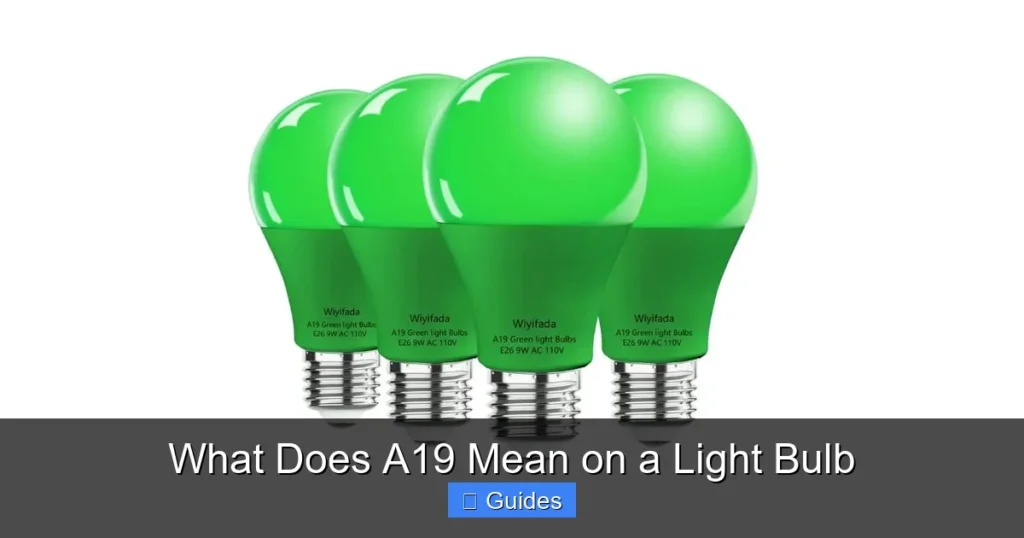
When you see “A19” on a light bulb, it refers to its classic pear-like shape (“A”) and its diameter (“19”), which is 19/8ths of an inch. This designation helps ensure you’re selecting the correct bulb type and size for your fixtures. It’s the most common and versatile bulb found in homes worldwide, fitting most standard lamps and sockets effortlessly.
What Does A19 Mean on a Light Bulb?
Have you ever stood in the light bulb aisle, a little overwhelmed by the array of numbers, letters, and unfamiliar terms? You’re not alone! It feels like there’s a secret code on every box, and sometimes, all you want is just a simple light bulb. Among these codes, “A19” is perhaps the most common, yet its meaning often remains a mystery to many. But once you crack it, the world of lighting becomes a whole lot clearer!
Understanding what A19 means on a light bulb isn’t just about trivia; it’s about making informed choices for your home’s lighting. It ensures you pick a bulb that fits your fixture properly, looks aesthetically pleasing, and provides the kind of light you expect. So, let’s peel back the layers of this common designation and demystify the humble A19 light bulb, turning you into a savvier shopper in no time.
In this guide, we’ll explore the significance behind the “A” and the “19,” dive into why this particular shape and size became the global standard, and even touch upon how it translates across different lighting technologies, from old-school incandescents to modern LEDs. Get ready to gain a clear understanding of what A19 truly represents and how this knowledge can empower your future lighting decisions.
Key Takeaways
- Shape Designation “A”: The “A” in A19 refers to the traditional, rounded, pear-like shape that most people associate with a classic incandescent light bulb.
- Diameter Measurement “19”: The “19” indicates the bulb’s maximum diameter in eighths of an inch. An A19 bulb is 19/8ths of an inch (or 2 3/8 inches / 60 mm) at its widest point.
- Universal Standard: A19 is the most common and versatile bulb shape and size worldwide, making it suitable for a vast majority of household light fixtures and lamps.
- Fixture Compatibility: Understanding A19 helps ensure proper fit, preventing issues with shades, enclosures, or socket compatibility.
- Transition Across Technologies: While originally for incandescent bulbs, the A19 shape is now universally adopted by CFLs and LEDs, allowing for seamless upgrades without changing fixtures.
- More Than Just A19: While A19 is standard, knowing other bulb designations (like B, C, G, PAR) can help you find specialized lighting for specific aesthetic or functional needs.
Quick Answers to Common Questions
What is the physical size of an A19 bulb?
An A19 bulb has a maximum diameter of 19/8ths of an inch, which is equivalent to 2.375 inches or approximately 60 millimeters.
Can I replace an incandescent A19 bulb with an LED A19 bulb?
Yes, absolutely! One of the great advantages of the A19 standard is that you can seamlessly replace an old incandescent A19 bulb with a modern LED A19 bulb without needing to change your fixture.
Does “A19” tell me anything about the bulb’s brightness?
No, “A19” only describes the bulb’s shape and physical size. Brightness is measured in lumens (lm), so you’ll need to check the lumen rating on the bulb’s packaging.
Are all A19 bulbs dimmable?
No, not all A19 bulbs are dimmable, especially with LED technology. If you need a dimmable bulb, always look for explicit “dimmable” labeling on the A19 bulb’s packaging.
Is A19 the only type of light bulb shape?
No, A19 is just one of many bulb shapes. Other common types include B (bullet/blunt-tip), C (candle), G (globe), R/BR (reflector), and PAR (parabolic aluminized reflector) bulbs, each designed for specific lighting needs or aesthetics.
📑 Table of Contents
Decoding the “A” in A19: Shape and Style
Let’s start with the first part of the puzzle: the “A.” When you see an “A” on a light bulb, it refers to its distinctive shape. Imagine the classic light bulb that cartoonists draw or that first comes to mind when you think of “a bulb.” That’s the “A” shape!
What “A” Actually Stands For
The “A” shape is officially known as an “Arbitrary” or “A-Type” bulb. It’s essentially a traditional, rounded, pear-like, or elongated sphere shape. It has a relatively wide base that tapers smoothly towards the top, creating that familiar silhouette. This design has been around for over a century, since the early days of electric lighting, making it the iconic image of a light bulb. It’s simple, elegant, and highly functional.
The Classic Incandescent Look
The A-shape was initially developed for incandescent bulbs. Its gentle curves and robust structure were perfect for housing the filament and inert gas within. Even though bulb technology has advanced dramatically with CFLs (Compact Fluorescent Lamps) and LEDs (Light Emitting Diodes), the A-shape has stuck around. Why? Because it’s what people are used to, it fits most existing fixtures, and it distributes light beautifully. When you pick up an A19 light bulb today, whether it’s an old incandescent or a brand-new LED, it will almost certainly maintain this classic form.
Why Shape Matters for Light Distribution
The shape of a light bulb isn’t just about aesthetics; it plays a crucial role in how light is cast into a room. The rounded, diffused nature of the A-shape allows light to spread out evenly in all directions (typically a 360-degree beam angle). This makes A19 bulbs incredibly versatile for general ambient lighting in a wide range of applications, from ceiling fixtures to table lamps. Unlike directional bulbs (like spot or floodlights), an A19 bulb is designed to illuminate a broad area, making it ideal for living rooms, bedrooms, and general utility spaces where you want uniform, comfortable light.
Unpacking the “19”: Diameter and Dimensions
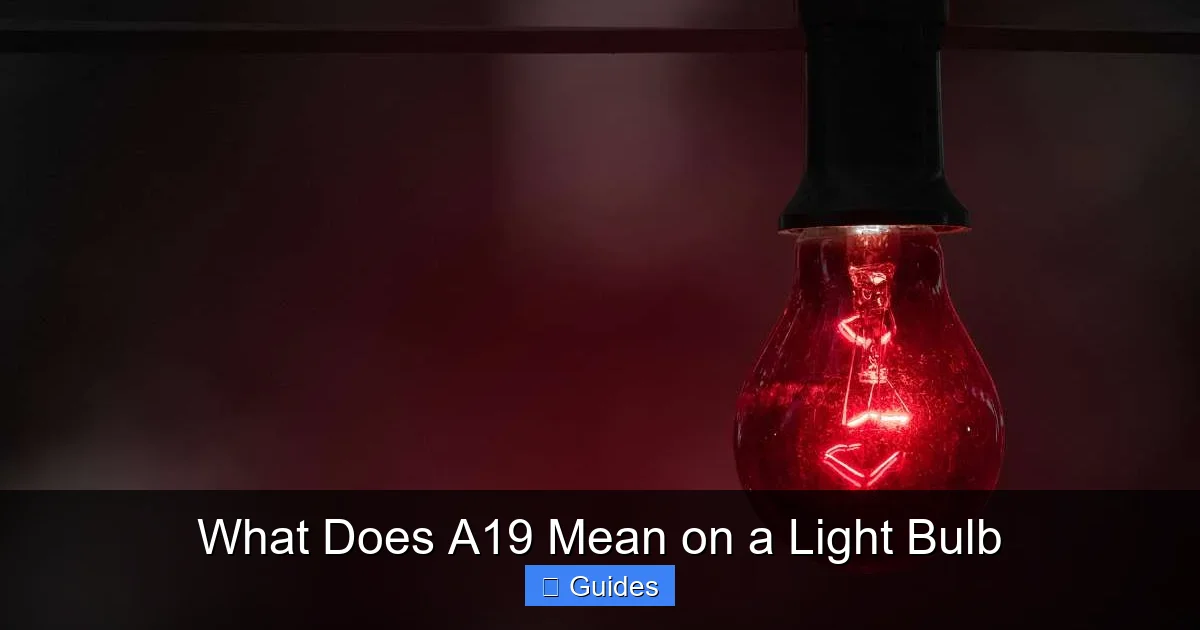
Visual guide about What Does A19 Mean on a Light Bulb
Image source: storables.com
Now that we understand the “A” is all about shape, let’s move on to the number “19.” This part of the code provides essential information about the bulb’s size, specifically its maximum diameter.
Understanding Bulb Measurements (E-numbers)
In the world of light bulbs, measurements can sometimes seem a bit quirky. Bulb diameters are often measured in eighths of an inch. This system is a holdover from historical manufacturing practices and is still widely used today, even alongside metric measurements. So, when you see “19” after the “A,” it directly refers to the bulb’s width.
Calculating the Diameter (19 * 1/8 inch)
To figure out the actual diameter of an A19 light bulb, you simply take the number “19” and multiply it by 1/8th of an inch.
19 * (1/8 inch) = 19/8 inches.
If you convert this fraction to a decimal, you get 2.375 inches.
In metric terms, that’s approximately 60 millimeters (mm).
So, an A19 light bulb has a maximum diameter of about 2 and 3/8 inches or 60 millimeters at its widest point. This measurement is crucial for ensuring the bulb fits properly within your fixture, especially if it has a globe, shade, or other enclosure.
Standardizing for Fixture Compatibility
The standardization of the A19 size is a huge convenience. It means that the vast majority of lamps, ceiling fixtures, and recessed cans designed for general lighting in homes are built to accommodate an A19 bulb. This prevents the frustration of buying a bulb only to find it’s too wide to fit under a lampshade or too tall for a enclosed fixture. When you see a fixture that calls for a “standard” bulb, an A19 is almost always what it means. This universal compatibility is a key reason why A19 remains the dominant light bulb type.
Why A19 is the “Standard”: Versatility and Ubiquity
The A19 isn’t just a shape and a size; it’s practically the default light bulb for homes around the globe. Its prevalence is a testament to its unparalleled versatility and user-friendliness.
From Incandescent to LED: A Seamless Transition
One of the most remarkable aspects of the A19 standard is how gracefully it has transitioned across different lighting technologies. For decades, it was the quintessential incandescent bulb. When energy-efficient CFLs came along, manufacturers designed them to mimic the A19 shape and size, often by coiling the fluorescent tube inside a plastic or glass enclosure to achieve the familiar look. Now, with LEDs dominating the market, you’ll find countless A19 LED light bulbs that perfectly replicate the traditional form factor. This commitment to the A19 standard has allowed homeowners to upgrade their lighting to more efficient options without having to replace their fixtures, making the switch incredibly simple and cost-effective.
Common Applications: Lamps, Fixtures, and More
Where will you find an A19 bulb? Almost everywhere!
- Table and Floor Lamps: The most obvious place, where the A19’s diffuse light is perfect for reading or ambient glow.
- Ceiling Fixtures: Many flush-mount, semi-flush, and pendant lights use A19 bulbs to cast a wide, even light.
- Enclosed Fixtures: Its standard size means it fits well within many enclosed glass globes or decorative cages.
- Outdoor Porch Lights: Often, the same A19 compatibility extends to outdoor rated enclosed fixtures.
- Utility Lighting: Basements, garages, and laundry rooms frequently use A19 bulbs in simple open or enclosed fixtures.
Its ability to fit so many applications is precisely why the A19 bulb has earned its status as the “go-to” light bulb for general residential lighting.
The Comfort of Familiarity
Beyond technical specifications, there’s a psychological comfort in the A19. It’s the bulb we grew up with, the one we instinctively reach for. This familiarity contributes significantly to its ubiquity. Manufacturers know that consumers recognize and trust this shape, making it an easy sell and a reliable choice for any general lighting need. When in doubt about what bulb to get for a new lamp, chances are an A19 will be the perfect fit.
Beyond A19: A Glimpse at Other Bulb Shapes and Sizes
While the A19 light bulb is king for general home lighting, it’s certainly not the only game in town. Different lighting needs call for different bulb types. Knowing a few other common designations can help you select specialized bulbs when the A19 simply won’t do.
B/C Series (Candleabra/Bullet)
These are often smaller, decorative bulbs with a distinctly pointed (B-shape, often called “bullet” or “blunt-tip”) or flame-like (C-shape, “candle”) appearance. They are typically used in chandeliers, wall sconces, or decorative fixtures where the bulb itself is part of the aesthetic. They often have smaller bases (like E12 candelabra bases).
G Series (Globe)
The “G” stands for Globe. These bulbs are perfectly spherical, offering a very clean, uniform look. G-series bulbs come in various sizes (e.g., G16.5, G25, G30, G40), with the number indicating the diameter in eighths of an inch, just like A19. They’re popular in vanity strips, exposed bulb fixtures, or anywhere you want a more decorative, rounded aesthetic.
R/BR Series (Reflector/Bulged Reflector)
“R” for Reflector and “BR” for Bulged Reflector. These bulbs have an internal reflective coating to direct light forward, creating a more focused beam. BR bulbs are a variation that offers a wider beam spread than traditional R bulbs. They are commonly used in recessed lighting or track lighting where you want to illuminate a specific area or object, rather than general ambient light.
PAR Series (Parabolic Aluminized Reflector)
“PAR” bulbs are similar to R/BR bulbs in that they are designed to direct light, but they are typically more precise and often used in outdoor floodlights, stage lighting, or high-performance recessed fixtures. They have a very distinct, often faceted, lens and a strong, focused beam. Like A19, the number (e.g., PAR30, PAR38) refers to the diameter in eighths of an inch.
Edison/Vintage Styles
While not a formal “A” or “B” series, many modern bulbs mimic the early incandescent designs, often called “Edison” or “vintage” bulbs. These usually feature clear glass and visible filaments (often LED filaments) to create a warm, nostalgic glow. They can come in various shapes, including teardrop, globe, or tubular, and are chosen specifically for their aesthetic appeal in exposed fixtures.
Choosing the Right A19 for Your Needs: Beyond Just Shape and Size
Knowing what A19 means is a great start, but today’s light bulbs offer so much more than just shape and size. When you’re picking an A19 light bulb, consider these additional factors to ensure you get the perfect illumination for your space.
Lumens: Brightness, Not Watts
Forget watts when thinking about brightness, especially with LEDs. Watts measure energy consumption, not light output. Lumens (lm) are the true measure of a bulb’s brightness. A 60-watt equivalent A19 LED bulb might only consume 8-10 watts but produce around 800 lumens, which is the amount of light an old 60W incandescent used to give off. Always check the lumen output to know how bright your A19 will be.
Color Temperature (CCT): Setting the Mood
Color temperature, measured in Kelvin (K), describes the “warmth” or “coolness” of the light.
- 2700K – 3000K (Warm White/Soft White): This is the traditional yellowish glow of an incandescent bulb. Ideal for bedrooms, living rooms, and dining areas where you want a cozy, inviting atmosphere.
- 3500K – 4100K (Neutral White/Cool White): A balanced light, good for kitchens, offices, and workspaces where you need clarity without being too harsh.
- 5000K – 6500K (Daylight): A very bright, bluish-white light that mimics natural daylight. Excellent for task lighting, garages, or areas where maximum visibility is required.
Your A19 light bulb can dramatically alter the mood of a room based on its color temperature.
Dimmability: Control Your Ambiance
Not all A19 LED bulbs are dimmable. If you have dimmer switches in your home, make sure the A19 LED bulb you choose is explicitly labeled as “dimmable.” Using a non-dimmable LED bulb on a dimmer switch can lead to flickering, buzzing, or even damage to the bulb or switch. For optimal performance, pair dimmable LEDs with LED-compatible dimmer switches.
Energy Efficiency: LED vs. Incandescent/CFL
While incandescent A19 bulbs are largely phased out or difficult to find due to energy regulations, some CFLs (Compact Fluorescent Lamps) and a wide array of LED A19 bulbs are available. LEDs are by far the most energy-efficient option, using significantly less power and lasting much longer than CFLs or incandescents. Investing in A19 LED bulbs will save you money on electricity bills and reduce the frequency of bulb replacements.
Smart Features: The Future of Lighting
Many modern A19 LED bulbs now come with “smart” features. These can include:
- Connectivity: Control via Wi-Fi or Bluetooth from your smartphone.
- Color Changing: Adjust the light to millions of colors (RGB) or a wide range of white tones.
- Scheduling: Set lights to turn on/off at specific times.
- Voice Control: Integrate with smart home assistants like Amazon Alexa or Google Assistant.
If you’re looking to upgrade your lighting beyond simple on/off, an A19 smart bulb can offer incredible convenience and customization.
Conclusion
So, what does A19 mean on a light bulb? It’s far more than just a random code. It’s a precise designation that tells you you’re holding a light bulb with the classic, pear-like “A” shape, measuring 19 eighths of an inch (or 2 3/8 inches / 60 mm) in diameter. This specific combination makes the A19 light bulb the most common, versatile, and universally compatible bulb for general lighting in homes across the globe.
Understanding “A19” empowers you to confidently navigate the light bulb aisle, ensuring a perfect fit for your fixtures every time. It’s a standard that has gracefully adapted across technological shifts, from Edison’s early designs to today’s sophisticated LED smart bulbs. So, the next time you’re shopping for light bulbs, you’ll not only know what “A19” stands for but also how to choose the right one, considering brightness, color, dimmability, and smart features, to perfectly illuminate your living space. Happy lighting!
Frequently Asked Questions
What does the “A” in A19 specifically refer to?
The “A” in A19 refers to the bulb’s classic, traditional shape. It’s a rounded, pear-like or elongated spherical design, often called an “Arbitrary” or “A-Type” shape, which is the most recognizable form of a household light bulb.
How do I calculate the diameter from the “19” in A19?
To calculate the diameter, you take the number “19” and multiply it by 1/8th of an inch. This gives you 19/8 inches, which equals 2.375 inches or roughly 60 millimeters at the bulb’s widest point.
Why is A19 considered the standard light bulb for most homes?
A19 is considered the standard because its shape allows for broad, omnidirectional light distribution, and its universally recognized size (2 3/8 inches diameter) fits most common household fixtures, lamps, and shades without issue, making it incredibly versatile.
Does A19 only apply to incandescent bulbs?
While the A19 shape originated with incandescent bulbs, the designation now applies across all lighting technologies. You’ll find A19-shaped CFLs and, most commonly, A19 LED bulbs, which maintain the same physical dimensions for easy replacement in existing fixtures.
What should I look for when buying an A19 LED bulb today?
When buying an A19 LED bulb, consider its lumen output (for brightness), Kelvin temperature (for color of light, e.g., 2700K for warm, 5000K for daylight), dimmability, and any smart features you might desire.
Are there any specific situations where an A19 bulb might not be the best choice?
Yes, while versatile, an A19 bulb might not be ideal for highly decorative fixtures that require smaller, more ornate bulbs (like chandeliers needing B or C shapes), or for applications requiring focused light (like track lighting or outdoor floodlights needing R, BR, or PAR types).
