


As an Amazon Associate, We earn from qualifying purchases.
Compact Fluorescent Lamps (CFLs) are a type of fluorescent light bulb designed to fit into standard incandescent light sockets. They were a revolutionary step in energy efficiency, using significantly less electricity and lasting much longer than traditional incandescent bulbs. While largely superseded by LEDs today, CFLs played a crucial role in making energy-saving lighting accessible and mainstream.
Hey there! Have you ever wondered about those twisty, curly light bulbs that used to be everywhere, promising to save you money on your electricity bill? Chances are, you’re thinking of a CFL light bulb. For years, these compact fluorescent lamps were the go-to choice for anyone looking to upgrade from traditional incandescent bulbs to something more efficient. They popped up in homes, offices, and stores worldwide, becoming a symbol of eco-consciousness and smart energy use.
But what exactly is a CFL light bulb, and what made it such a game-changer for so long? In an era where energy conservation is paramount, understanding the evolution of everyday technologies like light bulbs helps us appreciate where we’ve come from and where we’re headed. While newer technologies like LEDs have taken center stage, the CFL light bulb still holds a significant place in the history of lighting and continues to be used in various applications today.
Join us as we explore the inner workings of a CFL light bulb, uncover its benefits, discuss its environmental considerations, and see how it compares to other lighting options. By the end of this guide, you’ll have a complete picture of this fascinating and once-ubiquitous lighting solution.
Key Takeaways
- Energy Efficiency Pioneer: CFLs were among the first widely adopted energy-efficient light bulbs, consuming 70-80% less electricity than incandescent bulbs.
- Extended Lifespan: A typical CFL light bulb lasts 8 to 10 times longer than a comparable incandescent bulb, reducing the frequency of replacements.
- Fluorescent Technology: They work by passing an electric current through a gas containing mercury vapor, which then emits UV light. This UV light is converted into visible light by a phosphor coating inside the tube.
- Mercury Content: CFLs contain small amounts of mercury, necessitating special handling and recycling to prevent environmental contamination.
- Environmental Benefits: Despite their mercury content, CFLs significantly reduce greenhouse gas emissions over their lifetime due to their lower energy consumption.
- Diverse Options: Available in various wattages, color temperatures (from warm white to daylight), and shapes to suit different lighting needs.
- Paved the Way for LEDs: CFLs introduced consumers to the concept of energy-saving lighting, making the transition to even more efficient LEDs smoother.
Quick Answers to Common Questions
What does CFL stand for?
CFL stands for Compact Fluorescent Lamp.
Are CFLs more energy efficient than incandescent bulbs?
Yes, CFLs are significantly more energy efficient, using about 70-80% less electricity to produce the same amount of light as incandescent bulbs.
Do CFLs contain mercury?
Yes, all CFLs contain a small amount of mercury vapor, typically 1-5 milligrams, which is essential for them to produce light.
Can CFLs be used with dimmer switches?
Only specifically marked “dimmable” CFL light bulbs can be used with dimmer switches. Regular CFLs are not compatible and can be damaged by dimmers.
How long do CFLs typically last?
A typical CFL light bulb lasts much longer than an incandescent, usually between 8,000 to 10,000 hours, which is 8 to 10 times longer.
📑 Table of Contents
What Exactly Is a CFL Light Bulb?
Let’s dive right into the heart of the matter: what is a CFL light bulb? A CFL stands for Compact Fluorescent Lamp. Essentially, it’s a miniaturized version of the long, tube-shaped fluorescent lights you might see in a garage or office, but designed to screw into the same sockets as a regular incandescent bulb. This compatibility was key to its widespread adoption, making it easy for anyone to switch without needing new fixtures.
How a CFL Light Bulb Works Its Magic
The science behind a CFL light bulb is pretty ingenious. Unlike an incandescent bulb that creates light by heating a filament until it glows (which wastes a lot of energy as heat), a CFL operates on a completely different principle called fluorescence. Here’s a simplified breakdown:
- Electrical Discharge: When you flip the switch, electricity flows into the CFL light bulb.
- Gas Excitation: This electricity energizes a small amount of mercury vapor and inert gas (like argon) contained within the twisted glass tube.
- UV Light Production: As the electrons in the gas get excited, they emit ultraviolet (UV) light – a type of light our eyes can’t see.
- Visible Light Conversion: The inside of the glass tube is coated with a phosphor material. When the UV light hits this phosphor coating, the coating absorbs the UV energy and re-emits it as visible light, which is what we see.
This multi-step process is incredibly efficient, converting a much larger percentage of the electrical energy into light rather than heat, making the CFL light bulb a true energy saver.
Key Components of a CFL Light Bulb
To make this process happen, a CFL light bulb relies on several critical components, all neatly packaged into its compact form:
- Glass Tube: This is the characteristic twisted or folded tube. It’s designed to contain the gases and maximize the surface area for the phosphor coating while keeping the bulb compact.
- Electrodes: Found at each end of the tube, these are responsible for creating the electrical discharge that excites the gas.
- Mercury Vapor and Inert Gas: The small, precise amount of mercury vapor (often less than 5 milligrams) and an inert gas are essential for the UV light production.
- Phosphor Coating: This special coating on the inside of the glass tube is what converts the invisible UV light into the visible light we see. Different phosphor blends create different color temperatures of light.
- Ballast: This is arguably the most crucial component for a CFL light bulb. The ballast regulates the current flow through the tube, providing the initial voltage needed to start the lamp and then stabilizing the current during operation. Early CFLs had bulky magnetic ballasts, which contributed to flicker and slow startup, but modern CFLs use electronic ballasts that are much smaller, faster, and eliminate flicker.
- Standard Base: The screw-in base (usually E26 or E27) allows the CFL light bulb to fit into existing light fixtures, making replacement easy.
The Rise and Reign of CFLs
The journey of the CFL light bulb from a niche product to a household staple is a fascinating story of innovation meeting necessity. Before CFLs, the dominant lighting technology was the incandescent light bulb, which had remained largely unchanged for over a century. While familiar and inexpensive, incandescents were notoriously inefficient, converting only about 10% of their energy into light and the rest into heat. This inefficiency led to higher electricity bills and a significant energy drain on power grids.
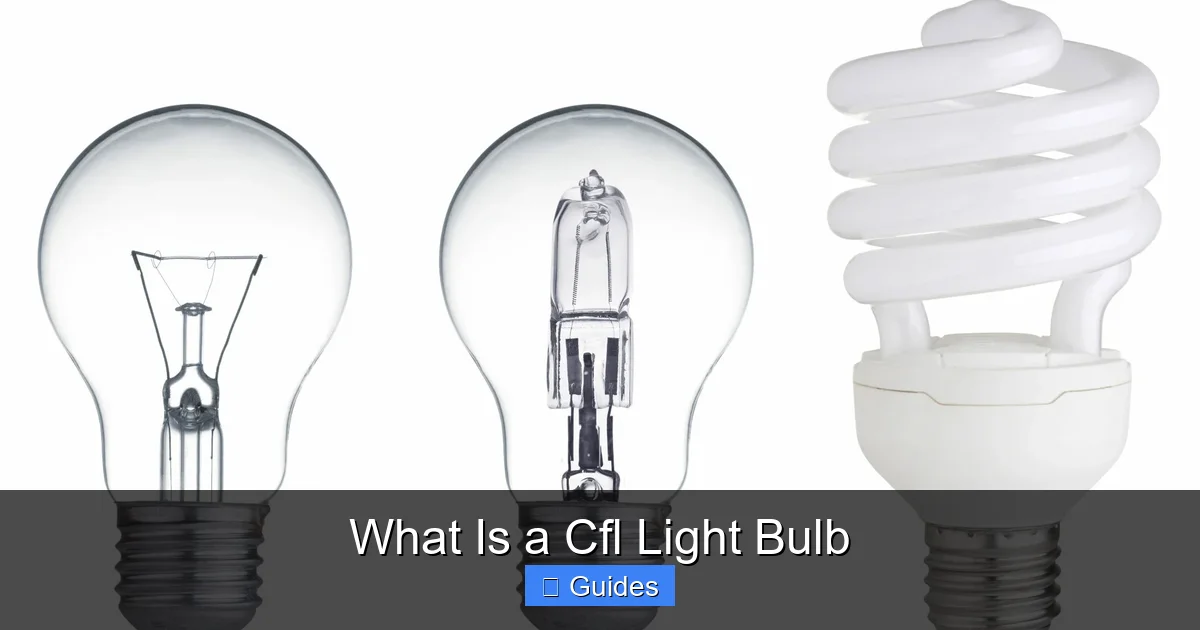
Visual guide about What Is a Cfl Light Bulb
Image source: lamphq.com
Why CFLs Became So Popular
The 1970s and 80s saw growing concerns about energy independence and environmental impact. Engineers began looking for ways to make lighting more efficient. The compact fluorescent lamp emerged as a viable solution. It offered several compelling advantages that quickly propelled it into popularity:
- Dramatic Energy Savings: This was the primary driver. A 13-watt CFL light bulb could produce the same amount of light as a 60-watt incandescent, meaning it used about 75% less electricity. Over time, this translated into significant savings on utility bills for consumers and reduced demand on power plants.
- Extended Lifespan: Not only did CFLs save energy, but they also lasted much longer. A typical incandescent bulb might last 750 to 1,000 hours, while a CFL light bulb could last anywhere from 8,000 to 10,000 hours or even more. This meant fewer trips to the store and less hassle replacing bulbs, especially in hard-to-reach fixtures.
- Environmental Benefits: By using less electricity, CFLs helped reduce the amount of fossil fuels burned to generate power. This, in turn, lowered greenhouse gas emissions, contributing to cleaner air and a reduced carbon footprint.
- Versatility: Early CFLs often had a noticeable spiral shape, but manufacturers quickly introduced various forms, including globe, candle, and reflector shapes, making the CFL light bulb suitable for a wide range of fixtures and aesthetic preferences.
The Incandescent Showdown: A Clear Winner
The comparison between an incandescent and a CFL light bulb was stark. Imagine two bulbs, both providing similar brightness. The incandescent is hot to the touch, constantly converting electricity into heat you don’t want. The CFL, on the other hand, stays relatively cool. This difference in energy conversion efficiency was not just an academic point; it had real-world implications. Governments and environmental agencies started promoting CFLs, even offering rebates and incentives to encourage consumers to switch. This push helped cement the CFL light bulb as the standard for energy-efficient lighting for over two decades.
CFLs vs. Modern Alternatives (LEDs)
While the CFL light bulb was revolutionary in its time, technology doesn’t stand still. Today, a new player has largely taken the spotlight: the LED (Light Emitting Diode). Understanding the differences between CFLs and LEDs helps us see how lighting technology continues to advance and where the CFL light bulb fits into the current landscape.
Where CFLs Stand Today
The CFL light bulb still offers significant advantages over incandescent bulbs in terms of energy efficiency and lifespan. However, when compared to LEDs, some of its characteristics become less favorable:
- Slower Startup: Many CFLs take a few seconds, or even a minute, to reach full brightness. This “warm-up” period is less than ideal for applications where instant light is needed, like a closet or a hallway with motion sensors.
- Limited Dimming: While special dimmable CFLs exist, they are often more expensive and may not dim as smoothly or across as wide a range as incandescent or LED bulbs. Using a non-dimmable CFL with a dimmer switch can damage the bulb or the switch.
- Heat Sensitivity: CFLs can be sensitive to extreme temperatures. Their performance might degrade in very cold environments (like an outdoor fixture in winter) or in enclosed fixtures where heat can build up.
- Mercury Content: This remains a key concern. The presence of mercury, however small, means CFLs require careful handling and specific recycling procedures, which can be less convenient for consumers.
LED Advantages: The New Frontier
LEDs have emerged as the current gold standard in lighting, building upon the energy-saving principles introduced by the CFL light bulb and pushing them further:
- Even Greater Efficiency: LEDs are even more energy-efficient than CFLs, often using 20-30% less energy to produce the same amount of light.
- Instant On: LEDs provide instant full brightness with no warm-up time.
- Exceptional Lifespan: LEDs typically last much longer than CFLs, often 25,000 to 50,000 hours or more, translating to decades of use.
- Durability: LEDs are solid-state devices with no fragile glass tubes or filaments, making them much more resistant to breakage and vibrations.
- No Mercury: A major advantage is that LEDs do not contain mercury, simplifying disposal and making them a safer choice if broken.
- Superior Dimming and Color Control: LEDs offer smooth dimming capabilities and are available in a vast array of color temperatures, and even color-changing options, often controlled by smart home systems.
- Performance in Varying Temperatures: LEDs perform well in both hot and cold environments, making them suitable for almost any application.
Why You Might Still Encounter or Choose a CFL
Despite the rise of LEDs, the CFL light bulb isn’t entirely obsolete. You might still find them:
- In Existing Installations: Many homes and businesses still have CFLs in their fixtures, and they continue to work reliably until they need replacement.
- Cost-Effectiveness: CFLs can sometimes be found at a lower upfront cost than equivalent LEDs, making them an attractive option for budget-conscious consumers for certain applications, especially if replacing a large number of bulbs.
- Specific Niche Uses: For certain very specific lighting needs or older fixtures, a CFL might still be a suitable fit.
However, for most new purchases and replacements, the benefits of LED technology generally outweigh those of the CFL light bulb, making LEDs the preferred choice for long-term energy savings and convenience.
Understanding CFL Specifications and Varieties
When you’re shopping for any light bulb, understanding the labels and specifications is crucial. The CFL light bulb comes with its own set of terms that help you choose the right one for your needs. Gone are the days of just looking at wattage; there’s more to consider with a CFL.
Wattage vs. Lumens: The True Measure of Brightness
With incandescent bulbs, we traditionally looked at wattage to gauge brightness. A 60-watt bulb was brighter than a 40-watt bulb. With a CFL light bulb, things changed:
- Wattage: This still tells you how much electricity the bulb consumes. However, a lower wattage CFL can produce the same brightness as a much higher wattage incandescent. So, a 13-watt CFL might replace a 60-watt incandescent.
- Lumens: This is the most important number for brightness. Lumens directly measure the total amount of visible light produced by a bulb. The more lumens, the brighter the light. Always compare lumens when trying to match the brightness of an older bulb. For instance, if you want to replace a 60-watt incandescent, look for a CFL light bulb that produces around 800 lumens.
This shift from watts to lumens was a significant educational hurdle for consumers but helped emphasize efficiency.
Color Temperature: Setting the Mood
Another crucial specification for a CFL light bulb is its color temperature, measured in Kelvin (K). This describes the perceived color of the light emitted:
- Warm White (2700K-3000K): This light is yellowish, similar to traditional incandescent bulbs, creating a cozy and inviting atmosphere. It’s often preferred for living rooms, bedrooms, and dining areas.
- Cool White / Bright White (3500K-4100K): This light is more neutral, less yellow, and sometimes has a slight blue tint. It’s often found in kitchens, bathrooms, and offices where a brighter, more focused light is desired.
- Daylight (5000K-6500K): This light mimics natural daylight, appearing very white or even with a noticeable blue tint. It’s excellent for tasks requiring high visual clarity, like reading, detailed work, or in workshops.
Choosing the right color temperature can drastically change the ambiance of a room, so it’s a vital consideration when selecting your CFL light bulb.
Shapes and Sizes: Beyond the Spiral
While the spiral shape is iconic for a CFL light bulb, they come in many forms to fit various fixtures:
- Spiral: The most common and recognizable shape, known for its compact size and good light distribution.
- Globe: A round, enclosed bulb, often used in vanity lights or fixtures where the bulb is visible.
- Candle: Designed to fit chandeliers and decorative fixtures, often with a frosted or clear glass shell.
- Reflector / Floodlight: These bulbs have a built-in reflector to direct light in a specific beam, suitable for recessed lighting or outdoor floodlights.
Always ensure the physical size and shape of the CFL light bulb will fit your fixture, especially if it’s enclosed, as some CFLs generate more heat than an incandescent in a confined space.
Dimming and Special Features
As mentioned, not all CFLs are dimmable. If you need a dimmable CFL light bulb, make sure the packaging explicitly states “Dimmable CFL.” Using a non-dimmable CFL with a dimmer can lead to buzzing, flickering, or premature bulb failure. Some CFLs also offer features like “Soft Start” to extend bulb life, or “Rapid Start” for quicker illumination.
Understanding these specifications helps you make an informed decision, ensuring you get the right CFL light bulb for the right application, optimizing both light quality and energy savings.
Safe Handling, Disposal, and Environmental Considerations
One of the most important aspects of owning and using a CFL light bulb is understanding its environmental footprint and the proper ways to handle and dispose of it. The presence of mercury, however small, makes this a crucial discussion point.
The Mercury Question: Why It Matters
Every CFL light bulb contains a small amount of mercury, typically between 1 to 5 milligrams (for comparison, an old mercury thermometer contains about 500 milligrams). This mercury is essential for the bulb to produce light efficiently. However, mercury is a neurotoxin, meaning it can be harmful to humans and the environment if released.
- Environmental Impact: If CFLs are improperly disposed of in landfills, the mercury can leach into the soil and water, eventually contaminating ecosystems and entering the food chain.
- Health Concerns: While the amount in an intact bulb is not a direct threat, if a CFL breaks, it can release mercury vapor into the immediate area. Although the amount is very small and typically disperses quickly with ventilation, caution is advised.
This is why proper handling and disposal are so important for a CFL light bulb.
Proper Disposal: Recycling is Key!
Because of the mercury content, you should never throw a broken or burned-out CFL light bulb into your regular household trash. It’s vital to recycle them properly. Here’s how:
- Locate Recycling Centers: Many hardware stores (like Home Depot, Lowe’s), municipal recycling centers, and some waste management facilities offer free CFL recycling programs. Check with your local government or visit Earth911.com to find a recycling location near you.
- Store Safely: When a CFL light bulb burns out, place it back in its original packaging or a sealed plastic bag and store it safely until you can take it to a recycling facility. Avoid breaking it.
- Mail-Back Programs: Some regions or manufacturers offer mail-back recycling programs, especially for larger quantities of CFLs.
Recycling ensures that the mercury is safely removed and contained, and other materials like glass and metal can be reused, reducing the need for virgin resources.
What to Do If a CFL Light Bulb Breaks
Accidents happen. If a CFL light bulb breaks, follow these steps immediately to minimize exposure to mercury vapor:
- Clear the Area: Have people and pets leave the room immediately.
- Ventilate: Open windows and doors to air out the room for at least 5-10 minutes. Turn off central forced-air heating and air conditioning to prevent the spread of mercury vapor.
- Do NOT Vacuum: Using a vacuum cleaner can spread mercury-containing powder or vapor throughout the area.
- Collect Debris: Carefully scoop up all broken glass and visible powder using stiff paper or cardboard. Use sticky tape (like duct tape) to pick up any remaining small pieces of glass and powder.
- Clean Surfaces: Wipe the area with a damp paper towel or wet wipes to pick up any remaining residue.
- Seal Waste: Place all cleanup materials (glass, paper, tape, wipes) into a sealable plastic bag.
- Dispose Properly: Take the sealed bag to a local household hazardous waste collection site or a CFL recycling center. Do not place it in your regular trash.
- Wash Hands: Thoroughly wash your hands after cleanup.
Overall Environmental Benefits of CFLs
Despite the mercury concern, it’s important to remember the significant environmental benefits offered by the CFL light bulb during its active lifespan. By consuming 70-80% less energy than incandescent bulbs, CFLs played a crucial role in:
- Reducing Greenhouse Gas Emissions: Less electricity demand means less fossil fuel burned by power plants, leading to a reduction in carbon dioxide and other greenhouse gases responsible for climate change.
- Conserving Natural Resources: Lower energy consumption helps conserve coal, natural gas, and other resources used for electricity generation.
- Lowering Air Pollution: Fewer power plant emissions mean less smog, acid rain, and other forms of air pollution.
When recycled correctly, the environmental benefits of using a CFL light bulb significantly outweigh the risks associated with its mercury content. They were a crucial stepping stone towards a more sustainable future in lighting.
Conclusion
From its groundbreaking energy efficiency to its characteristic spiral design, the CFL light bulb holds a unique and important place in the history of home and commercial lighting. It was a true pioneer, introducing millions to the concept of saving energy and money through smarter lighting choices. For years, knowing “what is a CFL light bulb” meant understanding a commitment to a greener planet and a lighter utility bill.
While the lighting landscape has continued to evolve, with LEDs now largely dominating the market, the lessons learned and the paths paved by the CFL light bulb remain invaluable. It taught us that light doesn’t have to come at a high energy cost and demonstrated that consumers are willing to embrace new technologies for a better future.
So, the next time you see a familiar spiral bulb, take a moment to appreciate the innovation it represents. The CFL light bulb was more than just a source of illumination; it was a beacon of progress, lighting the way for a more sustainable and efficient world.
Frequently Asked Questions
Why do CFLs take time to brighten?
CFLs often have a short “warm-up” period because the mercury vapor and gases inside the bulb need a few moments to fully energize and reach optimal operating temperature before emitting full brightness. This effect is more pronounced in older CFL models and colder environments.
Are all CFLs the same brightness?
No, CFLs come in various brightness levels, measured in lumens. To find a CFL with the desired brightness, you should check its lumen rating rather than just its wattage, as a lower wattage CFL can be as bright as a higher wattage incandescent.
Can I put a CFL in any lamp?
Generally, a CFL light bulb can be screwed into any standard incandescent light fixture that matches its base (e.g., E26 or E27). However, avoid using non-dimmable CFLs with dimmer switches and ensure sufficient ventilation in enclosed fixtures to prevent overheating and premature failure.
What are the disadvantages of CFLs?
Disadvantages of CFLs include their mercury content (requiring special disposal), slower warm-up time to full brightness, limited dimming capabilities compared to LEDs, and potential sensitivity to extreme temperatures or frequent on/off cycling.
Is it okay to throw CFLs in the regular trash?
No, it is not okay to throw CFLs in the regular trash due to their mercury content. They should be recycled at designated collection points or household hazardous waste facilities to prevent mercury from contaminating the environment.
Are CFLs being phased out?
While not universally banned, CFLs are being gradually phased out or seeing reduced production in many regions, including the US and EU, due to the superior energy efficiency, longer lifespan, and mercury-free nature of LED lighting technology.
