


As an Amazon Associate, We earn from qualifying purchases.
An incandescent light bulb is a traditional electric light that produces light using a heated wire filament. This filament, typically made of tungsten, glows brightly when an electric current passes through it, heating it to incandescence. Though largely replaced by more energy-efficient alternatives today, the incandescent light bulb revolutionized lighting and remains a symbol of innovation and familiar warmth.
Have you ever stopped to think about the simple magic behind the light that fills your room? For over a century, a humble device known as an incandescent light bulb was the reigning champion of illumination, bringing light into homes, offices, and streets across the globe. Even though newer, more energy-efficient technologies have largely taken its place, the incandescent bulb holds a special, glowing spot in our history and collective memory.
Imagine a world before electric lights – a world lit by flickering candles, smoky oil lamps, and gaslight. It was a world drastically different from our own, especially after dusk. The invention and widespread adoption of the incandescent light bulb didn’t just illuminate rooms; it extended productive hours, enhanced safety, and fundamentally reshaped society. It allowed for evening activities, transformed industries, and gave us the concept of “flip a switch and there’s light.” Understanding what is an incandescent light bulb is like taking a step back in time to appreciate a cornerstone of modern convenience.
In this article, we’re going to pull back the curtain on this iconic invention. We’ll explore its basic mechanics, delve into its fascinating history, break down its components, and understand why it eventually stepped aside for newer technologies. So, dim the lights (or brighten them, if you prefer!), and let’s shed some light on the incandescent light bulb.
Key Takeaways
- Fundamental Principle: An incandescent light bulb produces light by heating a thin wire filament to a very high temperature until it glows. This process is called incandescence.
- Key Components: Its primary parts include a glass bulb (or envelope), a tungsten filament, support wires, an inert gas fill (or vacuum), and a screw-in or bayonet base with electrical contacts.
- Historical Significance: While not solely invented by Thomas Edison, the commercialization and practical improvements he introduced made the incandescent light bulb widely accessible and transformed modern society.
- Energy Inefficiency: Incandescent bulbs are relatively inefficient, converting only about 5-10% of their electrical energy into visible light, with the rest lost as heat. This led to their eventual phase-out in many regions.
- Warm Light Spectrum: They are known for producing a warm, full-spectrum light that many people find aesthetically pleasing, often described as comfortable and natural.
- Phased Out, Not Forgotten: Despite being largely replaced by LEDs and CFLs, incandescent light bulbs still have niche applications and hold a significant place in cultural history and design.
Quick Answers to Common Questions
What is the main principle behind an incandescent light bulb?
The main principle is incandescence, where electricity passes through a thin wire filament, heating it to such a high temperature that it glows and emits visible light.
What material is typically used for the filament in an incandescent light bulb?
The filament is almost always made of tungsten, chosen for its incredibly high melting point, which allows it to get extremely hot without melting.
Why are incandescent light bulbs being phased out?
They are being phased out primarily due to their low energy efficiency, as most of the electricity they consume is converted into heat rather than light, leading to higher energy costs and environmental impact.
Did Thomas Edison invent the first light bulb?
While many experimented with electric lighting before him, Thomas Edison developed the first practical, long-lasting, and commercially viable incandescent light bulb, along with the entire system to make it widely usable.
What kind of light does an incandescent bulb produce?
Incandescent bulbs produce a warm, full-spectrum light, typically around 2700-3000 Kelvin, which many find aesthetically pleasing and natural.
📑 Table of Contents
- The Core Principle: How an Incandescent Light Bulb Works
- A Look Inside: Anatomy of the Incandescent Light Bulb
- A Flash of Genius: The History and Evolution of the Bulb
- Why They Shined (and Faded): Pros, Cons, and Efficiency
- Beyond the Home: Where Incandescent Bulbs Still Serve
- Conclusion: The Enduring Legacy of Light
The Core Principle: How an Incandescent Light Bulb Works
At its heart, what is an incandescent light bulb? It’s a marvel of simplicity and physics. The word “incandescent” itself gives us a huge clue: it means “emitting light as a result of being heated.” That’s exactly how these bulbs work. They take electricity and use it to heat a small wire until it glows so brightly that it emits visible light.
The Filament’s Role: The Heart of the Glow
The star of the show in any incandescent light bulb is its filament. This is a very thin, coiled wire, usually made from tungsten. Tungsten is chosen for this critical role because it has an incredibly high melting point (over 6,000 degrees Fahrenheit or 3,400 degrees Celsius). This means it can get extraordinarily hot – hot enough to glow intensely – without melting.
When you flip a light switch, an electric current rushes into the incandescent light bulb. This current travels through the filament. Because the filament is so thin and has electrical resistance, it heats up rapidly – much like the heating element in a toaster oven, but to a far greater temperature. As the filament’s temperature soars, it emits photons, which are tiny particles of light. This emission of light due to heat is the phenomenon we call incandescence. The hotter the filament gets, the brighter it glows and the more light it produces.
Protecting the Glow: The Vacuum or Inert Gas
If you’ve ever watched a piece of metal get red-hot in the open air, you’ll notice it quickly oxidizes and burns out. The same would happen to our delicate tungsten filament. To prevent this, the filament in an incandescent light bulb is enclosed in a sealed glass bulb.
Early incandescent bulbs often had a vacuum inside the glass bulb. By removing all the air, there’s no oxygen to react with the superheated tungsten, preventing it from burning out quickly. However, even in a vacuum, tungsten atoms slowly evaporate from the filament, depositing on the inside of the glass bulb and causing it to darken over time (this is known as “bulb blackening”).
Later, a more effective solution was found: filling the bulb with an inert gas, such as argon, nitrogen, or krypton. These gases don’t react with the hot tungsten filament but help slow down the evaporation of tungsten atoms. This allows the filament to burn even hotter and brighter, extending the bulb’s lifespan significantly compared to vacuum bulbs. So, the environment inside the glass sphere is just as crucial as the filament itself for the operation of an incandescent light bulb.
A Look Inside: Anatomy of the Incandescent Light Bulb
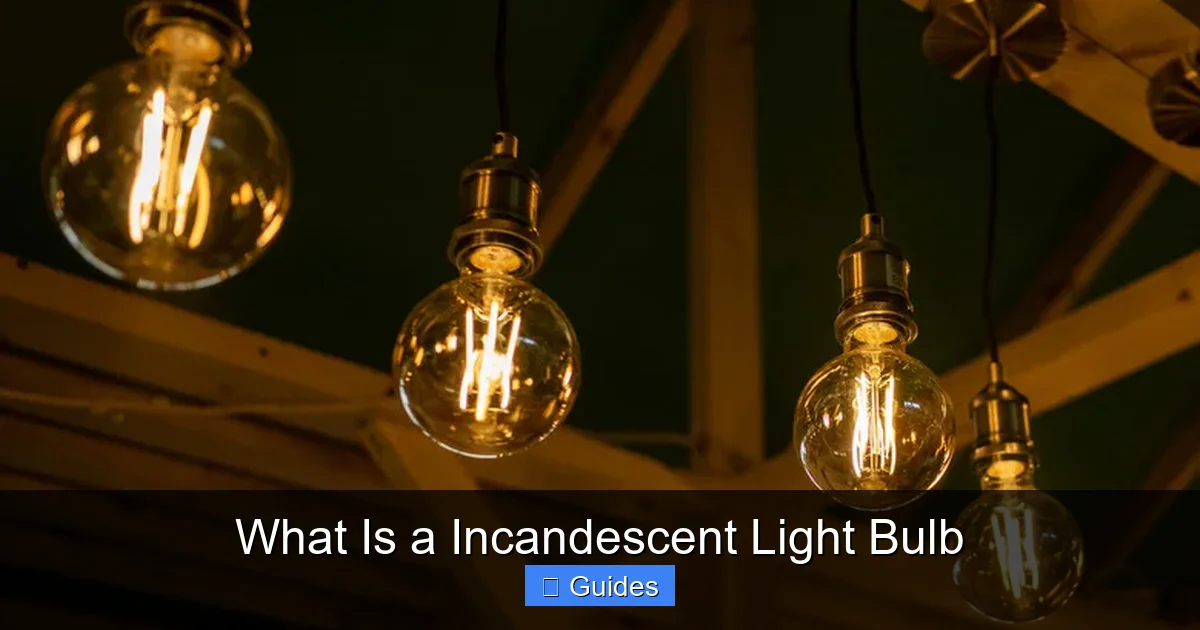
Visual guide about What Is a Incandescent Light Bulb
Image source: slashgear.com
While the basic principle is simple, a few key components come together to make an incandescent light bulb a functional device. Each part plays a vital role in delivering light reliably.
The Glass Bulb (Envelope)
This is the transparent outer shell that you immediately recognize. Its main purpose is to enclose the filament and the inert gas (or vacuum), protecting them from the outside atmosphere. It’s usually made of soda-lime glass, which can withstand the heat generated by the filament. The shape of the glass bulb can vary widely, from the classic “A-shape” (the standard pear shape) to decorative candelabra, globe, or reflector (R and PAR) bulbs designed for specific lighting effects.
The Filament
As we discussed, the filament is typically a thin, tightly coiled wire made of tungsten. This coiling increases the length of the wire within a small space, allowing for more resistance and a greater surface area to emit light. The precision of this coil is critical for the bulb’s performance and lifespan.
Support Wires and Lead-in Wires
The delicate filament needs to be held securely in place. This is done by thin molybdenum support wires that are attached to a central glass support rod. These support wires prevent the filament from sagging or breaking due to vibration or gravity, especially when hot and malleable. The electricity reaches the filament via two thicker lead-in wires (also often made of molybdenum) that pass through the glass support and connect to the electrical contacts in the base.
The Base and Electrical Contacts
The bottom part of the incandescent light bulb, usually made of aluminum or brass, is designed to screw into a light socket. This base serves two purposes: it provides mechanical support for the bulb and, crucially, establishes the electrical connection. There are typically two electrical contacts: one on the very bottom tip of the base (the “foot contact”) and one on the threaded side of the base. When screwed into a socket, these contacts connect to the household electrical circuit, allowing current to flow.
The Exhaust Tube (Tip)
After the inert gas is introduced (or the air is evacuated), the bulb is sealed. The exhaust tube, a small glass protrusion often found at the very tip of the bulb’s base end, is where this sealing process takes place. It’s heated and pinched off, creating the airtight seal necessary for the bulb’s operation.
A Flash of Genius: The History and Evolution of the Bulb
While the incandescent light bulb feels like a timeless invention, its journey to widespread adoption was a long and challenging one, involving many brilliant minds.
Edison’s Contribution: Making it Practical
When people hear “incandescent light bulb,” the name Thomas Edison almost immediately comes to mind. And for good reason! While he didn’t “invent” the light bulb from scratch (many others before him experimented with the concept of incandescence), Edison’s crucial contribution was developing a *practical, long-lasting, and commercially viable* incandescent light bulb in 1879.
Before Edison, bulbs existed, but they were short-lived, inefficient, and expensive. Edison and his team at Menlo Park focused on finding the right filament material and creating a high vacuum inside the bulb. After thousands of experiments with various materials, they famously settled on a carbonized cotton thread filament, which burned for an unprecedented 13.5 hours. Later, they improved this with a bamboo-derived carbon filament, which lasted even longer. Edison’s genius lay in his systematic approach, not just to the bulb itself, but to creating an entire lighting system – including generators, wiring, meters, and sockets – making electric light truly accessible and reliable for homes and businesses. This was a critical step for what is an incandescent light bulb in a practical sense.
Improvements Over Time
The incandescent light bulb didn’t stop evolving with Edison. Many engineers and scientists contributed to its refinement:
- Tungsten Filaments: Early carbon filaments were eventually replaced by tungsten, first developed by Austrian chemist Carl Auer von Welsbach (who also invented the gas mantle) and later commercialized by General Electric. Tungsten offered a much brighter light and a longer lifespan.
- Inert Gas Fill: Irving Langmuir, a Nobel laureate at General Electric, introduced the use of inert gases like argon and nitrogen in 1913. This dramatically reduced filament evaporation, allowing for higher operating temperatures and further extending bulb life and efficiency.
- Coiled-Coil Filaments: Further efficiency gains were made by coiling the tungsten filament a second time (a “coiled-coil” design). This reduced heat loss and made the filament glow even brighter for the same amount of power.
These innovations cemented the incandescent light bulb as the dominant lighting technology for decades, illuminating the world as we know it.
Why They Shined (and Faded): Pros, Cons, and Efficiency
For many years, the incandescent light bulb was simply “the light bulb.” Its advantages were clear, but eventually, its drawbacks became undeniable, leading to its decline.
The Warm Glow: Aesthetic Appeal
One of the most beloved characteristics of an incandescent light bulb is the quality of light it produces. Incandescent bulbs emit a continuous spectrum of light, meaning they produce all colors of the rainbow. They are particularly strong in the yellow and red parts of the spectrum, giving them a “warm” appearance, typically around 2700-3000 Kelvin (K). This warm, soft glow is often perceived as comforting, inviting, and natural, making colors appear rich and vibrant. Many people still prefer the aesthetic quality of incandescent light for certain applications, like mood lighting or photography. They also “dim” beautifully, gradually lowering their brightness and becoming even warmer in tone.
Energy Consumption and Heat: The Major Downside
The primary reason for the incandescent light bulb’s decline is its inefficiency. The core principle of incandescence – heating a filament until it glows – means that a significant amount of energy is wasted as heat, not light. In fact, only about 5-10% of the electrical energy consumed by an incandescent bulb is converted into visible light; the other 90-95% is emitted as heat.
Think of it this way: a standard 60-watt incandescent bulb is more like a tiny, inefficient heater that happens to produce light. This heat not only wastes energy but also contributes to indoor cooling costs in warmer climates. For example, a home with many incandescent bulbs might need its air conditioning to work harder to compensate for the heat they generate, leading to a double whammy of energy consumption. This high energy consumption became a major concern as environmental awareness grew and electricity costs rose.
Environmental Impact and Phase-Out
The energy inefficiency of incandescent light bulbs led to significant environmental concerns, primarily related to increased greenhouse gas emissions from power generation. As a result, many governments around the world, starting in the early 2000s, began implementing regulations to phase out the production and sale of traditional incandescent bulbs in favor of more energy-efficient alternatives like compact fluorescent lamps (CFLs) and, more recently, light-emitting diodes (LEDs). This phase-out was a global effort to reduce energy consumption and mitigate climate change. While you can still find some specialty incandescent bulbs, the common household versions are largely gone from store shelves in many regions.
Beyond the Home: Where Incandescent Bulbs Still Serve
Despite the widespread phase-out, the incandescent light bulb hasn’t completely disappeared. It still finds purpose in specific applications where its unique characteristics are either desirable or where alternatives are not yet ideal.
Specialty Applications
- Ovens and Appliances: The high heat resistance of incandescent bulbs makes them suitable for use inside ovens, where they must withstand extreme temperatures. Specialty oven bulbs are still readily available.
- Indicator Lights: Small incandescent bulbs are sometimes used as indicator lights in older appliances or specialized industrial equipment, valued for their simplicity and robust nature in certain circuits.
- Heat Lamps: Infrared incandescent bulbs are specifically designed to generate heat rather than visible light. These are used in food service to keep food warm, in animal husbandry (e.g., for chicks), and in some therapeutic applications.
- Medical and Scientific Equipment: Certain precision instruments, microscopes, and medical devices still rely on specific types of incandescent bulbs for their reliable light output and often full-spectrum light quality for accurate color rendition.
- Photography and Film Lighting: Professional photographers and filmmakers sometimes use incandescent bulbs (often halogen variants, which are a type of incandescent) for their excellent color rendering index (CRI) and warm, continuous light spectrum, which can be desirable for certain artistic effects.
Nostalgia and Aesthetics
Beyond practical utility, the incandescent light bulb holds a powerful aesthetic appeal for many.
- “Edison Bulbs”: A popular trend in interior design is the use of “Edison bulbs” – incandescent bulbs with exposed, decorative filaments. These are designed to evoke a vintage, industrial look and are chosen for their visual appeal rather than their energy efficiency. They are often used in open fixtures where the bulb itself is part of the decor.
- Mood and Ambiance: For certain mood lighting or specific decorative fixtures, the warm, soft glow of an incandescent bulb is unmatched for creating a cozy or intimate atmosphere. Restaurants, cafes, and homes often use them where ambiance is paramount.
- Dimmability: Traditional incandescent bulbs dim seamlessly across their entire range, often getting warmer in color as they dim, a quality that some modern LEDs are only now beginning to replicate effectively.
So, while the era of the everyday incandescent light bulb may be drawing to a close, its legacy and presence in specific niches continue to glow on.
Conclusion: The Enduring Legacy of Light
What is an incandescent light bulb? It’s far more than just a piece of glass and wire. It’s an invention that sparked a revolution, transforming human life in profound ways, from extending our working hours to illuminating our leisure. It represents a monumental step in technological progress, making electric light safe, affordable, and widespread.
While its reign as the primary light source has ended, giving way to more energy-efficient and environmentally friendly alternatives, the incandescent light bulb’s contribution to modern society is undeniable. It laid the groundwork for all subsequent lighting technologies and remains a powerful symbol of innovation and ingenuity. Its warm, familiar glow continues to hold a special place in our cultural imagination, a testament to the simple yet profound impact of bringing light into the darkness. So, the next time you see one, perhaps in a vintage fixture or a specialty application, take a moment to appreciate this pioneering light source that truly brightened the world.
🎥 Related Video: How Does a Light Bulb Work?
📺 ScienceABC II
Have you ever wondered what happens inside a light bulb when you flip the switch? The incandescent bulb, first patented by …
Frequently Asked Questions
What is the typical lifespan of an incandescent light bulb?
The typical lifespan of a standard incandescent light bulb is relatively short, usually ranging from 750 to 1,000 hours of operation. This is significantly less than modern LED bulbs, which can last tens of thousands of hours.
Do incandescent bulbs contain mercury?
No, standard incandescent light bulbs do not contain mercury. This is one of the advantages they held over early compact fluorescent lamps (CFLs), which did contain small amounts of mercury and required special disposal.
Can incandescent bulbs be used with dimmer switches?
Yes, incandescent bulbs are excellent for use with traditional dimmer switches. Their light output can be smoothly adjusted across the entire dimming range, often exhibiting a pleasing shift to a warmer color temperature as they dim.
What is the difference between an incandescent bulb and an LED bulb?
The fundamental difference lies in how they produce light. An incandescent bulb uses a heated filament (incandescence), while an LED (Light Emitting Diode) uses semiconductors to produce light through electroluminescence, making LEDs far more energy-efficient and durable.
Are incandescent bulbs still legal to buy?
In many regions, the sale of general-purpose incandescent bulbs has been restricted or phased out due to energy efficiency regulations. However, specialty incandescent bulbs for specific applications (like ovens, heat lamps, or decorative “Edison” bulbs) are often still available and legal to purchase.
Why do incandescent bulbs burn out?
Incandescent bulbs primarily burn out because the tungsten filament eventually weakens and breaks. Over time, atoms evaporate from the hot filament, making it thinner in certain spots until one thin spot can no longer withstand the electrical current and breaks, interrupting the circuit.
