


As an Amazon Associate, We earn from qualifying purchases.
The E26 light bulb is the most common screw-in bulb standard in North America. The “E” signifies an Edison screw base, and “26” refers to its 26-millimeter diameter. This versatile and widely adopted standard ensures that a vast array of incandescent, halogen, CFL, and modern E26 LED light bulbs can fit countless fixtures, making it a simple yet crucial component of our everyday lighting.
Think about the last time you changed a light bulb in your home. Chances are, you unscrewed an old bulb and screwed in a new one, perhaps without giving it a second thought. This common, everyday task is made incredibly simple thanks to standardization, and at the heart of lighting in North America lies a crucial standard: the E26 light bulb. But have you ever stopped to wonder what that “E26” actually means?
It might seem like a small detail, just a letter and a couple of numbers printed on the base of a bulb, but understanding the E26 standard is key to making informed choices about your home’s lighting. From ensuring compatibility with your fixtures to navigating the vast array of bulb types available today, knowing what an E26 light bulb is can save you time, money, and frustration. It’s more than just a size; it’s a legacy of innovation and convenience that lights up our lives.
So, let’s pull back the curtain on this unsung hero of home illumination. We’ll dive deep into what E26 means, why it became the dominant standard, explore the different kinds of E26 light bulbs you can find, and give you practical tips for choosing the perfect one for every corner of your home. Get ready to illuminate your understanding of the ever-present E26 light bulb!
Key Takeaways
- E26 is the Standard in North America: It is the most prevalent screw-in light bulb base used in the United States and Canada for general lighting applications.
- “E” Stands for Edison Screw: This denotes a threaded base, named after Thomas Edison, designed to screw into a compatible socket.
- “26” Represents Diameter: The number 26 indicates the base’s diameter in millimeters, meaning it’s approximately 26mm wide.
- Versatile Bulb Compatibility: E26 sockets can accommodate various bulb technologies, including incandescent, halogen, compact fluorescent (CFL), and modern LED E26 light bulbs.
- Ease of Replacement and Availability: Thanks to its ubiquity, finding an E26 light bulb replacement is incredibly easy, as they are stocked almost everywhere lighting products are sold.
- More Than Just the Base: While E26 defines the base, other factors like bulb shape (e.g., A19), lumens (brightness), color temperature, and wattage are equally important when choosing the right E26 light bulb.
Quick Answers to Common Questions
What does the “E” in E26 stand for?
The “E” in E26 stands for “Edison Screw,” referring to the threaded base design pioneered by Thomas Edison for easy and secure installation.
What does the “26” in E26 signify?
The “26” in E26 indicates the diameter of the bulb’s screw base in millimeters, meaning it is approximately 26mm wide.
Is an E26 light bulb the same as an E27?
No, technically they are different. E26 is the North American standard (26mm), while E27 is the European standard (27mm). However, due to manufacturing tolerances, they are often practically interchangeable, though E26 is the official spec for North America.
Can I use any E26 LED light bulb in any E26 fixture?
While the base will fit, you should always check the fixture’s maximum wattage rating and ensure the bulb’s shape and size fit physically within the fixture. For enclosed fixtures, use an E26 LED light bulb rated for enclosed use.
What’s the best type of E26 light bulb for energy efficiency?
LED (Light Emitting Diode) E26 light bulbs are by far the most energy-efficient option available today, offering significant energy savings and a much longer lifespan compared to incandescent or CFL bulbs.
📑 Table of Contents
- Understanding the E26 Standard: What Does “E26” Really Mean?
- Why E26 is So Common: A Legacy of Simplicity and Versatility
- Navigating the World of E26 Bulb Types: More Than Just Incandescent
- Beyond the Base: Other Important E26 Bulb Specifications
- Choosing the Right E26 Light Bulb for Your Needs: A Practical Guide
- Installation and Maintenance Tips for E26 Bulbs
- Conclusion
Understanding the E26 Standard: What Does “E26” Really Mean?
When you pick up a light bulb and see “E26” on its base, you’re looking at a code that defines its physical connection to a light fixture. This code is a combination of a letter and a number, each telling you something important about the bulb’s design.
The “E” for Edison Screw
The “E” in E26 stands for “Edison Screw.” This name is, as you might guess, a nod to Thomas Edison, who pioneered the design of the screw-thread bulb base. Before Edison’s standardized screw-in design, attaching a bulb to a power source could be a bit of a haphazard affair. His invention made it simple, safe, and easily reproducible. The Edison screw base is a threaded metal cylinder that screws directly into a compatible socket, establishing both the mechanical connection and the electrical contact. This design has proven incredibly robust and reliable over more than a century, which is why it’s still so prevalent today.
The “26” for Diameter in Millimeters
The number “26” in E26 refers to the diameter of the bulb’s screw base, measured in millimeters. So, an E26 light bulb has a base that is approximately 26 millimeters (or about 1 inch) wide. This measurement is crucial because it ensures that the bulb will fit snugly and securely into a socket designed for that specific diameter. Imagine trying to screw a small bolt into a large nut – it just won’t work properly. The same principle applies here. The precise 26mm diameter guarantees a proper fit and electrical connection with an E26 socket.
The American Standard (and A19 Commonality)
It’s important to note that E26 is primarily the standard for North America (the United States and Canada). While other parts of the world use similar Edison screw bases, their diameters differ. For example, in many parts of Europe, the E27 light bulb is common, which, despite the small numerical difference, is generally interchangeable with E26 in practice due to manufacturing tolerances, though E26 is the true North American spec.
You’ll often hear E26 bulbs referred to as “medium screw base” or “standard base” bulbs. This differentiates them from smaller candelabra bases (like E12, which is 12mm) or larger mogul bases (like E39, which is 39mm), which are used for different applications. The most common shape of an E26 light bulb is the A19, which refers to the classic pear-like shape you probably envision when you think of a typical light bulb, with a maximum diameter of 19 eighths of an inch (or about 2.375 inches). However, E26 light bulbs come in many other shapes, which we’ll explore later.
Why E26 is So Common: A Legacy of Simplicity and Versatility
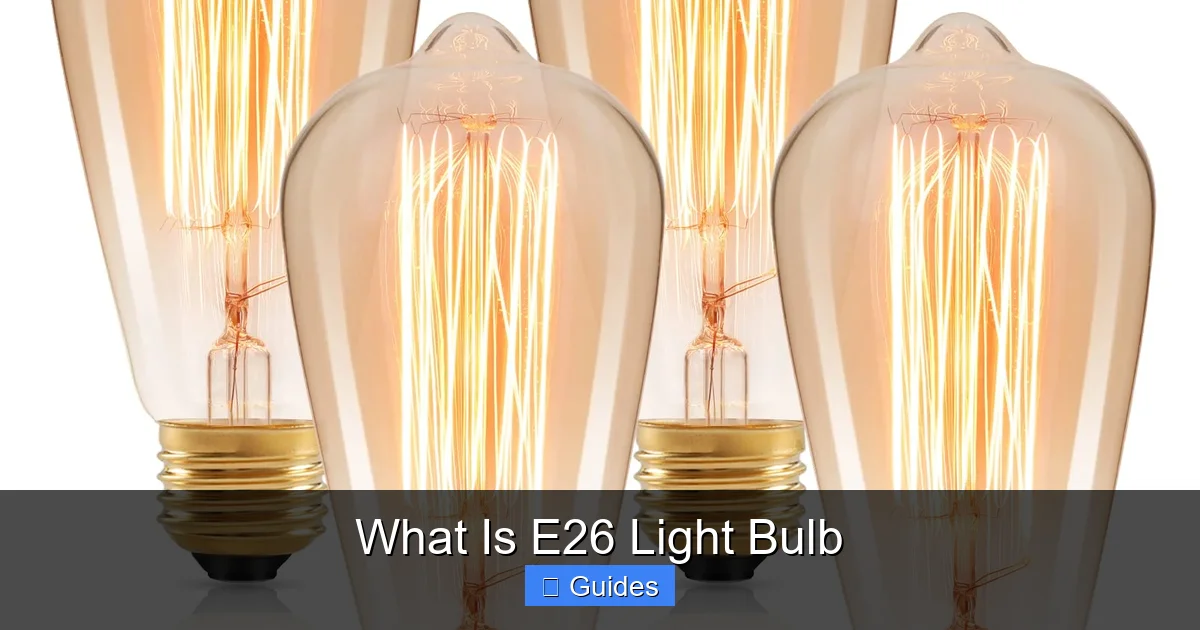
Visual guide about What Is E26 Light Bulb
Image source: m.media-amazon.com
The E26 light bulb didn’t become the predominant standard by accident. Its widespread adoption is due to a combination of historical factors, practical advantages, and its inherent versatility.
Historical Roots and Widespread Adoption
When electric lighting first started to become a reality, there was a period of intense innovation and competition. Thomas Edison’s incandescent bulb, combined with his screw-in base design, offered a practical and relatively easy-to-manufacture solution. As Edison’s system gained traction, particularly in the burgeoning electrical infrastructure of North America, his base design became a de facto standard. Early electrical systems were built around this design, from power generation to the wiring in homes and businesses. This “first-mover” advantage, coupled with the system’s reliability, cemented the E26’s place in history.
Ease of Installation and Replacement
One of the most significant reasons for the E26 light bulb’s enduring popularity is its sheer simplicity. Installing an E26 light bulb requires no special tools or complex procedures. You simply screw it into the socket until it’s snug. This user-friendly design means that virtually anyone can replace a bulb, making lighting maintenance incredibly straightforward for homeowners and professionals alike. This ease of installation also translates to a lower barrier for fixture manufacturers, as they can reliably design products around a universally understood interface.
Compatibility Across Fixtures
The beauty of the E26 standard lies in its universal compatibility within North American homes and businesses. From ceiling lights and table lamps to floor lamps, wall sconces, and outdoor fixtures, if it’s designed for general lighting, it most likely uses an E26 socket. This means you don’t have to stock multiple types of bulbs for different fixtures in your home (unless they use specialized bases like E12 candelabra or GU10 twist-lock). This broad compatibility simplifies shopping, inventory management, and ensures that you can almost always find a suitable replacement for any E26 light bulb, no matter where you are.
Navigating the World of E26 Bulb Types: More Than Just Incandescent
While the E26 base remains constant, the technology inside the bulb has evolved dramatically. Today, you have a vast array of options when choosing an E26 light bulb, each with its own characteristics in terms of energy efficiency, light quality, and lifespan.
Incandescent E26 Bulbs: The Classic
For decades, the incandescent E26 light bulb was the only game in town. These bulbs produce light by heating a filament inside a glass bulb to incandescence. They are known for their warm, familiar glow and excellent color rendering. However, they are also highly inefficient, converting most of their energy into heat rather than light, and have a relatively short lifespan. While many governments have phased out less efficient incandescent bulbs, you can still find some specialty or rough-service incandescent E26 light bulbs.
Halogen E26 Bulbs: Brighter, More Efficient Incandescent
Halogen E26 light bulbs are a more efficient version of incandescents. They use a halogen gas inside the bulb to reactivate tungsten particles, prolonging the filament’s life and allowing it to burn hotter and brighter. This results in a whiter, crisper light and slightly better energy efficiency compared to traditional incandescents, along with a longer lifespan. They still produce a significant amount of heat, though, and are generally less efficient than CFLs or LEDs.
CFL E26 Bulbs: The Early Energy Savers
Compact Fluorescent Lamps (CFLs) were among the first widely adopted energy-efficient alternatives to incandescent E26 light bulbs. These bulbs work by passing an electric current through a tube containing argon and a small amount of mercury vapor, which produces ultraviolet light that then excites a fluorescent coating on the inside of the tube, emitting visible light. CFL E26 light bulbs consume significantly less energy and last much longer than incandescents. However, they often take time to warm up to full brightness, can have a less desirable light quality (though this improved over time), and contain mercury, requiring special disposal.
LED E26 Bulbs: The Modern Powerhouse
Light Emitting Diode (LED) E26 light bulbs are the current gold standard for home lighting. They produce light through the movement of electrons in a semiconductor material. LED E26 light bulbs are incredibly energy-efficient, using a fraction of the power of incandescents to produce the same amount of light. They also boast exceptionally long lifespans, often lasting for tens of thousands of hours, which means less frequent replacements. Furthermore, LED technology offers a wide range of light colors, dimming capabilities, and instant-on brightness. While the upfront cost of an E26 LED light bulb might be higher, the energy savings and longevity typically result in significant long-term savings.
Beyond the Base: Other Important E26 Bulb Specifications
While knowing you need an E26 light bulb is a great start, it’s only part of the puzzle. To choose the *right* E26 light bulb, you need to consider several other specifications that impact light quality, appearance, and energy use.
Shape and Size (A19, BR30, PAR38, etc.)
The E26 specifies the base, but the bulb itself comes in many shapes and sizes.
- A19: The classic “standard” shape, often associated with general lighting.
- BR (Bulged Reflector) series: Like BR30 or BR40, these bulbs have a wider, bulged shape designed to spread light over a broad area, common in recessed lighting.
- PAR (Parabolic Aluminized Reflector) series: Such as PAR30 or PAR38, these have a more precise beam control and are often used for spotlights or outdoor floodlights.
- Candelabra (B or F shape): Though E12 is the common candelabra base, some larger, decorative E26 bulbs might mimic candelabra styles.
- G (Globe) series: Spherical bulbs like G25, often used in vanity lighting or decorative fixtures.
- Tube (T shape): T-series bulbs are cylindrical and typically used in specific fixtures.
Always check the dimensions of your fixture to ensure the chosen E26 light bulb will fit properly and not extend beyond the shade or housing.
Lumens (Brightness)
Forget watts for brightness! With modern energy-efficient E26 light bulbs, lumens are the true measure of a bulb’s light output. A 60-watt incandescent bulb, for example, produces about 800 lumens. When buying an E26 LED light bulb, look for the lumen rating to understand how bright it will be. More lumens mean more light.
Color Temperature (Kelvin)
Color temperature, measured in Kelvin (K), describes the warmth or coolness of the light.
- 2700K-3000K (Warm White/Soft White): A yellowish, inviting light, similar to traditional incandescents. Ideal for living rooms, bedrooms, and dining areas.
- 3500K-4000K (Neutral White/Cool White): A balanced, less yellow light that’s good for kitchens, home offices, and workspaces where tasks are performed.
- 5000K-6500K (Daylight): A bluish-white light that mimics natural daylight. Excellent for utility rooms, garages, or areas where high visibility is needed, but can feel stark in living spaces.
Choose a color temperature that suits the mood and function of the room.
Wattage (Energy Consumption)
While lumens measure brightness, wattage tells you how much electricity the E26 light bulb consumes. For LED E26 light bulbs, the wattage will be significantly lower than an incandescent bulb of comparable brightness (e.g., an 8-watt LED might replace a 60-watt incandescent). Always ensure the bulb’s wattage does not exceed the maximum wattage rating of your light fixture, as exceeding this can be a fire hazard, even with energy-efficient LEDs.
Dimmability
Not all E26 light bulbs are dimmable. If you have a dimmer switch, make sure you choose an E26 LED light bulb explicitly labeled as “dimmable.” Using a non-dimmable LED on a dimmer switch can lead to flickering, buzzing, or even damage to the bulb or dimmer.
Smart Features
Many modern E26 LED light bulbs now come with “smart” capabilities, allowing you to control them via an app, voice commands, or integrate them into a smart home system. These can offer features like tunable white light, millions of color options, scheduling, and remote control, adding a layer of convenience and customization to your E26 light bulb.
Choosing the Right E26 Light Bulb for Your Needs: A Practical Guide
With so many E26 light bulb options, making a choice can feel overwhelming. Here’s a practical guide to help you select the perfect bulb for any situation.
Assess Your Fixture and Room
First, look at the fixture itself. Does it have a closed enclosure? Some enclosed fixtures can trap heat, which can shorten the life of certain E26 LED light bulbs. Many manufacturers offer specific “enclosed fixture rated” LEDs. Also, consider the room’s purpose. A bright, cool light might be great for a kitchen or bathroom, while a warm, soft light is better for a living room or bedroom. Measure the space available in your fixture if you’re considering a larger bulb shape like a BR or PAR.
Consider the Ambiance
What kind of mood do you want to create? For a cozy, relaxed atmosphere, choose an E26 light bulb with a warm white (2700K-3000K) color temperature and perhaps lower lumens. For a vibrant, energetic space like a home office or laundry room, a neutral white (3500K-4000K) or even daylight (5000K+) E26 light bulb with higher lumens might be more appropriate.
Prioritize Energy Efficiency
Unless you have a very specific aesthetic need, opt for LED E26 light bulbs. They are the most energy-efficient choice, saving you money on electricity bills and reducing your environmental footprint. While the initial cost might be slightly higher than other types, the long-term savings and extended lifespan make them a superior investment. Look for Energy Star certified E26 LED light bulbs for guaranteed efficiency and performance.
Look for Special Features
Do you need dimming? Are you interested in smart home integration? Do you want a bulb that changes colors for parties? Decide which advanced features are important to you and look for E26 LED light bulbs that explicitly offer them. Don’t assume all LEDs are dimmable or smart-enabled.
Safety and Compatibility Checks
Always check the maximum wattage rating of your fixture. Even if you’re using an energy-efficient E26 LED light bulb, it’s a good habit. For example, if a fixture says “Max 60W,” a 10W E26 LED light bulb is perfectly fine. Also, ensure the bulb’s physical size fits your fixture without touching the sides or obstructing any shades.
Installation and Maintenance Tips for E26 Bulbs
Installing and maintaining your E26 light bulbs is straightforward, but a few tips can ensure safety and prolong their life.
Safety First
Always turn off the power to the fixture at the wall switch or, even better, at the circuit breaker before changing any E26 light bulb. This prevents accidental shocks. Allow hot bulbs to cool down before handling them. If a bulb breaks in the socket, use pliers to carefully twist out the metal base, still ensuring the power is off.
Proper Insertion
When installing an E26 light bulb, gently screw it into the socket clockwise until it feels snug. Do not overtighten, as this can damage the socket or the bulb’s base. It should be firm enough to make good electrical contact without requiring excessive force.
Cleaning and Care
Occasionally, dust can accumulate on E26 light bulbs, especially on decorative or exposed ones, which can slightly reduce light output. When cleaning, ensure the power is off and the bulb is cool. Use a soft, dry, lint-free cloth to gently wipe down the bulb. Avoid using liquid cleaners unless the bulb is specifically rated for wet environments, as moisture can damage internal electronics or lead to electrical hazards.
Troubleshooting Common Issues
If your new E26 light bulb isn’t working, first ensure the power is on. Check if the bulb is screwed in tightly. Sometimes, the metal tab at the bottom of the socket might be flattened; with the power off, you can carefully lift it slightly with a non-conductive tool to improve contact. If an LED E26 light bulb flickers, especially on a dimmer, it might be incompatible with your dimmer switch; consider replacing the dimmer with an LED-compatible one or switching to a dimmable bulb.
Conclusion
The E26 light bulb, with its simple yet ingenious Edison screw base, is much more than just a component; it’s the bedrock of general lighting in North America. Its ubiquity, ease of use, and compatibility with a wide range of lighting technologies – from traditional incandescents to the marvels of modern LED E26 light bulbs – make it an indispensable part of our daily lives.
By understanding what E26 means and taking the time to consider factors like lumens, color temperature, and bulb shape, you empower yourself to make smart choices that not only illuminate your spaces effectively but also contribute to energy efficiency and a comfortable ambiance. So, the next time you screw in an E26 light bulb, you’ll do so with a deeper appreciation for this small but mighty piece of technology that truly lights up your world.
🎥 Related Video: Standard Light Bulb – Size & Codes | Spec. Sense
📺 AMRE Supply
What does the A19 code describe? What is an E26 base? In this episode of Spec. Sense, Vance shows how to measure and how …
Frequently Asked Questions
What are the most common applications for E26 light bulbs?
E26 light bulbs are incredibly versatile and are used in a vast majority of general lighting applications in North America. This includes everything from table and floor lamps to ceiling fixtures, recessed lighting, outdoor porch lights, and many decorative fixtures throughout homes and businesses.
How do I know if my existing fixture uses an E26 light bulb?
The easiest way to tell if your fixture uses an E26 light bulb is to look at the base of the current bulb you’re replacing. If it’s a standard screw-in bulb with a base diameter of about one inch, it’s almost certainly an E26. Many bulbs will also have “E26” printed on their metal base.
Can I replace an incandescent E26 light bulb with an LED E26 light bulb?
Absolutely! Replacing an incandescent E26 light bulb with an LED E26 light bulb is one of the best ways to save energy and reduce heat output. Just make sure the LED’s lumens match your desired brightness, the color temperature is to your liking, and if you have a dimmer, that the LED is specifically marked as dimmable.
What is the difference between lumens and watts for an E26 light bulb?
For an E26 light bulb, lumens measure the brightness of the light emitted, while watts measure the amount of electricity the bulb consumes. With older incandescent bulbs, wattage roughly correlated to brightness, but with energy-efficient LEDs, it’s important to look at lumens for brightness and watts for actual power usage.
Are all E26 LED light bulbs dimmable?
No, not all E26 LED light bulbs are dimmable. If you intend to use an E26 LED light bulb with a dimmer switch, you must purchase one that is explicitly labeled as “dimmable.” Using a non-dimmable LED on a dimmer can cause flickering, buzzing, or shorten the bulb’s lifespan.
What is “color temperature” and why is it important for E26 light bulbs?
Color temperature, measured in Kelvin (K), describes the hue of the light an E26 light bulb emits, ranging from warm (yellowish, like 2700K) to cool (bluish-white, like 5000K). It’s important because it significantly impacts the ambiance and functionality of a room, influencing mood, perceived warmth, and visibility for tasks.
