


As an Amazon Associate, We earn from qualifying purchases.
The Type A light bulb is the most common and recognizable bulb shape, often called “standard” or “pear-shaped”. Its classic design has evolved significantly, now incorporating energy-efficient technologies like LED and CFL, making it a versatile and essential lighting choice for virtually any fixture in homes and businesses. This enduring shape combines functionality with widespread compatibility.
Have you ever walked into a store looking for a light bulb and felt overwhelmed by the sheer number of options? There are so many shapes, sizes, and technologies! But among them all, one shape stands out as the undisputed champion of familiarity: the Type A light bulb. You probably use several of them every single day without even realizing its specific designation.
Often just called a “standard” or “general purpose” bulb, the Type A light bulb is the classic pear-shaped or teardrop-shaped bulb that has illuminated our homes and businesses for over a century. It’s the iconic form factor that immediately comes to mind when someone says “light bulb.” But what exactly makes a bulb “Type A,” and why has this particular design remained so enduringly popular through countless technological advancements? Let’s shed some light on this essential piece of everyday technology.
In this comprehensive guide, we’ll dive deep into everything you need to know about the Type A light bulb. We’ll explore its history, its defining characteristics, how it has evolved with new lighting technologies, and practical tips for choosing and using the best Type A bulbs for your home. Understanding this fundamental bulb type will not only demystify your next trip to the hardware store but also empower you to make smarter, more energy-efficient lighting choices.
Key Takeaways
- Iconic Shape: The Type A light bulb is defined by its classic “pear” or “teardrop” shape, making it the most recognized and widely used bulb design globally.
- Universal Compatibility: This shape typically pairs with a standard Edison screw base (E26 in North America, E27 elsewhere), ensuring it fits into most everyday light fixtures.
- Technological Evolution: While historically associated with incandescent bulbs, the Type A light bulb now encompasses modern technologies like CFLs and LEDs, offering significant energy savings and longer lifespans.
- Versatility in Use: Type A bulbs are incredibly versatile, suitable for everything from table lamps and ceiling fixtures to pendant lights and outdoor lanterns, adapting to diverse lighting needs.
- Understanding Designations: The “A” in Type A refers to the bulb’s shape, while the number often following (e.g., A19, A21) indicates its maximum diameter in eighths of an inch.
- Choosing the Right One: When selecting a Type A light bulb today, focus on lumens for brightness, Kelvin for color temperature, and wattage equivalency for energy consumption, rather than just traditional wattage.
Quick Answers to Common Questions
What does “Type A” specifically refer to in a light bulb?
The term “Type A” specifically refers to the light bulb’s classic pear or teardrop shape, which is the most common and recognizable bulb shape for general household lighting.
Are all Type A light bulbs incandescent?
No, not anymore. While the Type A shape was originally synonymous with incandescent bulbs, it now encompasses other technologies like halogen, CFL, and most commonly, LED light bulbs.
What is the most common size for a Type A light bulb?
The most common size for a Type A light bulb in household use is the A19, which has a maximum diameter of 19/8 inches (approximately 2.375 inches or 60 mm).
Do Type A light bulbs use a standard screw base?
Yes, Type A light bulbs almost universally use a standard Edison screw base. This is typically an E26 base in North America or an E27 base in other regions, which are generally interchangeable.
Can I replace an old incandescent Type A bulb with an LED Type A bulb?
Absolutely! You can almost always replace an old incandescent Type A light bulb with a modern LED Type A bulb. Just ensure the LED bulb’s lumen output matches your desired brightness and check for dimmability if needed.
📑 Table of Contents
- The Iconic Shape: What Defines a Type A Light Bulb?
- From Incandescent to LED: The Evolution of the Type A Light Bulb
- Why the Type A Light Bulb Remains the Go-To Choice
- Choosing the Right Type A Light Bulb for Your Home
- Installation, Maintenance, and Safety Tips for Your Type A Light Bulb
- The Enduring Legacy of the Type A Light Bulb
The Iconic Shape: What Defines a Type A Light Bulb?
When we talk about a Type A light bulb, we are primarily referring to its physical shape and size. The “A” in Type A specifically designates a bulb with a classic pear-like or teardrop shape. This design is characterized by a rounded body that tapers towards the base, giving it a smooth, familiar silhouette. It’s the quintessential bulb shape that you’ll find in most household lamps and fixtures.
Understanding the “A” Designation and Beyond
The “A” series is just one of many bulb shape designations, which also include “B” (candelabra), “C” (cone), “G” (globe), “PAR” (parabolic aluminized reflector), and “BR” (bulged reflector), among others. Each letter signifies a distinct form factor designed for specific aesthetic or functional purposes. The Type A light bulb’s broad, diffused light output makes it ideal for general illumination.
You might also see numbers after the “A,” such as A19 or A21. These numbers aren’t arbitrary; they tell you the bulb’s maximum diameter in eighths of an inch. So, an A19 light bulb has a maximum diameter of 19/8 inches, or 2 and 3/8 inches (approximately 60 mm). An A21 light bulb, being larger, would be 21/8 inches, or 2 and 5/8 inches. While the shape remains consistent, these numbers indicate the overall size, which is important for ensuring the bulb fits properly into your fixture, especially if it has a shade or enclosure. The A19 is by far the most common size for a Type A light bulb in residential settings.
The Standard Base Connection
Beyond its shape, the Type A light bulb almost universally features a standard Edison screw base. In North America, this is typically an E26 base, meaning 26 millimeters in diameter. In many other parts of the world, an E27 base (27 millimeters) is common. The good news is that E26 and E27 bases are generally interchangeable, so most Type A light bulbs you buy will screw perfectly into your standard lamp sockets. This universal compatibility is a huge part of why the Type A light bulb has remained so popular and convenient for consumers.
From Incandescent to LED: The Evolution of the Type A Light Bulb
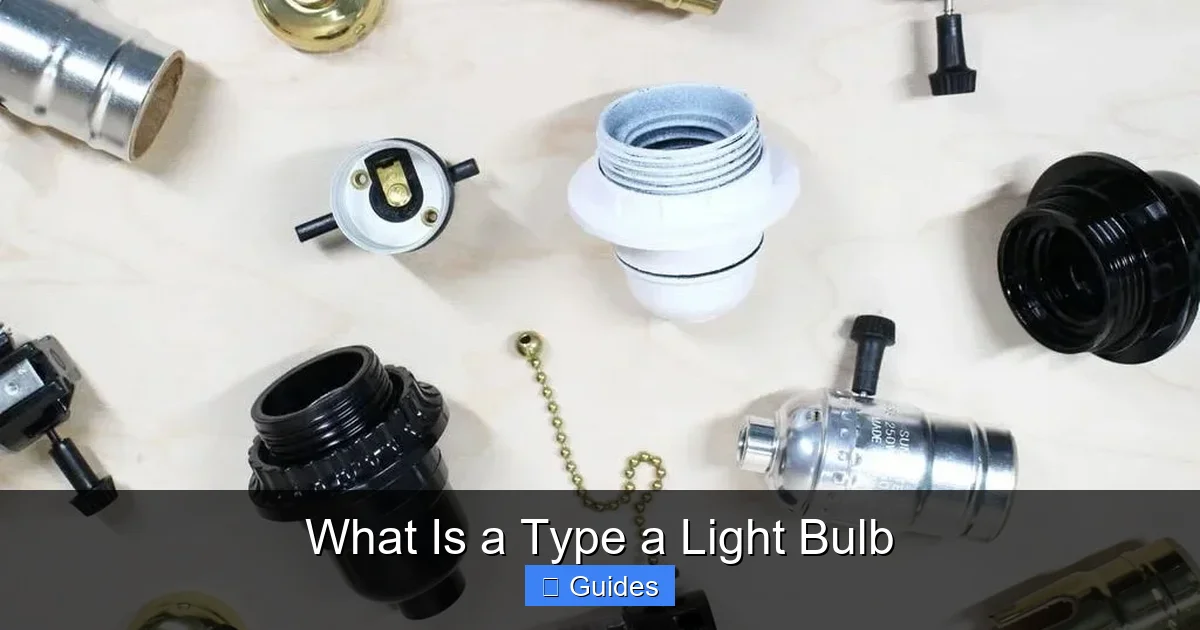
Visual guide about What Is a Type a Light Bulb
Image source: lightbulbsocket.com
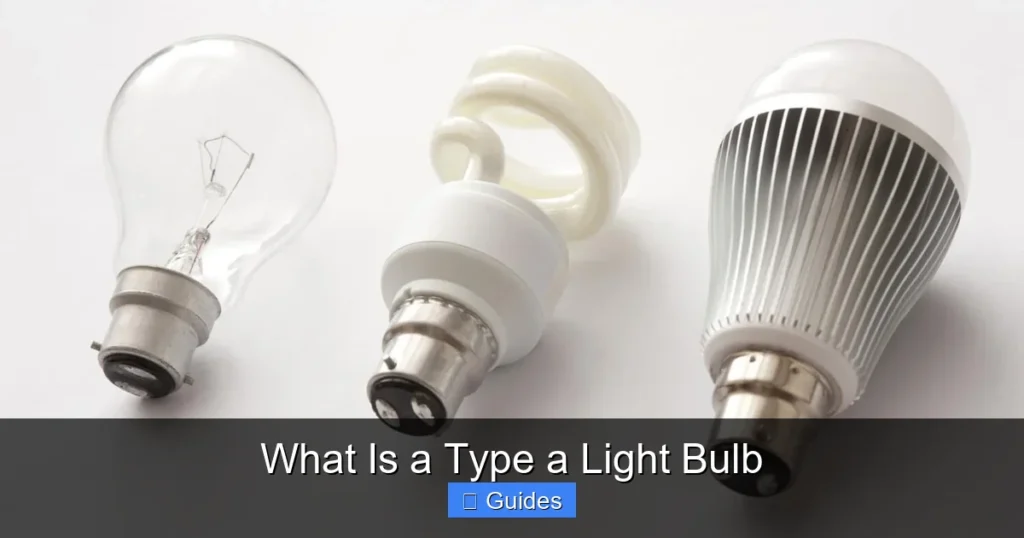
The Type A light bulb may have a classic shape, but what’s inside has changed dramatically over the years. Originally, the Type A light bulb referred exclusively to the incandescent bulb – Thomas Edison’s revolutionary invention that used a glowing filament to produce light. Today, the same iconic shape houses a variety of much more efficient lighting technologies.
The Incandescent Era
For over a century, the incandescent Type A light bulb was the dominant form of home lighting. These bulbs worked by heating a small wire filament (usually tungsten) until it glowed white-hot, emitting both light and a significant amount of heat. They produced a warm, inviting light and were inexpensive to manufacture. However, they were also very inefficient, converting only about 10% of their energy into visible light, with the rest lost as heat. This inefficiency led to shorter lifespans and higher energy bills. Governments around the world have largely phased out incandescent Type A light bulbs due to these energy concerns.
The Rise of Halogen
A slightly more efficient variation of the incandescent, the halogen Type A light bulb uses a halogen gas inside the bulb to create a chemical reaction that allows the filament to burn brighter and last longer. While still using a filament, halogen bulbs offered incremental improvements in energy efficiency and bulb life compared to traditional incandescents, often fitting into the same Type A shape and base. They typically produced a brighter, whiter light.
Compact Fluorescent Lamps (CFLs)
The 1990s and 2000s saw the widespread introduction of Compact Fluorescent Lamps (CFLs) in the Type A form factor. These bulbs use a tube filled with gas and a small amount of mercury, which, when electrified, produces ultraviolet light that then excites a phosphor coating inside the tube to create visible light. CFLs were a significant leap in efficiency, using about 75% less energy than incandescents and lasting up to 10 times longer. However, early CFL Type A light bulbs often had issues with slow warm-up times, dimming capabilities, and the presence of mercury, making disposal a concern. Despite their efficiency, many found their light quality to be less appealing than incandescent.
The LED Revolution
Today, the reigning champion of the Type A light bulb is the Light Emitting Diode (LED). LED Type A light bulbs represent a monumental leap forward in lighting technology. They work by passing an electric current through a semiconductor, which then emits light. LEDs are incredibly energy-efficient, using up to 90% less electricity than traditional incandescents and lasting 25 times longer, sometimes even more.
Modern LED Type A light bulbs also offer a wide range of features:
- Instant On: No warm-up time needed.
- Dimmability: Many are fully dimmable (though check compatibility with your dimmer switch).
- Color Temperature: Available in a spectrum from very warm white (2700K) to cool daylight (5000K+).
- Smart Features: Some Type A LED bulbs integrate Wi-Fi or Bluetooth for control via apps, voice assistants, and smart home systems.
The adoption of LED technology into the classic Type A light bulb shape means you can enjoy the traditional look and universal fit with all the benefits of modern efficiency and versatility.
Why the Type A Light Bulb Remains the Go-To Choice
Despite all the innovation in lighting, the Type A light bulb continues to be the most popular choice for general lighting purposes. Its enduring appeal isn’t just about nostalgia; it’s rooted in practical advantages that make it incredibly functional and convenient.
Universal Compatibility and Ease of Use
Perhaps the biggest reason for its widespread use is its near-universal compatibility. Almost every lamp, ceiling fixture, wall sconce, and even many outdoor lights are designed to accept a Type A light bulb with its standard E26 or E27 screw base. This means you don’t need to worry about specialized fixtures or complex installations. You simply screw it in, and you have light. This “plug-and-play” simplicity is incredibly appealing to homeowners and renters alike.
Versatility Across Applications
The Type A light bulb is a true chameleon, adapting to a vast array of lighting needs.
- General Room Lighting: Perfect for overhead lights in living rooms, bedrooms, and kitchens.
- Task Lighting: Ideal for table lamps and desk lamps where diffused, even light is needed.
- Accent Lighting: Can be used in fixtures to highlight features or create mood.
- Outdoor Lighting: Many enclosed outdoor fixtures also use Type A bulbs to provide ambient light.
Its ability to provide broad, omnidirectional light makes it suitable for almost any space where you need general illumination without harsh spotlights.
Aesthetic Familiarity and Comfort
There’s an undeniable comfort in the familiar. The pear shape of the Type A light bulb is deeply ingrained in our collective consciousness as “what a light bulb looks like.” This familiarity means it blends seamlessly into various décor styles, from traditional to contemporary. Many people also appreciate the diffused, omnidirectional light output of the Type A light bulb, which provides a comfortable and even illumination that minimizes harsh shadows.
Choosing the Right Type A Light Bulb for Your Home
Gone are the days when you just picked a wattage. Today, choosing the best Type A light bulb involves understanding a few key metrics to ensure you get the light quality and efficiency you desire.
Watts vs. Lumens: Understanding Brightness
With incandescents, wattage directly indicated brightness. A 60-watt bulb was brighter than a 40-watt. However, wattage now primarily indicates energy consumption. For LED and CFL Type A light bulbs, you need to look at lumens (lm). Lumens measure the actual brightness of the light output.
- 450 lumens: Equivalent to a 40W incandescent.
- 800 lumens: Equivalent to a 60W incandescent (the most common household brightness).
- 1100 lumens: Equivalent to a 75W incandescent.
- 1600 lumens: Equivalent to a 100W incandescent.
Always check the lumen rating to know how bright your Type A light bulb will actually be.
Color Temperature: Setting the Mood
Color temperature, measured in Kelvin (K), describes the perceived warmth or coolness of the light.
- 2700K – 3000K (Warm White): Mimics traditional incandescent light, creating a cozy and inviting atmosphere. Ideal for living rooms, bedrooms, and dining areas.
- 3500K – 4000K (Cool White/Neutral White): A more balanced, crisp white light. Good for kitchens, bathrooms, offices, or workshops where you need clear visibility.
- 5000K – 6500K (Daylight): A very bright, bluish-white light that mimics natural daylight. Excellent for task lighting, garages, or areas where high visibility is crucial.
Consider the function and mood of the room when selecting the color temperature of your Type A light bulb.
Dimmability and Smart Features
If you have dimmer switches, ensure your Type A light bulb is explicitly labeled “dimmable.” Not all LED bulbs are, and using a non-dimmable bulb with a dimmer can lead to flickering, buzzing, or premature bulb failure. For smart homes, look for Type A LED bulbs that connect to your Wi-Fi or Bluetooth, offering remote control, scheduling, and integration with voice assistants.
Energy Star Rating and Lifespan
Always look for the Energy Star label. This indicates that the Type A light bulb meets strict energy efficiency guidelines set by the EPA, ensuring lower energy consumption and better performance. Check the estimated lifespan, usually expressed in hours (e.g., 15,000 hours, 25,000 hours). Longer lifespans mean fewer replacements, saving you time and money.
Installation, Maintenance, and Safety Tips for Your Type A Light Bulb
Installing a Type A light bulb is straightforward, but a few tips can ensure safety and optimal performance.
Safe Installation Practices
- Turn Off Power: Always turn off the light fixture’s power at the wall switch before replacing a Type A light bulb. For added safety, switch off the corresponding circuit breaker if working with ceiling fixtures.
- Let Cool Down: If replacing an old incandescent or halogen Type A light bulb, wait for it to cool completely before touching it. These bulbs can get very hot.
- Handle with Care: Hold the new Type A light bulb by its base or the glass, but avoid excessive squeezing of the glass, especially for older incandescent or halogen types.
- Don’t Overtighten: Screw the Type A light bulb in until it’s snug, but don’t overtighten it. Overtightening can damage the socket or the bulb’s base.
Maintenance and Longevity
Modern LED Type A light bulbs require very little maintenance due to their long lifespans. However, you can extend their life and ensure consistent light output with these practices:
- Clean Periodically: Dust buildup on the bulb surface can dim its light output. Gently wipe cool bulbs with a dry, soft cloth or a slightly damp cloth (ensure bulb is off and dry before turning on).
- Proper Ventilation: Ensure your fixtures allow for adequate ventilation. While LEDs produce less heat than incandescents, excessive heat can still shorten their lifespan, especially in enclosed fixtures not rated for them. Check bulb packaging for “enclosed fixture rated” if needed.
- Use the Right Dimmer: If using a dimmable LED Type A light bulb, make sure your dimmer switch is compatible with LED technology. Older incandescent-only dimmers can cause issues.
- Incandescent/Halogen: These can typically be disposed of with regular household trash.
- CFLs: Because they contain small amounts of mercury, CFLs should be recycled. Many hardware stores and local waste management facilities offer recycling programs for CFLs. Do not put them in regular trash.
- LEDs: While not containing mercury, LED bulbs do contain electronic components. Check with your local recycling center for proper disposal of electronic waste, or if they can be included with regular household waste.
Disposal
Disposing of old Type A light bulbs depends on their type:
The Enduring Legacy of the Type A Light Bulb
The Type A light bulb, with its classic pear shape and standard screw base, is more than just a light source; it’s a testament to enduring design and adaptability. From the glow of Edison’s first filaments to the sophisticated efficiency of today’s LEDs, this iconic form factor has consistently met our need for general, comfortable illumination. Its universal compatibility, versatility, and aesthetic familiarity have cemented its place as the backbone of residential and commercial lighting.
As technology continues to advance, the Type A light bulb will undoubtedly evolve further. We can expect even greater energy efficiency, smarter controls, and potentially new features, all while retaining the fundamental shape that has become synonymous with light itself. So, the next time you screw in a bulb, take a moment to appreciate the humble yet mighty Type A light bulb – a true constant in our ever-changing world. It’s not just a bulb; it’s a piece of lighting history that continues to light our way, making our homes brighter and more comfortable.
Frequently Asked Questions
What is the difference between an A19 and an A21 bulb?
Both A19 and A21 bulbs refer to the classic “Type A” pear shape. The number indicates the maximum diameter of the bulb in eighths of an inch. So, an A19 bulb is 19/8 inches wide, and an A21 bulb is 21/8 inches wide, making the A21 slightly larger in physical size while maintaining the same general shape.
How do I know what wattage LED Type A bulb I need to replace an old incandescent?
When replacing an incandescent, focus on lumens for LED Type A bulbs, not watts. For example, to replace a 60-watt incandescent, look for an LED Type A bulb that produces around 800 lumens. The packaging will usually state “replaces 60W incandescent” for convenience.
Can Type A light bulbs be used in enclosed fixtures?
It depends on the bulb technology. Older incandescent Type A bulbs could generally be used in enclosed fixtures. However, some LED Type A light bulbs generate heat at their base, and prolonged use in fully enclosed fixtures can shorten their lifespan. Always check the bulb’s packaging to see if it’s rated for “enclosed fixtures.”
What is “color temperature” when choosing a Type A light bulb?
Color temperature, measured in Kelvin (K), describes the warmth or coolness of the light emitted by a Type A light bulb. Lower Kelvin numbers (e.g., 2700K) produce a warm, yellowish light, while higher numbers (e.g., 5000K) produce a cool, bluish-white “daylight” effect.
Are smart Type A light bulbs common?
Yes, smart Type A light bulbs are very common now. Many manufacturers offer Type A LED bulbs with integrated Wi-Fi or Bluetooth technology, allowing them to be controlled wirelessly via smartphone apps, smart home hubs, or voice assistants like Alexa and Google Assistant.
How long do modern LED Type A light bulbs typically last?
Modern LED Type A light bulbs are remarkably long-lasting compared to their predecessors. They typically have a lifespan of 15,000 to 25,000 hours, which can translate to 15-25 years of average use before needing replacement, offering significant longevity and convenience.
