


As an Amazon Associate, We earn from qualifying purchases.
Many hobbyists wonder, “Will a black light cure UV resin?” The short answer is yes, a black light can cure UV resin, but it’s often a slower and less efficient process compared to a dedicated UV lamp. While black lights emit UVA wavelengths that activate resin’s photoinitiators, their intensity is typically much lower than specialized curing lights. For optimal, fast, and complete cures, a professional UV LED lamp designed for resin is always recommended, especially for thicker or pigmented projects.
Diving into the wonderful world of UV resin crafting can be incredibly exciting. From creating dazzling jewelry to tiny intricate figurines, UV resin offers a fast and fun way to bring your artistic visions to life. But as you explore this creative medium, a common question often pops up, especially among beginners: “Will a black light cure UV resin?” It’s a perfectly valid question! After all, both UV resin and black lights involve ultraviolet light, so it’s natural to wonder if they’re interchangeable.
The short answer is a bit nuanced, but here it is upfront: Yes, a black light can technically cure UV resin, but it’s usually not the ideal tool for the job. Think of it like trying to hammer a nail with a shoe – you might get the job done, but a hammer is far more efficient and effective. In this comprehensive guide, we’re going to dive deep into the science behind UV resin and black lights, explore the ‘why’ and ‘how,’ and ultimately help you understand when you might get away with using a black light and when a dedicated UV lamp is an absolute must for your resin projects.
We’ll cover everything from the specific wavelengths involved to practical tips for achieving the best possible cure, no matter your light source. So, whether you’re working on a small, clear piece or a larger, more complex design, you’ll walk away with a clear understanding of what it takes to get that perfect, hard, non-tacky finish we all aim for in our UV resin creations. Let’s shed some light on this fascinating topic!
Key Takeaways
- Black Lights Can Cure UV Resin: Yes, black lights emit UVA light, which can initiate the curing process in UV resin, but they are generally less efficient than dedicated UV lamps.
- Intensity and Wavelength Are Crucial: The effectiveness of a black light to cure UV resin depends heavily on its intensity and the specific UVA wavelengths it emits, which often fall short of professional curing lamps.
- Slower and Potentially Incomplete Cures: Using a black light typically results in much longer cure times and may lead to sticky surfaces or incomplete hardening, especially for thicker or opaque resin projects.
- Not Ideal for All Projects: While suitable for very thin, clear, and small pieces, black lights are generally inadequate for larger, thicker, or pigmented UV resin creations.
- Dedicated UV/LED Lamps Are Superior: Professional UV or UV LED curing lamps are specifically designed for resin, offering the optimal intensity, wavelength, and coverage for fast, thorough, and reliable cures.
- Factors Like Distance and Ambient Light Matter: When attempting to cure with a black light, factors such as the distance from the light, ambient room light, and the type of resin significantly impact the outcome.
- Safety First: Always wear appropriate UV protection (gloves and glasses) regardless of the UV light source you use for curing resin, even with a black light.
Quick Answers to Common Questions
Can a phone’s flashlight cure UV resin?
No, a standard phone’s flashlight emits visible white light, not the ultraviolet (UV) light necessary to activate the photoinitiators in UV resin. It will not cure the resin.
How can I tell if my UV resin is fully cured with a black light?
A fully cured piece will be hard, non-tacky, and firm to the touch. If it still feels sticky, gummy, or pliable after significant exposure to a black light, it is likely not fully cured.
Is it safe to cure UV resin with a black light?
While black lights are generally considered safer than higher-intensity UV sources, you should still always wear UV-protective gloves and safety glasses when working with any UV light and resin to protect your skin and eyes from exposure.
Why does my UV resin stay sticky even after curing with a black light?
Resin often remains sticky or tacky when it hasn’t received enough UV light intensity or exposure time. With a black light’s lower power, this is a common issue. Try curing for much longer, or in thinner layers.
Can I use a nail lamp (UV/LED lamp) to cure UV resin?
Yes, nail lamps, especially those designed for gel nails, are typically excellent for curing UV resin. They provide the correct wavelengths (often 365nm+405nm) and sufficient intensity for a fast and complete cure for most resin projects.
📑 Table of Contents
- Understanding UV Resin and the Magic of Curing
- The Science of Black Lights: More Than Just a Party Trick
- Will a Black Light Cure UV Resin? The Direct Answer
- Factors Affecting Black Light Curing of UV Resin
- Optimizing Black Light Curing for UV Resin Projects
- When NOT to Rely on a Black Light for UV Resin
- Conclusion: Choosing Your Curing Path
Understanding UV Resin and the Magic of Curing
Before we can truly answer “Will a black light cure UV resin?”, we need to understand what UV resin is and how it actually works. At its core, UV resin is a liquid acrylic polymer. It stays in its liquid state until exposed to a specific type of light – ultraviolet (UV) light. This isn’t just any light; it needs to be light within a certain wavelength range to kickstart a chemical reaction.
What is UV Resin Made Of?
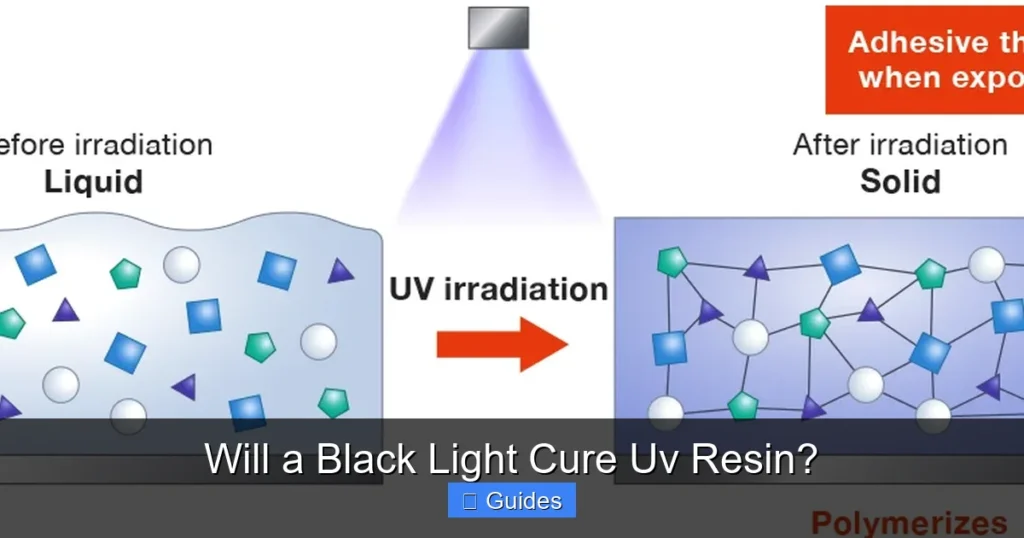
UV resin typically consists of acrylic oligomers, monomers, and most importantly, photoinitiators. These photoinitiators are the true stars of the show. They are special chemicals that are highly sensitive to UV light. When they absorb enough UV energy, they break down into reactive species, usually free radicals. These free radicals then go to work, linking the oligomers and monomers together in a process called polymerization. This is what transforms the sticky liquid into a solid, clear, and often durable plastic.
The Curing Process: A Closer Look
The curing process is essentially a chain reaction. Once the photoinitiators are activated by UV light, they start creating bonds between the resin molecules. This bonding continues until all the photoinitiators are used up or the UV light source is removed. For a complete and strong cure, it’s crucial to have sufficient UV light intensity and exposure time. If the cure is incomplete, you’ll end up with a sticky, soft, or pliable resin piece that hasn’t fully hardened. This is often referred to as a “tacky” layer, and it’s a common issue when the UV light isn’t strong enough or the exposure isn’t long enough. This is where the question of “will a black light cure UV resin effectively?” really comes into play.
The Science of Black Lights: More Than Just a Party Trick
Black lights are widely known for making white clothes glow at parties or for detecting pet stains. But what exactly are they, scientifically speaking? And how does their light output compare to what UV resin needs to cure?
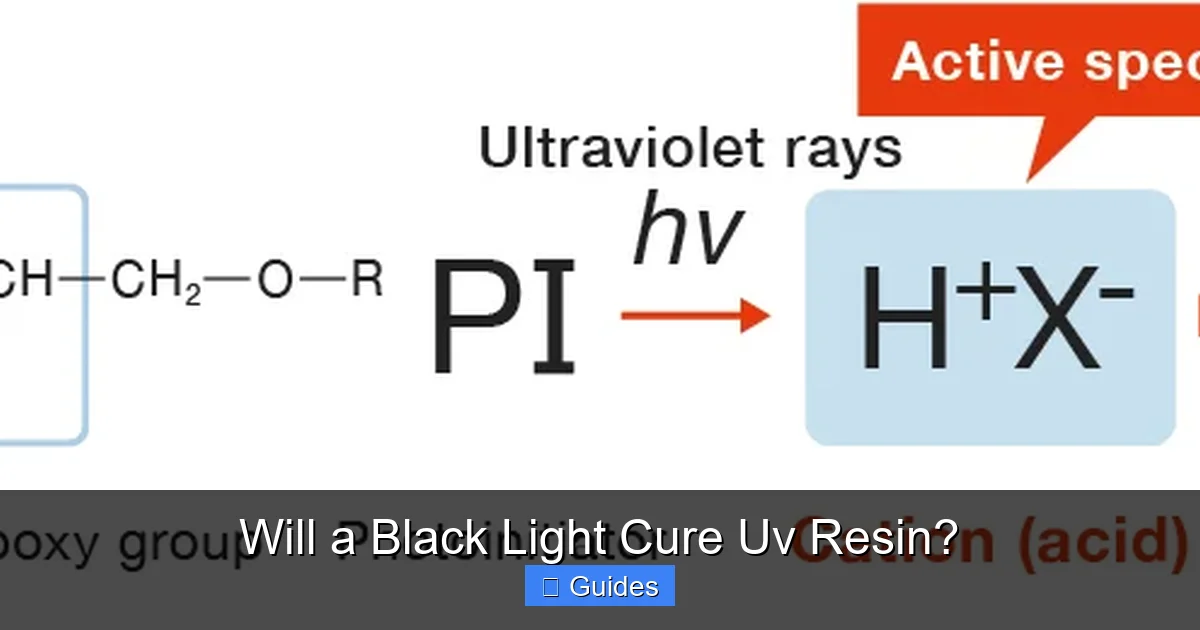
Visual guide about Will a Black Light Cure Uv Resin?
Image source: threebond.co.jp
What is a Black Light?
A black light, also known as a UV-A light or Wood’s lamp, emits ultraviolet light in the UVA range. This specific part of the electromagnetic spectrum is invisible to the human eye, which is why the room looks dark when a black light is on, yet certain materials glow. Standard black lights typically emit UV light in the range of 320 to 400 nanometers (nm), with their peak intensity usually around 365 nm or 395 nm. This range is important because it overlaps with the wavelengths required to activate the photoinitiators in many UV resins.
UVA, UVB, and UVC: Understanding the Spectrum
- UVA (320-400 nm): This is what black lights primarily emit. It’s also the type of UV light that reaches the Earth’s surface and is responsible for tanning and skin aging. Many UV resins are formulated to cure efficiently within this wavelength range.
- UVB (280-320 nm): This is the “burning” UV light that causes sunburn. It’s typically filtered out by the atmosphere, but some specialized UV curing lamps might emit small amounts.
- UVC (100-280 nm): This is germicidal UV light, extremely damaging to living tissue, and completely blocked by the Earth’s atmosphere. It is NOT used for curing resin and should be avoided.
So, because black lights emit UVA light, which falls within the activation spectrum for most UV resins, theoretically, they *can* initiate the curing process. The critical difference, however, lies in the intensity and the consistency of that UV output. A party black light is designed to make things glow, not to provide a concentrated burst of energy for a chemical reaction. This distinction is key to understanding whether a black light will cure UV resin efficiently.
Will a Black Light Cure UV Resin? The Direct Answer
Alright, let’s get straight to the point you’ve been waiting for. Will a black light cure UV resin? Yes, a black light can cure UV resin, but with significant caveats. It’s crucial to understand that while it *can* work, it’s rarely the optimal or most reliable method for achieving a perfect cure, especially for professional-looking results.
Why it Can Work
As we discussed, black lights emit UVA wavelengths (typically 365-400 nm). Most UV resins are formulated with photoinitiators that are designed to absorb energy within this very range. So, when the resin is exposed to a black light, those photoinitiators will indeed absorb the UV energy and start the polymerization process, turning the liquid resin into a solid.
The “Buts” and “Why Not Always”
Here’s where the nuance comes in. The main reasons why a black light is often a suboptimal choice for curing UV resin are:
- Lower Intensity: Dedicated UV curing lamps (especially UV LED lamps) are specifically engineered to provide a much higher intensity of UV light. This concentrated energy ensures a fast and thorough activation of photoinitiators throughout the resin. Black lights, particularly the common consumer-grade ones, have a significantly lower UV intensity. This means fewer photoinitiators are activated at any given moment, leading to a much slower and often incomplete cure.
- Longer Cure Times: Due to lower intensity, you will need to expose your resin to a black light for a considerably longer period – often hours, compared to minutes with a professional lamp. This isn’t just inconvenient; it can also affect the final quality of your piece, potentially allowing dust to settle or causing yellowing over prolonged exposure.
- Incomplete Curing (Tackiness): The biggest frustration of using a black light to cure UV resin is often a sticky or tacky surface. With insufficient intensity, the top layer might harden, but the resin underneath or the resin closer to the surface might not fully cure, leaving a gummy residue. This is particularly common if the piece is thicker or if the resin contains pigments.
- Inconsistent Curing: Many black lights have a wide spread of light rather than a focused beam. This can lead to uneven curing, where parts of your resin piece cure faster or better than others, resulting in a less uniform finish.
So, while you might achieve some level of hardening with a black light, especially on very thin, clear applications, it’s a game of patience and often compromise. For reliable, fast, and complete cures, a purpose-built UV/LED lamp remains the gold standard.
Factors Affecting Black Light Curing of UV Resin
If you’re determined to try curing UV resin with a black light, or if it’s your only option, understanding the factors that influence its effectiveness is crucial. These variables can make the difference between a somewhat cured piece and a complete sticky mess.
Intensity and Wavelength Output of the Black Light
Not all black lights are created equal. A cheap party black light wand will have a significantly lower UV intensity than a high-powered professional black light used for industrial inspections. The peak wavelength also matters. Most UV resins cure best around 365nm to 405nm. Ensure your black light’s output falls within this range. A stronger, more focused black light will perform better than a diffuse, weak one. For instance, a small keychain light will be far less effective than a larger black light strip.
Distance from Light Source
UV light intensity diminishes rapidly with distance. The closer your resin piece is to the black light, the more concentrated UV energy it will receive. Place your project as close as safely possible to the light source, ideally just a few inches away, to maximize exposure. This is a critical factor when asking, “will a black light cure UV resin effectively?”
Thickness and Opacity of the Resin Project
This is perhaps one of the most significant limitations. UV light can only penetrate so far into the resin. Thin, clear layers (e.g., less than 1-2mm) have the best chance of curing completely with a black light. As soon as you introduce thickness, especially anything over 3-5mm, or add any pigment or glitter, the UV light struggles to penetrate deeply enough to activate photoinitiators throughout the entire piece. Pigments, in particular, block UV light, making it very difficult for a black light to achieve a full cure.
Ambient Light and Room Conditions
Believe it or not, the lighting in your room can impact the curing process. Direct sunlight or even bright room lights contain some UV light, which can start pre-curing your resin or interfere with the black light’s specific output. For best results, cure your resin in a dark room with minimal ambient light, focusing only on the black light source. Also, ensure the room temperature is comfortable, as extreme cold can slow down the curing reaction.
Type of UV Resin Used
Some UV resins are more sensitive to lower UV intensities than others. Hobbyist-grade resins are often formulated to be quite forgiving, but very specific or industrial resins might require higher, more precise UV dosages. Always check the manufacturer’s recommendations for curing times and lamp requirements for your specific resin.
Optimizing Black Light Curing for UV Resin Projects
If you’ve assessed the situation and decided that using a black light to cure your UV resin project is your best or only option, don’t despair! There are several strategies you can employ to maximize your chances of success and achieve the best possible cure. Remember, patience is your greatest virtue here.
Work in Thin Layers
This is arguably the most important tip. Instead of pouring all your resin at once, build up your project in very thin layers, ideally no more than 1-2mm thick at a time. Cure each layer thoroughly before adding the next. This ensures that the black light’s limited UV penetration can fully harden each section. This method dramatically improves the chances that a black light will cure UV resin completely.
Increase Exposure Time Significantly
Forget the 30-second cures you see with professional lamps. When using a black light, you’ll need to cure for much longer. Depending on the resin, the black light’s intensity, and the thickness of your layer, this could mean anywhere from 15 minutes to several hours for each layer. For small, thin, clear pieces, you might still need 30-60 minutes. Keep an eye on your piece, and if it’s still tacky, keep curing.
Flip and Rotate Your Project
UV light cures from the top down. To ensure an even cure, especially for three-dimensional objects, periodically flip your piece over and cure the bottom and sides. Rotate it every 10-15 minutes if possible to ensure all angles receive adequate exposure to the black light. This prevents uncured spots underneath.
Consider a Curing Box or Enclosure
To concentrate the black light’s UV energy and minimize ambient light interference, you can create a makeshift curing box. Line a cardboard box with aluminum foil (shiny side in) to reflect the UV light back onto your piece from all directions. Place your black light inside, positioned to illuminate your resin project effectively. This helps maximize the efficiency of a black light to cure UV resin.
Keep it Clear and Simple
When using a black light, stick to clear resin projects without pigments, dyes, or glitter. Any additive will block the already limited UV penetration, making a complete cure nearly impossible. If you must add color, use very, very tiny amounts of translucent dyes rather than opaque pigments.
Clean the Tacky Layer (If it Happens)
Despite your best efforts, you might still end up with a slightly tacky surface. This can often be wiped away with isopropyl alcohol (IPA). Gently rub the tacky surface with a soft cloth dampened with IPA. This can help remove the uncured surface layer and reveal a harder resin underneath. However, this is a sign of an incomplete cure, and the internal structure might still be softer than ideal.
When NOT to Rely on a Black Light for UV Resin
While we’ve established that a black light *can* cure UV resin under specific, often constrained, conditions, there are many situations where it’s simply not appropriate or effective. Knowing when to invest in a dedicated UV curing lamp can save you time, frustration, and wasted materials.
For Thick or Large Projects
If your project involves pouring UV resin layers thicker than a few millimeters, or if you’re working on a larger surface area, a black light simply won’t cut it. The UV light won’t penetrate deeply enough, leading to incomplete cures, sticky resin, and potentially compromised structural integrity of your piece. A dedicated lamp with higher power is essential for these types of projects.
When Using Pigmented or Opaque Resins
As mentioned, pigments and even dense glitter act as barriers to UV light. A black light already struggles with penetration, so adding anything that further blocks the UV rays will almost certainly result in an uncured, gooey mess. If your design requires vibrant, opaque colors, you absolutely need a high-powered UV LED lamp or traditional two-part epoxy resin (which cures via chemical reaction, not UV light).
For Professional or High-Quality Results
If you’re selling your resin creations, giving them as gifts, or simply demand the highest quality finish for your hobby, relying on a black light is a gamble. Professional results require reliable, consistent, and fast cures. A dedicated UV/LED lamp provides this consistency, ensuring your pieces are fully hardened, non-tacky, and durable, reflecting your skill and attention to detail.
When Speed and Efficiency are Important
If you’re making multiple pieces or have limited time, waiting hours for a black light to cure each thin layer is simply impractical. A good UV LED lamp can cure a thin layer of resin in 30 seconds to 2 minutes, dramatically speeding up your workflow and allowing you to create more in less time. This efficiency alone often justifies the investment in a proper curing lamp.
For Certain Resin Types
While most hobbyist UV resins cure with UVA light, some specialized resins might require specific wavelengths or higher intensities that only a purpose-built UV lamp can provide. Always refer to your resin manufacturer’s instructions for the recommended curing equipment.
The Comparison: Black Light vs. Dedicated UV Lamp
Think of a dedicated UV LED lamp as a specialized tool engineered for one purpose: curing resin. It offers high, consistent UV intensity, often focused and optimized for resin polymerization, with specific wavelength outputs (e.g., 365+405nm dual wavelength). A black light, on the other hand, is a general-purpose UV light source with much lower, less focused intensity, designed for visual effects rather than chemical reactions. The difference in performance is significant, making the dedicated lamp a wise investment for serious resin crafters.
Conclusion: Choosing Your Curing Path
So, “will a black light cure UV resin?” The answer is a qualified yes, but it comes with a strong recommendation to understand its limitations. While a black light can initiate the curing process for UV resin, especially for very thin, clear, and small pieces, it is rarely the optimal tool for the job. Its lower intensity and less focused UV output mean significantly longer cure times, a higher risk of tackiness, and an inability to handle thicker or pigmented projects effectively.
For casual experimentation, or if you’re in a pinch with a very small, clear project, a black light might just do the trick if you’re patient and follow the optimization tips. However, for anyone serious about UV resin crafting, whether for personal enjoyment, gifts, or selling creations, investing in a dedicated UV or UV LED curing lamp is highly recommended. These specialized lamps provide the necessary intensity and wavelength precision for fast, complete, and reliable cures, ensuring your beautiful resin projects are perfectly hardened and durable every time.
Ultimately, your choice of curing light depends on your project’s demands, your desired quality, and your budget. By understanding the science and the practical differences between black lights and professional UV lamps, you can make an informed decision that leads to satisfying and successful UV resin creations. Happy crafting!
🎥 Related Video: uvBeast 385-390nm V3 & 365nm High Power Flashlight with UV Resin
📺 Eric Haney
This video shows how well the uvBeast 385-390nm V3 & 365nm High Power Flashlight will cure UV Resin in 15-20 seconds.
Frequently Asked Questions
What is the ideal wavelength for curing UV resin?
Most UV resins are formulated to cure effectively within the UVA spectrum, typically between 365 nanometers (nm) and 405 nm. Many modern UV LED lamps for resin crafting are dual-wavelength, emitting both 365nm and 405nm to accommodate a wide range of resin types.
Does sunlight cure UV resin faster than a black light?
Yes, direct sunlight, especially on a clear, sunny day, can often cure UV resin faster and more effectively than a typical consumer black light. Sunlight contains a broad spectrum of UV light (UVA and some UVB) at a higher intensity than many black lights, making it quite efficient for curing resin, though still slower than a dedicated lamp.
Can I mix pigments into UV resin if I’m using a black light to cure?
It’s generally not recommended to mix opaque pigments into UV resin if you’re relying on a black light for curing. Pigments block the already limited UV penetration of a black light, making it very difficult, if not impossible, to achieve a complete and thorough cure, leading to sticky or soft resin.
Why does my UV resin yellow after curing with a black light?
Prolonged exposure to UV light, especially from less-efficient sources like some black lights that require longer curing times, can sometimes cause UV resin to yellow. Overheating during an extended cure or using resin that isn’t formulated with strong UV stabilizers can also contribute to yellowing over time.
How long should I cure UV resin under a black light?
Curing times with a black light can vary significantly based on the black light’s intensity, resin type, and project thickness. For very thin, clear layers, expect anywhere from 15 minutes to several hours, flipping the piece frequently. This is much longer than the 30 seconds to 2 minutes typically required by a dedicated UV LED lamp.
Do I need to wear protection when using a black light for resin?
Yes, even with a black light, it’s always recommended to wear UV-protective gloves and safety glasses. While UVA light is less harmful than UVC, prolonged or direct exposure can still damage your skin and eyes. Safety first is always the best approach when working with UV resin and any UV light source.
