


As an Amazon Associate, We earn from qualifying purchases.
Ever wondered what glows under UV light? This fascinating phenomenon, primarily fluorescence, reveals a hidden world where many ordinary objects transform with vibrant colors. From minerals and plants to everyday items like highlighters and security features, UV light makes the invisible visible, offering exciting insights into science, nature, and practical applications. It’s a journey into the secret lives of things, often revealing beauty or information we’d otherwise miss.
What Glows Under Uv Light?
Have you ever walked into a dark room where a “blacklight” was on? Suddenly, your white shirt seemed to burst into a vibrant blue, your teeth shimmered, and anything made with neon colors seemed to leap out with an otherworldly glow. It’s like stepping into a secret world, a hidden dimension of color and light that’s usually invisible to our eyes. This fascinating phenomenon, where everyday objects and natural wonders come alive, is all thanks to ultraviolet (UV) light.
But what exactly is UV light, and why does it make certain things glow? It’s a bit like magic, but it’s pure science! When we talk about things glowing under UV light, we are mostly talking about a process called fluorescence. This is where a material absorbs the invisible UV energy and then quickly re-emits it as visible light, the kind of light our eyes can see. The result is a stunning, often vibrant display of colors that were previously hidden.
From the intriguing secrets hidden in your wallet to the ancient glow of certain minerals, the world of UV light is vast and full of surprises. Getting to know what glows under UV light can reveal incredible beauty, help solve mysteries, and even protect us from counterfeit goods. So grab your curiosity, and let’s dive into the amazing things that come to life when illuminated by the invisible rays of a blacklight.
Key Takeaways
- Understanding UV Light: Ultraviolet (UV) light is invisible to the human eye, but when certain materials absorb its energy and then re-emit it as visible light, we see them “glow.” This process is called fluorescence.
- Fluorescence vs. Phosphorescence: Fluorescence is an instant glow that stops when the UV light is removed. Phosphorescence, like glow-in-the-dark toys, involves a delayed emission, meaning the glow persists for a while even after the UV source is gone.
- Everyday Glows: Many common items glow under UV light, including highlighters, laundry detergents (due to optical brighteners), tonic water (quinine), petroleum jelly, and even ripe bananas.
- Nature’s Hidden Colors: The natural world is full of UV wonders. Scorpions glow vividly, certain minerals like fluorite and calcite exhibit stunning colors, and some plants and marine life, like corals, reveal unseen patterns and hues.
- Practical Applications: The phenomenon of what glows under UV light has critical uses in forensics (detecting bodily fluids), security (authenticating currency and documents), medicine (diagnosing skin conditions), and even art and entertainment.
- Safety First: While often fascinating, it’s crucial to use UV lights responsibly. Always protect your eyes with UV-filtering glasses and avoid prolonged direct skin exposure, especially with stronger UV sources, to prevent potential harm.
- Explore Safely: With the right UV flashlight (preferably 365nm) and safety precautions, you can unlock a captivating hidden world of glowing treasures, making everyday objects and natural environments truly come alive.
Quick Answers to Common Questions
What is the primary scientific reason things glow under UV light?
The main reason is fluorescence, where a material absorbs invisible UV light energy and then quickly re-emits that energy as visible light that our eyes can see, creating a glow.
Are all UV lights safe for casual use?
No, not all UV lights are safe. Standard “blacklights” (UVA) are generally safe for casual use with proper eye protection. However, UVB and especially UVC lamps are much more powerful and dangerous to skin and eyes, and should never be used for casual viewing.
Do bananas really glow under UV light?
Yes, particularly ripe or overripe bananas can show a blue luminescence under UV light. This is due to the breakdown of chlorophyll as the banana ripens, creating fluorescent compounds.
Why do scorpions glow under UV light?
Scorpions’ exoskeletons contain specific compounds, like beta-carboline, which cause them to fluoresce a vivid blue-green under UV light. The exact biological reason for this glow is still debated among scientists.
What’s a practical, everyday use for knowing what glows under UV light?
A very practical use is checking the authenticity of currency. Most banknotes have hidden fluorescent security features, such as fibers or threads, that only become visible under UV light, helping to detect counterfeits.
📑 Table of Contents
Understanding UV Light and Fluorescence
Before we can truly appreciate all the amazing things that glow under UV light, it helps to understand a little about the science behind it. Don’t worry, we’ll keep it super simple and fun!
What is UV Light?
First off, what is UV light? Well, light is part of something called the electromagnetic spectrum, which includes everything from radio waves to X-rays. Our eyes can only see a small portion of this spectrum, which we call visible light (think of the colors of the rainbow). Ultraviolet light sits just beyond the violet end of this visible spectrum, meaning it has a shorter wavelength and higher energy than visible light. It’s invisible to us, but its energy can certainly make an impact!
When you hear “blacklight,” people are usually talking about a type of UV light called UVA. This is the least energetic and generally safest form of UV for casual use, like at parties or for exploring. There are also UVB and UVC rays, which are much more powerful and can be harmful, so we mostly stick to UVA blacklights for our glowing adventures.
How Fluorescence Works
Now for the cool part: how does something actually glow under UV light? The process is called fluorescence. Imagine a tiny molecule within an object. When UV light hits this molecule, it absorbs the energy from the UV photons. This extra energy makes the electrons in the molecule jump to a higher energy level. They get really excited for a moment!
But electrons like to be in stable, lower energy states. So, almost immediately, they fall back down to their original energy level. As they fall, they release that extra energy, but they do it in a slightly different form: as visible light. Because some energy is lost (usually as heat) in the process, the emitted visible light always has less energy and a longer wavelength than the absorbed UV light. This difference is called the Stokes Shift. The key is that fluorescence is an instant reaction; the glow appears as soon as the UV light hits and disappears the moment the UV light is removed. This immediate switch makes it really captivating to watch what glows under UV light.
What About Phosphorescence?
While fluorescence is super common, you might also have heard of phosphorescence. This is what makes “glow-in-the-dark” toys work! Phosphorescence is a bit like fluorescence, but with a twist. The molecules still absorb UV energy, and their electrons still jump to a higher energy state. However, instead of falling back down right away, these electrons get “stuck” in an intermediate energy level for a while.
Because they’re stuck, it takes them longer to release the energy as visible light. This is why phosphorescent items continue to glow for minutes or even hours after the UV light source is taken away. So, while both fluorescence and phosphorescence involve light emission from UV absorption, the key difference is the duration of the glow. For most of our exploration of what glows under UV light, we’ll be focusing on the immediate dazzle of fluorescence!
Everyday Wonders: Common Items That Glow
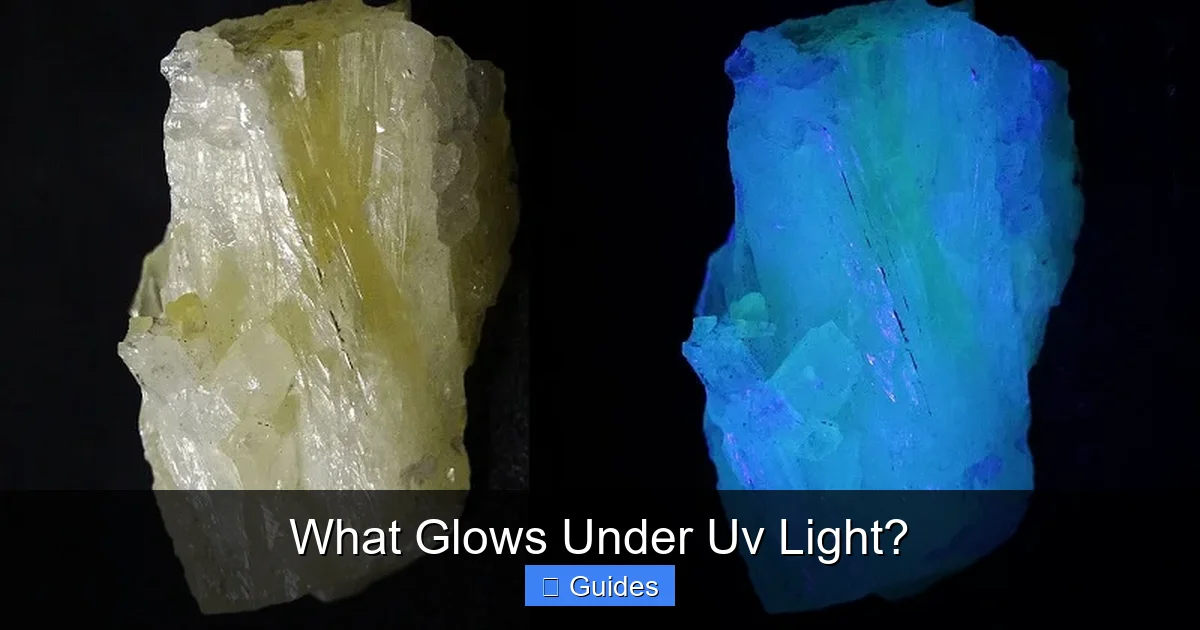
Visual guide about What Glows Under Uv Light?
Image source: rockseeker.com
You don’t need to go on a grand expedition to find things that glow under UV light. Many of them are probably right in your home or easily accessible! Let’s take a look at some common items that unveil their secret colors with a little UV illumination.
Natural Materials
Your own body holds some glowing secrets! Did you know your teeth naturally fluoresce? The enamel absorbs UV light and re-emits a soft blue-white glow. Dentists sometimes use this property to examine teeth. Even your fingernails can show a subtle glow. Beyond your body, a common fruit offers a surprise: ripe bananas often show blue luminescence when their chlorophyll starts to break down.
Household Items
Your house is a treasure trove of UV wonders!
- Highlighters: Almost every bright yellow, green, pink, or orange highlighter contains fluorescent dyes. Shine a UV light on them, and they’ll practically explode with color, making your notes look incredibly vibrant.
- Laundry Detergents and Whiteners: This is a big one! Many detergents contain “optical brighteners” or “fluorescent whitening agents.” These chemicals absorb UV light and re-emit it as blue light. Our eyes perceive a mixture of yellow light (from dirty clothes) and blue light as whiter and brighter. So, your white shirts and socks will often glow brilliantly under a blacklight, especially after a wash!
- Tonic Water: Grab a bottle of tonic water and shine a UV light on it. It will glow a beautiful, unmistakable blue! This is due to quinine, an ingredient in tonic water that’s famous for its fluorescent properties.
- Petroleum Jelly (Vaseline): Surprisingly, many brands of petroleum jelly will glow a soft blue under UV light. It’s a fun and safe experiment to try at home.
- Vitamins: Some vitamins, particularly Riboflavin (Vitamin B2), can glow. If you crush a vitamin B2 tablet and put it under a UV light, you might see a yellow-green glow.
- Olive Oil: The purity of olive oil can sometimes be checked with UV light. Extra virgin olive oil might show a reddish-orange fluorescence due to its chlorophyll content, while refined oils may glow more bluish.
Security Features
Here’s where what glows under UV light becomes super practical. Governments and businesses use fluorescence to prevent counterfeiting and ensure authenticity.
- Banknotes: Take a look at your money under a UV light. You’ll likely see hidden fluorescent fibers, security threads that glow in different colors (like the USD $100 bill’s blue thread), or specific numerical denominations appear.
- Passports and IDs: Many official documents feature intricate fluorescent patterns and designs that are only visible under UV light, making them much harder to forge.
- Credit Cards: You might find fluorescent logos or security holograms on your credit cards.
- Event Tickets: Concert or sports tickets often have invisible fluorescent ink that verifies their authenticity at the gate.
These hidden glows are vital for keeping our transactions safe and secure.
The Natural World’s Secret Glow
The magic of what glows under UV light isn’t limited to human-made objects; nature itself is full of hidden fluorescent wonders! From tiny creatures to ancient rocks, a UV flashlight can unlock a dazzling, unseen world.
Plants and Fungi
Even the plant kingdom has its glow. Many species of lichens, which are fascinating organisms that are a mix of fungi and algae, display vibrant fluorescence under UV light, often in shades of yellow, orange, or green. While most plants don’t visibly fluoresce green, their chlorophyll does emit a faint red glow under UV light, especially noticeable in extracted form or when the plant is stressed. Some fungi and even certain flowers can also show surprising fluorescent patterns that are thought to attract specific pollinators, though often these are in the UV spectrum only visible to insects.
Animals
This is where things get really wild!
- Scorpions: Perhaps the most famous animal that glows under UV light, scorpions are truly spectacular. Their exoskeletons contain chemicals (like beta-carboline) that make them glow a brilliant blue-green under UV light. Scientists aren’t entirely sure why they do this; theories range from helping them find mates to acting as a form of UV protection. If you’re ever camping in a scorpion-prone area, a UV light is a great tool for spotting them safely from a distance at night!
- Corals and Marine Life: Dive into the ocean with a UV light (and the right equipment!), and you’ll discover a breathtaking spectacle. Many marine corals contain fluorescent proteins that glow in a rainbow of colors—greens, reds, oranges, and blues. This biofluorescence is also found in some fish, sharks, and even sea turtles, creating an underwater light show that scientists are still trying to fully understand.
- Platypus: A relatively recent discovery showed that the fur of the platypus also glows blue-green under UV light! This fascinating finding suggests that biofluorescence might be more widespread in mammals than previously thought.
- Puffins: Believe it or not, the beaks of puffins have been found to fluoresce, possibly playing a role in mating rituals.
Minerals
Geology meets rave party when you shine a UV light on certain minerals! Many rocks and minerals contain impurities that make them fluorescent, often glowing in incredibly vivid and unexpected colors.
- Fluorite: This mineral actually gave fluorescence its name! Fluorite comes in many colors, but it often glows purple, blue, or green under UV light.
- Calcite: Another common mineral, calcite, can display a variety of fluorescent colors, including red, orange, pink, or even blue, depending on the impurities present.
- Willemite: Found in places like Franklin, New Jersey, willemite is famous for its bright green fluorescence.
- Sodalite: Some varieties of sodalite glow a bright orange.
- Uranium Glass (Vaseline Glass): This beautiful antique glass contains trace amounts of uranium, which gives it a distinctive yellow-green color in daylight and makes it glow a vibrant neon green under UV light. It’s a fascinating piece of history that continues to glow today.
Exploring what glows under UV light in the mineral world is a favorite hobby for many rock collectors, turning ordinary rocks into dazzling gems.
Practical Applications and Fun Uses
Beyond just being cool to look at, knowing what glows under UV light has many important and practical applications across various fields, as well as plenty of fun uses!
Crime Scene Investigation and Forensics
This is one of the most well-known and crucial uses of UV light. Forensic scientists regularly use UV lamps to detect evidence that might be invisible to the naked eye.
- Bodily Fluids: Semen, urine, saliva, and sometimes blood (especially after being treated with luminol) can fluoresce under UV light, helping investigators locate crucial evidence at a crime scene.
- Fingerprint Enhancement: UV light, often combined with fluorescent powders or dyes, can make latent fingerprints more visible for collection.
- Document Authenticity: Just like checking currency, UV light can reveal alterations or forgeries on documents, checks, and legal papers.
The ability to make the invisible visible is a powerful tool in solving crimes.
Art, Entertainment, and Novelty
If you’ve ever been to a glow-in-the-dark party or a themed attraction, you’ve experienced the fun side of UV light.
- Glow Parties: UV-reactive paints, makeup, clothing, and decorations transform any space into a vibrant, glowing spectacle.
- Special Effects: Theatrical productions, escape rooms, and haunted houses often use UV light to create stunning visual effects, reveal hidden clues, or make props appear to glow mysteriously.
- Art Installations: Many artists incorporate fluorescent materials into their work, creating immersive and interactive experiences that change dramatically under UV illumination.
It’s amazing how simply changing the light source can completely alter an artistic creation or environment.
Health and Medicine
UV light plays a surprisingly vital role in healthcare.
- Dermatology: A “Woods lamp,” which is a specialized UV lamp, is used by dermatologists to diagnose various skin conditions. Fungal infections (like ringworm), bacterial infections, and pigment disorders (like vitiligo) can fluoresce in specific colors, helping doctors make accurate diagnoses.
- Dentistry: Dentists use UV light to detect plaque build-up on teeth, check the integrity of dental restorations, and sometimes even identify cracks or demineralized areas that glow differently.
- Ophthalmology: A special fluorescent dye called fluorescein is used in eye exams to highlight corneal abrasions or foreign objects, making them glow under a blue light (a specific type of filtered UV).
These medical applications highlight how understanding what glows under UV light can directly impact our health and well-being.
Security Features and Authenticity Checks
We touched on currency earlier, but this extends much further. UV light is a frontline defense against counterfeiting.
- Product Authentication: Many high-value products, from designer bags to electronics, use invisible UV inks or threads for authentication, helping brands protect against fake goods.
- Pet Control: Some pest control experts use fluorescent powders to track rodents, applying the powder to suspected pathways and then using UV light to follow the glowing trails.
In a world rife with fakes, the hidden signals that glow under UV light are invaluable for verification.
Safety First: Using UV Lights Responsibly
Exploring the hidden world that glows under UV light is incredibly exciting, but it’s super important to do it safely. Just like too much sun can be harmful, improper use of UV lights can also pose risks.
Eye Protection
Your eyes are precious, so protecting them is paramount. When using a UV light, especially a powerful one or for extended periods, always wear UV-protective glasses. Standard sunglasses often block some UV, but specialized UV-filtering glasses are best. While a typical UVA blacklight is less harmful than direct sunlight, prolonged exposure to its rays can still contribute to eye strain or, in rare cases, damage the retina. Never, ever look directly into a UV bulb, especially stronger ones.
Skin Exposure
For most casual exploration with a standard UVA blacklight (like those used at parties), brief skin exposure isn’t a major concern. However, continuous or prolonged exposure, especially to stronger UVA sources or any UVB/UVC, can lead to skin damage, similar to sun exposure. It can cause premature aging and increase the risk of skin cancer. If you’re going to be in a UV-lit environment for a long time, treat it like sun exposure: cover up, and if possible, use sunscreen.
Types of UV Lights
It’s crucial to understand that not all UV lights are created equal.
- Blacklights (UVA): These are the safest for general hobby use and what most people refer to when they talk about a “UV light” for making things glow. They emit long-wave UVA radiation and very little visible light, making them ideal for revealing fluorescence without blinding you.
- UVB/UVC Lamps: These are much more powerful and dangerous. UVB lamps are used in tanning beds (and can cause sunburn and skin cancer). UVC lamps are germicidal; they’re used to kill bacteria and viruses (like in water purification or hospital sterilization) and are extremely harmful to skin and eyes. Never use these for casual exploration of what glows under UV light without expert guidance and appropriate safety gear. Stick to UVA blacklights for your glowing adventures!
Always check the specifications of your UV light source to ensure it’s appropriate and safe for your intended use.
Tips for Exploring the UV World
Ready to start your own adventure into the hidden world of things that glow under UV light? Here are a few tips to help you get the most out of your exploration!
Choosing the Right UV Light
Not all UV flashlights are created equal, and choosing the right one can significantly enhance your experience.
- Wavelength: UV lights are measured in nanometers (nm). For general fluorescence detection, especially for minerals, currency, and many natural phenomena, a 365nm UV flashlight is generally considered the best. It emits very little visible purple light, meaning the fluorescence stands out more vibrantly.
- 395nm UV flashlights are more common and often cheaper. They work well for party effects, highlighters, and many household items, but they also emit a noticeable purple glow that can sometimes “wash out” weaker fluorescence.
- Power: Higher wattage or lumen ratings usually mean a brighter glow, which is helpful for outdoor use or larger areas.
- Battery Life: Consider rechargeable options if you plan to do a lot of exploring.
Creating a UV Exploration Kit
To make your UV expeditions even better, assemble a simple kit:
- Good Quality UV Flashlight: As discussed, a 365nm one is often preferred.
- UV Safety Glasses: Essential for protecting your eyes.
- Notebook and Pen: To record your discoveries and observations.
- Magnifying Glass: To get a closer look at the intricate details of the glowing objects.
- A Dark Room or Nighttime Setting: Fluorescence is best seen in complete darkness, as any ambient visible light will make the glowing effect much harder to spot.
- Curiosity and Patience: Sometimes it takes a moment for your eyes to adjust, and some objects glow more subtly than others.
With these tools in hand, you’re all set to uncover the astonishing beauty and secrets of what glows under UV light, turning ordinary moments into extraordinary discoveries.
Conclusion
From the dazzling dance floors of a party to the subtle security features on your passport, and from the vibrant patterns of deep-sea corals to the eerie glow of scorpions in the desert night, the world of things that glow under UV light is truly captivating. It’s a testament to the hidden wonders that exist all around us, often just waiting for the right kind of light to reveal their true colors.
Understanding how fluorescence works, recognizing common items that exhibit this magical property, and appreciating its vast applications in science, security, and entertainment adds a whole new layer to our perception of the world. It reminds us that there’s always more to see than meets the eye.
So, next time you encounter a blacklight, or perhaps when you pick up your own UV flashlight, take a moment to safely explore. You might be amazed at what glows under UV light, transforming the familiar into something extraordinary and revealing a secret, glowing universe hidden in plain sight. Happy glowing!
🎥 Related Video: 💡LEARN: When to use a UV light
📺 Geocaching
shorts #geocaching #learn.
Frequently Asked Questions
What’s the difference between a “blacklight” and a “UV light”?
Often, these terms are used interchangeably, but “blacklight” specifically refers to a lamp that emits mostly UVA (long-wave ultraviolet) light and very little visible light. “UV light” is a broader term encompassing all types of ultraviolet radiation, including UVA, UVB, and UVC, which vary in wavelength and potential effects.
Can all white clothes glow under UV light?
Many white clothes will glow under UV light, especially those washed with laundry detergents containing optical brighteners. These chemicals are designed to absorb UV light and re-emit blue light, making fabrics appear whiter and brighter to the human eye.
Why is it important to wear eye protection with UV lights?
Wearing UV-protective glasses is crucial because prolonged or direct exposure to UV radiation, even from a blacklight, can potentially harm your eyes. It can contribute to eye strain, cataracts, or damage the retina over time, so protecting your vision is always a priority.
Do all minerals fluoresce under UV light?
No, not all minerals fluoresce. Only certain minerals contain specific impurities or structural defects that allow them to absorb UV light and re-emit it as visible light. The presence and type of these activators determine if a mineral will glow and what color it will be.
Can food glow under UV light?
Yes, several foods can glow! Beyond tonic water and ripe bananas, some vitamins (like B2), certain cheeses, and even honey can show fluorescence under UV light due to various organic compounds they contain.
What’s the best type of UV flashlight for beginners to explore with?
For beginners, a 365nm UV flashlight is highly recommended. While slightly more expensive than 395nm lights, it produces a purer UV output with less visible purple light, which makes fluorescent objects glow more distinctly and vividly, offering a clearer view of what glows under UV light without interference.
